
Did we tell you the one about meeting the actress who played the poisoner who Livia employed in I Claudius, in a chemist in the Oval, complimenting her on her talent and the wonderful series, then deciding not to buy any medicine that day! From the frayed temper in reply to a blog about another I Claudian, Derek Jacobi, and the Earl of Oxford theory today, perhaps emotions run deep. We do want to stress then undying admiration for real writers, poets, and actors, especially Derek Jacobi, so point out that disagreeing with his thoughts on Shakespeare’s identity, in his programme about Richard II, has nothing to do with our appreciation of his huge talents as an actor. So we invite him to tea, to dispute the Oxford theory, or even better to hear about research here into the story of Edmund Shakespeare in Southwark. No poison will be even contemplated.
Tag Archives: William Shakespeare
PHOENIX ARK PRESS INVITE DEREK JACOBI TO TEA!
Filed under Education, Language, Non Fiction, Poetry, The Arts
SHAKESPEARE’S BROTHER AND JAMES SHAPIRO
It was the US academic, and very nice guy, even if he would not help with an agent, who said that any work on Edmund Shakespeare was a ‘good idea’. So it was gloomy to take it to Faber and Faber and discover James Shapiro is doing another book on the year 1608 there, after his very valuable and enjoyable 1599. Sorry to correct editors though, but there is a great deal that was and is completely new in writing about Edmund Shakespeare and Southwark, in Shakespeare’s Brother.
Firstly is the precise discovery of where Edmund was living in Southwark and probably died in 1607, The Vine, who owned it and what it was. It was based on initial information in a lecture by Berkeley Professor Alan Nelson on the Token Books at Southwark Cathedral, but then original research into deeds and the ownership of The Vine by the Hunt family. That family also played a part with a fascinating local Catholic fraternity called The Brotherhood of Our Lady of Assumption, linked to the leatherworking Guild that played a large role at the all important church of St Mary Ovaries, later St Saviours, now Southwark Cathedral, where Edmund Shakespeare is buried.
There are jewels of information in those Token Books, that read like an Elizabethan Address Book, as there are in birth and death records, new to the Reformation, proving how long Philip Henslowe, who became a warden, lived in Southwark, precisely where, and the residence there of his son in law Edward Alleyn and his family. There are a great many things about other players living in Southwark at the time too. But following the trail of that Brotherhood of Our Lady there are also unknown facts, as far as we are aware, about ‘pleyers’ in the district and at the Church of St Margarets, that was thrown down during the Reformation, well over a hundred years before Shakespeare’s troupe, especially performing on St Margaret’s and St Lucy’s days. But in that Reformation earthquake also specific evidence of how The Bishops of Winchester were running and licencing brothels, and how so much of the history of Bankside was about the tavern and then coming brewing industry, and the battle for money and wealth in the great capital.
Much of the writing on Shakespeare nowadays comes from the US, perhaps because of the forming of a consciousness at a particular time, or a US need for roots, especially in Southwark, with the likes of John Harvard being born there (if he was). Also because of those religious echoes that still sound so loudly in America. But much as American academics can be very brilliant, and well funded, there seems also the danger of American literalism in work on Shakespeare that does miss some point about the mysterious well springs of language and inspiration itself. Read the story with us, as it happens, and perhaps James Shapiro can tell if it is of further importance or value.
Phoenix Ark Press
Filed under America and the UK, Education, The Arts
DEREK JACOBI, RICHARD II AND THE EARL OF OXFORD ‘THEORY’
“Whatever they say I am, that’s what I’m not.” Alan Silitoe.
Always good to see Derek Jacobi, whose I Claudius made everything forgivable, and his programme about Richard II last night, despite that desire to roll the wooorld around the plum of his English tongue. But why, like great actor Mark Rylance, does he go on about the fatuous Edward Devere, Earl of Oxford authorship theory for Shakespeare’s work? Perhaps because both were in Anonymous,or because of strange chips on acting shoulders? He said, with that cheeky grin of supposed assumed knowledge, it would ruffle feathers, or something, but it only ruffles feathers because it is rubbish. We all know nowadays you have to sell a thing by supposedly being controversial, or coming up with the great conspiracy. Though the most moving elements in the programme were actors talking, through the insights of Richard II, of how we are all nothing, specks in eternity, simply a part of the mysterious pattern.
There is a great deal of evidence for the Stratford Shakespeare though, despite the difficulty of reading contemporary records and the obvious desire of a poet and playwright, unlike self trumpeting Ben Johnson, to remain forever mercurial, behind the dangerous, ever watching London scenes. That was about preserving the well-spring of his art itself, dark and light, and not being pinned by anyone. Also the delicate nature of his temperament. There is little or no evidence for the 17th Earl of Oxford, Edward Devere, who published under his own name during his lifetime, as a minor and rather bad poet. There is that little bit of interesting self flattery about Devere being called the ‘spearshaker’ at court, but this was an age of impresses and also the fluid change in the fixity of Sirnames themselves. Did Shakespeare think he was Shakespere, Shakesbye, Shackspere, or was he a mind and spirit on a great journey, capable of inhabiting everyone, who then sured up his own name, as spelling codified, and he found the right to survive and buy New Place in Stratford? To make good where his father had gone wrong.
It is continued social snobbery though that supports the Edward Devere authorship theory, that emerged in the nascent proto-fascist climate of the 1920’s, and incidentally an insult to today’s fluttering Free School movement too. It underestimates how advanced was the Edwardian and later Elizabethan Grammar school education, well beyond learning by rote from the school Horn Book, how grand were some of Stratford’s historical links to London and how a young Shakespeare could well have moved among very educated circles, as a young man, either as player or tutor, or in prominent Catholic families. Besides, if Tony Blair could go on about “education, education, education,” he might go on about what’s being taught, how the teachers around you, in school, life or home are inspiring or destructive forces, or, in the realms of freeing imaginations, sing snatches of “teacher, leave them kids alone.”
The conspiracy thesis of Anonymous, and those who must somehow vindicate lineage alone, perhaps a symptom of any actor’s search for identity too, is that Elizabethan society was highly stratified and players the scum of the earth. All the evidence suggests the opposite, at a time of huge mobility in London and the building of permanent playhouses under James Burbage and others, despite the rich City of London’s attempts to drive them out. The actor Edward Alleyn became a superstar of his day, as did James’ son and Shakespeare’s brother-in-arms, Richard Burbage. Indeed, in terms of the ‘celebrity’ values of their day, perhaps little changes, and it was Burbage’s not Shakespeare’s death that was so mourned in his time. But at least those celebrities set very high cultural standards and the whole of London thrilled to poets and writers, good and bad, as well as brothels, gambling dens, cockpits and bear pits.
As for any claim that writing plays was NQOCD, so not to be linked to an Earl, the Earl of Essex paid for the funeral of Edmund Spencer and writers processed proudly to the grave to throw in their quills. The idea that what was said in those plays could be dangerous, even fatal, so supporting secret authorship, might be more convincing, except for all the other evidence and arguments, and the fact that not only can Shakespeare be as conservative as radical, on the side of Kingship, as against its excess or madness, but he very carefully wrote and rewrote his plays in tune with the changing political weather vane of the time. No time-server, but aware, and also a writer trying to succeed, appealing to popular kinds of opinion, imagination and humour, and going beyond it all. Just as a very aware court protected the players, in part because of its need for the popular pulse and battles with The City of London.
As one commentator briefly said though, on Derek Jacobi’s programme of course, perhaps the most important thing is how all Shakespeare’s plays so breathe and resound with the working life and metaphors of theatre, of the fact of acting, seeming, playing, that you do not pick up as some clever or mediocre nob in the wings. They were written and semi-literally wrought in the revolutionary and thrilling climate of London playhouses, a largely nasty, brutish, dangerous and very smelly place. The Globe Theatre itself, built in 1599 out of the wood of the dismantled Theatre, across the river in Shoreditch, was partly Shakespeare’s owned triumph, and house of vital independence too, sounded out so loudly in plays like Henry V. His independence too from the likes of playhouse owner, bear baiter, Master of the Game, brothel owner, local grandee and all time creep Philip Henslowe. To be fair, Henslowe protected writers sometimes with loans, but fell foul of what he thought it was only about, money. You could go on about the metaphors of Arden forests though in As You Like It, the constant repetition of imagery of gloves or clothes, out of professional working people like his father John, very far from the bottom of any social heap. The journey too of the plays, from experimental bums on seats pot boilers like Titus Andronicus, worthy of blood-soaked Anonymous, through to such an astonishing flowering, speak of one man, one consciousness, rooted in the countryside, on a momentous journey, physical and metaphorical, who lived through his times, and out of Stratford. You do not get to the metaphysical astonishments of Hamlet, under magestical rooves fretted with golden fire, inside the physical echo chamber of his imagination, a working theatre, unless you have walked the boards and written for them too.
Why is it important? Because, apart from truth, given the right soil, and in revolutionary times, genius can grow from and come from anywhere, and die anywhere too, which is not to say Shakespeare did not take on aspirations of the Court, and move increasingly freely in those circles, as patrons fought political battles of patronage around the City of London, that were also about influencing public opinion. The power of imagination is also linked to real life power. As he got his coat of arms and his ceremonial sword that he wore at the accession of James I, and his mind went high to low, probably found more beauty in the high, though far from always, and as much energy in the low. Although Shakespeare died not a hugely rich man, but a moderately wealthy one. Jacobi is an actor who inhabits other’s words, but Shakespeare was actor, poet and playwright too, formative in his understandings and visions, increasingly distancing himself from players, or players that don’t know the purpose of the whole play, or ‘stand beside their part’, and there perhaps is the key. The writer distinguishing himself from the acting he also knew so well. A mind that so imbibed what Shakespeare is all about, living language, where the basic secret lies, of course, at a time of vital metaphorical richness and linguistic fluidity, living and flowering in and through it, completely in tune, perhaps at a time when such imagination was possible, in a way it no longer is. Science has compartmentalized and ‘rationalised’ language itself, so it is hard to even use it in the holist, organic way Shakespeare lived it. That organic connection of language is also about the sonnets and his being a poet.
But that personal relationship to language, a gift for everyone, is not the exclusive preserve of Earls of anything, and great poets and writers come from many soils. Shakespeare also very quickly consumed the sources of his day, in the revolutionary age of the printing presses, from Holinshed to Plutarch, to all the renaissance stories and legends that abounded. He ‘stole’ plots like an ‘upstart crow’, then made them his own, constantly translating through the glass of his soaring, refracting imagination. That attack on an ‘upstart’ came from one of the Oxbridge wits of the time, Robert Greene, who first proved you could make good money from scandalous diaries, as you can’t anymore, and it has marked the divide ever since, that leads straight into the weary Devere theory. So splitting editions between the Arden and Oxford Shakespeares, summoning attacks from the establishment ‘educated’ that ‘he weren’t half as good as them’ and marking a fault line in English consciousness and social values.
There is another element to the ‘proof’ and that is increasing evidence of Stratford links with that vital centre of London life and theatre, Southwark and Bankside. That is one of the themes of coming blogs and original work on Edmund Shakepeare, William’s youngest brother, who is virtually unknown, but was also a player in London, died at only 27, four months after his bastard baby son, in the greatest freeze London and the river had seen in decades, and is buried in beautiful Southwark Cathedral. He lived in a property near the Globe just before his death, called The Vine, that belonged to a Hunt family, and though the link has to be yet made, there were also prominent Hunts in Stratford, one of whom talked of William Shakespeare as the ‘Rocius’ of his time. The Berkeley Shakespeare academic Alan Nelson has highlighted the significance of that.
As Peter Ackroyd argues though, Shakespeare the London playwright was not only known in his day, but a phenomenon, as actor, playwright but also Globe theatre sharer. The secret of ‘no Shakespeare the playwright’ on Stratford documents is about how all signed themselves in legal documents as associated to the Guild trades that legally marked social status and London citizenship. In the country it was about land and property ownership. But many of those people, at a time when Henry VIII’s reformation was also systematizing parish records themselves, making the perceived structures of recorded history, for administrative and tax purposes, for reasons of power, often had very good cause to avoid being put on the record. Shakespeare avoided local London taxes and may possibly have been protected by the Bishop of Winchester, in the Liberties in Southwark. But if Joe Orton advised in Loot, ‘never get caught’, that vanishing act is also about the freedom of the artist, poet and writer. The knowledge of how powerful but also dangerous it can be at the creative centre of the circle.
The work on Edmund though brings to light fascinating unknown material too on players in Southwark, as far back as the reign of Henry VI, a cycle of History plays that have been completely underestimated in their importance in Shakespeare’s ingathering of a time, an age and very specific place too, radical and divided Southwark, an almost physical fault line of the Reformation in London. Henry VI very possibly began the whole history cycle, but it is Henry VI’s reign, really defining the ‘Wars of the Roses’, and what is said about London, power, faith and miracles in those plays, that also links the poet to Southwark, the Bishops of Winchester and the all important religious battles of his day. That makes them just as important as Richard II, if not as good artistically. As Catholicism and Rome were pushed out, or into the shadows, and Kit Marlowe played dangerous games with ‘God’ and the ‘Devil’, and English spying too, Shakespeare turned to the humanist playwright’s art, grounded in very secular themes, the stuff of life, but understanding it all as metaphor to summon the creative energy and visions inside himself, the magic of his art and characters, culminating in Prospero. It was also a journey to other ‘countries’ of reality and imagination, as ‘The Globe’ and England opened in the discovery of the Americas, the breach with Rome, the explosion of City trading expeditions, and Shakespeare felt the tectonic conflicts of his time in his blood.
It is another frustration of Phoenix Ark though that DCD, unagented, and damaged by the story in America, or perhaps it’s just today’s terrified or cynical publishing climate, could not get backing after months of work at the Metropolitan Archive. Perhaps a grand ambition is to make Phoenix Ark Press a ‘Globe Theatre’ for writers then(!), but we’re pleased to give it to readers for free instead. All the world’s a page!
New addition to Phoenix Ark in pages above: Shakespeare’s Brother, the story of Edmund Shakespeare, the missing player, and the biography of an unrecorded life.
Phoenix Ark Press
Filed under Culture, Education, London, The Phoenix Story
ANONYMOUS, EDUCATION AND THE PLAYER’S BLOG!
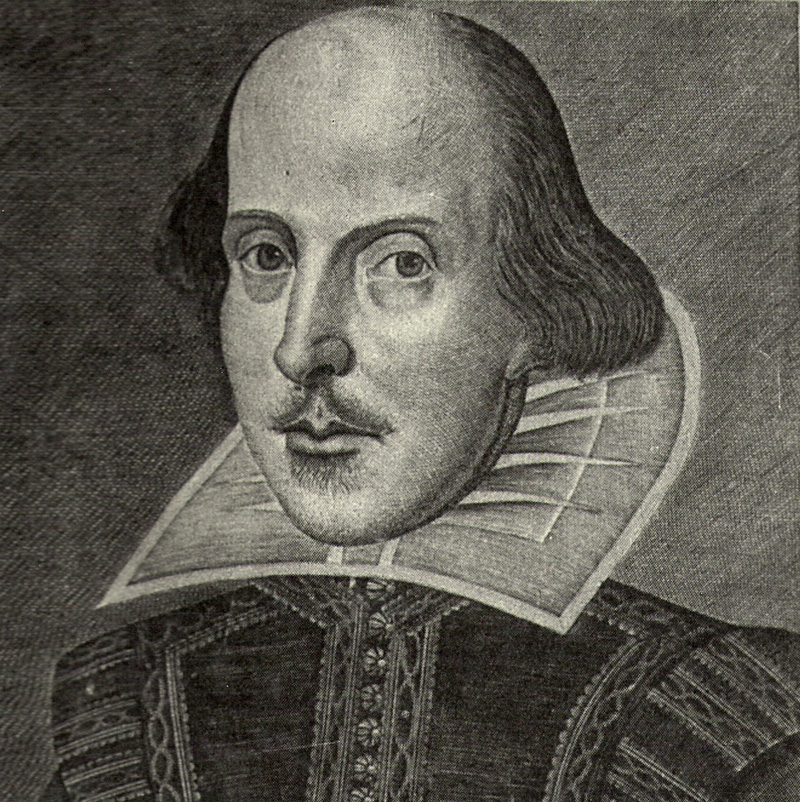

We haven’t seen Anonymous yet, the ‘Shakespeare was a fraud’ Roland Emmerich movie. But it was very interesting speaking to James Shapiro recently, the American Shakespeare academic. He appeared on stage with Emmerich in New york to argue the merits of the almost completely discredited Edward Devere theory, that emerged in the twenties, about Shakespeare really being the Earl of Oxford. Perhaps the strongest argument was that Devere was called ‘The Spear Shaker’ at court but, as Shapiro and many others say, no serious academic credits the Devere theory at all, the man was named as a writer during his lifetime and his work does not scratch the Bard.
It is interesting how the ‘lovie’ establishment has divided, with such a brilliant cast in Emmeric’s movie, including Mark Rylance and Derek Jacobi. On the other side, the old fashioned Shakespeare and Stratford side, apparently come the likes of Ian Mckellan and Simon Russell Beale. It seems odd that the likes of Rylance, admitting the plays sometimes had joint authorship, should not believe such a man could have been a ‘common man’. Indeed, it seems rather crucial to contemporary arguments about Free Schools in Britain, like Toby Young’s. We think genius can come from anywhere, and Stratford’s free school was probably a very good one, not to mention the fact the Ardens were of a fairly grand Catholic lineage. Not only that, but Shakespeare emerged precisely at a time when the Players were being patronised by and mingled directly at Court. It is a vital part of Shakespeare’s story, as is the linguistic explosion, in an age that saw writers process to the grave of Edmund Spencer to throw in their quills, while the Players were the newspapers of their time, or perhaps bloggers is better! Nowadays we lionize film-makers not writers, and at that, in this case and in the name of the lad from Stratford, we shake our spears crudely!
Shapiro’s argument, and it seems American Academics care more than we seem to in the UK, is very much about education. He is indignant that Anonymous is being taught as ‘truth’ in US Schools, complete with study aids. We share that indignation, and one also about the likely truth of history, and the presentation of Queen Elizabeth as being DeVere’s incestuous mother. ‘It’s only a movie’ countered Emmeric in that debate, but when you are dealing with possible history and Shakespeare it isn’t good enough. You have to apply some discipline of fact and possibility. First there is that schooling and background debate, Shapiro worries is treated with the laxity of the Creationism argument in American schools, fact versus faith, secondly there is historical accuracy, thirdly a mind like Shakespeare’s. One, working on a novel here, we think breathes the world of Stratford, the forest of Arden in As You Like It, as it does London and the opening world, including the New World. Above all though, the plays are completely forged in the crucible of the working, living theatre, it is their prevailing metaphor, not written by some nob from the wings. Perhaps it picks up a point in a book called The Closing of The American Mind, which suggested everyone nowadays picks up Socrate’s saw that he ‘knew nothing’, but at High School and Grad level, rather than a lifetime’s struggle for insight and knowledge. Then only the Scriptwriter and the money source for Anonymous is American.
You MUST go an see Anonymous, some critics cry, loving the famous Emmerich production values, and calling to the fact the Bard plays with history and truth all the time. Well yes, but the contempt for the players themselves, and their kind of heroism, seems hugely off-putting, especially in the excerpts, making Shakespeare so revolting that they distort any possible argument against Devere. You want him to ‘win’. Of course Shakespeare played with historical truth for his own theatrical purposes, his own extraordinary but changing visions, but then to so play fast and loose with a real man, above all a mind, and an extraordinary theatrical and cultural moment too, seems just not good enough. It is a work, whether it wins an audience here or not, for our age of Anxiety and Conspiracy, though Emmerich is certainly an interesting man and film-maker. The last thing it is is true, or even historical, unless you like the values of Titus Andronicus, perhaps, when the Bard was trying to put bums on seats, with his stories ‘baked in a pie’. Though Shapiro suggests the Emmerich camp are fantatic believers in their ’cause’. The problem, as Shapiro points out, is that twenty years ago it would have been laughed out of ‘court’, and now perhaps no-one cares at all. What is more likely though, in our age of democratised images, Conspiracies and huge anxiety, where fantasy and fact have become so confused, partly because of the camera and movies, to fuel all that, than the sloppiness of thought and research that means the ones who dominate our culture cannot be trusted with a true genius at all? It is important where that genius came from, how it grew and what it represents for an age. On the other hand, perhaps we’ll go and see it, even if controversy is what sells, and one merit is the interest in Shakespeare! In the meantime, wondering about the conspiracy of how and why films get made, we will by-line this blog Yours Anonymous.
Filed under America and the UK, Culture, Education
 Phoenix Ark's Blog