Category Archives: Community

THE CITY OF LONDON AND ST PAUL’S

The mounting crisis at St Paul’s, with the resignation of the Dean, Graeme Knowles, is becoming almost Shakespearian, but it highlights something about London; the enormous power and significance of The Square Mile. The City of course was once exactly that, and the powers now enshrined by the Corporation of London were historically guarded furiously. It is why that area, bounded by its Dragon statues, has a separate branch of the police force. Now they don’t want tents and the masses on their patch, but they never did. They always wanted commerce. Stand on the hill and look straight down Fleet Street and you will see it runs past Temple Bar, down the Strand, to Westminster and then Buckingham Palace beyond. “What the City loves to earn, Westminster loves to spend” was the old adage, but they too always looked warily at one another and created complex checks and balances to protect their powers.

Around that mile, in Shakespeare’s day, grew up the so-called Liberties of London, like Southwark, South of the river. In Shoreditch was once the biggest collection of slums and brothels in Europe. So too lay the playhouses, the bear pits, and the beer and Pleasure Gardens. Of course, in a different age, it was the Bishop of Winchelsea in Southwark who both purchased his position from the Queen, at £400 a year, and licensed many of those brothels. How times have changed, in this rather haunting crisis of the headless Anglican Church, except that the City’s attitude has always remained the same and always will. It was they who established edicts to drive out rogues, vagabonds and sturdy beggars, whether wearing T-shirts calling for the abolishment of money or not, though in 1572 actors at least, the players, became exempt from those if protected by a Lord or patron, and so the Burbage family could establish London’s first permanent playhouse for purely theatrical performances – called simply, The Theatre. Yet still only on the fringes of that powerful Square Mile, as were The Red Lion, London’s first permanent building, The Curtain, Rose, Swan and Globe.

This may all be high drama, even farce, which is better than real violence, though a more violent farce may ensue, and now the Dale Farm Protestors against Capitalism have joined the merriments too. But it was foolish of St Paul’s to close its doors at all, and this succession of resignations may lead to a mounting tragedy that exposes the confusion in the Church and the powerlessness of people in the face of laws that are practical, even involved with Health and Safety, but also fundamentally designed to support the functioning of a City, and a now world financial system. Money and trade are what matters to London, as to New York. We all know we somehow need that system, which incited the Mail Online to produce a headline like ‘A Rabble Without A Cause’, yet it is the concentration of wealth within that Mile, like some vast piggy bank only those in the know understand, or can really raid, that makes this rather a telling moment, and the physical position of the protestors very interesting too, poised between the House of God and the House of Mammon. It seems to have got far more coverage than protestors traditionally camping outside the supposed seat of Government and legislative power, Parliament. In a world where wool and bushels of corn have become International bank transfers, complex derivatives and deals made far beyond the skirts of the Old Lady of Threadneadle Street, it is purely symbolic, but symbolism is what catches the media eye too and translates so many human aspirations and paradoxes around the globe. All the world’s a stage!

Leave a comment

Filed under Community, Culture

St PAUL’S, PIGEONS AND WAS JESUS A SOCIALIST?

No wonder Giles Fraser, the departing Cannon Chancellor of St Pauls has become a bit of a hero, in the face of the Church, as very much the establishment, invoking Health and Safety to defeat the voice of the unwashed crowd. ‘I can imagine Jesus being born in the Camp’ he said, invoking the age-old debate of whether Christ was or would have been a Socialist, that in an English tradition has proud antecedents that go back to the Civil War Diggers and Levellers. So, was he?

It is marvellous how many wealthy friends invoke that old saw about Rendering unto Caesar. Namely Christ was about another place, whether within or up there, and we can get on with all our greed and self-interest, and worry about Camels and Eyes of Needles later. On the other hand, one who did recently, and a Catholic, reminded me of the Priest in Rome last year who, at Christmas Time furiously ushered an old beggar woman from his porch opposite the Trevi Fountain, into the lashing rain, because she seemed to be upsetting the smart tourists.

Didn’t Christ drive the Money Lenders out of the Temple and wasn’t that Kingdom of Heaven, within or above, about the love of mankind? Even if that wasn’t a revolutionary fire, you can hardly imagine him siding with the Corporation of London. He may not have excluded the redemption seeking Tax Collector, but surely the point was the redemption, not the 49% pay rise! A Nigerian SuperPreacher on Unreported World last night, peddling Sunglasses and Prosperity, also a huge tradition in American Evangelism, would not agree either. He tried to claim that Jesus, that Carpenter’s son, had an accountant! Get thee behind me… But since this did all begin in New York, we wonder if American visitors and tourists realise that Socialism is not the dirty word here that it still is in America, though that is changing. It’s roots reach into the National Health Service, the Fabian traditions of the 19th Century, the Library and Schools movments, and the Enlightenments of Robert Owen. They also stretch into the report on Tuberculosis in Wales which the Phoenix Ark Founder’s Grandfather wrote, that influenced the Beveridge Report.

Not that the blitz spirit seeking Occupy London protestors would necessarily align themselves with the Church at all, and probably woke up to the sudden media coup, as the argument began. If God Moves in Mysterious Ways, perhaps he sent the Devil down in a dream to inspire the authorities to close their doors, so the Cameras would turn and actually hear what the protestors are saying. But since we publish Children’s Books and one, Michelangelo’s Mouse, involves St Francis, perhaps it’s best to remember not just people, but London’s other great tourist draw, pigeons, and quote from the Shermann Brother’s haunting song from Mary Poppins. Though its melancholy might only encourage those invested in the natural, enormous and increasing disparities of Capitalism, with their trickle down patronage and reluctant hand outs.

Early each day to the steps of Saint Paul’s
The little old bird woman comes.
In her own special way to the people she calls,
“Come, buy my bags full of crumbs.
Come feed the little birds, show them you care
And you’ll be glad if you do.
Their young ones are hungry,
Their nests are so bare;
All it takes is tuppence from you.”
Feed the birds, tuppence a bag,
Tuppence, tuppence, tuppence a bag.

1 Comment

Filed under Community, Culture, London

ST PAULS IS CRISIS?

Isn’t it rather silly, not to mention peculiarly British, that St Paul’s, supposedly a world spiritual centre, has closed it’s doors in the face of the world Capitalism protest? You would have thought their instincts were with the grubby protestors, not tourists, but the most British of reasons is of course not human suffering, banking corruption, or human disconnection, but Health and Safety! It is modern Britain to a cup of Tea, no doubt provided by the very polite protestors, along with free food and some bad singing.

Leave a comment

Filed under Community, Education

9/11

A post dedicated to Dinah, in Texas, because we may be grumpy, but we don’t forget friends.

After so much re-examination and seeing the photos of survivors and the fallen at 9/11 in the Sunday Times Magazine, Phoenix Ark Press want to remember the people inside, and the lives touched and harmed in so many unseen ways. We pray some other moron doesn’t try and ‘commemorate’ today with more horror and fear. Sometimes war is necessary too, the fight against evil or for freedom, but nothing is an absolute and be careful where the rage is directed and how. One of the most moving things about the 7/7 attacks in London was just the silence of Londoners, in Parliament Square, on balconies across the city, just standing side by side, to resist together. The way the War on Terror has been operated, and used as a catch all too, to mask the real movements of money and power, has many deep flaws and generates much fear. It is the principles of freedom you stand by that truly matter, not the force you use or the rules you break, and even the Arab Spring suggests one man’s terrorist is often another man’s freedom fighter. Fear itself is one of the first things you have to fight inside yourself too, because it has a natural escalation and is corrosive.

Did the philospher Francis Fukayama make a grave mistake when he wrote his thesis on The End of History though, believing in the final triumph of the Nation State and Liberal Democracy? We seem to have been in shock ever since. The world, like history, never stops turning, but those liberal values are right and must be defended. With the proviso that we understand we are on a completely interconnected planet, man, animal and biospheres, and must all wake up to it. No freedoms without responsibilities, no rights without awareness, no power without connection, and as little as possible – ‘them’ and ‘us’. To commemorate 9/11 too then, with a full knowledge of how sad and terrible it was, some other events in History, on 11th September. If you look at those ‘Today in History’ websites it is interesting how many of them are American, and so of course see the world from that perspective. So many things have happened and are happening all the time, and actually, in a dating perspective, time zones have shifted too, especially with the arrival of The Gregorian calendar, so those dates, at least the further back you get, are not exactly right either, but it makes you think. Like that song from the Flaming Lips though, that Phoenix have blogged before, today of all days, perhaps we also need a love song for the human and the beauty of nature too. There’s a power and a burning love and light in all of us if we find the courage to reconnect, and do not swallow the dark, the loneliness and the hurt.

THE FLAMING LIPS
One, two, three, four
Do You Realize – that you have the most beautiful face
Do You Realize – we’re floating in space –
Do You Realize – that happiness makes you cry
Do You Realize – that everyone you know someday will die

And instead of saying all of your goodbyes – let them know
You realize that life goes fast
It’s hard to make the good things last
You realize the sun don’-go down
It’s just an illusion caused by the world spinning round

2010 Pastor Terry Jones announces that the Dove Outreach Center will not burn the Koran, ‘not now, not ever’
2010 The Medal of Honor is awarded for the first time since the Vietnam War; U.S. Army Staff Sergeant Salvatore Giunta in Afghanistan
2001 19 Islamist terrorists hijack four commercial jets, killing nearly 3,000 in New York, Virginia and Pennsylvania
1995 Soyuz TM-22, lands
1992 Hurricane Iniki hits Kauai Hawaii; 3 die and 8,000 injured
1991 14 die in a Continental Express commuter plane crash near Houston
1988 1/3 of population argues for Estonia autonomy
1988 Sports Aid – jogging to feed the world
1987 Shoot out at Jean-Bertrand Aristides’ church in Haiti, 12 die
1986 President Mubarak receives Israeli premier Peres
1986 U.S. performs nuclear test at Nevada Test Site
1986 Dow Jones Industrial Avg suffered biggest 1-day decline ever, plummeting 86.61 points to 1,792.89. 237.57 million shares traded
1983 U.S.S.R. performs nuclear test at Semipalitinsk, Eastern Kazakhstan U.S.S.R.
1980 Chile adopts its constitution
1973 Chile’s President, Salvador Allende, deposed in a military coup
1969 U.S.S.R. performs nuclear test at Semipalitinsk, Eastern Kazakhstan U.S.S.R.
1967 French president De Gaulle visits Poland
1967 Indian/Chinese border fights
1967 U.S. Surveyor 5 makes 1st chemical analysis of lunar material
1966 France performs nuclear test at Muruora Island
1965 Beatles’ “Help!,” album goes #1 and stays #1 for 9 weeks
1961 Bob Dylan’s 1st New York performance
1959 Congress passes a bill authorizing food stamps for poor Americans
1958 Great Britain performs atmospheric nuclear test at Christmas Island
1952 West German Chancellor Adenauer signs a reparation pact for Jews
1951 Stravinsky’s opera “Rake’s Progress,” premieres in Venice
1951 Florence Chadwick becomes 1st woman to swim English Channel from England to France. It takes 16 hours and 19 minutes
1946 1st mobile long-distance car-to-car telephone conversation
1944 Franklin D. Roosevelt and Churchill meet in Canada at 2nd Quebec Conference
1944 U.S. 5th pantzer division is 1st to enter nazi-Germany
1943 Allied arm forces conquerors Salerno
1943 Jewish ghettos of Minsk and Lida Belorussia liquidated
1943 Last German Q/pirate ship sinks near Easter Island
1943 U.S. and Australian troops join in Salamaua, New Guinea
1942 Transport nr 31 departs with French Jews to nazi-Germany
1941 Franklin D. Roosevelt orders any Axis ship found in American waters be shot on sight
1941 Charles Lindbergh, charges “British, Jewish and Roosevelt administration” are trying to get U.S. into WW II
1940 Hitler begins operation-Sealion (invasion England)
1939 Iraq and Saudi Arabia declare war on nazi-Germany
1930 Stomboli volcano (Sicily) throws 2-ton basaltic rocks 2 miles
1926 Spain leaves League of Nation due to Germany joining
1923 ZR-1 (biggest active dirigible) flies over New York’s tallest skyscraper, Woolworth Tower
1922 British mandate of Palestine begins
1919 U.S. Marines invade Honduras
1914 T Handy publishes “St. Louis Blues”
1909 Max Wolf rediscovers Halley’s comet
1900 President Kruger crosses border with Mozambique
1881 Triple landslides bury Elm, Switzerland
1831 Charles Darwin meets with Captain Fitzroy at Plymouth
1773 Benjamin Franklin writes “There never was a good war or bad peace”
1741 Queen Maria Theresa addresses Hungarian Parliament
1714 French and Spanish troops under duke of Berwick occupy Barcelona
1709 Battle at Malplaquet: England/Austria/Dutch Great Alliance beat France
1697 Battle at Zenta: Prince Eugen van Savoye beats Turkish superior power
1649 Massacre of Drogheda-Cromwell kills 3,000 royalists
1645 Thomas Fairfax’ New Model-army occupies Bristol
1557 Catholic and Lutheran theology debated in Worm
1297 Battle at Stirling Bridge, Scottish rebel Wm Wallace beats English
813 Charles the Great crowns Louis I emperor

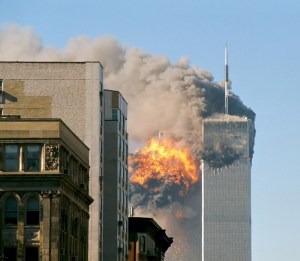
The image of the WTC is a public domain photo from Wikepedia

Leave a comment

Filed under Community, Culture, Environment, New York, Uncategorized

OF MEL, MENTORING AND MANKIND – Mmmm?

A long time ago I blogged something on standing up for Mel Gibson. Not because I know who he really is, but because the quickness of people to disassociate themselves with the difficult is often filled with an awful hypocrisy. Also because he did a very good Hamlet! I don’t believe he’s a racist, but above all it was extremely painful hearing that pain and rage that came out of him, the collapse of language, since it echoed my own loss of self down the phone to New York. The delight of the public trial, seeing someone brought low, the quickness of the tape to get out there, and the stoneiness of that passive, judging and rather superior American voice ‘You don’t love me,’ sent shivers down my spine. Shivers of shame, but also sympathy.

How he went wrong, but how people might understand why and how men can go wrong, so rage, or get lost. How the force of a strong spirit can get so tyrannical and so wounded too, projecting the feminine outwards entirely, but desperately trying to hold on to it. Look inside first. That is not to commend what can happen, but surely thugs on the streets in London might point to the need of good male role models nowadays. It was one of the things that odd crew called The Mankind Project is talking about, not about ‘them’ and ‘us’, but difference and finding male respect for the really masculine, and using it to mentor and grow. One friend who did it made a telling comment, which was ‘I thought I had a problem with women, but it was really with men.’ If you don’t respect men, for whatever reason, how can you find the confident one in yourself and take it to the person you want? He had not grown up with a father, but is now a father himself. So dads, remember to mentor and even initiate your sons in how to hold onto the truly strong, and so gentle and confident male stuff. But as for the Save Mel Campaign, he really should not play with glove puppets!

Leave a comment

Filed under Community, New York

RIOTS, WATERSTONES AND A BONEFIRE OF THE VANITIES

An American academic friend wrote today to ask me ‘so David, what’s up with your people?!‘ Good question. It seems to be one of the favourite moments in the movie Indianna Jones and The Last Crusade though, certainly mine, when Indy bumps into Hitler at the Berlin books burning and the Furher signs his diary. Someone pointed out that the sequence is set in 1938, and the book burnings really happened in 1933, but we already know that fantasy plays with fact, and Spielburg always does that brilliantly. Before the US or anyone starts to gloat about London though, I was, before my recent attempt to leave behind a bad ‘past’, going to use it to create a viral video and attack not what is happening in London, but my American publisher Abrams, for their own attitude to my books, and to free speech too. Because when a publisher does that to its own author and work, in a kind of bonefire of the vanities and values, something is seriously wrong.

But now London has been burning, a point came up on Newsnight yesterday from a ‘Free School‘ proponent about the search for ‘bling‘, quick cash and the fact that you have not seen looters attacking Waterstones, only the trainers stores, mobile phone shops and bookies nearby (as in the gamboling shops, not the printers or binders!). Of course, it makes the very good point that there is no deeper social statement being made, it is a mix of frustration, aggression and directed criminality, but it’s also a very middle class thing to say. It would be almost reassuring to see our angry youth trying to break into Waterstones, to get their hands on bundles of The Master and Margerita, The End of the Affair, War and Peace or Brazzaville Beach and flog them down the Old Kent road, or read them to each other by bonefire light. The bigger point, of course, is the frightening figures suggesting 17% of 15 year olds are functionally illiterate, fed by the addictions of the image, MTV values (coming out of America too) and all the hypocrisies that Big Brother, Celebrity and fame obsessed culture engenders. In the modern crisis of publishing too though, in the spawning of celebrity biogs, ‘ how I made it rich’ tales and the decline of writer’s voices in the democratisation of publishing methods, there are subtler ways of producing real book burnings at work. But people need to be literate in a great many ways. Reading literate, emotionally literate, professionally literate, legally literate and especially socially literate. Something like one in three London parents also say they are not confident enough to read aloud to their children, and that storytelling process is a key part of bonding, mentoring and sharing values.

Apart from the policing questions though, and political grand standing, apart from economic and moral arguments, especially about family and community structures and responsible mentoring, in the ‘am I my brother’s keeper?’ mould, there needs to be a very real debate about culture too and what, if anything, it means nowadays. About the decline of communities, the dislocations of social networking and perhaps, above all, about the shift from a reading culture, to a visual and news driven one, twenty-four hours a day, that is itself massively addictive. The eye finds it hard to resist a moving object. Not only are markets connected world-wide though, but so is a Western world ‘culture’, and to be frank, especially with my own New York publishing experience, there are many bad things to say about that too. I remember very well being in New York though when there were minor riots, because of a limit on the number of Playstations available, so perhaps no-one is immune. Wouldn’t it be nice if we could all sit down together and read a good book! In the pro-free speech and anti-book burning argument though, it is the paradox of freedom that we probably need less forms of entertainment and product, not more, just more of a sense of some shared culture and one that brings both value and meaning.

The photo shows the Wikepedia photo by David Shankbone of books burned by the Nazis, at the Yad Vashem memorial.

2 Comments

Filed under America and the UK, Books, Community, Culture, Education

ANTI-SOCIAL NETWORKING AND THE CYBERVERSE

As Phoenix Ark have renamed the Internet – The Cyberverse, so something should be said about the newly named Anti-Social Networking, after some interest in the blog about London Burning and Boris Johnson. About the co-ordinated use of closed Blackberry Mobile Networks too, in rioting. The truth of human freedom is that we seem to demand many vicious ‘freedoms’ nowadays, and you cannot control the swirling democratic forces of communication, that clearly have both good and bad sides. Good sides when used to fight real injustice and tyranny, bad when used for criminality, violence and attempting to attack real ‘social’ networking – namely some kind of decent and really connected society.

There are many things to be said about thugs, and frustrated young men too, or women, but many about the seeming breakdown of any kind of real Social Contract too. It affects those people who would never think of rioting, as its spreads a rot into difficult corners of society too. There really is a breakdown of power and opportunity at many levels, as lenders turn the screw, and people who look at the bewildering game of Banks and Markets, as Capital always moves upwards in the nature of the machine, increasingly cuts them off from opportunity, chance and hope.

But it seems we are all rather dazed and confused nowadays, and perhaps the discussion should return to what ‘freedom‘ really means too, what values and responsibilities we really should share, and how ‘rights‘ are ridiculous without duties too. But how can that start at a grass roots level, the level of family and community, if we mistrust what is happening at a supra-economic level? Who knows the answer, because there are many powerful arguments on both sides, both for cuts, and the kind of Social plans of enlightened reinvestment that were deployed during the 1920’s Depression in America. In terms of Anti-Social Networks World Markets seem so interconnected now, they are enormously volatile and thus playable too by those ‘in the know’, and who knows who is leading what? But on any front, swept up as we all are by it, where is the real vision and real leadership?

Leave a comment

Filed under Community, London

AMY WINEHOUSE

God, what is going on in the world? First the Norway horror and absolute tragedy, and now Amy Winehouse, just 27, found dead in her flat in North London. Obviously troubled, addictive and facing the difficulty of Celebrity, she was the most extraordinary voice and singer. Uncompromising on stage, to the point of being self abusive, that voice could be so beautiful and even hauntingly pure. There are no real details yet, so perhaps it was an overdose or suicide, and it is extraordinary that her Wikedpedia entry has already been changed, but what did the jeering at her drunken concert in Serbia do, who knows the pain that can go on inside people, and the madness too? What a terribly sad day.

Leave a comment

Filed under Community, Culture

ANDERS BREIVIK AND THE CHILLING TWITTER

One of the most chilling things about the Norwegian tragedy is a single tweet from Anders Breivik on twitter, dated July 17th – ‘One person with a belief is equal to the force of 100, 000 who have only interests.’ It hangs there in cyber space, the absolute prologue to decision and horror. So it appears that the madness of a ‘will’-driven, right wing Christian fundamentalist took so many lives, especially young lives, but also orchestrated a massive bomb attack in the centre of Oslo. Another Anders Breivik, a computer systems developer at Know IT in Oslo, laconically tweeted ‘Wish I had a different name today. What a sad day.’ It probably says it all.

The eyewitness accounts of the shootings on Utøya Island, which went on for an hour and a half, are terrible, as Breivik, dressed as a kind of policeman, but with red ‘Naziesque’ twinges to the outfit, and armed with an automatic weapon, killed at least 69 people, and the toll has been rising, taking part in the Labour party’s summer camp. It was calm, cold blooded and benefited from people thinking he was in authority, and the distraction of police attention to the capital, where 7 died in the car bomb attack, right outside the Prime Minister’s offices.

Mature, gentle, open minded Norway may have to review security, and police responses too, persue any potential links to active groups, of course, yet it surely can’t let this drive terror into the soul of a country, as was obviously intended. Fear only breads fear, and gives fuel to the extremists in any camp. It also gives energy to much bigger agendas. It was why the single greatest comment on 9/11 and perhaps 10 years of war, is how on earth do you think the terrorists wanted you to respond, except exactly as you did? It may be hindsight, but the photo of Breivik, in all his Arian weirdness, has the hallmarks of the sad and lonely lunatic. Will can indeed do a great deal, but actually Breivik was wrong, Hitler triumphed out of the darkness present in an entire society, in economic freefall, not just his own brilliant but psychotic ‘Kampf’, and madness only triumphs when collective madness is engaged. Peace to Norwegians today, and a blessing, in the strictly non Conservative Christian, non right wing fundamentalist sense(!), but it is a ghastly story and thoughts should be with all those families.

Addendum: The original figures on what happened have been revised down, which also shows the importancee of good journalism and getting your facts right.

Leave a comment

Filed under Community, Culture

The 8TH PHOENIX ARK CULTURAL ESSAY

I AM? by David Clement-Davies

With all the splendid regal hoo-ha today, perhaps the nicest blessing to a marrying couple would be not to write about the Royal Wedding at all. Especially avoiding the kind of trashy, invasive comments from a former-Sun editor on being bald young, or why a man, ‘Royal’ or ‘Commoner’, but in this case very rich, might actually win or love a beautiful woman. That particular celebrity editor’s empty beer-glass on something also private and intimate, and probably and hopefully completely wrong. On Royal Wedding days the difficult ‘private’ is what this Cultural Essay is about then, especially the inner mind and heart. Perhaps the ‘sacred’ too, in a world where we no longer seem to really know what it means, or how to value it privately, or collectively either.

Perhaps the Media strain on things like love is just the modern world, and the sometimes difficult hypocrisies of that vital ‘freedom of the press’ too. Too often debased by the hunt simply to sell papers, in no one’s real interest but Newspaper proprietors. Although journalist Andrew Marr did the right thing to apologise recently for his own injunction. Dodgy super-injunctions in mind, the law becomes an ass if you can just look up ‘restricted’ facts via Wikileaks, as Julian Assange well knows, or on the Internet. But Obama was right too about the idiocy of having to disport his birth certificate on the internet, and wanting to get on with far more important things. On the other hand, in former days of real Kingly power, in Hampton Court or Versailles, there would have been very little privacy, because then we owned our Kings and Queens too, and glared very intently, especially at the Royal bed. It’s just the audiences get bigger and bigger, and everyone’s holding the camera.

You might of course say that in the world of Einsteinian physics Royalty itself is nuts, and in very hard times, give a loud fanfare for the common man, and especially now, woman. It is something everyone comments on with Kate Middleton being ‘one of us’, although massive popular and moving support proves indeed we are still instinctive Monarchists, despite the little scandal of two Labour Prime Ministers not being invited to what is inevitably a ‘State occasion’. Or you might say that purely materialist communism was far madder and nastier than democratic Monarchy, where our figure heads to aspiring ‘us’ are a family, and real human beings, or that the American equivalent of royalty becomes a ‘class’ of pure money and connections, or Hollywood human inflation.

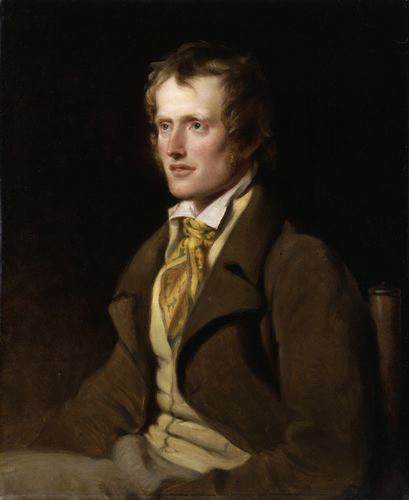
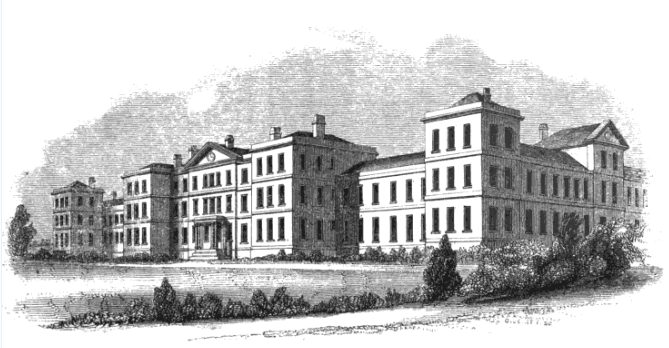
I don’t want to throw too much gloom into the fun, but there could not be a figure more removed, from royalty and it all, than the ‘Commoner’ and poet John Clare. I thought of Clare recently, researching a book about Rome, and writing about the figure of Violet Albina Gibson, who at 50 shot at Mussolini, in 1926, was released by the Fascists, and ended her days ‘back home’ in St Andrew’s Hospital, ‘up North’. St Andrew’s was, in a former incarnation, the Northamptonshire County General Lunatic Asylum, where John Clare had been locked up too, in 1841, and it brought back to mind his startlingly moving, very English sonnet ‘Lines written in a Northampton County Asylum.’

‘I am. Yet what I am none cares nor knows
My friends forsake me like a memory lost;
I am the self consumer of my woes,
They rise and vanish in oblivious host,
Like shades in love and death’s oblivion lost;
And yet I am, and live with shadows tossed’

Perhaps it’s the very proof of Oscar Wilde’s quip about there being ‘only one thing worse than being talked about’, although of course one of the agonies of ‘madness’ must be how others, or society, perceives you. Although Clare was a poet who necessarily sought fame, his true story is much about that inner Kingdom of the mind and psyche, the dangerous, vital stuff of artists and writers, and perhaps ultimately Wiki-leaking inflationists too – or, variably, ‘media heroes’ – like Julian Assange. Clare has been described as ‘the greatest labouring-class poet that England has ever produced’ and his is the most remarkable story, in part recreated in the Booker prize-winning novel The Quickening Maze. In his own fracturing consciousness, his disconnection – that saw Clare moved from his first stint of private voluntary medical care, into that General Lunatic Asylum – he rewrote the whole of Byron’s Child Harold, but in his own image, and also told newspaper editors he was Shakespeare. It shows the danger of over identification, jealousy, or too much empathy, or maybe ‘years of poetical prosing’, as the dismissive admission report had it. Clare wanted to move in a sphere consummate with his talents though, torn between his illiterate countryside companions, and clever, critical London, but by then the ‘spirits’ of past and present writers were certainly moving inside Claire’s hurt mind and imagination. As Martin Amis had it, when the attacks on The Satanic Verses began, books and by extension writer’s minds are their own countries. Then, unlike your average hack, blogger, or rooter in Grub Street, Clare took great writing, the value of literature itself to really speak to all, much to heart…and obviously to mind too.

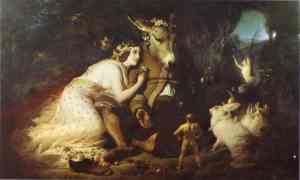
It’s interesting today though how many people aren’t royalists, and don’t believe in God either, but are going to wedding lunches. Quite right, because if Clare’s story means anything it is about the sometimes agonising inability to escape the Self, high or low, and the maxim ‘only connect’! It is also a testament to the eternal need to be involved in theatre, a theatre the British Establishment understands in its life blood. In terms of social connections, the real Shakespeare wrote much though on how the journey of ‘great ones’ – like those fairy powers of A Midsummer Nights Dream, flitting above all us ‘Rude mechanicals’ – can frame and inform lives, quite beyond the obvious facts of power, or of ‘cultural’ influence. Although a little in love with Princess Diana myself, as a teenager, too much champagne and Southern Comfort at a pre-nuptial party meant I missed that particular view of a Royal Wedding, groaning in the dark in my adolescent bedroom. Very rude indeed, and probably a little mechanical too, but perhaps my fairy-tale fantasies were already heartbroken, and I wanted to be a happy prince! Sixteen years later, a lost love meant that Sunday Times headline announcing Diana’s death in Paris was another kind of hard right of passage,that added to the crash of private experience, and grief, one the once lofty Royals took rather a long time to wake up to, in the public consciousness. William and Kate’s obvious and genuine openness to the crowd is just the right approach, backed by that police defence against the ‘fanatical’, ‘fixated’ and the ‘foolish’. Diana was loved for several reasons, a victim of an often nasty establishment, for several others, but perhaps the hurt and violence of famous celebrity deaths can be shattering, above all, because it slaps each of us in the face with the fact of our own mortality. Human grief is then iconised, and Elvis, Jim Morrison, or Princess Diana replace the saints of old, in our ache for comprehension, connection, and not to go down to the undertow. In fact, despite the BBC puff, as we all sell Business UK to the world, and people on the street last night wanting to be part of history, this is not a ‘truly historic moment’ at all. But William probably knows you’re nothing without a woman, and with Shakespeare in mind, today one could venture into intruding on the simple happiness of real human beings, with the words of unruly, dangerous Puck, when remastered by Titania-appeased Oberon, and not talk of the sad past at all.‘Not a mouse shall disturb this hallowed house, I am sent with broom before, to sweep the dust behind the door.

I suppose you could say that if Titania lost the plot by falling for a mortal commoner in her ‘dream’, today Will must be Kate Middleton’s upturned ‘Bottom’, except that the royals have succeeded in becoming rather real, too real if you take Furgy’s example, and you hope the authorities too do not make the law an ass today. If the novel on Clare though, The Quickening Maze, is noted for being brilliant on that shadow-land between the sane, the odd, and the truly or dangerously nuts, watching some of the ‘Wedding Fans’ on telly, getting their places near the Abbey, or indeed watching some of the Middletons themselves, you know that madness, or certainly out-of the circle eccentricity, is alive and well in merry Britain, and always will be. But then Mark Twain joked that when your realise everyone is mad, the mysteries of life disappear and life stands explained.

Most at ‘the top’ become adept at trying to keep it all out, even Andrew Marr, although if the lowly John Clare suffered from ‘madness’, one of the eternal problems of Kingship, indeed any extended forms of leadership, was always the potential imperfections of the individual. I always loved the fact that Henry VI, that ‘saintly’ King who so abhorred the fashion of exposed breasts at his Court, and would cover his eyes in horror at the good and no-doubt scheming ladies, spent most of the battle of Tewksbury talking to a tree. But then Henry was related to the French King Charles VI, who thought he was made of glass, and might soon shatter. Perhaps modern head doctors would simply talk about inflation, as possible for a leader like Gaddafi, isolated by power, as for a poet failing to be Shakespeare. One of the most profound takes though on a state that might afflict countries, parties and groups too, as much as people, travelling through time and change towards modern psychoanalysis, and individual freedoms, is Allan Bennet’s marvellously humane The Madness of King George. The tale of a royal line affected with porphyria, and touching the wild disconnection of King Lear, but with a take on the very healing power of theatre, the very point of writing, while Ian Holm’s stoutly ordered Doctor tries to keep George III ‘in his eye’.

As for any sad past stories though, John Clare’s own agony highlighted not inevitable or sometimes tragic mortality, that Undiscovered Country that ‘we know not of’ , but in that Northampton Asylum, alone, and without the union that is the very stuff of partnership and connection, or dare we talk marriage still, Clare faced something far starker, and in fact more relevant to David Cameron’s ‘Big Society’ too – a kind of living death, in isolation and disconnection, cut off from the vital world, and effectively powerless. A terrifying journey into…

‘…the nothingness of scorn and noise,
Into the living sea of waking dreams
,’

How and why that disconnection happened had many reasons for Clare, himself a clarion voice on the unstable and alienated Self; reasons in his difficulties of supporting his family of eight, in the growing destruction by industrialisation of a rural idyll, in drink, and in his failure, a common failure for artists, to win his audience in his lifetime. Today writers might talk, in the face of Royal expenditure and a party, of the slashing of arts grants, a deep publishing crisis, the failure to lend to small business, and ordinary people of the closing of libraries, and above all the cost of education. But in terms of Phoenix Ark Press we might be warned too by the failure of Clare’s Shepherd’s Calender, in trying to beat the ‘system’, by peddling it himself! Don’t develop a kind of Tourette’s Syndrome either, in public outpourings – although writers are made to feel and speak – or stand up in the middle of a performance of The Merchant of Venice, like poor John Clare did, and have a rant at Shylock! But today art sensitive psychologists like Oliver Sachs might remind us too of the extraordinary and fragile nature of consciousness, and the very worst response to difficulty sometimes being the negative judgement in easy or dismissive terms like ‘madness’. Diana herself was accused of it, in the public eye. Sachs represents that growth of awareness that moved us out of brutal places like Bethlem Hospital, then to become Bedlam, and turned that General Lunatic Asylum in Northamptonshire into St Andrew’s hospital.
That journey Clare took into the shades though, although he was treated humanely by the enlightened head of the institution, and encouraged to write – and writing may have been his salvation because it to be allowed a communicator to communicate -was a tragic country where…

‘… there is neither sense of life nor joys,
But the vast shipwreck of my life’s esteems;
And e’en the dearest -that I loved the best –
Are strange -nay, rather stranger than the rest.

That ‘vast shipwreck’ is a phrase deluged in grief, and captures the true monumentality of his mental and emotional suffering. Why should ‘the dearest’ though, that Claire ‘loved the best’, be ‘rather strange than the rest‘? In the alienations of lost loves, and friendships too, the violent flipsides of temporarily grasped happinesses, and mutual understandings and confidences, that seem sacred at the time, we all know why. But then to be hipper ‘people are strange, when you’re a stranger, faces look ugly, when you’re alone.’ Those failures and losses seem to challenge the very meaning of the private trusts and vows we can make, or don’t make these days. As Yeats put it ‘tread softly, for you tread on my dreams.’But then it is clear that something had dislocated inside Clare, and for the masculine, perhaps it lay far beyond the beginnings and consumations of marriage, but always has something to do with the loss of connection with the feminine, inside and out.

King Lear knew it above all, in his blindness to Cordelia’s real, sane and balanced love, but Clare’s re-writing of Child Harold is a lament for lost love too, and Clare’s first love for a girl called Mary Joyce was blocked by her prosperous farm-owning father. The country boy Clare, who was a farm labourer as a child, a pub Pot-boy, a gardener, a lime-labourer, and a Gypsy camp follower too, had not yet made any impression as a poet. But even if he had, and there was more money then in poetry than now, while he was supported by friends and patrons, you can imagine the scorn Mary’s powerful dad might have thrown at poets. Walking home from his first ‘mental home’, Clare was lost in the kingdom of fantasy, believing he was returning not just to his wife, but Mary too.

There is a kind of tragic purity too in Clare’s yearning for peace, in that real asylum, a sort of holy innocence, beyond the potential scorn and noise of life, or mankind, politics or power, or today the ever-present invasion of the ‘news’ hungry cameras. Or what deeply sensitive Clare at least imagined in his head to be that scorn and noise; the nasty whispers of the nasty world. Clare’s great I AM, undercut though with that bitter and yet…, is the author’s revolutionary defence of his and human identity, and of the so-called ‘common man’ too, as relevant today as then. But perhaps the Ego itself had to inflate, and then retreat, to see life and the world once more, and restore its glory and wonder, as the filmstrip of memory flickered through his lonely consciousness, in a way that could certainly ruin a good party.

‘I long for scenes where man has never trod,
A place where woman never smiled or wept;
There to abide with my Creator, God,
And sleep as I in childhood sweetly slept:’

Sleep – ever the natural Shakespeare’s ‘balm of hurt minds’ – but then there is for Clare, beyond hurt and near suicidal pain, the desire no longer to affect or be affected by life, and agonised memory. He should have read Kundera’s Book of Laughter and Forgetting. As if the greatest drama though is the one where nothing happens, and in a sense perhaps love is actually just that peaceful ‘un-drama’ of absolute connection, and a journey achieved. Where far beyond a great structure like Westminster Abbey, and the connectedness or supposed connectedness of rightly happy public events, a rural poet and natural and much suffering commoner was bound and healed again in the arms of beautiful nature.

‘Untroubling and untroubled where I lie, –
The grass below -above the vaulted sky.’

Return to Cultural Essays

David Clement-Davies April 2011. The public domain photos are John Clare, Landseer’s Titania and Bottom in A Midsummer Night’s Dream, and The Northamptonshire County General Lunatic Asylum in 1848. David is a best-selling fantasy author, a journalist and the founder of Phoenix Ark Press. You can visit his website by going to DavidClementDavies.com

Leave a comment

Filed under Community, Culture, London, Poetry