Category Archives: Culture

HORRID HEROES AND CRAZY CROOKS

History_of_Sir_Richard_Whittington(1770)-00-inset-detail[1]

The next instalment of HORRID HEROES AND CRAZY CROOKS by David Clement-Davies is the true tale of Dick Whittington. If you know the wonderful version by Roald Dahl, all David can say is that imitation is the sincerest form of flattery!

DIRTY DICK WHITTINGTON

I think perhaps we ought to skip
The early years of Dirty Dick
Who was (in truth) extremely sad
A crummy little orphaned lad,
The servants treated like a louse
In Hugh Fitzwarren’s London house.
Where, in the kitchens, for his supper
Dick worked and slaved as Washer-Upper
And in the evenings, on the floor,
Slept on a bed of filthy straw
His only friend among the tat
Tiddles, a scrawny Cheshire cat…
So there they’d sit, consuming rum
And toasting better days to come.
Until, one evening, having tea,
Sir Hugh turned to his family
And cried “My dears, it’s time, you know
I let the servants have a go.
I’ll get them to invest their tips
In one of my brand new Merchant ships.”
Fair Griselda (Fitz’s daughter)
Scowled and moaned “You never oughta
Oh blast, oh hell, it isn’t fair”
Then thrust her nostrils in the air.
“My duck,” soothed Hugh “don’t think pa’s sappy
We have to keep the workers happy.
Besides, it really isn’t funny,
But just right now I need the money!”
The household quickly took the hook
The cook whipped out her savings book,
The coachman cried “I’ll try the prank”
The butler smashed his piggy bank.
The only one left out that day
Was Dick, of course, who couldn’t pay.
But then the ruthless little snot
Came up with this disgusting plot.
“I’ll not be exiled from their fiddles
“I know,” he grinned “I’ll give ’em Tiddles.”
So seizing kitty by the scrag
Dick stuffed him in a leather bag
Then sent his only friend to sea
To earn for Dick a monstrous fee.
Which proves that, if you hadn’t guessed,
Dick was a crook, just like the rest.

So now our story changes tack
For no news of the ship came back
Dick waited there, a year and more
For all those riches, held in store,
But got no message from the log
And no news of his travelling mog.
At last the crook began to ditch
This plan to make him Super Rich
And then the dreadful little thief
Purloined Hugh’s spotted handkerchief
And glancing round him, sly and quick
Dick tied it to Hugh’s walking stick.
With all his worldly goods wrapped up:
His toothbrush in a paper cup,
And from the larder, for his tea,
Dick pinched a slab of mouldy Brie.
So Dick set off, at ten to two.
To make his loot, in pastures new.
In several hours, slowing down,
Dick reached the edge of London town
And here it was (as we all know)
That Dicky rested, outside Bow,
Where, after lunch, the lazy chap
Decided that he’d take a nap.
But just as Dick had settled in
The old Church bells began to ring:

“DING, DONG. DING, DONG. TURN AGAIN DICK.”

Now Richard, who was really thick
Was sure he couldn’t, BLOODY HELL,
Have just been talked to by a Bell!

“OR-AN-GES AND LE-MONS
SAY THE BELLS OF ST CLEM-MENS”

Well, this bit made the whole thing seem
Just like some awful, cheesy dream.

“WILL I GROW RICH?
SAY THE BELLS OF SHOREDITCH”

This clanging made Dick’s fingers itch.
Then gave the dozing snitch a stitch.

“WE WERE JO-KING. DING, DANG, DONG.
CAN’T YOU WAKE UP. WHITT-ING-TON?!”

At this Dick woke up, with a start,
A mighty thundering in his heart
But rubbed his fingers in his ears

“NO, NOT IN THERE, WE’RE OVER HERE”

The bells continued with a clang

“WE’VE NOT GOT ALL DAY LONG,” they sang,
“WE FEEL IT’S ONLY FAIR TO SAY
THAT, DICK, YOU’LL BE LORD MAYOR ONE DAY.
AND IF YOU LEARN THE LONDON PRICE
YOU’LL EVEN GET THE POSTING THRICE!”

As Dick heard what the bells just said
His eyes bulged from his greedy head
Forgetting all about his pack,
To London Town Dick hurried back
Where he discovered, with a grin,
His long lost ship had just come in.
For when (a year before) the liner
Had anchored off the coast of China
Tiddles, that hungriest of cats,
Had gobbled up a plague of rats
And charmed the Nation’s Emperor
(Who’d never seen a cat before)
Then, since his palace was infested
The chinaman had swift invested
So on the spot, right there and then,
Bought Tiddles for a million Yen.
Which was a quite ginormous fee,
In such a dodgy currency!
Yet Dirty Dick could not have cared
A jot how little Tiddles fared.
Instead he hoovered up the dough
And bought a suit from Saville Row
Then, as the richest in the land,
Dick asked Griselda for her hand
Who, though she was absurdly snooty,
Was still delighted by his booty.
So in a carriage, off they go,
To marry in that church in Bow
And now the pair await with glee
The bells enchanting prophecy.
Which proves that if you want to win
Like Richard you must not give in
And also shows, I’m sad to say,
That ruthlessness will often pay.

PART TWO – VERY DIRTY DICK

The last time that we heard of Dick
That horrid boy had turned a trick
And with Griselda, sweet and fair,
Was waiting to become Lord Mayor.
But if, this far, you’ve got the gist
Of Dicky’s story…here’s the twist.
Oh they got married, just near Bow,
Griselda wasn’t happy though
For everyone could plainly see
That Dirty Dick was dastardly.
Since, filthy boy, he held that path
That meant he’d never had a bath
Despised good soap to wash his face,
Yet lorded it around the place,
As poor Grizelda found their lair
Were soon as filthy as her hair.
Almost a tale too foul to tell,
Since no one could abide Dick’s smell,
But also shows why we all bitch –
‘There’s nothing worse than filthy rich!’
Yet as they stewed in noble rot
Now Dick refined his master plot
And bribed the townsmen, one and all,
To make him Mayor of City Hall,
Just as those talking bells had fated,
But as Dick dressed, to be instated
And Grizzy sobbed there, on the floor
There came a knocking at their door.
A furry banging – RAT, TAT, TAT,
And straight in walked a GIANT CAT.
Scrawny Tiddles who, since landing,
On all those rats, had been expanding
And, leaving China, made his fill
In business – working RENT-A-KILL.
The mog was sporting sparkling gnoshers,
Eight inch claws and huge goloshes.
And with a Pot-pourri of Rose,
A giant clothes peg on his nose.
“Meeeeooow” purred Puss, “So Dick, you swine,
You’d sell your Tiddles down the line?”
“Oh no,” cried Dick, “by boiled Salami,
I think I must be going balmy,
It’s bad enough a chatty bell,
But not a talking cat as well!”
Tiddles twitched and licked his paws,
Then opened out those murderous claws
And, with strange glintings in his eye,
He let his vicious razors fly
Across the sofa, round the beds,
Where Dick was swiftly torn to shreds
And smart Grizelda (not a slouch)
Stuffed Dicky’s entrails in the couch,
Then, kissing Tiddles on the nose,
She swooned “Oh Pussy, I propose
That now that Dirty Dicky’s ditched,
You steal his job and we get hitched.”
Which happened, as was only fair,
When Tiddles did become Lord Mayor
And with Grizelda in cahoots
Became that famous PUSS-IN-BOOTS!
And so it was that Griz, the louse,
Installed that couch in Mansion House
Where, on Dick’s stuffing, there they sat
That Lady Mayor and Cheshire Cat,
With lucious tongue to priss and preen,
Since cats are quite superbly clean!
But now I bet you’re wondering why
Those rotten bells had told a lie.
It’s not as strange as you suppose
Since this is how the story goes:
They hadn’t meant LORD MAYOR, as read,
But tried to say HORSE HAIR instead,
(You know, the kind of stuff you get
To fill a couch, or coverlet.)
And since, as all smart children know,
Those chatty bells were made in Bow,
It meant they only ever sang,
Or talked, in COCKNEY – RHYMING SLANG!

DCD

Horrid Heroes and Crazy Crooks is under copyright to Phoenix Ark Press, 2014, All Rights Strictly Reserved. The picture is a woodcut from The Famous and Remarkable History of Sir Richard Whittington, Three Times Lord-Mayor of London (1770). If you would like to read about Al Capone, Sweeney Todd and Sherlock Holmes, look at the blogs below.

Leave a comment

Filed under Books, Culture, Poetry

HORRID HEROES AND CRAZY CROOKS

4816416260_87ed2f3bb4_o[1]

St Valentine’s Day has been and gone but never too late for another excerpt from HORRID HEROES AND CRAZY CROOKS by David Clement-Davies. This time to meet the superstar and show maker of them all, Al Capone!!!

AL CAPONE AND THE VALENTINE’S DAY MASQUERADE

Hot off the press this headline runs:
A GANGSTER RULES WITH FEAR AND GUNS
So, kids, I hope you’re not alone,
To hear this tale of Al Capone:
Of all the crooks we’ve met so far,
This killer’s still the SUPERSTAR.
Since Al’s fame, to this dying day,
STRIKES TERROR THROUGH THE USA,
And when it’s mentioned on TV
Turns BRAVE ENFORCERS off their tea.
In old Chicago, where, it’s said,
Al SHOT his victims STONE COLD DEAD,
A hundred patsies Al gunned down,
That’s just around the edge of town,
With sub-Machine Guns at his chin,
Al PLAYED ’em, like A VIOLIN.
And since the news boys love to shout,
A crook was soon being read about
In Prohibition days, so grim,
Of crooked banks and boot-leg Gin
Enough to leave a drunk impression
And so bring on a Great Depression!:

CHICAGO DAILY NEWS

A GANGSTER RULE WITH FEAR AND GUNS
SUPERSTAR STRIKES TERROR THROUGH THE USA
BRAVE ENFORCERS SHOT STONE COLD DEAD
AL PLAYED A VIOLIN!

Until those front page lies were read
By one of Al’s best friends instead:
“Hey, ditch this junk, just hold a mo’,
Dat’s not the Al I used ta know.
Naah, Al was thoughtful, Al was kind,
Yeah, Al Capone was real refined.
The nicest guy I’ve met by far,
He doted on his dear ol’ Ma.
Oh sure, Al robbed a bank or two,
But with those frauds, hey, wouldn’t you?
There ain’t no equal Wall Street mothers
To rival crooks like Lehman Brothers!
Besides, Al had to terrorise a Nation,
To earn himself a reputation.
Yet in his heart of hearts, dis guy
Was sweet, romantic, modest, shy,
And every time he whacked some clown,
The tears, dey nearly made Al drown.
I know the story dat’s ta blame,
For blackening a hero’s name:
THE VALENTINE’S DAY MASSACRE
Dat day, dey claim, Al went too far,
When rounding up some mugs he hated,
He had the jerks… assassinated.
Yet every kid should know, I guess,
Dem lies were cooked up by da Press,
So listen, to da bitter end,
To Al’S TRUE STORY – (By a friend!)
And wise up to MY bottom line
On Al’s romantic Valentine:

One day, see, there with Snuff, Dutch, Guss and Gene
Al’s diary turned up FEB 14,
The day dat sweethearts, throughs der post,
Sends gifts to thems dey loves da most.
But this made Al Capone upset,
The boss had had no postcards yet,
Nor any broad nor classy dame,
To buy him chocolates or champagne.
‘Hey, Boss, woss up with you?” asked Guss,
‘Aaahhh, nuddin much’ sniffed Al, ‘Don’t fuss,
It’s just….I wish….oh gee, if only
I wasn’t feelin’ so darn lonely.
I knows your boss would feel fine,
If he’d received some… Valentine.’
A sentiment to tempt der fates,
Cos Al was never any good wid dates!
But, wid a most gigantic sigh,
Al wiped one tear drop from his eye.
Then soon a thought ran through that head,
‘I’ll SEND a Valentine, instead,
To all those dirty rats in town
Who’s ever tried ta gun me down.’
‘Dat’s swell,’ cried Snuff, ‘I’ll make em jive”
And Guss pulled out his ’45!
‘It’s noon,’ grinned Al, ‘so not too late,
To get them to agree a date,
Tonight, with us, in some place fancy,
That downtown garage run by LANCEY.’
“Like magic, soon Al’s guest arrived,
The meanest bunch of crooks alive.
Each sporting velvet gangster hats,
In pin striped suites, with patchwork spats,
They slouched, or leant against their cars,
Smoking a box of fat cigars.
With loaded sten guns, inches thick,
With which they’d planned to spring some trick,
On unsupsecting Al, whose heart,
Like meat, they’d serve up in a cart.
The clock ticked by, but still alone,
There was NO SHOW for Al Capone.
Until Fats Diamond turned to say
‘Look, boys, we’ll wait anudder day
To stich up Al, let’s split, you guys’
But then Al cried – ‘SURPRISE, SURPRISE’
And jumped out from behind a Ford,
With thirty mobsters, guns abroad.
‘Jeeees, no,’ blubbed Diamond, with a gulp,
‘I guess that means, us guys, we’s pulp.’
‘Dat’s right’ snarled Al, the Mafia boss,
‘I knows you’ve planned the double-cross,
So says yer prayers and waves goodbye,
Right here, in Lancey’s, time to die!’
The mobsters’ bullets RAT-TAT-TATTERED
Al’s sub machine guns shook and splattered,
Yet, when the smoke cleared in the air,
No single crook was lying there,
Instead, among the smoke and sparks,
A GIANT HEART, in bullet marks,
Was patterned on the garage wall,
Near ten feet wide and five feet tall.
While underneath, the dotted line,
In holes, spelt H..A..P..P..Y……..V..A..L..E..N..T..I..N..E
A nicer fate than being shot
Which sure proves dat Some Like It Hot.
Then, grinning on, cucumber cool,
Capone cried ‘tricked ya, APRIL FOOL!
And from a huge machine gun case,
Capone pulled out a cloth of lace,
A trifle, hampers, knives and forks,
As Gene and me popped Champagne corks,
Then smiling gangsters showered them crooks,
With roses, sweets, romantic books.
As Al, to raise our caper’s tone,
Turned on a wind-up gramaphone,
To which us mobsters, face to face,
Began to Waltz around the place.
Then Dutch, who never played the snitch
Sang Opera arias, perfect pitch,
And tuneful crooks were soon to be
Made men –Sopranos– on TV
As Snuff, a lucky name he had,
Got cast in parts of Breaking Bad
And since Snuff’s skills were never phoney
The mobster even won a Tony!
Which proves what Hollywood always saayes
Der Talent Never Ever Pays.
Yer see, I told ya Al was fine,
He loved his Ma AND Valentine,
Which shows why mobsters, to dis day,
Still wears for AL…A RED BOUQUET.”

HORRID HEROES AND CRAZY CROOKS by DAVID CLEMENT-DAVIES is under Copyright to Phoenix Ark Press, 2014, All Rights strictly reserved. If you enjoyed this read about SWEENEY TODD and SHERLOCK HOLMES in posts below. The image is ‘Little Bonaparte’ among the ‘Friends of Italian Opera’ from Billy Wilder’s classic Some Like It Hot.

2 Comments

Filed under Books, Culture, Poetry

HORRID HEROES AND CRAZY COOKS

Sweeney-Todd-sweeney-todd-24817430-1024-768[1]

Since everything on TV nowadays is celebrity chefs, here’s another from HORRID HEROES AND CRAZY CROOKS by David Clement-Davies, with cooking, murder and Master Chefs in mind…

SWEENEY TODD – THE DEMON MASTER CHEF OF FLEET STREET

I hope wise parents understand
I’d have this story quickly banned
Because the crimes I have in store
Are stewed in blood, guts, gunk and gore,
Hearts, lungs and livers, hands and toes
And human entrails, lined in rows
Then diced up finely where they lie
To bake up in a human pie.
We’d all go blind and surely deaf
To show the likes on Master Chef!
But what’s revolting, in my view,
Is that it isn’t even true:
In Fleet Street, close to London harbour,
Lived Sweeney Todd, a Demon Barber,
Whose shop front told, with cockney pride,
His skill in cuts – Short, Back or Side
But when Todd’s clients took the chair
He’d seize them by a knot of hair
And with his razor, where they sat,
He’s slice their heads off, just like that.
Then throw a lever on the floor
Which tipped them down a neat trap door
To send his victims down the shoot –
Off to the kitchens they would scoot
Where Mrs Lovett, stashed below,
Was greasing tins and rolling dough.
And when she got the bits Todd sent her
She’s stuff them smartly in a blender
Or, short on new electric fangles,
Would grind the hand cogs on her mangles.
Then mince ’em till the dish looked tasty
And cover folk in short crust pastry
So in the oven pop the mix
For fifty minutes – Gas mark six!
It’s vicious, please don’t tell your mother,
But people sometimes EAT each other.
Then when the pies were freshly done
Todd turned up with his marker gun
To stick a label to the side
And off to market he would ride
To sell hot pielets round the town
Todd’s Steak and Kidneys – Half a Crown
While hawking round, for all to hear
Exotic with a pint of beer!”
I try and try, from time to time,
To justify Todd’s ghastly crime,
Regardless of how close I look
There’s nothing to redeem the crook.
Except for this, I’m glad to say,
Which I unmasked the other day.
For not just anyone would do
In Sweeney’s filthy human stew.
Oh no, of this pure fact I’m sure
The barber was a connoisseur,
Indeed the very heart and soul
Of careful Quality Control,
And since real Master Chefs are few
A sort of gruesome Albert Roux.
Who only picked on clients that
Were grossly rich, or hugely fat,
And I’m quite sure Todd left alone
Poor folk, of barely skin or bone,
(Unless, of course, they failed to dip
Deep in their trousers for his tip.)
Todd never harmed a comely lass
Or any girl with cheek or sass
And rarely ever touched the heads
Of pensioners, or newly-weds.
Instead Todd favoured Counts and Earls
And Barons, Viscounts, Dames, or girls
Whose noble parentage he knew.
Todd even diced a Duke or two!
A Master Chef, not of Provence,
But purest London provenance
Who, as he dropped them down his ditch,
Would cry “Take that” and “Eat the Rich!”
Which proves another thing I’d missed
This Sou Chef was a Socialist!
Who wanted all his crimes to be
The finest in Society.
Which also shows why, from that blender,
His Steak N’ Kidneys came out tender.
The other thing in Sweeney’s favour
Lay in the pies’ exquisite flavour
For with her Ramsey recipe book
Todd’s love became an expert cook
To add some spice, or fresh chopped herb,
And make ingredients taste superb
Not least the essence of their stew
With all that tasty blood, so blue,
Indeed the kind of human pottage
To grace the likes of River Cottage!
Yet this, since life can be unfair,
Proved fatal to the Demon Pair
Because the Todds became, I guess,
The victims of their own success.
But not, as all the news hounds lie,
Because of buttons in a pie.
Oh that bit happened, as you’ll see,
When Sherlock Holmes was having tea,
And found a shirt stud in his stew
Jumped up, cried “Watson, here’s a clue”
But then the daft, eccentric twit
Completely missed the point of it,
Concluding that the Ku Klux clan
Were smuggling fasteners to Japan!
No, with their pies they showed such flair
Chez Todd produced a billionaire
And baking finest pies by far
That barber won a Michelin Star!
At which the crook was so elated
He had his business automated.
The Todds installed, in steel and pine,
A Patent Pie Production line,
Which with its new electric switch
Could, single-handed, EAT THE RICH.
So send a hatchet round the shop
To slice and slash, to cut and chop
And dice them, minceur, while below
It rolled ’em up in baking dough
And then, with all the Gas it saved,
It had them swiftly Microwaved.
Then even packed them, on the nail,
To post them off by Royal Mail.
Which surely anyone can see
Was quite a smart utility,
Until they learn the fuel crisis
Brings threats of escalating prices.
Now this last part provides our clue
To what befell the grizzly two.
For once she’d given up her job
Todd’s sweat-heart turned a dreadful snob
A selfish, snotty, bitchy prig
Who bought a coach and powdered wig
Then, dressed in pearls and crinoline,
Would dream of dining, with the Queen!
And asked her love, eventually,
To change their First Class recipe
So use, instead of Earls, alas
The members from the Working Class!
At which Todd’s lower jaw fell ope
And foam, a bit like shaving soap,
Began to bubble out of it:
Todd had an apoplectic fit!
The awful thought made Sweeney shake
And gave him such a stomach ache
That, sitting down to ease his stitch,
He accidentally – threw that switch!
A dreadful slashing now began,
The Todds were turned to Raspberry Jam
And by their Patent Pie Machine
Were posted, in a soup tureen.
But strange to tell, this new position,
As last fulfilled some rare ambition.
For shipped with chocolates, port and champers,
All neatly packed in Christmas Hampers,
Beside a leg of honeyed ham,
TODD’S PIES turned up at Sandringham.
Where, followed by the BBC,
The Queen was tucking into tea.
Among choice guests she’d learned to view,
That mixed the likes of Michelle Roux,
(Who’d if he’d known the state of play
Might certainly have rued the day),
With Rick Stein, Wignall, Delia Smith
And Raymond Blanc, of gallic pith,
Nigella Lawson, Nigel Slater,
Who’d brought his own refrigerator,
And, fresh from Fish Fights that enthral,
That top drawer Fearnely-Whittingstall
Who knows the most destructive plan
Was dreamt up by that animal Man.
Of course, not fond of scuffs nor hikers
No place-mat Pratts, or Hairy Bikers
Nor blokes like Jamie, to appall
Her palate newly Bloomenthal.
But there they sat, with graceful sighs
To tuck into those regal pies
So after years of being bled
The Rich ate Sweeney Todd instead!

DCD

If you enjoyed this excerpt from Horrid Heroes and Crazy Crooks by David Clement-Davies and want to read more of the bungling Sherlock Holmes too, look at the post below. The picture is of Jonny Depp in the movie of Sweeney Todd. Horrid Heroes and Crazy Crooks is under copyright to Phoenix Ark Press, 2014, All Rights Strictly Reserved.

Leave a comment

Filed under Books, Culture, Free Story, Poetry

THE GARDEN MUSEUM, THE TRADESCANTS AND GOING IN SEARCH OF THE ARK

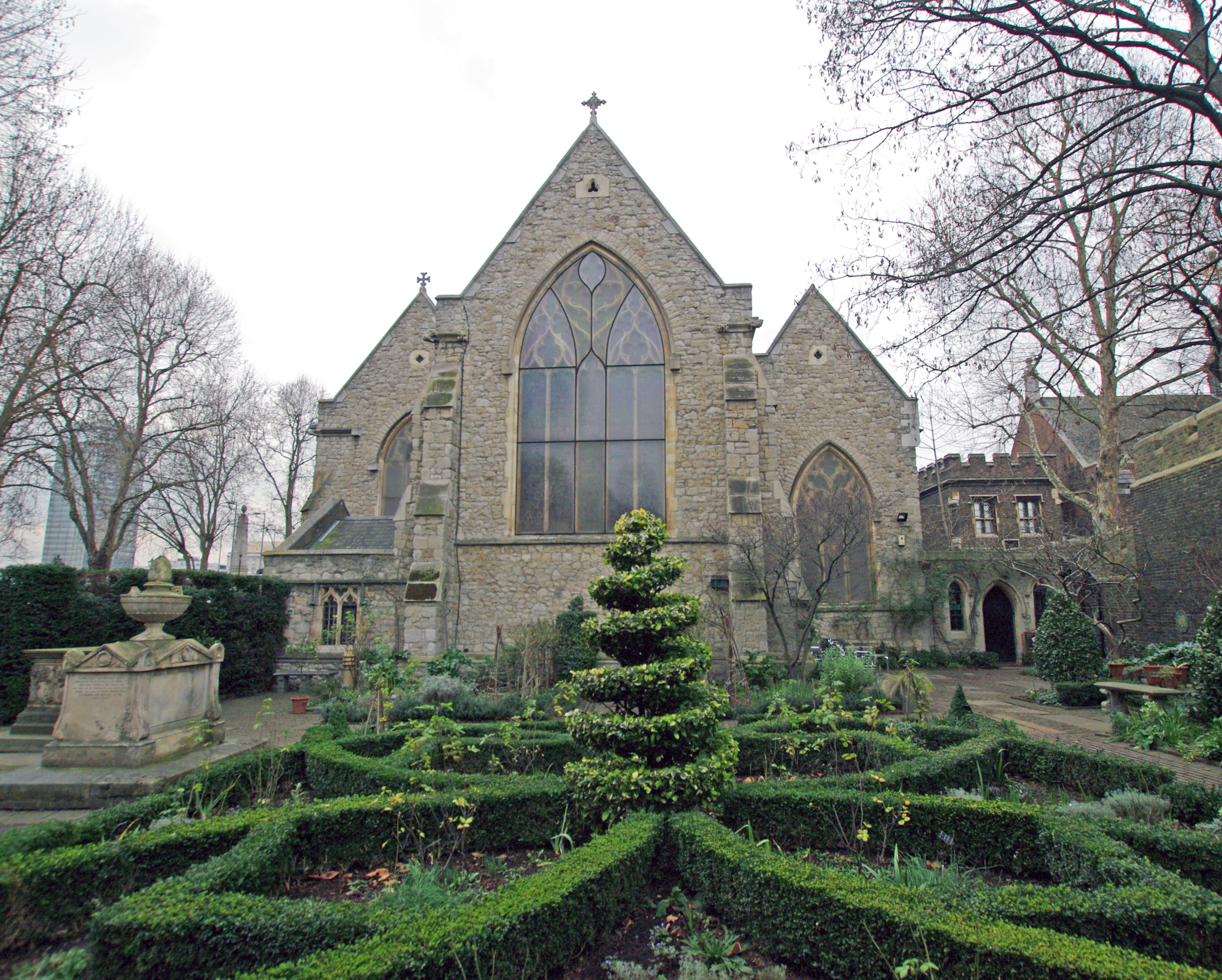
London_garden_museum_-20_garden_and_church
I had a very eccentric little treat this week, doing the Lambeth walk from my home, down to St Mary’s relatively recently deconsecrated church, right by beautiful Lambeth Palace, and thanks to the endeavours of a dedicated local couple today The Garden Museum. It takes its theme from the lovely and very rare tomb of the Tradescant family, in the traditional Jacobean Knot garden behind. John Tradescant senior being a man of many plants, plots, travels and fascinating schemes, first for Elizabeth I’s chief advisor Robert Cecil. They don’t make them like that anymore. Like father, like son, under King James I, but one of the testaments to a King’s many errors being the large, crook branched Mulberry tree nearby. The Scots King James, dreaming of his Greate Britaigne, the hope of legal Union with Scotland that foundered for 100 years and is perhaps about to collapse again, tried to compete with the silk trade but imported the wrong kind of mulberry, the black variety that silk worms do not like! So perhaps people have been making excuses about the wrong kind of snow or leaves ever since.

But the fascinating Tradescants, brought to life in a colourful historical novel by Phillipa Gregory, opened the very first public museum in what they called The Ark, on their estate on the edge of Lambeth Road. Appropriate stuff for Phoenix Ark Press then. It would become the basis for the Ashmolean Museum in Oxford when Elias Ashmole, mason, social climber, Herald at the College of Heralds and highly self-serving fellow, co-opted it from John Tradescant the younger, then fought a court case with his wife Hester, who was allowed to keep the contents for her life time. Hester died in somewhat questionable circumstances. A cabinet of rare curiosities, The Ark may have cost a hefty six pence to visit, when an average theatre ‘ticket’ was a penny, but it was technically open to all. Then the ‘democratic’ nature of that age before James I and then a Civil War ruined everything is also the fact that in 1612 The Virginia Trading Company had opened its first Free Standing Lotterie for anyone with a ready Twelvepence, to fund ventures in the Americas. It was soon taken up by all thirteen original colonies, so is a remarkably early origin to that so-called “American Dream” and straight out of that always very capital minded and adventuring London.

The Tradescant tomb stands right next to the monument to the Bligh family, and that Captain of The Bounty and mutiny fame, who lived just opposite the coming Imperial War Museum on Lambeth Road, a man of Bread Fruits, tough navy values and the most extraordinary feat of survival and navigation, when he was set adrift by his men. As my volunteer neighbour Kay and an ex ambassador to Mongolia pointed out though, the delicate carvings on the Tradescant tomb, restored four times now, have mythical rather than religious themes, like the seven headed and heavy breasted hydra guarding a skull, masonic pyramids, and curling stone groves and grottos. All good grist to the mill of Gary, another neighbour, friend, scholar of the esoteric and expert in Chinese textiles, who has a special interest in the likes of Dr John Dee and Simon Foreman. Foreman was a self taught astrologer, geomancer and proto Doctor, who was hounded by the licensed Doctors in the City over the water, with their surgeon’s hall on Silver Street, where Shakespeare lived a while, until he got his own licence to practice from Cambridge in 1603. Repeatedly locked up in those litigative spats so beloved of Elizabethans, constantly thinking of taking ship, and a man of somewhat rampant reputation with the ladies, who called sex to halek, Foreman lived in the house of a Mr Pratt in Lambeth, hence Pratt’s Walk, right over the road. A practicing Christian, while also casting his horoscopes, helping Elizabethans dig for buried treasure, providing love charms and tokens and tending to rich and poor, but not retreating from the great plagues either in that astonishingly fragile world, he was doubtless just as good as licensed Doctors of the time. He married in St Mary’s at 7am in the morning, in 1599. That year the famous wooden and thatched Globe Theatre rose on Bankside in Southwark and it is of course from Foreman’s diaries that we have one of the only accounts of visits to Shakespeare’s performances, in Foreman’s case Macbeth, Cymbeline and The Winter’s Tale.

Foreman, who is also buried somewhere in the church, was of course most interested in the witches in Macbeth but is a man whose reputation was especially blackened by being linked not just to that Occult that influenced so many, including Shakespeare, but to the famous Overbury murder, even though the poor man had himself been dead two years. As he was lampooned on stage by Ben Jonson, Foreman was described in court by Sir Edward Coke as “that devil Foreman“. Coke was of course the lawyer who changed the world, and built his own fortune too, when he gave the ruling in 1606 that the King could arrest no man except by good cause of the English law. Early soundings of a Civil War. A woodcut of Foreman with bristling necromantic beard adds to the dark myth, as does the legend that he predicted his own death in a journey across the Thames from Puddle dock, crying out “an impost, an impost“. As his biographer AL Rowse says, no doubt he had a natural intimation of the stomach ulcer that probably ended things in a straining boat trip, and in a world very fond of “mystergoguery and hermetic nonsense“. Perhaps it is about a different kind of language too. Elias Ashmole is buried in St Mary’s as well, although we only got closer in our pilgrimage when our guide kindly snuck us into the office, where his grave is somewhere below the photocopy machine. She also showed us the exquisite ‘Peddlar’s Window’ though, a little gem of stained glass and the bequest of a local man made good. Though it may be a restoration, since most of the Church windows were blown out when a WWII bomb droped on Lambeth palace, despite the Nazi’s famous avoidance of St Paul’s (not quite, in fact).

With strange purpose-built wooden exhibition rooms inside a remarkably large and impressive church, which in the days when Lambeth, or ‘the lamb’s bath’, was near open country must have dominated the edge of the river and that ‘horse ferry’ crossing that set the topography of today’s Lambeth Bridge, long after only covered London Bridge was the gate into the City, the Garden Museum is rather oddly done and awkwardly laid out too. Indeed, although I did not see the permanent exhibits, in such a place it is the suddenly discovered curiosities like that window that really delight, or a plaque to a D’Oily Cart, along with perhaps the finest cake in England, tasted at the nice little bar restaurant. It hums gently with older folk, pretty girls in their tiny jumbled office or students sketching plants in the garden, although it has the security and capacity now to have exhibited a Canaletto, among other things. But it should take the lead of John, Hester and their Ark, not nasty, grandiose Elias at all, and revel in sharing the eccentric, archaic and the curious.

It’s very existence is a testament to the moving tenacity of individual lives and passions, people who know that we are all really plants, that need good soil, nurturing and our time in the sun too. Perhaps then some of the pieces from the Ashmolean will be brought here, or an Ark will really sail the river’s edge once again. Get mayor Boris on the case and tell him to stop going on about Dragon Feasts, or protecting The City. Much meat for such a fascinating area as Lambeth, stretching, in that dramatic near Ox Bow bend of the river that made this such swamp land, and seems to fold the whole world back on itself, straight to Southwark and theatreland, that centre of our own research, based on lost St Margaret’s church there. This is an epicentre of study though for such an opaique and fascinating time and one that of course completely rewrote our internal and external landscapes. You can capture that in the 17th century plaque on the wall outside St Mary’s, courtesy of a Mr Turberville. The family made a bequest of £100 a year to support two poor local boys of an extremely poor but burgeoning district, of the ‘Stink trades’, like tanning, glass making, pottery and butchery too, kept on that famously detrops ‘South of the River’ side. An area of course dominated by thousands of watermen too, the spitting cabies of their day, and there is a Sail street by Pratt’s Walk, for the cottage industries serving the all important river. But that self proclaiming bequest was made with the proviso that the good offices of the parish should not be directed towards “fishermen, watermen, chimney sweeps or Roman Catholiks“! So of course the last words must go to the master, Shakespeare, and his line from Cymbeline that “All golden lads and lasses must, as chimney sweepers, come to dust”. At least with a Garden Museum we can all be reminded that life’s ashes are always good for the beauiful roses.

DCD Phoenix Ark Press

Admission to the Garden Museum varies from between £5 and £7.50 for adults and £3 for Student concessions. The cafe is its own delight. To visit their website CLICK HERE

1 Comment

Filed under Community, Culture, Environment, The Arts

DEATH COMES TO THE BBC, AND ON A WRITING SHOESTRING!

Oh dear Lord, if the cancelling of the tremendous and brilliantly written and acted Ripper Street is one sign of the corrupting cynicisms at the BBC, tonight’s Death Comes to Pemberley (pointless conclusion tomorrow) is the final proof. This loosely drawn and badly mocked up take on a future beyond Pride and Prejudice is exactly the corruption of awful commissioning editors and cynical writers, jostling for place and getting together to muse on what will sell. So they mix a take of now ‘popular’ characters, Mr Darcy, Elizabeth Bennet or Mr Whickham and cobble it together with a supposed detective drama, hence the introduction of decent actor Trevor Eave as the sleuth, like Shoestring in a wig.

It is so bad, so boring, so totally unrelated to the depth of Jane Austin’s marvellous characters and deep social understandings too, not only should the great lady be spinning in her grave but the creators should be hobbled together and pelted with copies both of Persuasion and Hercule Poirot. It aches with the tragic infections of Downtown Abbey too in the search for successful Christmas TV and is so full of anachronisms, cheap attempts to be ‘period’ and hollow references to the ‘duty of great ones’ or ‘I will not be constrained by place, Sir’ that all the actors should be shot or moved to an episode of Dr Who. There is no character, certainly any reflection of Austin’s vividly living people, no script and no point. It is empty prejudice that has none of the pride of Ripper Street and it, like its creators, should be garroted at source.

Leave a comment

Filed under Culture, Education, The Arts, Thrillers

THE GOLDEN AGE OF TV AND THE BBC RIPPER MURDERS!!!

What misery to be about to write praising the BBC’s brilliantly scripted and superbly acted Ripper Street, only to discover the murderers in BBC management have just axed the damned thing. If we have heard about the Golden Age of television in the US, with series like Homeland and many others, why is it that pathetic Britain always ruins the things it is best at? Ripper Street wins by avoiding creaky clichés like Jack the Ripper and instead goes for something that is rich, complex, historically convincing and socially important too. It has created very original characters and it never shies away from issues from Banking to Homosexual repression. It has been marvellously eccentric with its characters and at times deeply moving.

But just as it is getting better and better, lo and behold some idiot in White City street axes it, in another act of TV Murder. It is because the BBC, suffering from no leadership whatsoever, and after the Jimmy Saville scandals and others, is dominated by cowards and in fighting cynics who can only make their own way and feather their nests by getting rid of some one else’s excellence. There may be hope, with the Guardian announcing five hours ago they may have found a funding partner, but why isn’t the BBC that partner? We should all go down to the BBC building and pull up paving stones, tear back railings to assault the over paid ignoramuses and scrawl THE BBC WILL NOT BE BLAMED FOR NOTHING in dripping blood.

PA PRESS

Leave a comment

Filed under Culture, Education

THE DOCTOR, BRIAN COX AND THE TRIUMPH OF THE BBC

TARDIS1[1]

The most beautiful thing we can experience is the mysterious. It is the source of all true art and science. He to whom the emotion is a stranger, who can no longer pause to wonder and stand wrapped in awe, is as good as dead — his eyes are closed.”

Not the words of Professor Brian Cox, who just gave his charming and brilliant TV lecture at the Royal Society on The Science of Dr Who, but the words of the scientist at the heart of his physics, and the Dr’s too, Albert Einstein. Cox’s programme, including inserts of his mistaken entrance into The Tardis, in confusion over BBC make-up and his witty interaction with Matt Smith’s Dr, was both beautiful and filled with rapt awe, that sings out of Cox’s endlessly clear and accessible voice. A hugely popular voice, much enjoying the show too, not unreasonable for a former small-time rock musician, but never a populist or dumbed down either.

Beginning with Michael Faraday’s nineteenth century lecture at the Royal Society on the chemistry of candle light, he asked the question of whether Time Travel is possible. With the use of celebrity entrances, doing experiments explaining the point and wave movements of light, the spectrometry of elements, with Charles Dance squirting colourful, flaring things into flame, and the relationship between Space and Time, viewer and viewed, he effortlessly opened the box on Relativity. So proving future time travel possible, in fact always happening, in small ways, depending how fast you are travelling, since we move in relative space and time to one another. But clearly mapping the issue of travelling into the past, since the Cone of the Future is defined by the Universe’s ultimate speed limit, the big no-no, travelling faster than the speed of light itself.

He also ventured towards the Dr’s great opponents, Aliens, discussing the paradox that in an infinite Universe we should be being visited by Aliens all the time. They might have brought in a Sontaran or a Cyber Man, but on the other hand it would have been creaky, and Cox went back to wonder instead, to the journey of imagination, when he described how far the radio waves have travelled into the Universe, since the first broadcast of Dr Who in 1963; beyond the reaches of the Milky Way.

Of course we all travel back in time in our heads, through the physical notes that Faraday left of that lecture, through memory too and the accumulation of knowledge, the discarding of what is proved false. What we leave behind too, when we are gone. But Cox always has his eyes clearly set on the future, and the future of teaching science too. So, grasping that ultimate ‘speed limit’, he explained what happens when you touch the edge of the Future Cone. You only can if space-time-bending matter implodes, a Red Dwarf, creating a Black Hole. Of course a Black Hole, in the very smart and very modern reality behind the poetry of Dr Who, is what powers The Tardis, The Eye Of Harmony.

Cox’s words were beginning to sing, filled with harmonies, as he described both the reality and beauty of the Eye of Harmony, a point in time always frozen for the viewer, where you get very strung out indeed, if you are passing beyond that Event Horizon yourself, until you are crushed to a point of Infinite Mass. But as to traveling back in time, he also explained how no one knows if it is possible, because it might theoretically be possible to bend that entire and limited Future Cone around on itself and change the current map of physics, so effectively coming up behind yourself, and everything else, though never in this case up your own backside.

It left open the continuous possibility of wonder and discovery, worthy of all that poetry and imagination in Dr Who. So to a quiet nod to that Universe engine inside the Tardis, something bigger on the inside than outside, like the Human mind itself, with an eye on the limits of reality and discovery, but still in Einstein’s world of open-eyed awe. It was brilliant from start to finish, and unites what the BBC does best, passion and invention, with the time travel of creativity. Another thing it did was stress what is behind the Dr’s character itself, the freedom and courage of imaginative creativity and extraordinary adventure. We need more of this, but perhaps the excellence of Dr Who leads the way.

PHOENIX ARK PRESS

2 Comments

Filed under Culture, Education, Fantasy, Science, Science Fiction

PETER ACKROYD’S SHAKESPEARE

Shakespeare[1]

One of the more disappointing books we’ve read of late, partly because of the strength of expectation, must be Peter Ackroyd’s Shakespeare, the biography. With a supposedly subtle white glove draped across the highly designed front cover, to suggest the weave of everything, which Falstaff comments on in The Merry Wives of Windsor, this hefty tome is surprisingly conventional and very much one for the Establishment too.

Reassuringly researched, with reportedly a team behind him to check the facts, and so wary of making mistakes, it attempts a different voice by using short chapters and unusual quotations to take us back to a time, successful sometimes in a linguistic impression of chrisolm oil at a Stratford birth, for instance – as in the language making the texture of lives – yet says nothing really new or important at all. It is not that ignoring all the competing theories about Shakespeare is wrong, what is is ignoring the intense passions and conflicts that a period and the problems of history itself evoke and why.

The reason of course is that Shakespeare is such an all-encompassing writer, the poet of all time, that any attempt at conventional biography as an explanation or reflection of his genius, his facility, fails. You need someone like the Russian surrealist Bulgakov, who wrote his fictive Life of Mr Moliere, to try and unite the art and the facts. It is only ever an attempt. But what is so disappointing is that a brilliant creative novelist like Ackroyd, wunderkind of imaginative time travel, and fakery too, above all such a specialist on the London of the period, just opts for safety. So the author who wrote The Thames, Sacred River, and spoke on Dessert Island Disks of being on the side of the ‘spiritual’ camp, in the science-faith split, just fights shy of the issues that might have struck a real sounding bell to Shakespeare and the mystery of his linguistic ‘miracle’, language’s miracle, at a very specific time. Of course for everyone who approaches Shakespeare there is a kind of sanctity that must be acknowledge too, the author who authors trust above all, (except Tolstoy), but that sanctity might come with a little more profanity.

In assuring us Shakespeare is such a conventional writer then, so interested in power, for instance, so consumed by Kingship, that naturally reflected his career path or even his ‘politics’, he sometimes bores, while also touching on ideas that might be really interesting. That those original Wooden O’s were kinds of ‘wombs’ of creativity, for instance, seen within the context of a language in astonishing flux and self-discovery, at a period of intense spiritual conflict during The Reformation. Actual places of magic then, as Katherine Duncan Jones argues. Or that for the author who conceived of such strange, eventful histories, baldly factual history is not quite enough, especially because Shakespeare was so aware of it.

There are flashes of real creative insight, for instance when Ackroyd squashes the competing authorship and anti-Stratford theories with the simple remark that Shakespeare could not have lied about the happiness of a rich Stratford and Warwickshire childhood without some serious psychic disturbance on the surface of his plays. He is a man who knows the connections between writing and the life truths. Yet in just suring up a reassuring view of the validity of word of mouth reports, John Aubrey’s first impressions, or vignets around the few details there are, like those yards of red cloth and Shakespeare and the King’s Men processing in the train of James I, when the Lord Chamberlain’s Men became The Kings Men in 1604, he voids half the point of ‘the play’, the first professional players and playwrights in their new theatres and the struggle of meaning through art.

The biggest cop out is that ‘Shakespeare had no humanitarian purpose’, or it was really only about survival, money and putting bums on seats; the great entertainer, at the centre of a playwriting factory in London. You know what he means about the Humanitarian purpose question, as though we had to fix Shakespeare to a political party, and Dr Jonson said no one but a fool ever wrote for anything but money, but it is just rather disappointing about a writer who went so far and challenged himself so much.

Then there is his treatment of Southwark, that says so little about a place that was such an interesting Reformation fault line too. It is not the stewes, the brothels, or the bear baiting and gamboling dens there that are so important, but the position of the Bishop of Winchester, St Saviours church, Ben Jonson’s description of The Globe as a ‘fortress to the whole parish’ and why Shakespeare might have followed John Gower’s and not Chaucer’s literary tradition, or how the ‘liberties’ affected Shakespeare, younger and older.

The truth is not nearly enough work has been done on the significance of early plays like the three parts of Henry VI, that so sound the historical importance of Southwark, and probably started around 1592. But Ackroyd, as if he is getting old and weary, in need of a literary pension himself, quickly voids the challenges of a place and has Shakespeare inured to it all, spending most of his time up on wealthier Silver Street, near the Cripplegate.

Yet Shakespeare spent at least ten years there, probably longer, it was the place of the Rose and Swan, and the locus of the Globe, so his creative outlet whether in London or Stratford. While in picking John Gower to be the Chorus for Pericles, in the year his brother Edmund died, 1607, with such an issue of brothels highlighted in that strange play, it suggests how significant a place was to his themes and even crises. Pericles is also a play that has a scenario of a coat of arms at its centre, a withered branch flowering at the top, when his youngest brother, also an actor in London, had just died within four months of his own infant son, who was marked down in the church register as ‘base born’. Perhaps it is one of the reasons for that much noted ‘sea-change’ in Shakespeare’s art, a phrase from The Tempest, towards romances trying to heal time and families.

The truth is though that all the clothes of elegant or nervous research around Ackoryd’s own words and insights swamp his own voice. So it is highly significant that he suggests Shakespeare was ‘protected’ on Bankside and in London, in the backing of patrons or powers-that-be who were perhaps not exactly ‘establishment’, yet it is never really followed up. It would be the antidote to a book like 1599 by James Shapiro that takes a boy’s own view of the player’s independence, carrying that wood south of the river to build The Globe and a thrilling year in Shakespeare’s life. The truth is though that Francis Meres suggests Shakespeare had already well succeeded in London before The Globe was even built, as Ackroyd calls Shakespeare a ‘phenomenon’, and The Globe’s position within the skirts of the Liberty of the Bishop of Winchester is still of untapped significance.

If nothing comes from nowhere, except perhaps Cordelia’s silent love, it is even more important at a time where English history itself seems to appear from nowhere. Ackroyd touches on one of the keys to it all, language as metaphor, those clear springs in the old city, which borders on saying something else, and the uncertain ‘map’ of place that cannot be subsumed to the apparent facts, which is also the opposite of Shapiro’s high American literalism and attempt at precise factual, even journalistic detail. Yet Shapiro succeeds where Ackroyd fails because of the passion of his imaginative engagement, the sensitivity of his discourse about Shakespeare’s Stratford influences and the effect of plays like Henry V, Julius Caesar or As you Like It on contemporary audiences and why. That of course is not enough either, always the poet vanishes again, as was his intention and freedom, but it proves the need for something the great writer knew above all, so underestimated as instinctive storyteller, the compelling narrative.

PHOENIX ARK PRESS

Leave a comment

Filed under Books, Culture, Education

POPE FRANCIS AND MICHELANGELO’S MOUSE

It was Dad who was always so fond of the story of St Francis, this extraordinary Pope’s namesake and one of the great medieval reformers, just like this real man of God, Francis, a Pope for our times. I guess that soldier turned inspirer went so deep here because he is so associated with animals. GK Chesterton, a Catholic and author of the Father Brown detective books wrote a biography of him wonderfully called Brother Sun and Sister Moon. Whether you are a believer or not it is that human engagement with all life, with the sun, moon, stars and animals that sings of large spirits. St Francis is at the heart of a little fable called Michelangelo’s Mouse, set in renaissance Italy, teaching a mouse called Jotto how to follow his dreams, his artistic inspiration and become famouse!

Michelangelo’s Mouse is available at Amazon at $2.99

DCD

Leave a comment

Filed under Childrens Books, Culture, Education

THE TRUTH OF AMERICAN CENSORSHIP

I nearly fell off my chair laughing when an American friend sent this through.

Shelf Awareness Pro for Wednesday, October 9.

Congratulations to Michael Jacobs, president and CEO of Abrams Books,
who has been elected chairman of the board of the Academy of American
Poets. He is also chairman of the National Coalition Against Censorship
and is a member of the Board of Governors of Yale University Press.

I’ve already commented on the joke of someone like Michael Jacobs having anything to do with literature or poets. But to see him as Chairman of the National Coalition Against Censorship just highlights the rot going on in America, like the current Government crisis. I’d go so far as to call it evil. Michael Jacobs is the man who fixed an internal enquiry at Abrams, breached book contracts and lied to the US Authors Guild. The Guild lawyer informed me he would try to blacken my name, and insisted he respond, so he backed down. One of the whole points of that fight was the lies my ex and my editor had told over months, and a fight against the most fundamental principles of both law and non-censorship. Then he instructed an entire department at Abrams not to read this blog, while hiring lawyers in the UK to try and silence me too. I resisted. He had already wrecked my career in America, censored my books and stories, behaved appallingly in an extraordinary family crisis in late 2009, exploited a situation to remove Publisher Howard Reeves at Abrams, who he did not like, perhaps because Howard is gay, and finally it has lead to his two law firms provenly perjuring themselves to defend a law action in the New York Supreme Court, which involved a stream of lies and distortions. I have already asked the question, if any of this is libel, why hasn’t Phoenix Ark been taken to court, or elements of a blog removed? Because it is true and they cannot censor it or me.

It is only about money, highly orchestrated sales of questionable series like TTFN or Diary of A Wimpy Kid, upholding the ‘joys’ of text messaging or dubious attitudes inside Abrams to secrets of abusive behaviour, that came to define the abuse of an author and fundamental principles, but Michael Jacobs being an anti Censorship figure-head is like the money lenders deep in the Temple or like appointing President Assad to a Board of Clean Air and Anti-Pollution!

DCD

2 Comments

Filed under America and the UK, Books, Childrens Books, Culture