Category Archives: Culture

TRAVELS IN THE ROMANIAN MIND?

To keep a promise to a reader, Christian, and say hi, wondering how people are faring out there, time to write a bit about old travel journeys. Good God, it was twenty-two years ago now, in the late winter of 1990, I went to Romania for five weeks, with a friend called Sophie Thurnam. It took us to Bucharest, the foothills of the Carpathian Mountains, ‘Dracula’s’ or Vlad Tepes’s birthplace of Sigishoara, a beautiful old German town ringed by monumental housing blocks, to Brasov and up north into very snowy Moldova.

It was extraordinary for many reasons, not least because the Ceaucescus had just been shot, (there were bullet holes in our hotel lift). Yet the arrival of the miners to beat up journalists in the capital meant no one knew what was really happening, and if the old regime could reform, or who the puppet masters were. Spawning newspapers meant rumours were rife, but without the rigour or authority of real journalism. As we started to hear Russian voices on London tubes, or see Romanian gypsies begging here later, so too it was a sharp wake up call to my younger socialist ways of thinking, as sharp a lesson as seeing the terrifying, monumental Victory of Socialism Boulevard. That had destroyed half Bucharest’s churches, and created a giant avenue of ‘elegant’ apartments, with washing hanging off the balconies and nothing in the empty shops beneath. It would all somehow find its way into my fantasy novel, The Sight.

There’s too much to say in a brief blog, but many sights went deep, as war began to erupt in Yugoslavia. Perhaps, in discussions of what poverty really is, one was the sight of an art shop in Bucharest, with three plastic bottles of primary colour paints in the window and practically nothing else. In that hard winter, the imaginative poverty was just as shocking as the economic, especially with fear so long in the frame. In a country that had open ties with Saddam Hussein and seemed to have engineered some brilliant state trading coup to fill shops with boxes chinese rice crackers. Bucharest was once called “The Paris of the East”.

Then there was going to the old fashioned restaurant, Capsa, or visiting the theatre to see Timberlake Wurtenburgger’s “Our Country’s Good” , directed by Andre Sherban and feeling the physical fear in an audience. Or chatting to the bearded new Minster of Culture in the huge ‘Victory’ palace, who told me how Ceaucescu had even banned the tradition of puppet theatres, as a means of dissent, and rightly said the first thing he himself wanted to do was get rid of a Ministry of Culture all together. Too old style Communist block, or 1984 Ministry of Truth. At a Gypsy wedding a kind of local mafia were selling large tins of peaches to the guests, as they left.

But against it, enormous pollution, miners working with hand tools, an old beggar lady frozen up in the streets, the tragic story of orphanages, or the Pitest-Bucharest 3 mile stretch of motorway, which had giant potholes in it, was the astonishing beauty of the countryside. We drove towards the Carpathians, full of the stories and sensibilities from Patrick Lee Fermour’s travels, and in a haze of golden light an old shepherd flagged us down. “The King,” he said, with watery eyes, “The King is coming.” King Carol tried to get in a few weeks later, and was turned back on that motorway. Then, at a Monastery up north, we saw a world straight out of the 16th century, or perhaps 19th Century Russia, except for the wealth of the monks, whose long beards I barged in on, sitting around a polished table, watching a European cup football match. At Christmas time they were not exactly friendly, and offered no room at the inn. Then came the rumour that a Popa we managed to stay with, a priest, had links with the Securitate, the Secret Police. But we also saw the walls of the extraordinary painted monasteries of Bukovina.

It became travels in fact and in the Romanian mind, especially growing up with Bram Stoker ideas of how Transylvania is the land of vampires. Beautiful, very sad Romania. I’ve often wondered what has happened there and if people’s lives are still as hard as they were for so many.

DCD

PA PRESS

Phoenix Ark is a member of the Independent Publisher’s Guild, The IPG.

1 Comment

Filed under Culture, Education, Environment, Stories, The Arts

FIONA BRUCE AND FAKE OR FORTUNE

So, announcing extreme measures to stop herself going grey, and stay on TV too, Fiona Bruce returns with another series of Fake or Fortune. Last Sunday, 16th September, 6.30pm on BBC1. Excellent. It has all the most fundamental human fascinations – beauty, art, snobbery, a natural detective story, with a deal of potential crime in the background, and of course money. It also has the strange potential of chemistry between Bruce and art and Antique’s Roadshow expert Philip Mould. They should watch playing off that too much, as they should know that the public are very literate these days about how TV is made, and how all producers seek the security of ‘double jeopardy’, in deciding what stories to follow. “Lift not the painted veil that men who live call life.” We still think the programme on Winslow Homer’s painting was the most powerful and perhaps authentic too, in series 1, and hope that they follow-up what has happened in past conflicts and moving human tales.

But the first was very well done, imaginative with its journey into ballet, if a bit hokey on James Bond laser guns, and with a great conclusion too, entry into the Degas bible – and time to pop some champagne. Now researcher Bendor comes dancing into the frame too, but Philip Mould is one of the best, in both being of that world, but revealing his deep knowledge and passion for what art, often but not always produced by those struggling beneath social structures and mores, not to mention for survival, really is. Fiona Bruce has warmth and heart and does not seem to be tinged with any Titanium White. Let’s hope age shall not wither them, nor custom stain their infinite variety. But having glanced in this episode on World War II, they might always pick up the story of ALIU, the US Art Looting Investigation Unit. Or indeed why many individuals and museums do not especially want authenticities challenged, for all those pricey reasons. No, that takes too much beauty and fun out of the very entertaining frame.

PA PRESS

Leave a comment

Filed under Culture, Education, London

SHAKESPEARE’S BROTHER – EDMUND SHAKESPEARE

Published work on Edmund Shakespeare, London and Southwark, back on July 1st 2012, was too long, so it has been reworked into short storytelling chapters, the first of which starts today. There are still a few errors, or slight mistakes to be checked back with our original notebooks, though there are very definitive elements to come too. It is a thrilling adventure in Shakespeare and local history. The chapters will become part of the project Shakespeare’s Brother, posted above. Readers are very much encouraged to write in with corrections, or to point out glaring errors.

SHAKESPEARE’S BROTHER – The biography of a borough and an unrecorded life

by David Clement-Davies

Our revels now are ended. These our actors,
As I foretold you, were all spirits and
Are melted into air, into thin air:
And, like the baseless fabric of this vision,
The cloud-capp’d towers, the gorgeous palaces,
The solemn temples, the great globe itself,
Yea, all which it inherit, shall dissolve
And, like this insubstantial pageant faded,
Leave not a rack behind. We are such stuff
As dreams are made on, and our little life
Is rounded with a sleep.

William Shakespeare
The Tempest, Act 4 Scene 1

Shakespeare’s Brother is an original and relevant look at Elizabethan Southwark, 400 hundred years ago, with new evidence in the search both for a poor player, Edmund Shakespeare, his brother William, and kinds of brother and sisterhoods in life and art. New discoveries, like the history of The Vyne, or pleyers on St Lucy’s day in St Margaret’s Church, a hundred and fifty years earlier, and links to the Bishop of Winchester, are, as far as I am aware, ground-breaking.
It also attempts an approach not taken, which is to go backwards through time, from perhaps inevitably sad endings, to brighter or more mysterious beginnings. The story will turn pages with all the energy and excitement of James Shapiro’s hugely readable 1599. Yet in a way more attuned to the spirit and language of a fluid time, and perhaps the wider purpose and mystery of art and theatre.

For you, them and your children

SHAKESPEARE’S BROTHER
CHAPTER ONE –

Down the Borough.
“The past is prologue.”

Like any traveller venturing onto the shifting sea of words, it’s wise to trim your sails in a squall, and make for some safe, if temporary harbour. My slack sheets started to flap when an agent said she would like to see a novel of late 16th Century London – Shakespeare’s Brother.
Brother? The number of people who have said they had no idea Shakespeare even had one made me at least confident of a cargo’s value. If not, like Antonio in The Merchant of Venice, of its certain arrival in port – Venice, Antwerp or London.
In fact, Will Shakespeare had three brothers – Richard, Gilbert and Edmund. This story, and part story it is, does not support any theory surrounding the 17th Earl of Oxford, Edward Devere, as real author, nor Francis Bacon or many others. Nor that we do not know enough to write about Shakespeare, or of a family either.
Although it does ask what gets into a public consciousness and how, and treads more carefully than Giordino Bruno, falling into a pool of London slop, that nearly drowned him, and with respect for original documented evidence too. While challenging what we know, how studies, controversies and shibboleths have developed, even what identity itself might be, and why art is so important and universal a human need.
It is why a project tacked in that rising wind though, from very imagined fiction, to some kind of detailed social history. Although, I hope with a sense of play and fun too, as Shakespeare is so playful, and so much fun. As an actor or director, indeed student, you should never approach him with too much worthiness. If, for any miscarrying cargo, perhaps everyone writing about Shakespeare needs a Portia bravely on their side, suing for some quality of critical mercy.
I certainly never knew William Shakespeare had a youngest brother, Edmund, and a ‘player’ in London too. Although Will, an actor himself, reached much greater heights than the sometimes considerable skills and courage of actors.
How much in the Shakespeare critical cannon though has been written about specific family contexts, beyond glove makers like John Shakespeare, Hathaways or second best beds? Much is dismissed as speculation anyway, shots at truth, which can often misfire and burn down the thatched roof of real ‘history’. Like that theatrical cannonball in 1612 that set fire to the first Globe. It was put up again immediately, in 1613, and better, so disaster has its benefits too.
At least it seems a truism that William Shakespeare shared the most fundamental template we all do, the vital experience of our own families. Unless orphans, or only children, the influences that can block or encourage very significantly indeed are siblings; brothers and sisters.
Not to say brothers naturally like one another, spend time together, or find the kind of Arden forest reconciliations achieved in As You Like It. Indeed, as men break out to find their own families, and make new worlds, or remake old ones, others are affected inside families and there is far more possibility for violent contention between brothers than between sisters. Although the experience and consciousness Shakespeare gives to his great women can be extraordinarily liberated and ‘modern’.
It is an obvious subtext of this book to ask what brotherhood means, in a family, but wider metaphor too, and if Shakespeare did not simply find an obvious and more important brotherhood far from home, among London artists and players. As it asks what kind of company we would all like to keep in life, and how we really define ourselves.
“We few, we happy few, we band of brothers.” Henry V’s very human rallying cries are addressed to the needed comradeship and loyalty of arms, but voiced in the performing comradeship of a theatre company, on a wooden stage. Of course, if in Elizabethan times often avoiding the nasty reality of actually being called to war, both writers and actors can be an extremely vain, back biting or competitive lot, cowardly too, and in a world where fictions had far more likelihood of erupting into dangerous fact.
In the 16th Century Ben Jonson killed a fellow actor in a duel in Shoreditch, and players got training at Rocco Bonnetti’s Fencing Academy in Blackfriars, it seems with a few spies, and with real swords. This was not our world of Health and Safety then, we often complain about, as another misfiring cannon in a theatre killed a woman and child in the audience. Small beer to a collapsing Bull Baiting ring that killed hundreds, in a kind of mini Hillsborough.
But just as the novelist and Shakespeare biographer Peter Ackroyd stresses the reforming of Lord Strange’s Men in 1596, or the bequest of mourning rings and some shillings to Shakespeare’s ffelowes in his will, so this book stresses that a rare little brotherhood, with exceptions, stayed together for over 25 years.
Even lovers rarely exist in a bubble though, or are always challenged in the ‘real’ world, and all relationships are about a matrix of others. I think Shakespeare’s immediate family a very neglected field of study, certainly an important glass to look through. Not only for a person, Will or Edmund Shakespeare, but for a city and a time too, that tells a largely unknown story. Indeed, I believe he is, as a writer of real human relationships, so much about families, or how you get to them or loses them, and the structures of his own family is written across the plays. Although this is not exactly an academic book, more a creative journey through facts and fictions.
I wasn’t hugely interested in Will’s family either, or disturbing the myths, beyond visits to Mary Arden’s House and the Shakespeare Birthplace Trust in Stratford-upon-Avon. Certainly now part of ‘the industry’ some have attacked it as being, like that sometimes odd “RSC Land.”.
Like many, I twitched at representations of Will on TV or in historical novels like At the Sign of the Bell. The tendency too is to make it Shakespeare’s time alone, because he gave us so much language and metaphor to speak of it, and ourselves, which it was not, and so in fiction at least, the danger of blundering into pastiche and anachronism.
Those were strangely sacred early visits to Stratford though, contemplating an author who is both rebellious but has a deep instinct for the sacred too. Perhaps a kind of secular sacredness, even if scholarship is returning to his ‘Catholic’ sentiments. But out of an instinct and inheritance that stretches far beyond any family experience too, even to the healing traditions of ancient Greek drama, in those cathartic rounds that also had gymnasia attached, and snake pits dedicated to the worship of the God Asclepius. Shakespeare’s ‘Gods’ of inspiration could be very big and potent indeed.
A sense of the sacred for me, like first walking into a theatre space itself; a writer, but once a hopeful actor too, and bit of a stage hand. A place that is itself enormously liberating, and must have been for Shakespeare as he began to build and walk about the echo chambers of his own imagination. But the plays were the thing, and still are, in so many regards. While my feeling was Shakespeare left his past behind in many ways. Perhaps it was a driving factor, even if “the past is prologue.”
While we know William Shakespeare of Stratford married Anne Hathaway at 18, the Bard had had four sisters too, in a family of eight children. Only one, Joan, survived to marriageable age. One, Anne, died at the age of seven, and two others, Margaret and another Joan, in infancy. He of course had his own children, a son, Hamnet, and two daughters, Susanna and Judith, the girl twin of Hamnet.
But it was this missing Edmund Shakespeare who first caught a storyteller’s imagination, and then a partly trained historian’s, perhaps because, like me, Edmund was a youngest son. William was the eldest, and we know his amazements, if we still stand in awe and astonishment at exactly how. But youngest children can be a very particular thing.
Whether or not they become Auden’s ‘spoilt third son’, although Ed was the fourth son of John Shakespeare and Mary Arden, they can also be in danger of picking up the underlying family issue, and failing, or turning to revolt, beneath the structures and expectations above them.
They are supposedly the ‘magical’ child, the apple of a mother’s eye, but the youngest might well find themselves in exile too, or always be there. In the fairly modern days of Empire they might have become vicars, or set off to India to administrate. This book is also very much about an idea that the world is not at all used to though – a Shakespeare as failure – even tragedy. Although Shakespeare’s vision encompasses the metaphysical fact that we all fail and die too.
Here though was a chance to imagine and research a time through the angle of an unknown player, but a Shakespeare, so look back at those great plays as well. It has become much more an attempt to feel my way into a living history of London’s Southwark, Elizabethan ‘theatre land’, and a very specific area indeed – Borough and Bankside. One that Black taxi drivers with all their ‘Knowledge’, insist came to give its name to all London boroughs.
The giving and discovering of names to things is very important, especially on the edge of officially recorded history, which in the very beginning of church and parish records, in the mid 16th century, was another legacy of the Henretian Reformation itself. But I think in significant ways Southwark became the vital borough of a poet’s working and changing imagination.
This book might have been called Shakespeare’s Brothers then, there could be one on Sisters, while it tries to tell some story of Richard and Gilbert Shakespeare. Although in still the best book on documentary evidence by Samuel Schoenbaum, the index notes to the two are virtually non existent.
We know their christening dates in Stratford, like Edmund’s, a day or two after their actual births, though they would have known their own birthdays, not least because of casting astrology horoscopes, or joking about such things, as Edmund does in Lear. But none of the three are mentioned in Shakespeare’s famous will, bequeathing that second best bed to Anne Hathaway, although by 23rd April 1616, all three brothers were already dead. Will survived them all and his work survived everything.
Of Richard Shakespeare there is so little evidence, except he was not married and stayed in Stratford to get involved with some dubious local characters, that he might as well not be there at all. So it is left to Anthony Burgess’s novel and fancy to have Will ‘cuckold’ Rich on the ship of said marital bed. That’s brothers for you, perhaps, or certainly playful novelists, summoning lusty energies, because Shakespeare has perpetually been reimagined or reinvented over the ages. He has a very personal quality for everyone.
Not that I deny Shakespeare’s ‘dark side’, in his own psyche, possibly in matters of the heart and sex, or sometimes in his involvements over money. It is also why I wanted to write about him as real man, actor, poet and playwright. But perhaps concentrating on brothers, rather than pursuing William again, is a safer way to explore just what I mean, above all about life, success and survival in the London of the time too.
As for Gilbert Shakespeare, from the Coram Rege Roll of 1597, he was working as a haberdasher in St Bridge’s, in a London of abutting field-edged parishes, trying to grow into an interconnected city. Around that very formidable and ancient walled City of London, stretching down to the river, that had its own chartered rights and banned players and theatres officiously from its precincts by 1575.
A move, although travelling players and theatre taverns certainly remained and operated inside, just as the Inns of Court staged revels and plays, that itself led to the building of permanent playhouses, right on its perimeter. Like that simply autolicous The Theatre, put up by James Burbage, which aided a theatrical and literary revolution. They were also crowding in on the money and potential audiences.
When Gilbert died in 1612 though he was marked down as ‘adolescens’ so at first dismissed as not being Gilbert at all. Then a brother was transformed into an invented nephew, because of the adolscens. Actually, even for a 45 year old man, it meant someone who had no children. Much is about the wary reading of documents, and supposed facts and connections, by only interpreting them in specific context.
In an age when child bearing women were still ‘churched’ though, 40 days later, to welcome them back into a community, it shows how much Elizabethans and Jacobeans, for the period straddles an age, equated being a man with having children, so reaching Man’s Estate that Feste sings of. Edmund Shakespeare would never have a New Place, unlike Will in their Stratford birth place, and lose that estate, even as he reached it, then lose everything.
Male children were of course often sought, with primogeniture in high places, especially by the powerful and Monarchs like Henry VIII. Although the role of daughters and women in that society is far more complex than imagined, at various social levels, even in a world where female roles in public theatres were strictly taken by men. .
Just as London law ensured that standard wills did not operate by Primogeniture, but divided property equally between living spouses and male and female children. A portion was left over to be parcelled out at the deceased’s discretion called “The Deadman’s Portion”. A city and its laws, and means of escape too, is a thing in itself, but there is also that Elizabethan age, out of the barren and bloody, if mercifully brief, agonies of her sister Mary Tudor, that saw the most extraordinary woman sit on a throne.
A queen who was childless too, unless conspiracy theories prove she had a child and heir out of wedlock. But whose conscious formulation of a political myth, in the worship of Glorianna, not only lasts to the present, but literally supplanted the Catholic adoration of the Virgin Mary and the Reformation throwing down of saints. It is a vision much related to that eloquence and forging of a consciousness and national identity in Shakespeare’s largely secular plays.
Will, the eldest, started to have his children at the age of 18 though, the older Anne Hathway probably going up the aisle pregnant, like very many couples, then got on with the rest of it. But it is important to remember that ‘Shakespeare’, William or Edmund, was not one fixed person either, but growing through life and time, which is again why contexts are so vital.
Neither Richard nor Gilbert built successful relationships we know of though, nor had children, and Edmund’s own issue in London is much the case in point. As Alan Nelson says, a theatre Professor from Berkeley University, the Shakespeares were probably a rather odd family.
Instant meat for any writer, that, although all families are probably odd. Exceptional is another way of putting it, in this very exceptional case, or you might quote Tolstoy at the start of Anna Karenina: “All happy families resemble each other, all unhappy families are unhappy in their own way.” It suggests suffering itself is a very individual thing, but that is the arc of tragedy and comedy seeks more inclusive resolution.
I rather dismissed Gilbert Shakespeare too, but pause a moment. Their father John, a glove maker in Stratford, and Gilbert, a London haberdasher, selling buttons and bows. Southwark too was a place of many haberdashers, related to but not specifically connected to the theatre trade. The Christie family, that later turned into the enormously wealthy jewellers, Christies of London, started there in felting and tanning.
Does that parental and sibling profession though not suggest some family dressing up box in Henley Street, back in merry Stratford? It is not the dignified simplicity of Elizabethan home life hinted at by Peter Ackroyd, in his plain remembrance of beds or hearths.
Though Peter Ackroyd says something very important about both a childhood and indeed any writer, in it being a vitally happy experience, if only because Shakespeare’s summoning and remembering of childhood experience could not have been false happiness, without some serious psychic disturbance on the surface of his work. I think those disturbances were to come, but later, and in London, especially in a play like Macbeth, not unrelated to his brother Edmund’s existence and death.
But children learn the delight and importance of playing through dressing up, although teaching in play that life is more than a game, and this was an age of many kinds of dressing up, and undressing too. The truth in Gilbert’s case though is that is more about valuable businesses at the time than any theatrics of his own, but it is important.
There is an obvious reason this story is about Edmund Shakespeare though, and only incidentally the others, and that is of all the three brothers, Edmund Shakespeare alone came to muddy London to be a player too, an actor, and in Southwark. He followed his eldest brother’s first, most heroic profession then, for me, sharing many haunts, giving a special affinity between youngest and oldest. I have always wondered what that must have been like for both of them.
What about names though, as clues in a possible life of Edmund, this effectively lost player Shakespeare? If you are following records, it is important to say that although the name Shakespeare was common enough in rural Warwickshire, as a source of confused identities there, it was very rare indeed in London. ‘One in a million’ says Alan Nelson, although in the London of then, probably three in two hundred thousand.
As for the name Edmund, its biblical association was to prove rather fateful, because it literally means “wealth bringer”. Edmund Shakespeare, unlike the famous eldest, with his experience of court or wealthy patrons, his triumphs and his purchase of New Place in Stratford, was not that at all.
In terms of the name in the plays, there is of course only one, apart from the historical Edmund Mortimer. He is that “Now, God Stand up for bastards” Edmund of King Lear, one of the most malign characters of them all. Both a youngest and a bastard son, who scorns “the monster custom” because of it, and blinds his own father Gloucester, to seize his inheritance and drive out Edgar, in the failure of Lear’s parental ‘Kingship’ and Gloucester’s own foppery. Or Lear’s misguided search for unconditional love from his own daughters.
An Edmund who, in the moral blindness of successive generations, also expresses some preternatural energy about life and Man, perhaps much about London of the time too, in a City now very financially minded and just founding Virginia and East India trading companies to conquer brave new worlds.
It makes Shakespeare’s villains also his heroes. Essential Anti heroes too, like anti-matter to matter, or the evil becoming almost attractive in terms of the inadequacies or hypocrisies of everyone else. Then Shakespeare, the natural philosopher-poet, the great observer, is a playwright, who knew the devil sometimes had the best tunes, trying to move, create and entertain. He is summoning drama, both fixed in life on a page and happening in a head. Being historian or scholar, as Shakespeare writes histories, and being a player-writer, working in a theatre, are very different enterprises. Just as that vital spring of poetry and inspiration is not unrelated to the experience of acting, and sometimes improvising, in the magic circle of a stage.
Although, in the context of Lear and Gloucester, Edmund is a secondary character and anything but a hero, if a villain also allowed the possibility of human redemption. That famous Lear speech of Edmund’s probably has nothing visibly to do with a real Edmund’s life, or personality either, let alone Edmund Shakespeare talking. Yet, from what we know of each other in our own lives, would it not sound loudly in a brother’s mind to hear his own name on a London stage, in his own brother’s play?
Perhaps Edmund Shakespeare our lost player was once cast in Lear, or wanted the role. Except that by now big parts were being taken by well tried actors, gaining status, while there is no mention of an Edmund Shakespeare in any extant play bill. Although the vast majority of those flimsy bits of paper were long trampled into the Elizabethan mud. The evidence though also suggests that Edmund was not in his brother’s troupe, at the increasingly successful Globe, but was or became associated with The Fortune theatre, north of the river Thames.
My search for a real Edmund started in London though, in a pub in Clapham, when a teacher told me she had made a visit with her pupils to Southwark Cathedral, and come across the tomb of an Edmund Shakespeare. It instantly suggested a documentary, film or book, so I made a little pilgrimage.
St Saviour’s Church, as it was then, not so distantly St Mary’s Ovaries Priory too, today squats below modern London Bridge, in a strange chink of time and space, by London’s first muse, the river Thames. A replica of Drake’s world circumnavigating ship The Golden Hinde, like Puck putting a girdle round the earth, sits in what was its river dock. It is I think one of the most beautiful and resonant churches in all of London.
A gentle Cannon showed me to the tomb stone, under the lifting central nave. It was a thrill seeing that deep scored name, Edmund Shakespeare, something like the tomb of the Unknown Soldier for actors and writers, although the stone was laid in the 19th Century.
Right next to it are stones for John Fletcher and Philip Massinger, two playwrights. ‘Ooh, they didn’t mind in those days’, said the goodly Cannon, talking about why Fletcher had asked to be interred next to his ‘boyfriend’, and, if he had, reminding me about debates about Shakespeare’s bisexuality, the game of the sonnets, or patrons like Leicester or Southampton. He also suggested that the Church was far more tolerant in those days, which was and was not true.
There is also an effigy of Will there, on the South wall, rather better and certainly more overtly literary than that puffy Father Christmas oddity at the shrine in Holy Trinity Stratford, that one commentator described as looking like “a pork butcher.” But it was Edmund’s marker, and the presence and proximity of other players and writers, that convinced me this, not Stratford, was the place any investigation should start.
So like any good scholar I looked up Edmund on the internet to find some immediately redolent or concrete facts. It is full of compounding mistakes, that relay the myths, yet in the vein of programmes like Do You Know Who You Are the opportunities for useful genealogical work are also invaluable.
An Edmund Shakespeare had certainly been baptized though, in the Church at Holy Trinity on May 3, 1580. Here was the first evidence he had really mewled into the world, but it did not go much beyond that. In fact there are only six discovered records that do, or might, refer to any Edmund Shakespeare. The first is that baptism record. All the rest refer only to the single year 1607, the year he died in Southwark.
One appears in something called a Token Book, in the Southwark Liberty of Bankside. Two more refer to a July and August birth and death of an infant son, in St Leonard’s Shoreditch and St Giles, Cripplegate, both neighbouring areas, over a mile north of the river, but directly linked to theatres too, especially Shorditch. Henry VIII’s own Court Jester, Will Summers, was buried in St Leonard’s in 1560, as was Richard Burbage later.
The last two are burial records, one a loose leafed document, the other in the main register, when Edmund Shakespeare died in the river side parish of Southwark at only 27. Although lives were much shorter then, development earlier, it spoke of a little tragedy, if not a fall from some great height.
There is a problem with these records too though, namely that they were not only in the hands of, but highlighted in significance by the famous disgraced 19th Century critic and forger, John Payne Collier. It is one of the reasons Edmund was rediscovered and a tomb stone laid. Collier himself is a fascinating character, perhaps too much maligned, if Kermode is right to remark that he might have left a record of where his inventions or reinventions are. But immediately the possibility of forgery sprang into view and perhaps the pointlessness of any such quest too.
I argue its value on other records alone, completely unrelated to Edmund Shakespeare, but giving astonishing insights into the life and history of Southwark at the time. As for forgery, after looking into it there is only one record which, in my view, might still be an addition, in that Token Book, because of the quality of the ink. It would undermine my research into where Edmund was actually staying, although a place itself independently valuable to studying the period and his brother.
Edmund’s name in the loose leaf burial note from St Saviour’s and then the official register too, also appear in a very striking place indeed, namely December 31st, 1607, and right at the end of other names. That immediately flags the possibility of later insertion. So it is the name and profession appearing in registers from north London then, also in 1607, where forgery is impossible, that makes Edmund’s presence in London and his profession undeniable.
The lingering doubt in the Southwark burial register is because of its fortuitous position, and because two other names of buried residents that occur after Edmund’s in the loose leaf record are missing in the main register.
I think both real too, because of ink and style, with the simple explanation that the person copying over into the main register neglected to turn over the loose leaf page. The last two are the most significant because they speak of a burial “inside ye church” and with a forenoon toll of the great bell – 20S; twenty shillings.
To turn too to the record of the birth and death of a child though, four months earlier in 1607. First comes that reference to a christening in St Leonard’s, Shoreditch of an infant son whose father was Edmund Shakesbye, although such a variation was very possible in mishearing’s. Not to mention that family names are somewhat held in dialect. Henslowe’s ‘diary’ calls the playwright that we know in ‘Received Pronunciation’ as Thomas Dekker – Dikker. Christenings were also the places where parental records of a profession are most frequent, actually only fathers mentioned. The entry has a side notation about where the parents were; Morefields. It is on July 12th, 1607, and though it says “on the same daye“, that does not refer to a christening on the day of the birth, thus urgency, but the same day as other children listed, ie July 12th.
It was not a happy christening, but it happens that it took place in a year that was a happy time for William Shakespeare, June 5th, 1607 seeing the marriage of his daughter Susanna to John Hall in Stratford. It would have taken him home from London, to give his favourite away.
Then, exactly a month later, on August 12th, 1607, there is a death in neighbouring St Giles, Cripplegate, of Edward, sonne of an Edward Shakespeere player. The confusion of first names is easy and I do not dwell too much on the spellings of Shakespere, Shakespeer or Shakespeare, because spelling varied wildly, and its codification, especially in being turned into printed and standardising English, is as much part of this story as the liberation of language and wordplay. At the death though Edmund’s child was marked out as being ‘base born’. That struck a very loud chord indeed out of King Lear’s defiant Edmund – “why bastard, wherefore base?” – although this was a dead infant child, a son, to unmarried parents.
The sixth record, in that Token Book, needs some discussion of what Token Books are. They were local parish tallies, made by roundsmen, roughly recording houses, streets and the names of residents buying Communion tokens, for shillings, that they would then hand back to the Church as proof of attendance.
They were thus simultaneously a kind of church tithe, a record of parishioners and became a potential means to guard against Catholic Recusancy too. It is important to note that the accusation of Recusancy was more common at times of threat, real or presumed, but attendance at Communion was officially expected probably no more than once a year. That the Token Books can be hard to decipher too and are rather scrubby, and that some even appear to have been copied out of a previous year’s Token Book lists.
In themselves though they are an enormous resource and also reflect fascinating forms of very local economics, just as tokens found in the area of Southwark, stamped with symbols like The Dogge and Duck, or The Frying Pan, allowed for commerce, credit and barter beyond the minted coin. If we think money is a real thing, in the physical fact of gold or minted money, just look at our credit driven world.
There is perhaps one more ‘record’ of Edmund Shakespeare, in a suitably gloomy portrait circulated on the Internet, though no precise reason to say it is him at all. It shows a rather mournful figure, as limp haired and faced as his Jacobean ruff, though with that high forehead of the Droshout engraving, or the Folio, perhaps one doomed to die young, like a Shakespearian bit part player.
But back to that burial, inside the Church, and with a forenoon toll of St Saviour’s great bell. The story had long tolled bells in local mythology and that friendly cannon confirmed the legend. Edmund Shakespeare had not been buried outside in the churchyard, at the standard cost of around 3 shillings, but inside a very great Church, in a freezing winter, and a church of deep significance in the story of the Reformation in London. With an expensive honouring toll of the great bell too, because it then cost a penny for a short river ride.
So then, in a story that happens in reverse, to evoke the alchemies and even magic that Shakespeare is always attempting inside himself, and in a theatre space, taking you from an end to brighter beginnings, let’s go back to 1607. To explain why Edmund Shakespeare’s little story, “The biography of an Unrecorded Life”, is so important, for itself, but just as importantly because it is the story of Southwark, of London, of William Shakespeare and the English language.

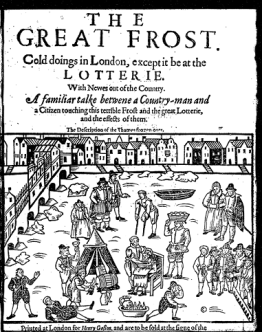
To come: The Deadman’s Portion: Cold Doings in London

Copyright David Clement-Davies 2012 – All Rights Reserved

Phoenix Ark would like to recommend that anyone interested in this or Southwark supports the work of John Constable and the petition he has started to turn Crossbones Graveyard into a memorial garden there. If you are interested Click Here<a href="Cross Bones Graveyard heritage site Petition | GoPetition“>

3 Comments

Filed under Culture, Education, London

OBAMA VS ROMNEY – THE BIG DEBATE?

We don’t subscribe to the idea all Republicans are baddies and all Democrats goodies, or visa versa. Though many people vote out of tradition and instinctive prejudice. But with an election looming and Obama and Romney neck and neck, though perhaps TV debates will be crucial, let’s pause to acknowledge failings, or the likes of Brad Pitt talking of disappointment with Obama, but then pause to remember too.

Remember the enormous sigh of relief when a Bush era seemed to have been left behind, even if McCain was holding the Republican banner by 2009. Bush being a President so spectacularly ignorant that the world winced and hurled shoes. That on his re-election, in dubious circumstances in Florida, Americans put up pictures on the Internet saying “Sorry World.” But one whose presidency not only saw the Iraq War, arguable on both sides but almost puerile in its “Mission Accomplished” and Liberation bringing blandishments, but also saw the massive growth of the Military Industrial complex, in the shape of Homeland Security and The NSA, indeed a doubling, and the very dubious operations of companies like Halliburton, so beloved of Dick Cheney. So American business, while people died, was ensured benefits that never got to Iraqis, and even Eisenhower warned of the danger when the military take control.

Then there was, in that “shock capitalism”, Chicago school of economics philosophy, massive deregulation, especially of energy markets, that led straight to Enron and the biggest corporate fraud in US history. That saw energy traders in California turning off power stations so they could rig prices. They are some of the arguments in the thriller The Godhead Game about the Mayan ‘End of the World’, or hopefully new dawn.

So if you buy into Romney ‘the big business leader model’, the hope for jobs and prosperity, be very aware of what individuals or society might again get at the end of the line, especially with the European economy so fragile. Obama has a great deal to do, but out of the shared scandal of massive lending, complex banking fixes and the selling on of Toxic debt in the housing market, the US treasury has made moves to protect individuals and to stimulate the economy, in ways the UK has not, and Obama believes in social and human protections, if Capitol Hill might lock him into the difficulty of getting there. Capitalism of itself can be ruthless and takes no prisoners, but perhaps Americans have to get over ideas, bedded so deep in the experience of the Second and Cold War, that “socialism” cannot have different forms and inspirations and is just a dirty word, rather an enormously important intellectual tradition, for all the horrors of Communism.

Obama has all the hallmarks of a true leader and statesman too, not least his intellectual capacity, even if his own skillful rhetoric might sometimes get the better of him. Fighting that American tendency to isolationism though, or to put up fearful and threatening walls, especially out of the terrible wound of 9/11, he spoke to Muslims of respect and dignity, not fear, but also tracked down Bin Laden. He turned to Putin to press the vital case too of Nuclear Non-Proliferation. His election also represented a sea change out of atavistic prejudice in America, so close to home in the relatively recent experience of the Civil Right’s movement. He is a figure the World can talk to and do business with and America’s hope, not Romney.

PA PRESS

Leave a comment

Filed under America and the UK, Culture, Education

THE ASTONISHING OLYMPIC CLOSING CEREMONY

Now thick grey clouds cover London, the euphoria starts to wear off. We don’t think the audience quite got the implications on the comedy show ‘Mock the Week’ the other day, when Andy Parsons talked about Sir Ian McKellen at the opening of the Para-Olympics, and Magnito from the X-Men, but stopped short of mentioning “the mutants”. Then even Jimmy Carr, Master of the outrageous joke, has pulled himself in, perhaps after that slap about Jersey tax haven antics, and called this “our finest hour.” He was genuinely moved and involved, we hope not just on the advice of his PR advisers. Well, we can’t run a Marathon, always flopped the steeple chase and long back shot-our-put, but we can let our little fingers dance on typewriter keys.

Good God, the closing ceremony of the London Para-Olympics, and indeed the whole Para-Olympic and Olympic Games, has been so deeply moving and inspiring, we think we’ll vote for Boris Johnson (A Tory Mayor). Talking of God, did you note the pagan and seasonal rhythms of the whole thing, with an essential spirituality right at the heart of Weird UK? As for the Para-Olympics, the adversity those people have conquered and face daily puts Phoenix Ark to shame, but it isn’t even about that, it’s about different spectacles and perceptions, the astonishment of the human spirit, and the will to try and try again. The love shown in London, the human dignity and the shere explosion of talent, creativity and invention, is an inspiration to the World, including Coe’s speech at the end, and if we can wake up a little, we must start to seek one world solutions.

Just before the Games The New York Times ran an excellent lead editorial on the “Bread and Circuses” element of David Cameron doubling the opening ceremony budget. Perhaps, keep an eye out, but where the Romans steeped the masses in blood and cruelty, the Games have steeped Britain in rightful dignity. Out of such shames as the London Riots, with whatever social causes, yobs stealing from injured foreign kids, the horror of abuse in British care homes, or the never-ending spectacle of fingers shamelessly in the pie at the top. The stamp from the start has been inclusion, of everyone, not just the triumph of excellence, and for Games supposed to be a-political, they have been astonishingly and unashamedly political. Well, good for them, stand up for what you believe, and since politics these days seems to have no easy answers from Right or Left, if any at all, believe in something bigger than it all too.

That’s what the Games have really done, shown the enormous complexity and tradition of the British legacy, its astonishing history and culture, and blasted it into the future. Those opening and closing ceremonies proved the triumph, ignoring the dreadful mid-Games closing, not only of all those athletes, all those Games Makers, but of the artist and creator, and those ‘unacknowledged legislators of the world’, as Shelley called them, poets. Now The Flaming Lips have even been demoted to number two here, after Coldplay’s Mellow Yellow, (or ‘Rebel’ and ‘I used to Rule the World’), the Para-Olympic orchestra adopted as top classicists and we’ll see if that “momentum” talked about by David Cameron last night can carry into any visionary action in the UK, that will not make such Games a sideshow and let us all down. Namely can you just cut your way out of Recession and, if the UK needs a more visionary solution, who is the leader to bring it?

Then, to anyone despairing or giving up, not kicking against the pricks, not fighting again and again, (perhaps trying is a better verb), or even thinking it’s only about being British, remember it was a German Jew, Dr Gootman, who fought for injured lives out of the Second World War and started those games at Stoke Mandeville hospital, as everyone giggled or looked away, planting an extraordinary seed, we have just seen bloom in fire. Both the Para-olympic and ordinary Games have indeed come home and might convince us all that even the nasty Darwinian fight of nature is more complex than that, and that everything exists in a mutually sustaining bio-spheres, we are fully capable of wrecking. That the journey of life and consciousness, however frightening at times, is astonishing. So it is about the limits of human possibility, or lack of them, that must also wake up to the animal biosphere we emerged from too.

We all want to blub at times, seek the easy ideal, find the righteous cause, walk the rhetorical hire-wire, but for any raised eye at Coe’s “made in Britain” stamp, why not be extremely proud, and ride the wave of such creativity too in the World? That’s real life too, just as it is a truism that people in wheel chairs are as capable of being as nice or nasty as the rest of us, though have more to cope with. There is a profound difference between sentimentality and genuine sentiment though, between mad visions and the visionary, between schlock and real love, and these Games, both “able bodied” and “disabled”, have given us a visionary sentiment, most essentially because all of it was grounded in true intelligence and meaning. Rock and roll can indeed change the world, and so can you, even if it’s only yours. It may well be someone else’s.

PA PRESS

Leave a comment

Filed under America and the UK, Community, Culture, Environment

OBAMA VS ROMNEY – THE BIG DEBATE?

We don’t subscribe to the idea all Republicans are baddies and all Democrats goodies, or visa versa. Though many people vote out of tradition and instinctive prejudice. But with an election looming and Obama and Romney neck and neck, though perhaps TV debates will be crucial, let’s pause to acknowledge failings, or the likes of Brad Pitt talking of disappointment with Obama, but then pause to remember too.

Remember the enormous sigh of relief when a Bush era seemed to have been left behind, even if McCain was holding the Republican banner by 2009. Bush being a President so spectacularly ignorant that the world winced and hurled shoes. That on his re-election, in dubious circumstances in Florida, Americans put up pictures on the Internet saying “Sorry World.” But one whose presidency not only saw the Iraq War, arguable on both sides but almost puerile in its “Mission Accomplished” and Liberation bringing blandishments, but also saw the massive growth of the Military Industrial complex, in the shape of Homeland Security and The NSA, indeed a doubling, and the very dubious operations of companies like Halliburton, so beloved of Dick Cheney. So American business, while people died, was ensured benefits that never got to Iraqis, and even Eisenhower warned of the danger when the military take control.

Then there was, in that “shock capitalism”, Chicago school of economics philosophy, massive deregulation, especially of energy markets, that led straight to Enron and the biggest corporate fraud in US history. That saw energy traders in California turning off power stations so they could rig prices. They are some of the arguments in the thriller The Godhead Game about the Mayan ‘End of the World’, or hopefully new dawn.

So if you buy into Romney ‘the big business leader model’, the hope for jobs and prosperity, be very aware of what individuals or society might again get at the end of the line, especially with the European economy so fragile. Obama has a great deal to do, but out of the shared scandal of massive lending, complex banking fixes and the selling on of Toxic debt in the housing market, the US treasury has made moves to protect individuals and to stimulate the economy, in ways the UK has not, and Obama believes in social and human protections, if Capitol Hill might lock him into the difficulty of getting there. Capitalism of itself can be ruthless and takes no prisoners, but perhaps Americans have to get over ideas, bedded so deep in the experience of the Second and Cold War, that “socialism” cannot have different forms and inspirations and is just a dirty word, rather an enormously important intellectual tradition, for all the horrors of Communism.

Obama has all the hallmarks of a true leader and statesman too, not least his intellectual capacity, even if his own skillful rhetoric might sometimes get the better of him. Fighting that American tendency to isolationism though, or to put up fearful and threatening walls, especially out of the terrible wound of 9/11, he spoke to Muslims of respect and dignity, not fear, but also tracked down Bin Laden. He turned to Putin to press the vital case too of Nuclear Non-Proliferation. His election also represented a sea change out of atavistic prejudice in America, so close to home in the relatively recent experience of the Civil Right’s movement. He is a figure the World can talk to and do business with and America’s hope, not Romney.

PA PRESS

2 Comments

Filed under America and the UK, Culture, Education

THE EARL OF OXFORD SHAKESPEARE “THEORY”

TO WILLIAM RAY

Dear William,

I’ve posted your response in EDMUND SHAKESPEARE, THE EARL OF OXFORD, FALSTAFF AND THE HOLLOW CROWN comments. Please understand though, despite admiring a spirit in your article, I do think “THY TEST IS EVER HAM” and that what ensues from trying to prove what you think self-evident is hugely distortive of so much other evidence, and pointless arguing with too, because the holes in it are so enormous. Despite some arguments about the datings of both The Tempest and Winter’s Tale, there is no doubt they were written well after Oxford’s death in 1604. Are you seriously arguing those were not by the “Shakespeare” of the cannon?

That, and so many other things, including work on Edmund Shakespeare and Southwark here, just make it rather silly, I’m afraid, though everyone is tantalised by possibilities, and leaves some space for them too, like those Latin signatures in the visitors book in The English College in Rome. Sure, Sacred Cows get handed down the generations, hence constant re-inventings and re-interpretations of Shakespeare, as history itself is dialogue between past and present, or assumptions over-write very valuable arguments about who anyone really is, even what consciousness is, especially with such an artist. That’s the difficult nature of any biography supposedly telling it as it was. I would argue Shakespeare far more complex than the “sweet” or “gentle” image, though as a man in life I think he was, but as an artist during the business of writing, he was indeed Everyman, hero, villain, or real human being, as Bloom argues he “invented the Human”. It is why it is so essential not to invade or judge artists during the process of their work, because then they are engaged in archetypal processes that summon everyone’s consciousness and experience.

But reinterpretation itself is natural, as we all rediscover the world from birth to grave, especially from an age only coming into official records. Is it wrong to observe that you argue it so strongly because Shakespeare’s spirit and plays support your or Emerson’s observations about the nasty world, or what might have happened in some regard to Oxford, but that Will can still be what the evidence proves, the boy then man from Stratford? I also strongly suggest any search demands not highly speculative textual clues at all, but only a hunt in archival records for missing letters, facts and a potential confusion of dates. There any real proof would lie, and it is not there at the moment, very clearly highlighted by, though not dependent on, Oxford’s death in 1604. Just a year after Elizabeth had died and James ascended, who, with his interest in witchcraft, Macbeth seems written to profoundly appeal to. While King Lear very possibly writes a brother, Edmund, certainly the strife of families, in years that saw John Shakespeare die in Stratford, then Mary Arden, all over its pages. Edmund Shakespeare, a player, died in Southwark in 1607 and his burial at 20 shillings suggests the payment by his now succesful playwright sibling. I’ve stared and stared at the original documents and records. Then there is Charles Nichols on Shakespeare’s time on Silver Street, also after 1604, and his appearance in court in the Bellot Mountjoy case, that has a theatrical milieu written all over it too. I kindly suggest you admire Oxford for who he was, but give up the rest as a bad lot, though it’s been stimulating, and would be more so if there were real evidence.

best wishes, DCD

1 Comment

Filed under Culture, Education, Language

THE EARL OF OXFORD, WILLIAM RAY AND “A LEERING HYDROCEPHALIC IDIOT”

“THY TEST IS EVER HAM!” PA Press

First to apologise to William Ray for having taking so long to get to this and to recommend that readers interested in a Shakespeare authorship question read his article http://www.wjray.net/shakespeare_papers/tabooing-de-vere.htm.

It is not only highly stimulating, and perhaps startling in certain aspects, but in brilliantly quoting Ralph Waldo Emerson, and in Ray noting “Rebellion can be fatal to iconoclasts”, it appeals not only to intrinsic instincts here, but vivid experience too of what happened to an author who dared to shake the publishing system, however shabby, shamed or tortured his spirit became at times, and one filled with a knowledge of and passion for Shakespeare’s visions and search for lasting truth. Some of the arguments we had you can find in the comments under two Phoenix articles, DEREK JACOBI, RICHARD II AND THE EARL OF OXFORD ‘THEORY’ and EDMUND SHAKESPEARE, EDWARD DEVERE, FALSTAFF AND THE HOLLOW CROWN.

Ray’s take offers a moving truth about the real world then, a warning about it and people, and especially their tribal instinct to buy into or reveal vested interests in that world, for whatever reasons. Take Oberon Waugh’s savage “A Handful of Dust” and what happens to truth, and establishment protections of human lies there. That quite stands on its own, but also demands some respect for claims about Devere, and certainly a fascination with the period. But although Emerson, and many authors tasting the possible bitterness of the world, may be right about life or society, as Shakespeare wrote it all over his plays, it still does not prove the case.

Two things struck here. The first is William Ray’s observation, unless someone else wants to refute it, that ‘Twenty years after De Vere died, Richard Brathwaite wrote, “Let me tell you: London never saw writers more gifted than the ones I saw during the reign of Queen Elizabeth. And never were there more delightful plays than the ones performed by youth whose author wrote under a borrowed name.”‘

Then there is, more startlingly, Henry Peacham’s 1612 Minerva Britanna, with a drawing of an arm and hand holding a pen, thrusting out from behind a theatre curtain, with a scroll:”Mente Videbori,” or “By the mind I will be seen,” which also produces the anogram “Tibi Nom De Vere” or “Thy name is Devere.”

But from there the argument descends, in the view on this side of the Atlantic, into something so strained it can only be described as “Shakepeare by Sudoku”. Namely the arguments about Cardan Grilles, or codes to somehow reinterpret Jonson’s dedication to the First Folio, or the inscription below the bust in Stratford.

Firstly, language itself is a kind of code, even game, that all authors and especially Shakespeare are engaged in, as Ray says almost reinventing or I would say inventing a language, to try and recreate or approach truth via fictional work, and find the door to vision and poetry, naturally inspired but not necessarily defined by ‘real’ events. But more important is my understanding that a Cardan Grille was really a template for coding where holes were cut arbitrarily in a piece of paper, and a message written in the spaces, then the paper removed and a message built around the text on the second paper. So that could only be read with the original grille and the unique second paper, where the letter, inscription, poem or whatever now lay. Perhaps I’m wrong. (The assumption being in any functional spy network, for instance, agents would have had to be issued with duplicates of an original template grille, from head office, that changed at various times for safety.)

The alternative, especially for printed, mass produced text, is a “grille” reformatting the order of the printed text, then picking out letters to give your supposed secret message. The one D.L Roper and by extension William Ray has chosen for the bust inscription is seven vertical boxes, by 34 horizontal boxes, attributing some huge significance to the horizontal number, because 34 is 17 x 2, and Devere was the 17th Earl of Oxford. It seems very feeble, and more so because of the strained nature of the message that appears to appear, namely HIM SO TEST, HE I VOW IS E. DE VERE AS HE, SHAKSPEARE: NAME I. B. IB, standing for Ionson, Ben.

But the “Shakespeare” and the “Name” are plucked not from a vertical but horizontal reading of the letters, and actually a significance might stand without them. On the other hand, reading vertically from the same supposed grille I quickly plucked out the sentence “THY TEST IS EVER HAM”! (I added the gratuitous exclamation mark.)

As for the First Folio dedication, that Sir Arthur Geenwood, as if that proves anything, suggested was either code or written not by Ben Jonson, but a “a leering hydrocephalic idiot”, with not much compassion for rabies victims, the idiocy seems repeated in the straining for codes with some 6-2-2 pattern. The text is punning and playful, perhaps not even very good, but it demands no dismissal.

Apart from all that, and it sells books to produce supposed prophecy from a claimed “Bible Code” too, because any long work will do it if you rejumble letters or sentence orders, (thus a clear, intentional and provable pattern must be established first, unless in the Bible case you argue God is speaking directly through the authors), the Oxfordians are again forgetting that if Devere did somehow suffer from the tyranny of his age, or indeed an artist’s desire to protect the well springs of the Self, why could a Stratford Shakespeare not too? Hence answering many questions about not pushing himself forward, and not especially defending his printed work, especially in an age where the printed word and rights in that were being invented. Such an author also finds meaning, pride and power in the success and effects of their living work, and for many reasons finds it harder to stand up and be that “author”. It can be an invasive thing, art or fame, and then was a very dangerous one.

That returns you to a debate that was fully underway in its time, namely that a scruff from the provinces could not have possibly have written such astonishing work. Hence it being perfectly possible that the Devere claim was generated even back in 1612, and with coded “hints” too.

But it’s a fascinating debate, and we’ll leave the “Oxford camp” with a resounding question, that in the many obfuscations, forced links and the Sudoku play of it they always fail to answer. The Earl of Oxford was dead by 1604, so what have they to say of all the other Shakespeare plays? We’d love to hear.

DCD

PA PRESS

40 Comments

Filed under America and the UK, Culture, Education, The Arts

PRINCE PHILLIP AND A STRANGE REPOSE ON CORFU

Read Lawrence Durrell, or just look at the sickel shaped island of Corfu on a map, in the middle of the Med and right between Rome and Istanbul, and you will immediately understand the historic and geographical significance of Corfu. It’s why, when the Brits took control of the Ionaian Islands, in the 1815 Treaty of Paris, after Napoleon’s defeat at Waterloo, the Governor built a residence here. In the days when Government officials could do things like that, he built a road up behind Corfu town, along with the road and sanitation works right across the island, that have lasted to today, so that he could have better communications with his Corfeat wife. She is recorded in a dreadful copy of a painting inside the house, all bundled up in Jane Austin pleats, and not at all reflective of the famous beauty of many Corfu girls. The Adams later went on to India.

Mon Repos, on the little peninsula that juts out into the mesmerizing cobalt blue, is where Prince Phillip was born into the Greek Royal family, a fairly small yet elegant Regency building, among a winding forest of wild oak, cyprus and monkey puzzle trees. At the little Hereum in the grounds, the temple to Hera, local archaeological works were underway, which consisted of a half bearded bloke with his two sweet daughters liberally bulldozing earth away in his dump truck, while his colleagues sheltered from the dripping heat, and smoked the odd cigarette. No careful toothbrush combing of earth layers here then.

The ancient Greek remains there are obviously far more extensive than have so far been revealed, but the neighbouring temple on the cliff edge that they describe simply as ‘Doric’ was most likely a temple to Poseidon. The place was lovely for a gentle, sweating walk, but it all seems rather haphazard and down at heel. Ill now and ninety one, the Queen’s hubby Phillip may remember it more clearly, and in grander times too. If another Greek financial crisis is looming tomorrow though, August 20th, when the coffers are due to run dry again, they could make far more of the whole complex of Mon Repos. Perhaps it is natural Greek indolence, some uncomfortable relationship to the idea of the British role in Greece, or because half of Corfu’s immense charm is not doing anything very much at all. It would be a nice idea to stage concerts and plays here though, encourage local tavernas, with regional produce, or make much more of the grounds and facilities, but it will probably never happen. Unless some clever entrepreneur steps off one of those super yachts in the bay and offers to buy it.

More visitors seem to flock up the hill to the palace just above our village of Gastouri, The Achilleion, where the famous Sissy, Empress of Austria and then Austria Hungary, found snatches of happiness. The story of her beauty, isolation and ultimately tragic life involved her sister setting fire to herself, as she learnt the dubious art of secret smoking, her husband playing away, and finally Sissy’s own assassination by some swaggering anarchist, even if Sissy had a comparatively radical temperament. But she found the spirit of the muses away from it all up here and her interest in classical Greece turned the elegant terraces into a stone Tussaud’s of Classical Greek statuary. It is more pleasing than the over-ornate, wedding cake style Baroque interiors and worth a visit.

It is still all very Germanic though, with the gigantic, over stylised statue of Achilles crowning the view that looks out at to Kerkyra, Corfu town. Another is set back in the gardens, with the prostrate hero clutching that arrow in his heel, launched by another Paris, after his tussles with the Apple of Discord. If the myths teach of the relationship between the eternal, and the mortal and transitory, the entry point into the real world around us, perhaps Greece will still prove the Achilles heal to the whole Eurozone. But despite corruption, some primitive superstitions and ignorances, like a neighbour remarking that British spending on the Olympics was a waste of ‘their’ money, and that oddly Greek sense of its own right, on wealthy, warm Corfu, where people are both welcoming and filled with a lively sense of humour, it is absurd to think of Greece as anything but a proud, beautiful and important European neighbour.

So, with all the work here on Edmund Shakespeare, to Lawrence Durrell recording in Prospero’s Cell the theory of a local Count in the 1930’s, as another war loomed, who gently insisted that Corfu is actually Shakespeare’s setting for The Tempest. It’s a lovely idea, as well as being the place that Odysseus overcame that siren song, on his eternal journey back home from war with man and Gods to Penelope and real love. But in the walls between fact and fiction there are few absolutes, and as much as any real place, or the possibility of Shakespeare travelling, that ‘isle full of noises’ is the islands of Shakespeare’s creative psyche and imagination.

Phoenix Ark and oddball family spent two lovely weeks there, filled with the noises of cicadas, skop’s owls and conversation. We swam, ate fish, drank Ouzo, played scrabble, puttered around in a little fiat, went to a festival, hired a boat and had gentle adventures. Now we are dispersed again, sadly, and preparing to face whatever the real world claims to be.

PA PRESS

Leave a comment

Filed under Culture

JUDICIAL SHOOTING INCIDENT ON CORFU!

It is an incident that could bring down the British establishment, and exactly in the spot where the celebrated meeting between Lord Mandelson, the British Chancellor George Osborne and their Russian oligarch chum took place. Well, actually, in the small bay of Agni, on Corfu’s beautiful north-western coast, it was not at Agni’s apparently now overated and slightly suspect restaurant, where the previous transgressors are said to have set foot on shore from ‘that boat’, but right next door, at the very nice eatery of Toula’s. If Greece faces further economic storms, with troubled Albania just a ten minute boat drift away, there could be few places more symbolic of what is happening economically in Greece and Europe, and how the ‘them’ and ‘us’ differentials are becoming so great and so potentially destructive too.

Just around the headland is one of the home’s of Italy’s Fiat motorcar dynasty, the Agnellis, and a short boat putter further on the Rothschilds also decamp in Corfu’s chic Kensington on Sea. At Kalami was ‘The White House’, the home of Lawrence Durrell and his wife, eponimised as simply N in his little travel book about the island, “Prospero’s Cell“. It was at pleasant Toula’s though that one of England’s finest circuit judges came to err so badly. The charming judge M, a scholar and gentleman, (well, certainly a gentleman), is from the very London court that hit the headlines recently because of the murderous discovery of unexplained traces of ammonia and phosphates in the kitchens, which in the legal campaign for plain English is a euphemism for some disgusting Caliban peeing in the food, to take a silent revenge on those bumbling wigs of power and justice.

But at lunchtime Toula’s weighty matters of British economic and foreign policy were not being discussed, nor the current state of the Lib-Con alliance, but instead, as the sparkling sun burned on the water, the said judge picked up a gun and shot one of the diners in the back. In fact he had been doing it for several minutes. The weapon was described by forensic experts as ‘a low calibre plastic water pistol’, that belonged to Phoenix Ark Press’s enchanting god-daughter, also called M and currently aged four. She had been distracted from her stewardship of the weapon by the sudden appearance of a plate of souvlaki and chips. So effective was the judge’s trajectory though, as he squirted a standing female client from the end of his table, spurred on by the beautiful, giggling S, that she turned in total fury and spat an incandescent rage at the startled, sunburnt and deeply apologetic member of the UK judiciary. Not since the notably liberal judge has had to impose a twenty year stretch on some of London’s nastier offenders has such a look of total innocence lighted on his roseate features, as he put the gun down and lifted a pair of mea culpa hands to heaven, prompting one diner to remark cruelly that the combined mental age of both the UK bench and the British cabinet is currently only five. The good judge avoided a custodial sentence, is currently resting, and will be back in the saddle soon, tanned but austere, and armed with a paintball gun to correct the great unwashed.

PA PRESS

Leave a comment

Filed under Culture