Category Archives: Poetry

FOR THE POET’S SWEATSHOP – HORRID HEROES AND CRAZY CROOKS

sherlock-holmes[1]

To celebrate the brilliant Sherlock Holmes adaptation by the BBC and DR Who team Phoenix Ark Press publish an excerpt from the series HORRID HEROES AND CRAZY CROOKS, about the great detective himself, by David Clement-Davies.

SHERLOCK HOLMES – THE DREADFUL DETECTIVE

Now here’s a hero you should meet
At 221b Baker Street:
The great detective Sherlock Holmes
Whose tale they’ve faked in endless tomes
With simply not one shred of truth,
Since Sherlock was NO Master Sleuth,
But just a fraud, of crackpot theories,
Outrageous schemes and pointless queries,
Who’d sit there chewing on his pipe
Inventing plots and talking tripe
While criminals, I’m sad to say,
Did ghastly things and got away!
Much worse than that, the urban flunky,
Was secretly a shameless junky
Who drank weird liquids at his bar
Like Creme de Menthe and Advocat
And when he’d downed a proof pure beaker
Would bellow out a loud “Eureka”
His hair would frizz, his pupils whirl
Then green smoke from his nostrils curl
As he’d conclude some crime or other
Had been committed – by his Mother!
Which proves the plots were always lost
As Sherlock got his wires crossed.
Just like the day the milkman rang,
In days when Londen hawkers sang,
To leave a pint of double top
But since he’d spilt some curdled slop
Across his boot the previous night
He’d stained his dark shoes milky white
Sherlock concluded that the guy
Was working as a Russian spy
Paid by a sect of singing jews
Who only danced in two-tone shoes.
Another time the butcher’s boy
Arrived with joint and savaloy
But Sherlock shopped him to the law
Because he’d read, the week before,
The story of some loon who’d done
His boss in, for a pound of tongue.
Alas, when Watson came for tea
As ever punctual – half past three,
With cries of “Holmes, the game’s afoot”
But tripped across a bag of soot
He nearly died there, in the hall
As Sherlock shot him through the wall
Thinking his face, now black and tan,
Was of a conjuring Arab man
And all the work to sweep his grate
A plot to prestidigitate!
And so the bungling list went on
Delighting every London Con
Until, one night, the dozy bloke
Was snoring, furled in orange smoke,
Dreaming his hat had flown in fear
Across a moor, to stalk a deer
Who spoke in riddles like Lestrade
And made his home at Scotland Yard
When came a thumping at his door
“Enter, dear Watson,” Holmes called out
But in walked a dame, of figure stout
Peroxide wig, large powdered nose
And straggling crimson pantihoes
Suspenders, handbag, satin bloose
And quite outrageous high-heeled shoes.
At which Holmes made his worst mistake,
Since, as you’ve guessed, this dainty fake
Was neither maiden blonde nor tarty,
But was in fact…YES… Moriarty:
The terror of the London Bill,
Napoleon of Notting Hill,
And if you paid his crooked fee
Professor of psychiatry!
Yet now Holmes cooed ‘Oh, Stars above’
And Sherlock promptly fell in love,
As Moriarty winked and snickered
Then flashed his criminal cami knickers,
And in a voice like lemonade
Swooned “Mr Holmes, I need your aid,
I’m being molested by some swine
Who sends me presents all the time
Red roses, chocolates, poems flirty
And postcards that are frankly dirty
.”
Then fixing Sherlock with his eye
The dainty Prof began to cry.
“The cad” the drunken sleuth now bawled
“Just tell me what the blighter’s called
And when I’ve caught the filthy varlet
I’ll call this one A Case in Scarlet!”
Professor M began to smile
He dried his tears – crocodile,
But then the cunning Panto Dame
Wrote ‘John’, a famous copper’s name
Who was no stalker, you can bet
But Chief Commissioner – of The Met!
Who must be said, no hint of blame,
Possessed a most unfortunate name.
Yet still Holmes purred “Leave this to me
While Mrs Hudson makes you tea”
So dashing from the room he rendered
A greedy glance at those suspenders.
But, now The Prof was all alone,
He scampered to the telephone
To call the newsdesk and report
The scandal to The Sunday Sport.
Then chuckling loud he closed the call
As Mrs Hudson, from the hall,
Appeared there with a silver tray
Of buttered crumpets, scones, Earl Grey,
But clocked the dame, and something rankled:
That stubbly chin, those thick set ankles.
She dropped the feast, stubbed out her fag
Then rugby tackled him in drag:
That giant wig, she pulled it off
Exposing underneath – the Prof.
“Too late,” snarled M, “this evening Holmes
Will be in prison, sorting combs.”
“Not so,” cried H, “I’ll give you hell”
Yet then she fell in love as well.
“My dear, you’re strange, so soft yet strong”
Purred Mrs Hudson, loud and long,
“Oh marry me, take me away,
I can’t stand Holmes another day
I’ll dress in hobnails, burn my bra,
Become a criminal superstar
And while you mind our house and crib
We’ll strike a blow for Women’s Lib!”
Poor Hudson fancied, I suppose,
Those spikey heels and gorgeous clothes.
Well M agreed to wed the strumpet,
He’d tasted Mrs Hudson’s crumpet,
And since they both admired cross dressing
They had a small Transvestite blessing
As Mrs H became in time
A studied Josephine of Crime
While sad Holmes hit the news that night
With “FILTHY SHERLOCK BANGED TO RIGHTS”
“FOR BOXING COPPER ON THE EARS

And “SHERLOCK GIVEN TWENTY YEARS.”
At least in gaol he started taking
A course in classic music making
Which was his most outrageous sin
The way Holmes played that violin!

DCD

Horrid Heroes and Crazy Crooks is under Copyright to Phoenix Ark Press 2014, All Rights Reserved. The image is http://investigazioni24.wordpress.com and please contact the blog if you would like it removed.

1 Comment

Filed under Books, Poetry

HENRY V, THE HOLLOW CROWN, HENRY VI AND EDMUND SHAKESPEARE

Perhaps it’s that Henry V is such a triumphant example of the language of transforming imagination, soaring poetry transporting us all beyond the physical confines of the ‘Wooden O’, that the BBC’s next contribution to The Hollow Crown did not quite soar, despite John Hurt voicing the chorus. It’s why the play, probably first performed in 1599, has become almost a metaphor for British martial rhetoric, intentionally undercut here, and out of Henry’s mis-spent youth at the Boar’s Head, for the making of man and hero. Perhaps it needed Oliver’s theatrical references in the World War II film, or the Te Deum splendour and horror of Kenneth Brannagh’s version, but the moment Henry delivered his warning to the Burghers of Harfleur, with the gates already open, was almost comic. Perhaps that was the director’s intention, to deflate Hal’s semi psychotic but truthful vision of war, but, just as the poetic language speaks to an audience in a theatre, both that and the Crispin’s day speech need a bigger present audience. It is about the making of political and royal rhetoric, despite the ironies of life and horror of war, though with the vision of the truly good King in the frame.

What was so winning though was Tom Hiddleston’s human, sensitive and pasionate Harry, reminding us that love and brothership is behind his journey, at least he hopes, high to low. The strange wooing of Katherine was lovely, with the ravashing Melanie Thierry playing the forced French consort, and reminds that the drive of the play is towards union, from Germaine Greer’s ‘poet of marriage’, as she described Shakespeare. It also places, as ever, the play of language and metaphor at the very centre of everything, as does the famous English-French translation scene, with its sexual punning, getting to the heart of the matter. So of course brave King Harry dies, in fact of dissentry on the way back from France, but Henry VI is sired, truly ushering in those Wars of the Roses, and the perpetual fear of weak Kingship “Whose state so many had the managing, That they lost France and made his England bleed.”

Henry VI was related to Charles I of France, who thought he was made of glass, and a devote King who reportedly wandered the Court, in days where one fashion was for Court ladies to wear dresses with their breasts exposed, with his head in his hands. He is also supposed to have spent the battle of Tewksbery talking to a tree! A clear warning about the danger of heriditary monarchy. But it is work here on Southwark and Edmund Shakespeare, William’s unkown youngest brother, with the real founding under Henry VI of The Brotherhood of Our Lady of Assumpiton in Southwark, that originally owned The Vine where Edmund Shakespeare was staying when he died, that might open a valuable doorway on the very neglected Henry VI play cycle too. Just as it should open a door to Southwark itself and how that place of theatres also echoes back into the plays. Henry VI features a very dishonourable Bishop of Winchester, the power there, a false miracle, at the cusp of a Reformation, and all the themes that of course haunted power and Kingship during the Reformation. Yet perhaps there is another brotherhood at play when Shakespeare speaks of we “few, we happy few, we band of brothers” in Henry V, the brotherhood of the players themselves, excempt from military service, inside the arena of a theatre.

Phoenix Ark Press

For Shakespeare’s Brother Click here

Leave a comment

Filed under Culture, Education, London, Poetry

THE SHAKESPEARE DEBATE, SOUTHWARK, FISHY THEORIES AND JOHN DONNE

THE BAIT, by John Donne

COME live with me, and be my love,
And we will some new pleasures prove
Of golden sands, and crystal brooks,
With silken lines and silver hooks.

There will the river whisp’ring run
Warm’d by thy eyes, more than the sun ;
And there th’ enamour’d fish will stay,
Begging themselves they may betray.

When thou wilt swim in that live bath,
Each fish, which every channel hath,
Will amorously to thee swim,
Gladder to catch thee, than thou him.

If thou, to be so seen, be’st loth,
By sun or moon, thou dark’nest both,
And if myself have leave to see,
I need not their light, having thee.

Let others freeze with angling reeds,
And cut their legs with shells and weeds,
Or treacherously poor fish beset,
With strangling snare, or windowy net.

Let coarse bold hands from slimy nest
The bedded fish in banks out-wrest ;
Or curious traitors, sleeve-silk flies,
Bewitch poor fishes’ wand’ring eyes.

For thee, thou need’st no such deceit,
For thou thyself art thine own bait :
That fish, that is not catch’d thereby,
Alas ! is wiser far than I.

It is just a pet theory here, but might be fun in talks about Shakespeare or Southwark. John Donne, soldier, poet, father of 12, and preacher, must have been a constant Southwark visitor and his daughter Constance married the actor manager Edward Alleyn, who lived with his father-in-law Philip Henslowe there, and became a warden at St Saviours. In trying to fictionally imagine London and Southwark of the time though, first in a film script, that Charles Dance promised to comment on and never did, though SKY thought it good (!), then a novel about Edmund Shakespeare, William’s unkown youngest brother, Donne’s poem The Bait suddenly sang of the area. It was part of that little poetic contest between Marvel and Marlowe, The Passionate Shepherd, but there is one line that sounds with brothel tenements and taverns in Southwark, and that is ‘windowy nets’, quite apart from the running river that speaks of the Thames. Then there are those sleeve-silk flies, factually accurate, but perhaps also redolent of an area swarming with Walsingham’s spies, in Elizabethan cuffs, or others betraying themsleves, or each other.

It was of course London’s most thriving tavern, brothel and theatre district, and Elizabethan or Henretian brothels, there for centuries, were also called the “stewes”. The medieval word seems to have dropped out of usuage during the Reformation, as it became better known as Bankside, but there has also been debate about the derivation of that term. Whether it stemmed from the Scandinavian for a stove, or the medieval ‘”stewes’, or Pike and carp fish ponds, that still existed in Southwark. The obvious link is the second, for many fishy reasons, and of course London bridge was a great centre for those fisherwomen, hawking their catch out of Billingsgate, with their pretty or lewd songs. If you are trying to imagine what the Shakespeare’s saw there at the time, in the face of the sturdy, power seeking City of London across the water, Fishmongers Hall stood right opposite St Saviours, now Southwark Cathedral. The Thames too, only beginning to touch the days of mass Urban pollution, long before the silted or darkened waters of Dickens, was a broad river many fished. Wand Mills had also grown up right along its banks to feed the new, and often Dutch, hop brewing trade in London, that spread down into Surrey and Kent. There, just a little food for Elizabethan thought and reality.

DCD

PA PRESS

Leave a comment

Filed under London, Poetry, The Arts

PHOENIX ARK PRESS INVITE DEREK JACOBI TO TEA!

Did we tell you the one about meeting the actress who played the poisoner who Livia employed in I Claudius, in a chemist in the Oval, complimenting her on her talent and the wonderful series, then deciding not to buy any medicine that day! From the frayed temper in reply to a blog about another I Claudian, Derek Jacobi, and the Earl of Oxford theory today, perhaps emotions run deep. We do want to stress then undying admiration for real writers, poets, and actors, especially Derek Jacobi, so point out that disagreeing with his thoughts on Shakespeare’s identity, in his programme about Richard II, has nothing to do with our appreciation of his huge talents as an actor. So we invite him to tea, to dispute the Oxford theory, or even better to hear about research here into the story of Edmund Shakespeare in Southwark. No poison will be even contemplated.

Leave a comment

Filed under Education, Language, Non Fiction, Poetry, The Arts

THE LOVE SONG OF HARRY N ABRAMS

The Love-Song of Harry N Abrams
With apologies to T.S. Eliot

“If I thought my reply were to one who could ever return to the world, this flame would shake no more; but since, if what I hear is true, none ever did return alive from this depth, I answer you without fear of infamy.”— Dante, Inferno

Let us go then, you and I,
When the Scraper’s reared against the sky
Like an author etherized upon a table;
Let us go, through certain Roman patterned streets,
Those harsh and sharp retreats
Of touring nights in small, Boutique hotels,
And Gainsvort restaurants, with oyster-shells:
Avenues that rush on like a vicious argument
Of most direct intent
To power you to an overwhelming question. . .
Oh, do not ask, “What is it?”
Let us move and make our visit.

In the firm the women come and go
Talking of Bad Pinnochio.

The yellow cab that rubs its lights upon the window-panes
The yellow smoke that rubs its muzzle on the window-panes
Licked its tongue into the corners of the evening
Lingered upon the pools that stand in drains,
Let fall upon its back the trash that falls from Galleys,
Slipped by the Brown Stone, made a sudden leap,
And seeing that it was a bright Eternal night
Curled once about its Publisher, and fell asleep.

And indeed there is no time
For the yellow cab that streaks along the street,
Flashing its eyes upon the window-panes;
There is no time, there is no time
To prepare a face to meet the falseness that you meet;
There is no time to murder or create,
No time for all the works and days of hands
That lift and drop a novel on your plate;

No time for you, no time for me,
No time yet for a hundred indecisions
And for a hundred visions and revisions
Before the ‘MOVE on’ for some Village tea.

In the room the women come and go
Talking of Bad Pinnochio.

And indeed there is no time
To wonder, “Was it fair?” or, “Did I dare?”
No time to turn back and descend the stair,
With some wood chip in the middle of my hair—
[They will say: “How his hair is growing thin!”]
My British coat, my collar fraying badly at the chin,
My Ink Pen rich and modest, but asserted by a simple grin—
[They will say: “But how his wooden legs are thin!”]
Did I dare
Disturb the Universe? It was disturbed.

In a minute there is no time
For decisions and revisions which a minute won’t reverse.

For I have known them all already, known them all;
Have known the evenings, mornings, afternoons,
I have measured out my life with lost dubloons;
I know the voices dying with a dying fall
Beneath the music from a happier room.
So how did I presume?

And I have known the eyes already, known them all—
The eyes that fix you in a nimble phrase,
Like, ‘Burns his bridges’,
or ‘Won’t avert his gaze,’
‘A kinda of own worst author,’
or ‘a heartbreak in a daze.’
And when I’m formulated, sprawling on a pin,
When I’m pinned and wriggling for them all,
Then how should I begin
To spit out all the butt-ends of my days and ways?
And how did I presume?

And I have known the arms already, known them all—
Arms that are amuleted, but white and bare
[Yet in the streetlight, downed with hard black hair!]
Is it perfume from a dress
That makes me so digress?
Arms that wait upon a proof, or edit out a scrawl.
And should I then presume?
And how should I begin?

Shall I say, I have gone at dusk through grid-lined streets
And watched the smoke that rises from the pipes
Of lonely CEO’s in shirt-sleeves, leaning out windows?

I should have been a pair of printed claws
Tapping across the floors of noisy seas.

And the afternoon, the evening, sleeps so fitfully!
Smoothed and edited by fingers,
Asleep . . . tired . . . or it malingers,
Stretched on the floor, here beside you and me.
Should I, after cupcakes and Bleeker ices,
Have had the strength to force the moment to its crisis?
But though I have wept and fasted, wept and prayed,
Though I have seen my wooden head (now bald) brought in upon a platter,
Perhaps I AM a prophet– and here’s great matter;
Yet I have seen the moment of my greatness flicker,
And I have seen the eternal Bellboy hold my coat, and snicker,
And in short, I was afraid.

And would it have been worth it, after all,
After the cupcakes, Margheritas, talk of being free,
Among the Galley Proofs, among some lies by you, of me,
Would it have been worth while,
To have bitten off the matter with a smile,
To have squeezed the universe into a ball
To roll it toward another overwhelming question,
To say: “I am Lazarus, come from the dead,
Come back to tell you all, I shall tell you all.”

If one, settling someone else’s novel by her head,
Should say, “That is not what I meant at all.
That is not it, at all.”

And would it have been worth it, after all,
Would it have been worth while,
After the sunsets and the meetings and the swarming streets,
After the novels, after the cupcakes, after the boots that stomp along the floor—
And this, and so much more?—
It is just possible to speak of what I mean!
But as if an emailed madness threw the nerves in patterns on a screen:
Would it have been worth while
If one, settling a cover, or throwing off my scrawl,
And turning toward the window, should say:
“That is not it at all,
That is not what I meant, at all.”

Yes! I was Prince Hamlet, and was sad to be;
Not just a branded author, one that once could do
To swell a progress, start a tale or two
Advise the prince; no doubt, an easy tool,
Deferential, mad to be of use,
Impolitic, outrageous, but meticulous;
Full of high sentence, but a bit obtuse;
At times, indeed, almost ridiculous—
Almost, at times, the Fool.

I grow old . . . I grow old . . .
I shall bear the dustjackets of my novels rolled.

Shall I part my wooden hair behind? Do I dare to grow a peach?
I shan’t wear All-Star Sneekers, or walk on Coney beach.
Yet I have heard bad mermaids singing, each to each.

I hear they will not sing to me.

I have seen them riding seaward on the waves
Combing the white hair of the waves blown back
When the wind blows the deep, loveless waters inky black.

We have lingered in the chambers of the sea
By press-girls wreathed with seaweed red and brown
Till New York voices wake us, and we drown.

DCD 2011

Leave a comment

Filed under New York, Poetry, Publishing

SPACE FLIGHT FOR TOTS

As part of the POLLIPIGGLEPUGGAR collection Phoenix Ark Press are delighted to publish another poem for parents and young children by David Clement-Davies. Please read it with and to your kids, because if a Standard newspaper survey about reading in London is right, then one in three parents don’t feel confident enough to read aloud to their children, and it is a tragedy for all of us.

SPACE FLIGHT FOR TOTS

Space flight for Tots,”
Said Professor Wot-Nots
“Is a question both grave and dark.
The problem you see
Isn’t Gravity
But the lack of some primal spark.
It seems mad to me
If you’re only just three
To rocket, straight up through the air.
The jolt would be cruel,
Not to mention the fuel,
That would surely ignite your hair.”
“But I’ve done the sums,”
Cried Professor Nun-Drums
“And I know I can conquer this race
To make Astro-Sports,
Of the Sevens to Noughts,
Then hurtle them out into space!”
“What ROT”, snapped Wot-Nots
“There isn’t a tot,
That could master your method of flight.”
Nun-Drums shook his head,
At what ‘Nots had said,
Then he cooed, like an owl in the night:
“First suck on your thumb,
As your lips start to hum,
Then sit with your knees in a ball
And jump up and down,
In your warmest night gown,
As you start to ascend the wall.
The problem’s not wings,
But the strength of the springs,
And the positive slant of the bed,
To provide a position
For natural ignition,
As you bounce up to Pluto instead!”
I see,” said Wat-Nots,
As he looked at those cots,
And wondered where all the kids were.
Then Wat’s scratched his head
And turned lobster red,
As he saw what he now should infer;
The Num-Drumic Proof
Were those holes in the roof,
And the way that the beds were all bent!
With Nun-Drums – ecstatic
As he gazed through the attic
Straight up at the twinkling sky
For there, from that room
Was a trail to the Moon
And the children all learning to fly!

Copyright David Clement-Davies 2011. All Rights Reserved.

Leave a comment

Filed under Childrens Books, Poetry, The Arts

NONSENSE FOR THE POET’S SWEATSHOP!

In the vein of having some fun and not just throwing rotten eggs at the disgrace that is modern Publishers, bottom feedings agents and the rest, Phoenix Ark Press are delighted to publish a Nonsense Verse for The Poet’s Seatshop, only somewhat inspired by Lewis Carrol, by the Founder and Children’s Award Winner David Clement-Davies

POLLIPIGGLEPUGGAR

Though PolliPigglepuggar is a nonsense kind of WORD
You CAN’T hunt down in any diction-reeeee,
THE Pollipigglepuggar’ is a most exotic bird,
Which sleeps within the Pollipiggle tree.
She isn’t quite a Parrot
Though her plumage is akin
And her ears are thin and furry, as a bear,
Her tail looks like a carrot,
While she has a sort of chin,
And wears a set of curlers in her hair.
Her beak is made of lemon peel,
Her eyes are black and blue,
Her call is like the bleating of a goat,
Her favourite meal’s spaghetti
It’s weird, but still it’s true,
She loves to wrap so loosely round her throat.
While, on her Pollipiggle branch,
She perches day and night –
A look that says – there’s nothing else to do.
Though in those scented piggle leaves,
She’s dreaming of the fright
I gave her when I stole out and went – ‘Boo’.
But just before I tell you
What a racket THAT inspired,
There’s something else to show you all, for free,
Not the colour of those feathers
Or the way her feet are wired,
But the nature of the Pollipiggle Tree.
The Pollipig’s a cousin of the Lollipopple plant,
In the genus of the Ligglepipple root,
Its leaves are made of herbal tea,
Although the branches aren’t,
While its flowers sprout out in rubber, like a boot.

It sways there in the piggle breeze,
Just waiting on some fun
Or that Puggar bird to use it for her bed,
And, since this tree can’t walk with ease,
(The thing can’t even run!)
It’s fond of simply growing up instead!
So there it waits to ponder,
As it blossoms once a year,
When the swooping puggar-puggar will appear,
Until from out of yonder
The thing loops through the air
And settles with a whooping, on its ear.
Behold the Pollipiggle Bird,
A fowl that isn’t deep,
A-landing on its side within the shrub
A bird, you see, that’s so absurd,
It promptly falls asleep
And dreams of bathing nightly in a tub.
So there they snooze together,
Like a perfect pair of chums
A-deep within the pollipiggle wood
And there the tree gets bigger
While the Pollipuggar hums
A tune I can’t remember, though I should.
You see, I’ve quite forgotton
That thing I had in mind,
Namely WHAT the creature cried when given fright;
It screeched out something rotten
When I woke it from behind,
Then called out like an ostrich taking flight:
oh, polli, pig AND puggar,
oh piggle, puggle, pol
oh, rallop, lipig, gopple, gup and gol
oh luggup, paggle, leppug, paaaa
And glipple loppgup too
.
Which really meant no more than;
‘Who are you?”
Oh, I love my Pollipiggle bird
A-sleeping in her tree
With her multicoloured feathers on her wings
And her strange, but polli, habits
Which NEVER seem absurd,
Like those ears that grow like rabbit’s,
Or the piggle way she sings,
And the puggar way she knows just how to be,
While she’s snoring up her Pollipiggle Tree.

Copyright David Clement-Davies June 20i1 All Rights Reserved.

5 Comments

Filed under Childrens Books, Free Story, Poetry

The 8TH PHOENIX ARK CULTURAL ESSAY

I AM? by David Clement-Davies

With all the splendid regal hoo-ha today, perhaps the nicest blessing to a marrying couple would be not to write about the Royal Wedding at all. Especially avoiding the kind of trashy, invasive comments from a former-Sun editor on being bald young, or why a man, ‘Royal’ or ‘Commoner’, but in this case very rich, might actually win or love a beautiful woman. That particular celebrity editor’s empty beer-glass on something also private and intimate, and probably and hopefully completely wrong. On Royal Wedding days the difficult ‘private’ is what this Cultural Essay is about then, especially the inner mind and heart. Perhaps the ‘sacred’ too, in a world where we no longer seem to really know what it means, or how to value it privately, or collectively either.

Perhaps the Media strain on things like love is just the modern world, and the sometimes difficult hypocrisies of that vital ‘freedom of the press’ too. Too often debased by the hunt simply to sell papers, in no one’s real interest but Newspaper proprietors. Although journalist Andrew Marr did the right thing to apologise recently for his own injunction. Dodgy super-injunctions in mind, the law becomes an ass if you can just look up ‘restricted’ facts via Wikileaks, as Julian Assange well knows, or on the Internet. But Obama was right too about the idiocy of having to disport his birth certificate on the internet, and wanting to get on with far more important things. On the other hand, in former days of real Kingly power, in Hampton Court or Versailles, there would have been very little privacy, because then we owned our Kings and Queens too, and glared very intently, especially at the Royal bed. It’s just the audiences get bigger and bigger, and everyone’s holding the camera.

You might of course say that in the world of Einsteinian physics Royalty itself is nuts, and in very hard times, give a loud fanfare for the common man, and especially now, woman. It is something everyone comments on with Kate Middleton being ‘one of us’, although massive popular and moving support proves indeed we are still instinctive Monarchists, despite the little scandal of two Labour Prime Ministers not being invited to what is inevitably a ‘State occasion’. Or you might say that purely materialist communism was far madder and nastier than democratic Monarchy, where our figure heads to aspiring ‘us’ are a family, and real human beings, or that the American equivalent of royalty becomes a ‘class’ of pure money and connections, or Hollywood human inflation.

I don’t want to throw too much gloom into the fun, but there could not be a figure more removed, from royalty and it all, than the ‘Commoner’ and poet John Clare. I thought of Clare recently, researching a book about Rome, and writing about the figure of Violet Albina Gibson, who at 50 shot at Mussolini, in 1926, was released by the Fascists, and ended her days ‘back home’ in St Andrew’s Hospital, ‘up North’. St Andrew’s was, in a former incarnation, the Northamptonshire County General Lunatic Asylum, where John Clare had been locked up too, in 1841, and it brought back to mind his startlingly moving, very English sonnet ‘Lines written in a Northampton County Asylum.’

‘I am. Yet what I am none cares nor knows
My friends forsake me like a memory lost;
I am the self consumer of my woes,
They rise and vanish in oblivious host,
Like shades in love and death’s oblivion lost;
And yet I am, and live with shadows tossed’

Perhaps it’s the very proof of Oscar Wilde’s quip about there being ‘only one thing worse than being talked about’, although of course one of the agonies of ‘madness’ must be how others, or society, perceives you. Although Clare was a poet who necessarily sought fame, his true story is much about that inner Kingdom of the mind and psyche, the dangerous, vital stuff of artists and writers, and perhaps ultimately Wiki-leaking inflationists too – or, variably, ‘media heroes’ – like Julian Assange. Clare has been described as ‘the greatest labouring-class poet that England has ever produced’ and his is the most remarkable story, in part recreated in the Booker prize-winning novel The Quickening Maze. In his own fracturing consciousness, his disconnection – that saw Clare moved from his first stint of private voluntary medical care, into that General Lunatic Asylum – he rewrote the whole of Byron’s Child Harold, but in his own image, and also told newspaper editors he was Shakespeare. It shows the danger of over identification, jealousy, or too much empathy, or maybe ‘years of poetical prosing’, as the dismissive admission report had it. Clare wanted to move in a sphere consummate with his talents though, torn between his illiterate countryside companions, and clever, critical London, but by then the ‘spirits’ of past and present writers were certainly moving inside Claire’s hurt mind and imagination. As Martin Amis had it, when the attacks on The Satanic Verses began, books and by extension writer’s minds are their own countries. Then, unlike your average hack, blogger, or rooter in Grub Street, Clare took great writing, the value of literature itself to really speak to all, much to heart…and obviously to mind too.

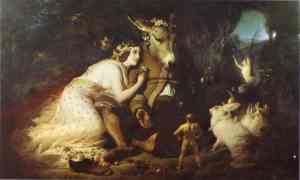
It’s interesting today though how many people aren’t royalists, and don’t believe in God either, but are going to wedding lunches. Quite right, because if Clare’s story means anything it is about the sometimes agonising inability to escape the Self, high or low, and the maxim ‘only connect’! It is also a testament to the eternal need to be involved in theatre, a theatre the British Establishment understands in its life blood. In terms of social connections, the real Shakespeare wrote much though on how the journey of ‘great ones’ – like those fairy powers of A Midsummer Nights Dream, flitting above all us ‘Rude mechanicals’ – can frame and inform lives, quite beyond the obvious facts of power, or of ‘cultural’ influence. Although a little in love with Princess Diana myself, as a teenager, too much champagne and Southern Comfort at a pre-nuptial party meant I missed that particular view of a Royal Wedding, groaning in the dark in my adolescent bedroom. Very rude indeed, and probably a little mechanical too, but perhaps my fairy-tale fantasies were already heartbroken, and I wanted to be a happy prince! Sixteen years later, a lost love meant that Sunday Times headline announcing Diana’s death in Paris was another kind of hard right of passage,that added to the crash of private experience, and grief, one the once lofty Royals took rather a long time to wake up to, in the public consciousness. William and Kate’s obvious and genuine openness to the crowd is just the right approach, backed by that police defence against the ‘fanatical’, ‘fixated’ and the ‘foolish’. Diana was loved for several reasons, a victim of an often nasty establishment, for several others, but perhaps the hurt and violence of famous celebrity deaths can be shattering, above all, because it slaps each of us in the face with the fact of our own mortality. Human grief is then iconised, and Elvis, Jim Morrison, or Princess Diana replace the saints of old, in our ache for comprehension, connection, and not to go down to the undertow. In fact, despite the BBC puff, as we all sell Business UK to the world, and people on the street last night wanting to be part of history, this is not a ‘truly historic moment’ at all. But William probably knows you’re nothing without a woman, and with Shakespeare in mind, today one could venture into intruding on the simple happiness of real human beings, with the words of unruly, dangerous Puck, when remastered by Titania-appeased Oberon, and not talk of the sad past at all.‘Not a mouse shall disturb this hallowed house, I am sent with broom before, to sweep the dust behind the door.

I suppose you could say that if Titania lost the plot by falling for a mortal commoner in her ‘dream’, today Will must be Kate Middleton’s upturned ‘Bottom’, except that the royals have succeeded in becoming rather real, too real if you take Furgy’s example, and you hope the authorities too do not make the law an ass today. If the novel on Clare though, The Quickening Maze, is noted for being brilliant on that shadow-land between the sane, the odd, and the truly or dangerously nuts, watching some of the ‘Wedding Fans’ on telly, getting their places near the Abbey, or indeed watching some of the Middletons themselves, you know that madness, or certainly out-of the circle eccentricity, is alive and well in merry Britain, and always will be. But then Mark Twain joked that when your realise everyone is mad, the mysteries of life disappear and life stands explained.

Most at ‘the top’ become adept at trying to keep it all out, even Andrew Marr, although if the lowly John Clare suffered from ‘madness’, one of the eternal problems of Kingship, indeed any extended forms of leadership, was always the potential imperfections of the individual. I always loved the fact that Henry VI, that ‘saintly’ King who so abhorred the fashion of exposed breasts at his Court, and would cover his eyes in horror at the good and no-doubt scheming ladies, spent most of the battle of Tewksbury talking to a tree. But then Henry was related to the French King Charles VI, who thought he was made of glass, and might soon shatter. Perhaps modern head doctors would simply talk about inflation, as possible for a leader like Gaddafi, isolated by power, as for a poet failing to be Shakespeare. One of the most profound takes though on a state that might afflict countries, parties and groups too, as much as people, travelling through time and change towards modern psychoanalysis, and individual freedoms, is Allan Bennet’s marvellously humane The Madness of King George. The tale of a royal line affected with porphyria, and touching the wild disconnection of King Lear, but with a take on the very healing power of theatre, the very point of writing, while Ian Holm’s stoutly ordered Doctor tries to keep George III ‘in his eye’.

As for any sad past stories though, John Clare’s own agony highlighted not inevitable or sometimes tragic mortality, that Undiscovered Country that ‘we know not of’ , but in that Northampton Asylum, alone, and without the union that is the very stuff of partnership and connection, or dare we talk marriage still, Clare faced something far starker, and in fact more relevant to David Cameron’s ‘Big Society’ too – a kind of living death, in isolation and disconnection, cut off from the vital world, and effectively powerless. A terrifying journey into…

‘…the nothingness of scorn and noise,
Into the living sea of waking dreams
,’

How and why that disconnection happened had many reasons for Clare, himself a clarion voice on the unstable and alienated Self; reasons in his difficulties of supporting his family of eight, in the growing destruction by industrialisation of a rural idyll, in drink, and in his failure, a common failure for artists, to win his audience in his lifetime. Today writers might talk, in the face of Royal expenditure and a party, of the slashing of arts grants, a deep publishing crisis, the failure to lend to small business, and ordinary people of the closing of libraries, and above all the cost of education. But in terms of Phoenix Ark Press we might be warned too by the failure of Clare’s Shepherd’s Calender, in trying to beat the ‘system’, by peddling it himself! Don’t develop a kind of Tourette’s Syndrome either, in public outpourings – although writers are made to feel and speak – or stand up in the middle of a performance of The Merchant of Venice, like poor John Clare did, and have a rant at Shylock! But today art sensitive psychologists like Oliver Sachs might remind us too of the extraordinary and fragile nature of consciousness, and the very worst response to difficulty sometimes being the negative judgement in easy or dismissive terms like ‘madness’. Diana herself was accused of it, in the public eye. Sachs represents that growth of awareness that moved us out of brutal places like Bethlem Hospital, then to become Bedlam, and turned that General Lunatic Asylum in Northamptonshire into St Andrew’s hospital.
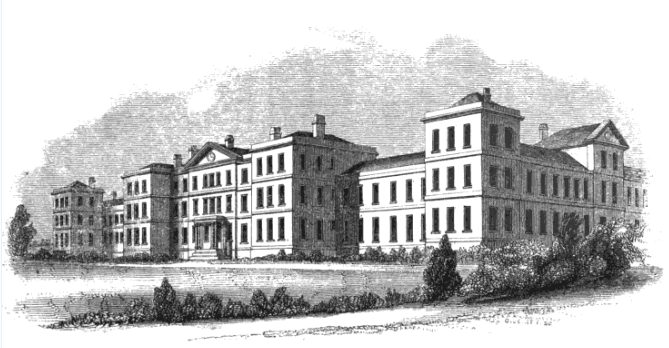
That journey Clare took into the shades though, although he was treated humanely by the enlightened head of the institution, and encouraged to write – and writing may have been his salvation because it to be allowed a communicator to communicate -was a tragic country where…

‘… there is neither sense of life nor joys,
But the vast shipwreck of my life’s esteems;
And e’en the dearest -that I loved the best –
Are strange -nay, rather stranger than the rest.

That ‘vast shipwreck’ is a phrase deluged in grief, and captures the true monumentality of his mental and emotional suffering. Why should ‘the dearest’ though, that Claire ‘loved the best’, be ‘rather strange than the rest‘? In the alienations of lost loves, and friendships too, the violent flipsides of temporarily grasped happinesses, and mutual understandings and confidences, that seem sacred at the time, we all know why. But then to be hipper ‘people are strange, when you’re a stranger, faces look ugly, when you’re alone.’ Those failures and losses seem to challenge the very meaning of the private trusts and vows we can make, or don’t make these days. As Yeats put it ‘tread softly, for you tread on my dreams.’But then it is clear that something had dislocated inside Clare, and for the masculine, perhaps it lay far beyond the beginnings and consumations of marriage, but always has something to do with the loss of connection with the feminine, inside and out.

King Lear knew it above all, in his blindness to Cordelia’s real, sane and balanced love, but Clare’s re-writing of Child Harold is a lament for lost love too, and Clare’s first love for a girl called Mary Joyce was blocked by her prosperous farm-owning father. The country boy Clare, who was a farm labourer as a child, a pub Pot-boy, a gardener, a lime-labourer, and a Gypsy camp follower too, had not yet made any impression as a poet. But even if he had, and there was more money then in poetry than now, while he was supported by friends and patrons, you can imagine the scorn Mary’s powerful dad might have thrown at poets. Walking home from his first ‘mental home’, Clare was lost in the kingdom of fantasy, believing he was returning not just to his wife, but Mary too.

There is a kind of tragic purity too in Clare’s yearning for peace, in that real asylum, a sort of holy innocence, beyond the potential scorn and noise of life, or mankind, politics or power, or today the ever-present invasion of the ‘news’ hungry cameras. Or what deeply sensitive Clare at least imagined in his head to be that scorn and noise; the nasty whispers of the nasty world. Clare’s great I AM, undercut though with that bitter and yet…, is the author’s revolutionary defence of his and human identity, and of the so-called ‘common man’ too, as relevant today as then. But perhaps the Ego itself had to inflate, and then retreat, to see life and the world once more, and restore its glory and wonder, as the filmstrip of memory flickered through his lonely consciousness, in a way that could certainly ruin a good party.

‘I long for scenes where man has never trod,
A place where woman never smiled or wept;
There to abide with my Creator, God,
And sleep as I in childhood sweetly slept:’

Sleep – ever the natural Shakespeare’s ‘balm of hurt minds’ – but then there is for Clare, beyond hurt and near suicidal pain, the desire no longer to affect or be affected by life, and agonised memory. He should have read Kundera’s Book of Laughter and Forgetting. As if the greatest drama though is the one where nothing happens, and in a sense perhaps love is actually just that peaceful ‘un-drama’ of absolute connection, and a journey achieved. Where far beyond a great structure like Westminster Abbey, and the connectedness or supposed connectedness of rightly happy public events, a rural poet and natural and much suffering commoner was bound and healed again in the arms of beautiful nature.

‘Untroubling and untroubled where I lie, –
The grass below -above the vaulted sky.’

Return to Cultural Essays

David Clement-Davies April 2011. The public domain photos are John Clare, Landseer’s Titania and Bottom in A Midsummer Night’s Dream, and The Northamptonshire County General Lunatic Asylum in 1848. David is a best-selling fantasy author, a journalist and the founder of Phoenix Ark Press. You can visit his website by going to DavidClementDavies.com

Leave a comment

Filed under Community, Culture, London, Poetry

THE 7TH PHOENIX ARK CULTURAL ESSAY

THE TWO WILLIAMS by Anthony Gardner

Recent travels have brought to mind two poets. Several weeks ago I was in Ireland, and thought inevitably of Yeats, whose poetry illuminated my own upbringing there. A fortnight later I visited Wordsworth country, which I’ve come to know only in the past few years. What, I found myself wondering, would each of these great writers have made of the other’s milieu, had Wordsworth not died fifteen years before Yeats was born? And what would they make of their domains today?

My Irish visit focussed on County Laois – not a region strongly associated with Yeats. But the Georgian mansion in which I stayed (now beautifully and painstakingly restored , as a hotel) was instantly evocative of his ‘Upon a House Shaken by the Land Agitation’, celebrating the virtues of gracious living:

‘…the sweet laughing eagle thoughts that grow
Where wings have memories of wings, and all
That comes of the best knit to the best…’

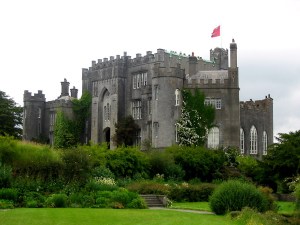
Many such houses were burned to the ground in the 1920s, and those that survived in the area have had widely different fates. Birr Castle remains the home of the Earl of Rosse, though its grounds and Victorian observatory are open to the public; Stradbally Hall is the setting for Ireland’s leading music festival, the Electric Picnic; Leap Castle (the country’s most haunted) is being restored single-handed, by a professional tin-whistle player, Sean Ryan.

In the Lake District, I visited the village of Lorton, four miles from Cockermouth (the town in which Wordsworth spent his early childhood). Lorton’s most famous inhabitant is an ancient yew tree, to which Wordsworth devoted a short poem, including the lines

‘This solitary tree! A living thing
Produced too slowly ever to decay;
Of form and aspect too magnificent
To be destroyed.’

This has proved over-optimistic: the tree is only half the size it once was; but it is still an impressive sight, and the fact that Wordsworth made the pilgrimage to see it brings a small thrill.

Wordsworth did not, to my knowledge, ever visit Ireland, nor Yeats the Lake District; the one place they had in common was London. The fact that Wordsworth, the great poet of nature, should have written the most famous of all poems in praise of the capital – ‘Upon Westminster Bridge’ – has always intrigued me. It is curious too (though in keeping with the tradition of the Irish artist in exile) that Yeats’s most famous poem, ‘The Lake Isle of Innisfree’, was inspired by a shop window in the Strand:

‘I will arise and go now, for always night and day
I hear lake waters lapping with low sounds by the shore.
When standing on the roadway, or on the pavements grey,
I hear it in the deep earth’s core.’

Wordsworth might have found in this an echo of his own ‘Lines Composed a Few Miles Above Tintern Abbey’, with its gratitude for memories of nature ‘’mid the din/Of towns and cities’. But I doubt that he would have thought much of Yeats’s lake and ‘bee-loud glade’: it’s far too tame, a world away from the grandeur of the Cumbrian scenery ,which formed his own sensibility with its ‘huge and mighty Forms’. The waterfalls and seascapes which characterise Yeats’s early West of Ireland poems would have left him equally unimpressed, for all the delight of fairies dancing

‘Where the wave of moonlight glosses
The dim grey sands with light…’

Yeats’s Celtic Twilight is a soft, dreamy thing which the harsh winds that blow with ‘strange utterance’ through Wordsworth’s ‘The Prelude’ might rip away in a moment.

Let us turn the tables, though, and imagine Yeats visiting Wordsworth at Dove Cottage. He would certainly have approved of the domestic set-up – Mary and Dorothy Wordsworth, indulging William as he himself was indulged by his young wife Georgie. But the building itself? Surely not in keeping with Yeats’s notion of the poet’s role in society: for him the Duke of Urbino’s court or Lady Gregory’s Coole Park were where a great artist belonged, at once creating beauty and finding inspiration in beautiful things. Even the much larger Rydal Mount, to which Wordsworth moved in 1813, would hardly fit the bill.
Perhaps Wordsworth takes him across the fells to visit the family’s old home in Cockermouth. Now owned by the National Trust, it ranks second only to Cockermouth Castle in the town. ‘That’s more like it,’ thinks Yeats; but Wordsworth has a bitter tale to tell about the aftermath of his father’s death, and the failure of John Wordsworth’s employer, a landowner on a grand scale, to repay an enormous sum owing to the family. No wonder he doesn’t share his guest’s enthusiasm for the splendid dwellings of the rich.

He might approve, though, of the home Yeats creates for himself in later life. Thoor Ballylee in County Galway is a ruin restored

‘With old mill boards and sea-green slates,
And smithy work from the Gort forge…’

but even after refurbishment it’s pretty uncomfortable. To Yeats its greatest importance is as a symbol from which he draws inspiration for ‘The Tower’ and other great late poems. Wordsworth is stirred by ruins, too, from those of Tintern Abbey, to the ruined cottage which symbolises a peasant family’s suffering in the eponymous poem.

Can we picture the two men working side by side as Wordsworth did with Coleridge? Not easily. For one thing, Wordsworth likes to walk while he is composing, while for Yeats writing is ‘sedentary toil’. But from time to time he climbs to the top of the tower and looks about him. How different Galway in the 1920s is from the gentle countryside of his youth!

In the final part of ‘Mediations in Time of Civil War’ he sees phantoms of hatred sweeping across the sky in a ‘rage-driven, rage-tormented and rage-hungry troop’.

Perhaps Wordsworth accompanies him up onto the roof after dinner and they confront the tumult like a pair of King Lears, the wind blowing their white hair into halos. But I suspect not: Wordsworth has seen enough of bloody civil strife during the French Revolution – for him such things are best considered in the light of a new day, as in ‘Resolution and Independence’:

‘There was a roaring in the wind all night;
The rain came heavily and fell in floods;
But now the sun is rising calm and bright;
The birds are singing in the distant woods…’

For today’s visitor to the Lake District, these lines recall the terrible floods which assailed Cockermouth and Workington last winter. I think Wordsworth would be impressed by how his birthplace has picked itself up again, and reassured that the stoicism of the local people still endures – though saddened by the way in which traditional agriculture has been eclipsed by tourism.

As for Yeats’s homeland, it is significant that when Ireland was forced to accept the EU’s financial support a few months ago, the Irish Times quoted his ‘September 1913’ in its leader:

‘Was it for this…
…………that all the blood was shed,
For this Edward Fitzgerald died,
And Robert Emmet and Wolfe Tone,
All that delirium of the brave?’

Only Yeats at his most magnificently scathing could do justice to the ignominy brought upon his country and the spectacle of picturesque landscapes lost to thousands of unfinished houses.

It is possible that the two great poets would not have got on at all. Wordsworth was not known for his kindness to younger writers, and made a poor impression on Keats when the latter came to pay his respects. Yeats counted Wordsworth among his early heroes, but was more critical of him in middle age:

He strikes me as always destroying his poetic experience, which was of course of incomparable value, by his reflective power. His intellect was commonplace and unfortunately he had been taught to respect nothing else.

Nevertheless, roaming the countryside together, I think they would have found shared sympathies – for example, their concern for ordinary people, such as the shepherd deserted by his son in Wordsworth’s ‘Michael’, or the old pauper in Yeats’s ‘Adam’s Curse’ breaking stones ‘in all kinds of weather’. Indeed, if I had to choose the poem by Yeats that brought him closest to Wordsworth, it would be his description of his ideal reader, ‘The Fisherman’:

….his sun-freckled face,
And grey Connemara cloth,
Climbing up to a place
Where stone is dark under froth,
And the down-turn of his wrist
When the flies drop in the stream;
A man who does not exist,
A man who is but a dream…’

Return to Cultural Essays

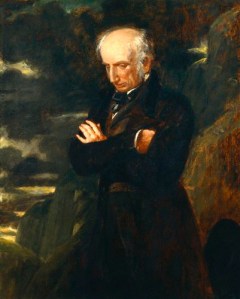
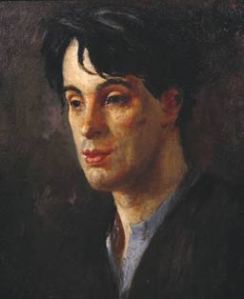
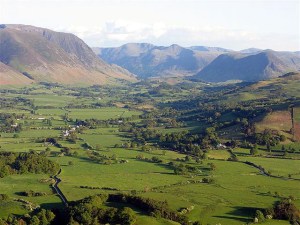
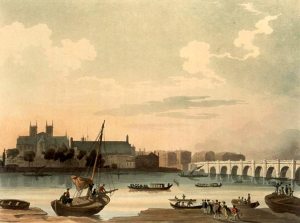
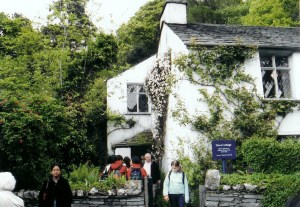
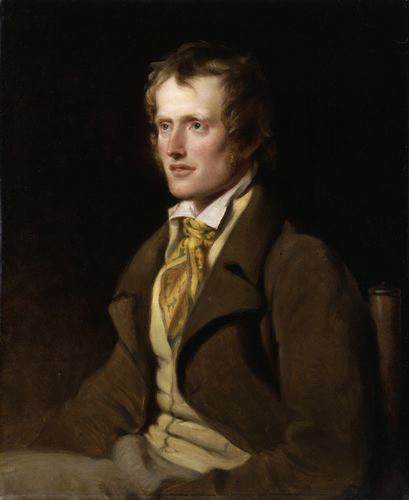
Anthony Gardner April 2011. The public domain photos are Wordsworth by Robert Haydon, Yeats by Augustus John, Birr Castle, The Lorton Valley, Westminster Bridge and Hall, painted in 1808, a year after Wordsworth declared ‘Earth hath not anything to show more fair’ and Dove Cottage today. Anthony is profiled below and his novel ‘The Rivers of Heaven’ is published by Starhaven.

1 Comment

Filed under Community, Poetry, The Arts

THE POET’S SWEATSHOP – PROUD TO SHARE A GEM FOR ALL SEASONS

LEARNING TO SKI
(For Rosanna)

The hillside is a blank page
On which I carve my hieroglyphs:
Snowplow, slalom, parallel turn.
A week ago these signifiers
Were incomprehensible to me;
Now I speak the language of the slopes,
Shifting the weight of consonants on my tongue –
Snowplow, slalom, parallel turn.
I swoop on bladed feet across the silence.

I thought I’d miss the moment, at my time of life,
To master a new dialect of risk.
But you have taught me things about myself I never guessed;
You have shown me blue skies where only blizzards flew;
Folds of sunlight on mountainsides;
Valleys wedged in the doorway of heaven.

C. Anthony Gardner 2010

Anthony is a novelist, Fellow of the Royal Society of Literature, editor of the RSL, the Society’s Review, and founder of http://www.tomorrowsbooks.com
His novel, The Rivers of Heaven, is published by Starhaven. He lives in London, with Rosanna and Sasha.

Leave a comment

Filed under Poetry