Category Archives: The Arts

PROFILING SAUL DAVID

Saul is the author of several critically acclaimed history books including The Indian Mutiny: 1857 (shortlisted for the Westminster Medal for Military Literature), Zulu: the Heroism and Tragedy of the Zulu War of 1879 (a Waterstone’s Military History Book of the Year) and, most recently, Victoria’s Wars: The Rise of Empire. His latest work of history – Soldiers: The Redcoat from the Glorious Revolution to Waterloo – will be published by Penguin in February 2012. Saul is professor of War Studies at the University of Buckingham, and Programme Director for Buckingham’s London based MA in Military History.

An experienced broadcaster, Saul has appeared in history programmes for all major TV channels and is a regular on Radio 4. He has also written two historical novels, set during the wars of the late Victorian period and featuring the Anglo-African soldier George Hart. The first, Zulu Hart, was published last year. Praised by Bernard Cornwell, it was chosen as Waterstone’s New Talent in Fiction title, and reached number 4 in the Daily Telegraph hardback fiction bestsellers. The follow up, Hart of Empire, will be published on August 5.

For reviews and Saul’s website click HERE

Leave a comment

Filed under Adult Fiction, Books, Culture, The Arts

BARCLAYS AND THE BIG SOCIETY?!

How interesting that Barclays Bank in the UK have just refused a small business loan, both to back an established, award-winning author, with 300,000 sales behind him, and a whole little publisher. Despite billions in profits, reported scandals about paying little tax, and their glossy adverts on TV purporting to be at the heart of Mr Cameron’s Big Society, backing 4 in 5 start-ups, not only was it a no, but the potential interest rate was absolutely punitive. So what are the realities for real but small business people out there, as banks are reporting more record profits, continued bonuses, and harder and harder lending requirements? For the little guy, the small business, those absolutely key links in finding a truly healthy and not top-heavy business community and society, there are reports everywhere of doors slammed, and people being financially throttled to death. Vince Cable was absolutely right, that although banks are not charities and have to assess risk, the banks need to be forced to use some of those taxpayer ring-fenced profits to support people and good, viable new projects everywhere, especially those entrepreneurs who want not only to support themselves, if allowed to, but generate jobs, not to mention sales, ideas and real culture. Or perhaps the gurus behind the desks should have asked to read David Clement-Davies and Phoenix Ark books before assessing that risk! Barclays has a very bad name, from some of the people we’ve talked to, and we are starting to believe it, but will they ever take the lead and show a more reasonable and visionary way, unless somehow forced? If regulation isn’t the answer, then something is needed to shake them and wake them up. Where are you Vince Cable, and what is the Liberal-Con alliance really doing to help and protect?!

Leave a comment

Filed under Publishing, The Arts, The Phoenix Story, Uncategorized

THE FIRST PHOENIX ARK ‘CULTURAL ESSAY’

‘OPULENCE’ – a cultural ‘short story’, by Philip Mount

Some time ago I was asked to write a piece of work regarding ‘Opulence’. I don’t really know what I wrote, or in fact if it really looks directly at opulence. I’m not really sure which of the below has any ‘truth’ in it. Which is truth – thought, memory or history? If any of it. Some of the people are, or were.

It is what it is

Living in New York offers the privilege of being a part of a wealthy family. A commune of one and a half million, in Manhattan alone. Of the many advantages to a large family, one is being privy to, and sharing, the collective turn of phrase. I left the city in 2006 – at this time the phrase on many a New Yorkers lips was: ‘Suck it up’.
One of my favourites was ‘This is not my movie’, or variations of: ‘This is turning into a bad movie’ or, ‘Thisisnotmymovie’ (in monotone, under breath). Of course there are the New York Staples: ‘…the f***?!’, shortened from ‘What the f***?!’ ‘Fergedaboutit, what are you gona do?’ There are more, many.

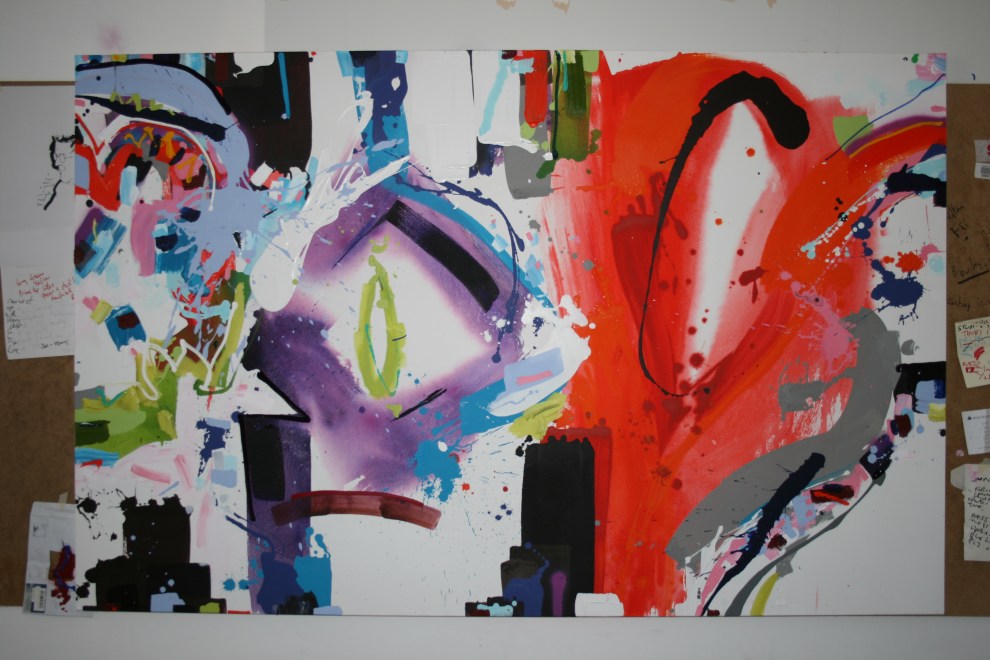
So, in my brief visit there, in early 2008, whilst delivering a new piece of artwork to collector Darren, and wife Margarete, and in the company of my young friend, Mary the Dancer, we decided we should celebrate with a drink and a bite. Dipping into fondue, whilst sitting around an elegant kitchen table, in their newly decorated minimalist Soho loft, I was pleased to be witness to the phrase of the moment, delivered to me from my young friend, Mary. Darren scans the artwork from a distance… ‘And have you titled this one, Philip?’
‘Ammiratore Vicis…Which, loosely translated, is the vicarious admirer… The painting is most happy when seen. It likes to be seen. Doesn’t hide away, it’s not introspective – it looks out, comes out – it’s bigger than the canvas. It demands you look at it and then sees itself through your eyes.’

The eyes of the table move off me and look toward the painting, hanging above the fireplace, a few painful moments pass and, much to my relief, heads begin to nod a little in collective agreement…Mary comes to my rescue; ‘Yip, I guess… It is what it is.’ ‘It is what it is,’ agrees Darren.

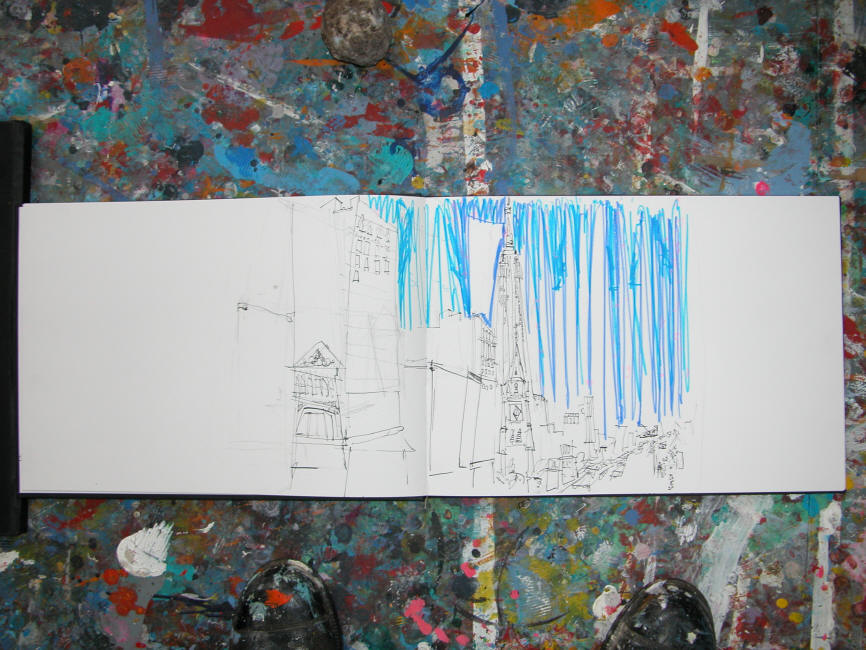
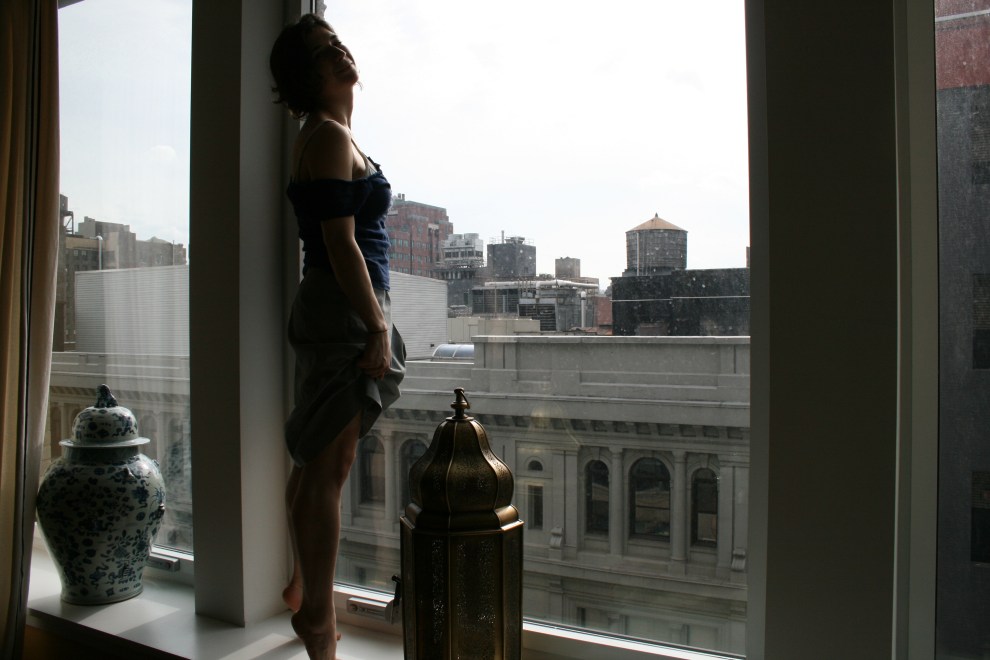
The next morning I’m walking with my young friend, Mary the Dancer, back to the apartment on W19th; I’ve asked her if she’ll let me photograph and sketch her. As we cross our street South to North, through the jammed up traffic, a driver leans on her horn for a nerve breaking amount of time.‘…the f***?!’ hollers Mary, ‘Y’know, people have a greater sense of entitlement in New York more than anywhere else in the world. It drives me crazy.’

IT IS WHAT IT IS? by Philip Mount – Later that day I’m on my way to an apartment in ‘Nolita’. I pick up some perfect roses on the way to Mulberry Street and duck into Fanelli’s tavern on Prince Street for a quick sharpener. I see Bill, the NYU film professor, in his usual seat at the bar.
His head cranes a hypermobile 180.‘Hey there… take a seat!’ he beckons, patting the bar next to him. I ask him what movies he’s seen lately and what he thinks of it all – ‘Coen Brothers – Thieves, totally derivative. Kevin Costner – guy still can’t act. Diving Bell Butterfly – artists becoming filmmakers – what are you gona do? Favourite film of the year – without question – Ratatouille! Y’know who I bumped into the other day…? That actor… English guy… worked with Sean Penn…’
‘Gary Oldman?’ I try.
‘Naaah… Tim Roth! So we’re at the bar talking and I say ‘Is Roth your real name?’ He tells me – Nah! It’s Smith – he changed it to Roth out of respect, something to do with his father, who knows, maybe he liberated a camp back in the war…’

Equity of fear

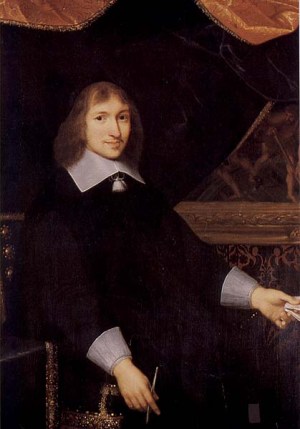
The motivation for Louis XIV to build Versaille, and to such Majestic splendour, was possibly brought about from an equity of absolute fear. The fund from which his inspiration sprang most likely derived from a glamorous party, hosted by Nicolas Fouquet (then finance minister), at his proud residence – the chateaux at Vaux-le-Vicomte.
In 1661, then green-eyed Louis claimed the finance minister had built this estate through embezzling from the crown. Louis confiscated Fouquet’s property and took into employment the talents used by Fouquet – the architects of his stolen dream; Louis Le Vau, André Le Nôtre (landscape), and decorator and painter Charles Le Brun, to build Versailles.

Don Trump

He was my first thought, as I walked into Darren’s loft. His new development , Tower Soho – 460 million dollars, 45 floors – is clearly visible from the north windows of the apartment. A couple of weeks before I arrived, Margarete heard a bang, an explosion, she called it – ‘well, after what happened… you hear a bang and think God no!’, but it wasn’t a bomb, or an airplane, it was a construction worker falling to his death, hitting the ground with such force that Margarete could hear his finality 4 blocks away. Some of the gaudy creations of Trump may put Midas at a loss for things to do. There is probably some other psychological or god-worship intention behind his wish to alchemize. Compromise comes when there are two elements in conflict. Doesn’t it? Following this logic, is Versailles compromised? And many other Grand Palaces I can think of.

I’m often lightly charmed at the amount of serious landed-gentry millionaires I know that ‘don’t know where the next pint of milk is coming from’ or announce they’re heading off to Barbados or Monaco in the ‘in-season’, but will walk around in worn out shoes, telling of how ‘vehy pooer’ they are at present. This false poverty serves the upper classes and their peers well – they have little need to show wealth, though this binary living may compromise their residences, their context.


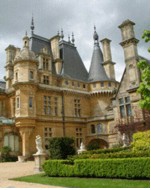
So I looked to Waddesdon Manor. The Rothschilds, upon building it, were neither established nor noble, nor were they new money. Their Manor at Waddesdon, transformed a hill top into uncompromised and sheer sumptuousness. Opulence. In it’s pure form. A very rare thing. With no other intention, from what I can feel, no compromise or conflict, it simply is what it is.

Philip Mount – February 2011

Return to Cultural Essays

Philip is profiled with his web link below. The second Phoenix Cultural essay will be another perfect addition to ‘The Storyeller’s Publisher’ and entitled ‘The Child’s Eye’ by Donald Sturrock, music impresario, and the hugely lauded biographer of Roald Dahl.

1 Comment

Filed under America and the UK, The Arts

TO KINDLE OR NOT TO KINDLE? THAT IS STILL THE QUESTION

People have asked if they will need to get a Kindle to get Phoenix books, and it’s brought up the question again of what books are. Books are many things, done in many beautiful and important ways, and I’ve no intention of being an enemy of printed books. One factor alone means Phoenix will go first to Kindle, and that is we hold the electronic rights to Fire Bringer and The Sight. But the internet is also as significant a revolution as Guttenberg, and ‘publishing’ now has very different meanings. Kindle is just one ‘platform’, among many, that becomes like an instant bookshop. The reader friendly quality of such devices, the bookish feel, except that you can have thousands of titles, is advancing in leaps and bounds. So to me, especially with fiction and journalism – although physical books are like old friends and will never disappear, or let you down – it does not matter so much in what form people are reading. But the fact that they are reading, and what they are reading. That is crucial, and why a core belief has to be in the power of great story, and the storytellers that make them. Of course, since so much is dominated by the power of money, and product placement, which always seems to take over inside big publishers, it still remains to be seen how the ‘self-publisher’, or the little publisher, can get the works they believe in to the fore. It is why independents, authors and publishers alike, so need to hook up, to provide mutual quality control, and so create a voice and prominence in the market place. Then the challenge will be whether they can hold to certain principles of protecting writers and artists, and balancing money with other talent. DCD

Leave a comment

Filed under Publishing, The Arts

THEY’LL NEVER DESTROY A VIEW

It looks more like some futuristic warhead than a pickled vegetable, but what a way to go! A friend and Daily Telegraph journalist claims it was she who first coined the nickname ‘Gherkin’, for Norman Foster’s glass and metal miracle at the heart of the City, on 30 St Mary Axe, but now it’s semi-official. The Gherkin stands on the sight of the former Baltic Exchange and, although plans for a larger Millenium Tower were dropped, like the Twin Towers that building was destroyed in a terrorist attack, from the massive bomb placed by the Provisional IRA. The night before last though there was a Charity-PR-Photo Show at the top of the new incarnation, and that astounding view is a wonder to man and phoenix alike. At night, with an open 380 degree view over sparkling London, sharp and clean in the hard cold, your mind and heart soar, beyond the shiny suites, fizzing champagne and the polite guff, out across the capital; then down, to Tower Bridge, and the Tower of London, like a medieval mecano set, and out along the snaking bend of the river Thames. To its coming rival too, Renzo Piano’s ‘Shard’, looking like a cross between Thunderbird III, only because of the scaffolding, and an architectural Christmas present, waiting to be unwrapped. The Gherkin may not be enormously tall, but it’s what’s in the way that counts, namely nothing, and in that glass and metal capsule, surprisingly light in design, you feel as if a map of the world has been laid before you. Well, at least a map of thrilling and often eccentric city. With a nod to the Institute of Chartered Surveyors, it brings on thoughts of William Blake, no longer wandering through each ‘chartered’ street, ‘near where the chartered Thames doth flow’, but asking a better question – ‘how do we know but every bird that cuts the airy way, is an immense world of delight, bounded by our five senses?”

Leave a comment

Filed under Environment, The Arts, Uncategorized

DRUE HEINZ, AND THE LITTLE LITERARY MYSTERY OF A WARTIME STRIPTEASE

FROM THE PHOENIX ARK FILES:

It turned up in a World War II visitor’s book, from an aristocratic home, on a hill in Switzerland, with sweeping views to Mont Blanc. There a glamorous American heiress, and a Swiss Baron, banker, and notable art collector, lived out the war in grand style, and with a considerable taste for adventure. Among their more permanent guests was the painter Balthus. They were also intimately connected with a celebrated spy – Allen Dulles – first Civilian Director of the CIA. The hostess of the house would help Dulles retrieve the Ciano diaries from Mussolini’s favourite daughter, Edda. As part of an American East Coast elite, she was at least an informal agent for the OSS, forerunner to the CIA, the Office of Strategic Services. As for Dulles, still said to be a romantic hero at the Agency, and a committed lady’s man, the be-spectacled, swashbuckling, but famously discrete lawyer had crossed into Switzerland, via Lisbon and Spain, as the borders slammed shut on the eve of Operation Torch, the allied invasion of North Africa. He was armed with a banker’s draft for a million dollars, and a virtually free hand, as Berne OSS station chief. That he cherished, and fully exploited, culminating in his work over Operation Sunrise, for German surrender in Northern Italy. His all important Swiss escapade is touched on, fictionalised, but largely avoided, in the film The Good Shepherd, starring Matt Damon. Dulles certainly believed in something that seems to have gone into decline, operatives fully enagaged on the ground, and culturally educated and well informed, rather than doing much second hand, perhaps nowadays down the net. He once famously said that all you really need in life is ‘a little bit of courage’.

Dulles had worked for the State Department, became a lawyer with Cromwell and Sullivan, and was a member of Yale’s infamous Skull and Bones Society, initiate to Presidents and security gurus, alike. In Switzerland he set about building a spy network that saw his intelligence gathering reach Roosevelt’s own desk. Since he had turned Lenin from the American Legation door in Switzerland, in 1918, he would never make the same mistake again, and worked with many. He also contacted every American living there, to ask for help, in what he described to Washington as a ‘somewhat distorted world’. It was the kind of world where agents still wore red carnations, or proffered a pack of Camel cigarettes, rather than Gauloise, to establish their allegiance to Free France, or Vichy. One that saw the British and Americans in touch with Admiral Canaris, employer and lover of Mata Hari, as head of the Abwehr, German Military Intelligence. Until Canaris fell, after the attempt to assassinate Hitler, and the Abwehr were abolished. Canaris was effectively replaced by Walter Schellenberg, who mounted two machine guns on his desk in Berlin, and later settled in Switzerland to write The Labyrinth. One of Allen Dulles’s greatest coups though was securing the help of the heroic Fritz Kolbe, who the British had turned away from ‘the shop’, and whose reports were validated in London by none other than Kim Philby, already working for the Soviets. Actually Dulles was too acute to sign his name in a visitor’s book, although his daughter Joan, and troubled wife Clover Todd, both appear in 1944. As does a patient of the psychologist Carl Jung, who, though he never came to the house, Dulles also consulted in Germany, and had his own OSS code number. There too came Dulles’s station replacement in Berne, Robert P. Joyce, and General Barnwell Legge, American Legation secretary. Legge was heavily criticized in a recent military controversy on the internet, for his involvement in preventing downed American airmen escape, under threat of Court Martial, probably because Dulles did not want their Swiss operation compromised. Also for failing to correct conditions at the scandalous camp at Wilmeroose, although one subordinate called him a caring man.

In a very ‘Special Relationship’, British Intelligence were at the house too, many times. In the person of George Younghusband, military number two at the British Legation, and the Colditz escapee Pat Reid, famous for his escape-themed board game, and for so successfully telling The Colditz Story, after the war. Reid never wrote about his time in Switzerland though. More specifically, on the British front, there is Henry Cartright, head of MI9 in Switzerland. MI9 dealt with escape routes out of Switzerland, although the role of MI6 has been little written about, in terms of the use and significance of information that debriefed escapees must have provided to intelligence networks, for attacks on Germany. Cartwright was a world War I escapee himself, whose best seller on the subject was avid Nazi reading in WWII, for obvious reasons. That house was watched closely by the Swiss Police too, reported for high antics, and for harbouring ‘a nest of spies’. Its owners were friends with the head of the Berne police though, and so probably protected, in the semi neutral atmosphere of smoke and mirrors diplomacy. One affected in Switzerland by the changing winds of war.

Soon after the war though, they received a grateful card from the British Legation, commending the couple not only for hospitality, but for their invaluable help to British and American escapees. It makes a family visitor’s book a very important historical document, as are unseen papers on Hitler and Edda Mussolini. Perhaps significantly, they received no such commendations from US Services, since spying rarely stops. The question still remains though as to how much their Brit guests were aware of the depth of their American connections, because the house’s true significance is testified to by a meeting in 1945, still a mystery, that involved a visit by colonels at the heart of SHAEF, The Supreme Headquarters of the Allied Expeditionary Force, and ETOUSA, American Theatre of Operations, during Operation Overlord. They had helped covertly in a war that would see Nazi scientists smuggled to America too, in the battle for the A-Bomb, under Dulles’s Operation Paperclip, and herald the triumph of American world hegemony, in more ways than simple military victory. If information is power, cash rich America certainly won the covert war, because America soon had vast reserves of European files transferred to Washington. Incidentally, some 6000 secret papers relating to Switzerland, and designated Safehaven, remain closed.

There is one rather surprising name in the visitor’s book too though, on an evening in 1943 – Drue Mackenzie Robertson. She is actually Drue Heinz, future wife of the Baked Bean and Ketchup Multi-Millionaire, Henry J Heinz. She was a doyenne of New York Society for many years – writing letters to the New Yorker in 1944, so she may have been back in the States by then – but also became a celebrated patron of the literary arts. One the flapping Phoenix Ark could certainly do with a little help from – for our love of stories, real and fictional! She is publisher of The Paris Review, established the Drue Heinz Literature Prize, and her foundation endows the Drue Heinz lecture series in Pittsburg. At the Carnegie Museum of Art, her foundation also funds exhibitions at the Heinz Architectural Centre, and supports The Lincoln Centre Review. Having endowed a chair of American Literature at St John’s College, Oxford, and involved with Hertford College too, Drue Heinz has long been at the very epicentre of American Arts and Culture, but also influential in the UK. In 2002 she was made an Honorary Fellow of The Royal Society of Literature.

Born Doreen Mary English, Mrs Heinz clearly had a taste for theatrics earlier on, and as an actress, earned a small part in the movie Uneasy Terms, in 1948. It is all a long time ago, and many lives have passed in-between, so distance affords both mystery, and admiration, for a now grand old literary lady. But what of such tantalising ‘skull and bones’ in her cupboard, and was Drue Heinz really part of the OSS too, America’s Office of Strategic Services, or only linked by association? The term spy became a very moveable feast during the war, but it is an open secret that some of the most fertile areas of unwritten intelligence history are neutral territories, and Switzerland is no exception. Drue Heinz was there that night in Switzerland, 67 years ago, in 1943, and her signature is on the visitor’s page too, below her second husband, Dale Wilford Maher. As a graduate of the US Cavalry School and military attaché, Maher is a dead ringer for a spy, and signs himself ‘Master of the Five by Five”. That entry rather bemused this excited researcher, until, last year, one of the obvious links sprang fully armed from the pages of history, to validate a remarkable story, worthy of a movie, or a very stylish spy novel. ‘Five by Five’ was official Nato parlance for the best quality wireless transmissions, namely ‘reading you loud and clear’.

These people based at the American Legation then, and guests at a private home, were sending back radio reports, as Dulles himself began nightly transmissions from Switzerland, which in a coming technological age changed the cloak and dagger style of British dominated spying. It was the dawn of a new era, and they specialised in American style code words, like ‘Fatboy’ for Herman Goering. Stationed in Berne, in his beautiful flat in the Herengasse, Dulles’s own rather charming code name was Mr Burns, so you might take another glance at the satirical cartoon The Simpsons. To underline the personal touch, that Dulles would stamp all over the CIA, he called the technique for an operative communicating with a plane overhead by radio, ‘J-E Operations’. It came from the initials of Dulles’s daughter Joan, and his sister Eleanor. Despite British fears, Dulles’s work never compromised the greatest British coup though, in his supposedly ‘gung ho’ and open door approach. A coup embodied in the Enigma project, and Ultra transmissions, concealing the fact Britain had cracked and could read all German messages at the start of the war. British archives, although still closed, reveal a wireless transmitor was installed in their own Swiss legation in 1943.

Dulles, whose obsession would soon become the Soviet threat, and who encouraged later assassination programmes, out of the no-holes-barred tactics learnt in defeating the Nazis, notably had shares in the American Fruit Company, and has a rather more suspect role after his heroic war effort. Allied propaganda was one of his specialities in Switzerland, and as a master of dis-information, he was to be involved in a Mind Control programme, and Operation Mockingbird – perhaps he liked Harper Lee – the CIA’s attempt to directly influence the American media. Another visitor to that house would be Captain Tracy Barnes, a so-called ‘Jedburgh Agent’, and code named ‘Trick’, who would later turn up in the Cuban ‘Bay of Pigs’ debacle. It was of course Cuban bedeviled Kennedy who said of the CIA that he would like to scatter the organisation ‘to the four winds’. But what of Drue Heinz, whose Wikepedia profile is rather thin? Tantalizingly, that evening Drue Heinz signed herself in appealingly Mata Hari vein, for such a sparkling Manhattan hostess-to-be – “Queenie – the Striptease Queen!” The intense passions and fortunes of war, and such heady Swiss excitement, may have been too much for some. Dale Maher died in 1948, and his forwarding address on the internet is simply listed as ‘The State Department’. Drue Mackenzie Robertson married Henry J. Heinz II in 1953, becoming his third wife, and so perhaps beginning her powerful and passionate role in fiction and the arts. A passion fully shared by Phoenix Ark Press, although admittedly with a sometimes sceptical eye on other literary powers that be.

If you enjoyed this article, which is exclusive and under copyright, you can donate to building a little writer’s publisher:

Phoenix Ark Press errors: If anything is factually wrong in any articles on the Blog, please write to us direct, and we will enadeavour to check and correct.

1 Comment

Filed under America and the UK, Publishing, The Arts

TALES OF THE VERY UNEXPECTED

It’s interesting Roald Dahl, any children’s author’s hero, thought of a ‘consequences style’ story, just discovered by The Sunday Times. Phoenix was thinking of one too. Many thoughts here, and many unexpected consequences, when a story is given to the world, but what is it that writers have to do to be respected, and protected? Is the only value we hold nowadays, not 12 years at a craft, starred reviews, awards, reports of books not staying on the shelves in School Libraries, fantastic letters, praised presentations, even three hundred thousand sales, but only that thing called a ‘best seller’, especially in ‘success’ obsessed America? Because it is really all about money and power, and the growing ruthlessness inside publishing houses, propping up big teams, and big money machines? I sent a file of precious fan letters received to my publisher, but that did not wake any one up either.

It is to the absolute shame of any editor though, inside that system, if they will not protect the essential openness and flow of creativity, vital to any real artist. Even let the beautiful Cleaner Wrasse feed, in the protective shadow of the great whales. Only partly because of a supposedly private matter, that stamped itself all over a publisher in New York. Where once I had a wonderful link to a designer, to a team, my editor fought for nothing but their own power base. So a writer was forced to work into a brick wall, with not even that one classic guarantee at least afforded to authors in a contract, respected either, namely some minor and genuine say in a cover. Art is about beauty, value, story into meaning, true culture, but expressed in the full and free expression of the author, whether it’s fantasy, literary fiction, or non-fiction. Unless those people who build ‘their lists’ guard those things with all they are, only the principle of money through gimmicks will prevail, not real storytellers at all. I’m not jealous of the big hitters, and readers set the pace, because if you don’t like a book, put it away. But I do not agree the market is the only meaning, in anything, and at Phoenix the power of story has to win this one, and perhaps online too, help to affect some kind of sea-change. No one at all takes a lead nowadays, and the confusion as to what we might be reading, who takes those gems to the public, and who the Gatekeepers now are, is writ large everywhere. The threat of online and Kindle is that there are no Gatekeepers at all, so how are brilliance or quality defended and identified, and how do they survive in the marketplace? That is a debate that simply has to be engaged in by everyone, and fought out in every sphere, but I suggest writers have a very big say in the matter. DCD

The opinions expressed by David Clement-Davies are unique to him, and not to be seen as the opinions of Phoenix Ark Press. That is the difference between a writer’s blog, and a publishing website, profiling several pieces of work, and both contained at WordPress. Phoenix Ark Press is a Limited Company.

Leave a comment

Filed under America and the UK, Publishing, The Arts

WELL, SAYING IT BLUNTLY!

Leave a comment

Filed under America and the UK, Books, London, New York, The Arts, The Phoenix Story

A SNEAK PRIEVEW

Since this story of Phoenix is being blogged, as it happens, and B sent such a kind post, I wanted to share the excerpt from Michelangelo’s Mouse, that’s being chipped away at, at the moment. It’s for younger children, but the spirit is that artistic fight to believe in work, beyond even making money, though that would be nice too! Had a wonderful illustration on Saturday of our hero mouse, and the artist is now at work too.

“Oh, no, please, you can’t give up,” came a little voice, from somewhere below. “It’s not fair.”
“Who’s that?” cried Michelangelo, jumping to his feet.
“What about me?” came the sad voice. “If you give up, Michelangelo, then how will I ever learn to be an artist? How will I ever become famouse?”
“Who’s there, I say?” cried Michelangelo angrily, looking left and right.
“I’m down here,” came the tiny voice.
So Maestro Michelangelo, the greatest artist in all the world, looked down and saw a little waist-coated mouse, poking his head through the finger hole in his painting palette.
Michelangelo was always looking at things, but he had never seen any-thing so amazing in his life before. His huge, brooding eyes opened wide. His great stubbly chin dropped open, and he placed his giant hands on his sides, and stared down in astonishment at the little mouse.
“And who are you?” he asked softly.
“I’m Jotto,” squeaked Jotto nervously. “I’m a mouse.”
“I can see that,” said Michelangelo, “and why can’t I give up, little mouse? I’m Michelangelo. I can do what I like.”
“You can’t do what you like,” said Jotto boldly.
“And WHY NOT?” said Michelangelo, beginning to get angry.
“Because…because I need your help. Because I left my family, and my village of Popolo, and the painting of St Francis, to be a real artist. Because if I don’t become an artist, the fresco in the stone church will never be finished, and I’ll never be famouse. And because, because without you, what will the others do?”
“OTHERS?!” said Michelangelo.
“The school of mice, under your studio.”
“Under my studio!” cried Michelangelo, looking even more amazed.
“Dante and Caravajeo, and Tintorettito and the others. They’re mice, but artists, too, and they haven’t got any paints, or food, or spirit left. So they left. Except Caterina.”
“Oh,” said Michelangelo, a little guiltily.
“So, you see, we need your help. All of us.”
“I never knew I was so needed,” said Michelangelo, shaking his strong head.
“Oh, yes,” said Jotto, “now more than ever. Besides, we love what you do. ”
“Oh, you do, do you?”
“Oh, yes,” said Jotto.
“But I can’t go on, Jotto,” said Michelangelo more kindly, sitting down wearily next to the tiny mouse.
“Why not?” asked Jotto.
“Because they’re always telling me what to do. I’m fed up with it.”
“I don’t understand. You can do what you like. You’re famous,” said Jotto, “the most famous artist in all Italy.”
“Oh, that doesn’t matter,” said Michelangelo, with a sad smile. “I still have to please other people. I have to earn a living. I have to buy brushes and paint and canvas, Jotto, so I have to listen to my patrons. And, they’re always so patronising. Do this, do that. Palaces and portraits. Sometimes I forget what it’s like to be an artist, and just do what I want. Just for the fun of it.”
“Would you teach me?” asked Jotto suddenly. “What it’s like to be an artist, I mean.”
Michelangelo looked carefully at the little mouse. “What do you want to learn?”
“I don’t know. Sometimes I think I want to paint. But sometimes I want to make sculptures, and sometimes I want to make buildings, and sometimes I just want to think.”
“Do it all then,” said Michelangelo, shrugging.
“What do you mean, Maestro?”
“With the Renaissance going on, everybody’s trying everything. Some-times art is agony, sometimes ecstasy. But be a Renaissance Mouse.”

David Clement-Davies Copyright 2010 – All Rights Reserved Published by Phoenix Ark Press

The right of David Clement-Davies to be identified as the author of this work has been asserted by him in accordance with the Copyright, Designs and Patent Act 1988

Leave a comment

Filed under Childrens Books, The Arts, The Phoenix Story