Category Archives: Uncategorized

THE SHAKESPEARE BLOG – IMAGINING A FUNERAL AND DIGRESSING WITH SIR JOHN GOWER

640px-John.gower.southwark.london.arp

Is it significant in the search for Edmund Shakespeare and his relationship with his eldest and now immortal brother William, that the play Shakespeare wrote, probably with the flash in the pan George Wilkins in 1607, Pericles, so strongly contains the presence of another prominent English poet, Sir John Gower?  If Shakespeare was there in Southwark Cathedral on that freezing day on December 31st 1607,  to listen to the great bell tolling for 27 year old Edmund, he would certainly have seen Gower’s colourful tomb against the North wall, as he must have several times in Southwark.  He would never have seen the simple tombstone that now lies in the choir marked Edmund Shakespeare 1580-1607. That is a much later addition, probably early nineteenth century and part of the rediscovery of Southwark and the player’s church, partly  forged, in its best sense, by the later discredited John Payne Collier. Amongst the sculptured dead, as Keats has it, in the church that was once St Mary Ovaries and not dedicated as a Cathedral until 1905, Edmund could of course have been buried anywhere for that 20 shillings, that day over four hundred years ago.  It was probably under a slab of tiling near a wall lifted especially for the enterment, since the register records he was certainly buried inside ye chuche. Of course, in that false image of ye olde Englande, ye was the spelling of the and the e at the ends of words would have been as silent as the mourners, at times.  There are many clues in the Burial Register as to the types of funerals conducted there, to tolls of the great or lesser bell, to a free-standing hearse in the church, not the modern moving hearse but the bier on which the coffin sat, all for a fairly specific price.  Well, everyone had to work and earn, including the priest and the sexton.

So that morning Edmund Shakespeare’s shroud wrapped body would have been carried from the Vine Tavern on Maid Lane, five minutes walk away down Clink Street, or laid in the Church the night before, and the funeral conducted before noon.  When did he die exactly? The freeze would have made the need for a quick burial less pressing, so conceivably even Christmas, or perhaps even St Stephen’s Day, the day Lear had been performed the year before at Court, December 28th.  It was not a New year in the way we know it, because that fell on Lady Day, March 21st.  The ground they broke  must have been hard as ice, with the big river freeze, and interestingly a fascinating insight into Elizabethan, now Jacobean funerals, is given by the 1588 Will of Edward Hunt, up online, the owner of the tavern Edmund came to die in. There it shows that as well as leaving The Vine to his pregnant wife Mary, and his unborn son if he ever came of age, and his nagge, his horse, to a servant, he left coins to be given out to the local poor, also acting as kind of professional mourners around the big church. Perhaps very well-known local characters.  There is no reason that practice was not followed for Edmund Shakespeare’s funeral.  It is tantalising to think that such an honouring funeral of his youngest brother by the man who showed the astounding humanity of a play like King Lear was conducted in defiance of the darker echoes that surrounded the death, like Edmund’s dead baby son marked down as baseborn, or the argument nearly a decade before about a player like Shakespeare becoming a Gentleman at the College of Heralds. Its significance can only be understood by understanding the enormously stratified nature of Tudor society and the chasm you crossed when you did become a Gentleman, which also gave you the formal right to carry a sword in the streets.  Although I still believe social mobility in London was much greater than is often allowed.  Especially by those snobs who are horrified by the idea Shakespeare or his brother could have been ‘ordinary’ Stratford country lads, so trump up the Earl of Oxford theory and silly films like Anonymous.   There was of course shock when an early 17th Century headsman tried to carry himself off as a Gentleman in Europe, but as for the players, the record of Edmund as ‘a player’ has a distinct flourish of excitement, and a status beyond any other.

Who knows who was there that day, but in the Token Book recording his presence at the Vine, one name next to Edmund’s, unless Edmund’s is a fake courtesy of Collier, is one Edward Woodfroofe.  Did they live on the same floor in the tavern, or share a room and was he at the funeral?  As for the cause of death, it is unlikely Edmund would have been buried inside the church if it was plague.  It is much more convincing to build a picture around that little tragedy back in August, the death of an only son on the social margins north of the wall, then perhaps drink, a return to friends around The Globe at the Vine and a weakened immune system, then the terrifying freeze of that year to carry him away.  Perhaps the journey to manhood is underestimated these days though, and having a son and heir at all, or losing one, because in Elizabethan society you were not really consider an independent adult until you had children, perhaps especially a son.  That is why there was a confusion about another Shakespeare brother, Gilbert, who in the Stratford funeral record at the age of 42 was marked down as adolescens. That record was initially dismissed as a much younger Gilbert, perhaps a nephew, until it was realised that adolscens refered to any unmarried male.  It is of course possible it was suicide, but if so the canons against self slaughter would have meant it would have had to have been hushed up.  But Southwark was a world apart and the influence of the player community great at the church.

But walk away from the choir in St Saviours, from our imagined funeral, with all its mysteries, back to that memorial to Sir John Gower.  There is one obvious reason that  Gower appears in the play Pericles, as the Chorus, namely that the story of Pericles is based on a work by Gower, Confession Amantis.  Yet why choose that and why actually name Gower as the chorus?  Is it because Southwark itself had suddenly become enormously significant in Shakespeare’s mind, not least because of his brother’s death?  As to that sea change in Shakespeare’s work, towards the magical romances, it is a play much about seafaring, another reason critics like Frank Kermode have written the Riverside Shakespeare and pointed to the significance of the Thames, in an area that housed the Marshalsea, a predominantly Marine prison, and is filled with reports of pirates and seafarers kidnapped and ransomed.  Remember that Philip Henslowe’s company were The Admiral’s Men.  Pericles is not about a brother, of course, but a daughter, presumed murdered, spirited away to more exotic climbs, who ends up in a brothel, yet trying to protect her purity and maidenhead by sowing and telling tales.  Much an echo of a poet’s re-spinning of hard reality, with the magic of art, but another echo of an area of crime too, brothels and ‘low life’ like Southwark. Shakespeare always has that ability to encompass both the sublime and street realities for a local audience.  Bolt is one of the panders in Pericles who, again with Shakespeare’s realism, justifies his trade in terms of a world without any social nets, and the horror of war where no ex-soldiers like Bolt were supported.  But Shakespeare’s consciousness, in the year he married his daughter to John Hall, is now of the father concerned with the fate and future of children, especially girls.  Yet there is still that worried echo of heraldry and status in Pericles, the running theme of specific family tragedy too, that seems, not least in the light of Edmund’s death, to have suddenly gone much deeper in Shakespeare.  Also the theme of the attempted restoration of life by the magic of art. Finally there is another possible echo of the year 1607 in Pericles, when  Gower as the chorus refers to a tale told ‘at ember eves and holy ales’. Remember that in spring the ale drives in the town of Wells had been violently suppressed, as the Puritans took greater hold, much as James I disliked them. Whether or not Shakespeare was a Catholic, and there will be a blog on that, the texture and language of the old faith is deep in his poetic sensibility, in a world reforming itself and often tearing apart. You can hear it in Henry V’s St Crispin’s Day speech, when a profoundly secular play appeals to an ancient code.  The magic of ‘religion’ is perhaps also the magic of fairy tale and story.

So again to John Gower though,  who had also been known as ‘moral Gower’ by his friend Chaucer, yet was clearly a figure of both humanity and great sexuality, who certainly married twice.  He is chosen and named by Shakespeare when one of the greatest poets of the language, and one extremely important to Southwark too in immortalizing the Tabard Inn, hard by St Margaret’s Church, and the Canterbury Road too, Geoffrey Chaucer, never is, in any of the plays, except perhaps in referring to Sir Topaz in Twelfth Night.  Bawdy, brilliant, Chaucer, ‘the father of English’.  Perhaps no poet like Shakespeare would have chosen either to imitate or tilt at Chaucer.  Or perhaps it has deeper coded significance in tilting at the importance of Southwark itself, where Gower had lived in rooms granted by the Church, and some of the moral agonies and dilemmas Shakespeare faced there, in London and during his times. That consummate artist, probably bisexual, whose work is filed with the lusty drive of sex and life, the prick of genius, yet who  was specifically described by one very early biographer in quoting the players themselves as ‘not debauched and when invited would say he was in pain.’ Who seemed to drive out the likes of bawdy Will Kempe.from the Globe Company, an original sharer, to set a new standard for English drama, over the street romps that dominated the playhouses and directed Henslowe’s company more.  Yet throughout Shakespeare there is the tension of the ‘moral’ and the human, the drive of sex and life that fills the comedies, but has Lear cry in horror ‘let copulation thrive’.  In Shakespeare it is much more below the surface than in Chaucer.  No wonder Shakespeare has sometimes been described as a dived Self, although such a writer had to inhabit everyone. The dramatist is necessarily divided, perhaps, but in poetry and prose Shakespeare is also obsessed with his own internal flow and muse. Gower too of course supported the cause of Henry IV in the end, whose legitimacy was essential to the Tudors.

Finally, in thinking about his youngest brother’s funeral in Southwark, an area both knew so well, perhaps it’s worth pausing again over the difficult dating of the plays and Macbeth in particular.  Macbeth is usually dated liberally after 1605 because of references to the Powder Plot.  But there are other references that might just place it as late as December 1607. I don’t know the truth of that,  but of course plenty of other player friends of Shakespeare’s had died already in Southwark and were buried in that church, including Augustine Philips.  To give biting significance to a line that could well have sounded loud again in Shakespeare’s head that freezing funeral day in December 1607, contemplating Southwark and Edmund too, snuffed out before his prime: “Out, out, brief candle, life’s but a poor player who struts and frets his hour upon the stage and then is heard no more.  It is a tale told by an idiot, full of sound and fury, signifying nothing.”  

David Clement-Davies,  January 8th, 2015

For writers in the Sixteenth Century it was hard to survive, books and plays often supported by private donations. We seem to have returned to that time, in some ways, so please realise that the research on Edmund Shakespeare and Southwark represents two years of unpaid work.  If you enjoy these blogs then and can afford to support Phoenix Ark Press, please donate below.  Many thanks.

Donations

The photo is a Wikepedia image of the tomb of Sir John Gower in St Saviour’s Church, renamed from the Church of St Mary’s Ovaries priory, now Southwark Cathedral.

Leave a comment

Filed under Uncategorized

THE SHAKESPEARE BLOG – REVEALING SOUTHWARK AND THE UNKNOWN STORY OF SHAKESPEARE’S BROTHER

220px-Southwark_Cathedral_-_geograph.org.uk_-_1498322

Perhaps it is the Shardlake books on Tudor England that have inspired Phoenix Ark Press to again blog the story of Shakespeare’s youngest brother Edmund this January and the significance of many discoveries made about him and London to Shakespeare scholarship. 2016 is of course also the 400th anniversary of ‘the poet’s’ death and this time blogs, rather than engaging in arguments about the bogus Earl of Oxford theory or whether Shakespeare was a Catholic, will try and pinpoint specific discoveries and themes thrown up by nearly two years work by David Clement-Davies in the London Metropolitan archives and elsewhere. He believes that some of those discoveries are quite unique, cast significant light on the forming and the dating of the plays, especially the writing of the three parts of Henry VI, but also help build a fascinating picture of London and Southwark in particular, over a period of two hundred years. That play, bear baiting and brothel district, a gateway across the river and hub of ‘aliens, foreigners and strangers’ right opposite the walled city of London on the Thames.

David has been disappointed in the current desultory publishing climate not to find more interest from mainstream publishers for a book about Shakespeare’s Brother. Perhaps that is partly because there are only six records of Edmund Shakespeare’s life and death, while Shakespeare’s work and immortality itself so draws focus from any possible historical narrative of a largely unrecorded life. But at least blogging facts, theories and discoveries will make the work available. It is written from memory and without consulting 8 notebooks held here, so forgive errors or do write in to challenge them. The one joy of blogging is that mistakes can easily be corrected. If you use it please would you credit David or Phoenix Ark Press.

This running blog will be rather free form, but we start with a top ten of crucial facts that may be of assistance to future scholars and writers:

1) William Shakespeare had three brothers, in a large family of eight children, although three of his sisters died young. Shakespeare was the eldest, Richard and Gilbert Shakespeare following, and Edmund Shakespeare was the youngest. Edmund was sixteen years Will’s junior, born in May 1580, and of all the others was the only one to become a player too, in London. Although there is no record of Edmund in any extant play bills nor among the players listed in the First Folio. Edmund Shakespeare died in the freezing winter of 1607, at the age of only 27, and was buried in St Saviour’s Church, Southwark, formally the main church of St Mary’s Ovaries priory, on December 31st, at the cost of 20 shillings and with ‘a forenoon toll of the great bell’. It was the same year Shakespeare, now a Gentleman with a large house in Stratford called New Place, married his daughter Suzanna to the herbalist John Hall.

2) St Saviours, today’s Southwark Cathedral, was the dominating church of Bankside, that included the ‘Liberties’ of The Clink, Bankside and Paris Gardens. If you walk them today they represent a comparatively tiny area but it is from the Vestry minutes and Token Books of St Saviour’s that most of the clues about Edmund Shakespeare and Southwark come. Token Books were the yearly list of locals paying for Easter Communion Tokens, given back to the churches to prove attendance, and thus both a tithe and a kind of minor census. Many are very hard to read, in that scrolling Elizabethan ‘secretary’ script, with its uncertain spelling and of course at the time the spelling of names in particular were very changeable. Both Philip Henslowe, sometimes called Hensley, and his son-in-law the player Edward Alleyn became vestrymen and wardens of St Saviours for a time. Henslowe was one of the most significant figures in Southwark who built the Rose Theatre there, was a major landlord and brothel keeper, and became Master of the Game and Keeper of the Royal Barge House in Paris Gardens. He was also leader of The Admiral’s Men, chief rivals to Shakespeare’s troupe, and it is his diaries, really his book of accounts, playhouse receipts and payments for new plays, that gives us the most important evidence of the players and dramatists of the time. There are no extant records from the Globe and The Lord Chamberlain’s, later the King’s Men. Henslowe would also build The Fortune Theatre north of the river in 1600 and then The Hope in Southwark. He died in the same year as Shakespeare. David believes that the rivalry between the companies has been underestimated, the effect the building of the Globe in 1599 had on the Rose, which was just up the way but closed by 1605, and the fact that Henslowe went north of the river almost immediately, only building the Hope when Shakespeare’s activities at the Globe had declined.

3) There is some debate about where Phillip Henslowe, who was played by the actor Jeffrey Rush in the film Shakespeare in Love, actually lived in Southwark, since one account places him hard by the Clink Prison, the little prison of the Bishop of Winchester’s palace on Clink Street. In fact the token books prove that Henslowe lived in a tavern and tenement grouping on Clink Street called The Bell, hard by St Saviour’s, but in sight of The Clink. It was very possibly named around on the foundry bells for the church. They also prove that Edward Alleyn and his wife moved in with him in the plague year of 1603, when Elizabeth I also died. The lists of tavern dwellings in the Token Books are often broken down into the name of streets, alleys or their dominating tavern, like The Bell, The Three Tunnes, The Elephant or The Vine, in an area that was also still very rural, dominated to the south by Winchester Park. The Token Books also prove that both Henslowe and Alleyn sat on something instituted after the Gunpowder Plot of 1605 called The Great Enqueste, that seems to have been an investigation into officers and local practices by James I. In Southwark it culminated in a scandal coalescing around the abuse of money for the poor by the wardens and vestrymen of St Saviour’s, and a vestry that had risen to 80 strong. There were many complaints about the building of a huge new refectory or dining hall and there was even a bill mooted in Parliament. The Wardens and Vestrymen resisted and appeared to reform themselves. A very great many of the records from St Saviours, especially leading into the period up to the Civil War, are missing. The position of Warden was not only a prominent local one but gave Wardens rights to sign off leases and wills and it is hard to believe that someone as wary of the public eye as Shakespeare was not concerned by Henslowe’s local dominance.

4) Of the six known records of Edmund Shakespeare’s existence the first is his christening record, a couple of days after his birth, at Holy Trinity Church Stratford. The next two are the records of the christening and burial of his infant son in July and August 1607, four months before his father’s death, in St Leonard’s Shoreditch and St Giles Cripplegate respectively. There Edmond is marked down as a player, though there is slight confusion about the Sirname Shakspere or Sharksby and the name for the son either as Edmond or Edward. They are explained by mishearings and uncertain spellings. The boy child was barely a month old when he died, and perhaps because of the rise in local infant death records, probably not from plague but from an outbreak of some infant disease. As to the beliefs or practices of the Shakespeare family, whoever his lover was, in the scrofulous morals of London at the time, they certainly made sure their child was christened and as Germaine Greer says ‘owned’ the birth and the baby. It appears from a side note in the records that the unknown mother of the child was living in The Morefields. There is as yet no likely record in either St Giles or St Leonard’s of the mother dying in childbirth. The Morefields, where the famous London eye hospital now is, was a poor area, although improved in the planting of new gardens, especially around the new Scot’s Kings arrival into London. It also housed the infamous little Bethlehem Hospital, or Bedlam. The More fields stretched across the road that ran straight up through the Bishop’s Gate, where Shakespeare had lived inside the wall in his early years, in the parish of St Helens, that ran up to both The Theatre and The Curtain in Shoreditch. St Giles Cripplegate is barely ten minutes walk from St Leonard’s, the graveyard once just against the outside of London Wall. Christening and burial in different churches may be because many graveyards were simply overflowing at the time, but some church politics at the time is suggested by the entry by the child ‘baseborn’. It was not far through The Cripplegate that Shakespeare himself for a time lived on the wealthy Silver Street, near the Barber Surgeon’s Hall and in the house of the Tirer or wigmaker, the Hugenot immigrant Christopher Mountjoy. Since Shakespeare was undoubtedly back in Stratford in June 1607 for Suzanna’s wedding, at the time Edmund’s lady was having a difficult birth, it throws up many questions about the state of the family at the time. The next two records of Edmund are his burial on December 31st 1607 in St Saviour’s. One is at the very end of a Vestry bill of burials, the other is the copy of that record into the main burial register. The final record of Edmund is in the 1607 Token Book of St Saviour’s, from the Liberty of Bankside, that record of a purchase of communion tokens, and shows that at sometime that year Edmund Shakespeare was living at a tavern-tenement complex, with a garden, called The Vine. It is very likely that he died there too, since he was buried just six minutes walk away in the big church, where many players and dramatists are buried.

5) A slight doubt has been raised over records of Edmund Shakespeare because of the activities of the famous 19th Century Shakespeare antiquarian John Payne Collier. Collier’s work on the players in Southwark was crucial but he was very publicly disgraced for forging entries in Henslowe’s diaries and perhaps elsewhere. The records were certainly in his hands. There is also a slight doubt about the vestry bill and the register of burial at St Saviour’s because two other names of dead men appear after Edmund’s in the bill, which are not in the final burial register and Edmund’s name appears as the last, on such an apparently numinous date as December 31st 1607. However, those other names are over the page and there is nothing about the entries or the ink that suggests forgery. It suggests the church official neglected to turn the page when copying the names into the Burial Register. The most possibly suspect entry is in fact in the Token Book then, putting Edmund’s lodging at The Vine, because of the seeming difference in ink colour, the fact it seems a bit squeezed in and is semi scored out. In fact the entries were done by hand by local Roundsman in a very rough and ready way and ink can discolour. If the place Edmund was living, The Vine, is a forgery it does not at all undervalue what the work on The Vine reveals about the whole neighbourhood and its links to local St Margaret’s church. There is also no doubt Shakespeare had a brother called Edmund, from the Stratford record, that he was a player too, from the Christening record of his son and that he was buried that day in St Saviour’s. It was a church Shakespeare must have passed and visited many times and that 20 shillings for a ‘forenoon toll of the great bell’, represents an expensive and honouring funeral, probably paid for by Shakespeare’s purse. It is of course possible that Edmund’s burial, who seems, if he was working much as an actor, to have been just as active around north London and The Fortune Theatre, might have been paid for by someone like Henslowe but that is pure conjecture. There is no knowledge of who was present at the funeral on that freezing winter’s day and local legend has it that it was done before noon so that the actors could go off to perform in the afternoon, in the vein that ‘the show must go on’. Local lore also says The Vine was a tavern brothel, but in a district of brothels there is no evidence it was, if an attitude to such trade was entirely different. It is very possible that the theatres were open, and with the big winter freeze of the river, the start of the great frost fairs, people spilled out from the city and could walk across the water. It is very vividly testified to by a pamphlet, probably by Thomas Dekker, called ‘The Great Frost, Cold Doings in London’. However, a pre-noon burial was a common thing, as was an honouring either with a toll of the little or great bell, as the records show was given to both gentle folk and many honoured servants too. Time to quote John Done though – “Go not to ask for whom the bell tolls, it tolls for thee.’

6) The major work on Southwark began to unfold after David discovered the name of The Vine from a lecture given by Professor Alan Nelson of Berkeley university on the Token Books, although it was known previously and published. It involved looking at leases both in the Metropolitan and National archives and the tiny records in the boxes related to St Saviour’s. It coalesced both around the discovery of the will of one Edward Hunt Esquire in 1588, the year of the Armada, bequeathing the Vine tavern to his pregnant wife Mary and her brother John White and scraps of ‘leases’, really tiny bits of hand written paper from the 15th Century, relating to a Fraternity at the Church of St Margaret’s. St Margaret’s once stood right by The Tabard Inn and up the road from The White Hart, in the middle of Long Southwarke, the road that ran straight over old London Bridge. Today it is the sight of a Slug and Lettuce bar but it was also the site of St Margaret’s Cross and the original starting point of Southwark Fair. In Hogarth’s painting of Southwark Fair the old Norman church is still in evidence, though it had become a prison, a courthouse and a tavern called The King’s Head. A very Catholic church, as reflected by the Brotherhood and in an area that was of course also Chaucer’s Canterbury Road, it was suppressed in 1534, its parishioners subsumed into now renamed St Saviour’s, three minutes walk away. It’s prominence was also because it stood right in the middle of the King’s Highway, just before you reached the gate to London Bridge, which is probably why it was also used afterwards as a local Compter, or Court lock up. The Commissioners who fined St Francis Langely, who built The Swan Theatre, for not keeping up the Manor of Paris Gardens probably met there. The records suddenly stop then at The Reformation, with scrawled, handwritten documents entitle Testi 1-V, which are the as yet untranslated Latin interrogations by the King’s commissioners of the wardens. The reformation ax had fallen on the history of the little church. In 1460 though Livery and Land Rights had been granted to the wardens of St Margaret’s Church for their brotherhood, and in fact sisterhood too, of ‘Our Lady Of Assumption’, by Henry VI himself at Westminster. Being less than 8 miles from Westminster Southwark fell withing ‘The Verge’, the moveable area of authority that operated around the King’s person, but Henry granted the local wardens not only a livery but the right to buy land worth up to Sixty Marks. They started investing in two local taverns, The Vyne and what appears on the computer records of The Metropolitan Archive to be The Har- although the tiny piece of paper is torn. David now believes from other records that The Har was in fact The Haxe, or The Axe. The Vine stood on the long earthen track that became a kind of Broadway of its day called Maid Lane. Maid Lane has been cut to pieces by time, bridge building and concrete, but on it, and flanked by marshland first the Rose, then the Globe and then The Hope came to stand. As Ben Jonson records in his Execration Against Vulcan The Globe was ‘forced out of a marish’ or a marsh in 1599, when the players carried the wood from the old The Theatre in Shoreditch across the river, as the lease on Giles Allen’s land ran out. By Edmund’s day The Vine was a tavern-tenement complex, with gardens, stables and waterways, according to the standard lease, in a grouping also called Hunt’s Rents, as there were so many named ‘rents’ in London. It is hard to pinpoint it exactly or how large it was, but it may well have given its name to the modern Vinopolis and been hard by The Globe. But on the Grant of The Brotherhood of Our Lady of Assumption the two most prominent wardens named were local knights, Peter Averne and John Le Hunt. There can be no doubt that John Le Hunte is the direct ancestor of Edward Hunt Esquire who died in 1588 and was also buried in St Saviour’s. As the church was suppressed its property and profits passed back into secular hands and there is no evidence the Brotherhood of Our Lady of Assumption survived The Reformation or went underground. John Le Hunte would have been a boy in Southwark when Henry V stopped just down the road in front of St George’s Church, to be welcomed by Alder or older men and city minstrels singing him a plaint to his victory at Agincourt in 1415.

7) The history of St Margaret’s church though is a fascinating window into Southwark itself and the inter-relationship of churchmen and locals, taverns, theatres and brothels. The whole area of course fell under the aegis of the Bishops of Winchester, with Winchester Palace or House right by St Saviour’s, on Clink Street facing the river. Much has been made both of the licencing and profiting of brothels in the area by the church and Winchester, a sea second in importance only to Canterbury, and it did become an area of vice and crime, especially lurid in the Puritan imagination, and a key to Civil War Propaganda. One pre Civil War pamphlet shows a soldier aiming his canon at the legendary Hollands Leaguer, a moated brothel popular with courtiers that was probably in the Manor House of Parish Gardens, once owned briefly by the Cloth Algener, or tester, and impressario Francis Langley. It is certainly true that the Bishops of York made much profit from the cheap tenements that flourished in Southwark, and with the independent nature of the Liberties of London, later spawned the murderous slums of the Rookeries. The Tabard was owned by the Bishop of Hyde. Also such a tough area because of the presence of five prisons in Southwark, including the famous Mashalsea, that also stood on Long Southwarke. The records certainly prove that in running the Vine and The Axe the wardens of St Margaret’s and the Brotherhood of Our Lady of Assumption were paying ‘purse money’, ie cash, straight up to the Bishop of Winchester. They also show payments for the lighting of the lamps along the river, the improvement of the ways and evidence of an argument with a Flemish woman at the Axe. Whether or not she was some proto Mistress Quickley, it also testifies to the influx of foreigners along the river, especially Dutch and Flemish immigrants, but if in the mind of someone like Sir Walter Raleigh the association with prostitution was with foreigners, and not our lovely English girls, in fact brothels had been licensed there since the 12th Century. As well as securing prices paid by ‘incontinent men’, it ensured girls might spend an entire night with clients, regulated food and drink, but also tried to ensure the liberty of the girls and the fact that they could not be held against their will by ‘the stewe holder’. The name ‘the Stewes’ for Southwark Brothels, especially housing the famous Winchelsea Geese, is probably a conflagration of the Scandinavian word for a stove but also the name for the Royal Carp ponds in Southwark. The fishy connotations are quite obvious, not least in Hamlet’s discussion with Polonius of the honest trade of Fishmongers, but also John Donne’s poem The Bait, when he talks of swimming in ‘that live bath’. Fishmongers Hall was of course the most prominent Guild House, right opposite St Saviour’s on the north shore and west of Billingsgate fish market that served London.

8) St Margaret’s church records, like so many in a time of proto records, and when the register of christenings, weddings and funerals also began at The Reformation, are not only the real beginning of urban and administrative history in London but accounts – how much things cost. They give their own astonishing insights, an echo of living history. But they are especially fascinating in trying to relate Shakespeare’s histories to real local history on the ground, since they span the reigns of Harry V, Henry VI, Edward IV, Richard III and the King Shakespeare never wrote about, Henry VII. The way some are headed ‘Harry V’ for instance also capture so much of the intimacy in referring to the Crown that is such a part of Shakespeare’s own language. But one of the most fascinating aspects is the uncovering of the role of little St Margaret’s, the Bishop of Winchester William Waynflete and the story of the rebel Jack Cade, all so prominent a part of Shakespeare’s Henry VI, part II. Not nearly enough work has been done of the three parts of Henry VI, not least because they represent Shakespeare’s first real appearance on the London theatre scene and his recognition among other writers.

9) The attempt to uncover more about Edmund Shakespeare’s own life and death has largely foundered on the lack of evidence and records. It is fairly surprising there is no record of a player brother in the First Folio, among that close knit group of actors who worked together for 25 years in Shakespeare’s Company. The relationship between Shakespeare’s works, Edmund and brothers in general is an ever tantalizing one, that must again be considered speculation. It is also true that families and especially brothers play a dominating role in Shakespeare’s utterly human dramas but ones that are so concerned with internal imagination, and psychic wholeness, in a language of family that was also related both to the idea of the Commonweal and to those fathers, brothers and sisters of the Church. In terms of a younger brother not least in As You Like It, where Orlando is made the hero against the corruption of older brothers, politics and the court. Is that Shakespeare’s consummate awareness but also guilt at work, and perhaps a kind of warning to a younger brother arriving or struggling in the City as a player, who was 19 in 1599? Is it somehow telling that the only fictional Edmund in Shakespeare, not counting the historical Edmund Mortimer, is Edmund in King Lear, one of the most vicious, yet intelligent of them all? Perhaps it reflects nothing at all about a real younger brother, whose name ironically means ‘wealth bringer’, but it throws some light on Shakespeare’s own experience, especially in that traumatic year of 1607. Shakespeare had already written his greatest tragedies, his themes growing darker and darker in the last years of Elizabeth’s reign and into the reign of James I, but Lear was certainly written by 1606, and performed for James I at Whitehall at Christmas. Did that presentation of an Edmund on stage, for a player brother struggling on the social margins and watching it, have any effect on the real Edmund or produce any sense of guilt for his eldest brother, when he died so young, just a year later? The most interesting clues though come in a sea change in Shakespeare’s work, with Pericles, probably written with the tavern-brothel keeper and general thug George Wilkins, the argument about the social status of players that had developed in 1603 at the College of Heralds, now Shakespeare was a Gentleman, and the marking down in the church records of Edmund’s son as ‘baseborn’. Was Edmund Shakespeare at odds with Shakespeare the Gentleman and did a greater tragedy ensue we are as yet unaware of? The very prominent presence of Heraldry in Pericles, and Pericles’ crest represented by a withered branch only flowering at the top, can hardly be ignored. But there are other references in Pericles, particularly to the poet John Gower, who is also buried in Southwark Cathedral, that give it a significance that is yet to be fully explored.

10) Edmund Shakespeare’s life is of course important in terms of the evidence, or lack of it, about Shakespeare himself. Many controversies remain, perhaps quite wrongly, about who Shakespeare was. The fact that there was a Stratford Edmund Shakespeare who was also a player only adds to the evidence about Shakespeare and his whole and much neglected family. Some have argued that the Stratford Shakespeare cannot have been the London Shakespeare, not least because Shakespeare does not refer to himself as a player or writer in his Stratford will. That is just rather silly, because he also leaves mourning rings to his first actor and King’s Man, Richard Burbage, and to those gatherers of the First Folio, Henry Cundell and John Hemming. Perhaps though Edmund’s presence at the Vine too will give the final link in the chain to confound the doubters and especially the Earl of Oxford theorists (who was dead by 1604) in its ownership by Edward Hunt, esquire. That is if any link can be made between a book owned by the Warwickshire cleric Richard Hunt and the London Hunts, that bears an inscription describing Shakespeare as the ‘Roscius’ of his day, a term from the celebrated Roman actor applied to the like of Edward Alleyn. Of course Edmund’s life, both as a Shakespeare and a player, is valuable in itself and in all it has helped uncover about the period. Of which there is more to come.

1271788_ce8c23d0

Phoenix Ark Press, January 4th, 2015

For writers in the Sixteenth Century it was hard to survive, books and plays often supported by private donations. We seem to have returned to that time, in some ways, so please realise that the research on Edmund Shakespeare and Southwark represents two years of unpaid work.  If you enjoy these blogs then and can afford to support Phoenix Ark Press, please donate below.  Many thanks.

Donations

The first Wikepedia image shows the South end of St Saviours, Southwark Cathedral, restored in the 19th Century. It state was very different in Shakespeare’s day. The second picture shows the War Memorial, that was once St Margaret’s Cross and the start of Southwark Fair, and Slug and Lettuce bar that was once St Margaret’s Church, where John Le Hunte and the Brotherhood of Our Lady of Assumption were granted livery and land rights of up to 60 Marks by Henry VI in 1460. Jack Cade met the Bishop of Winchester here, after the Battle of London Bridge, staying over the way in The White Hart Inn.

Leave a comment

Filed under Uncategorized

WOLF WARRIORS, CHRISTMAS, PUBLISHING AND A TIME FOR GIVING BACK

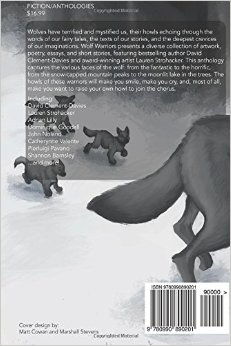
thurston2jthurstonI’ve said a lot about the cynicism of the publishing industry and a world made worse not better by the arrival of the Internet and Self Publishing, especially for those who love the culture of bookshops and for established authors too.  But there are better stories than that and one is the work of Jonathan Thurston to gather together a special anthology of wolf stories, and artwork by the likes of award winner Lauren Strohacker, called appropriately Wolf Warriors, entirely out of his passion for those remarkable animals and for charity too. It is getting 5 stars at Amazon and thrilling reviews.

During the crowd funding campaign on Dragon In The Post I also wrote a short story for him, Fell’s Dream, that has never been published before and which is included in the anthology.  I do hope it helps to bring interest and sales, especially at Christmas time, because any profits from the book will be actively doing good and aiding The National Wolf Watcher’s Coalition in the US. Remember, Ghandi said that one of the measures of our civilisation is how we treat animals.  So please come and support through buying the book by CLICKING HERE  and well done to Jonathan, especially at such a young age, and everyone who contributed.

David Clement-Davies

Leave a comment

Filed under Uncategorized

HAPPY OHI DAY

It was a sharply moving little moment, standing up respectfully at the taverna in Sinarades today as the slightly battered brass band came thumping up the street followed by villagers to celebrate Ohi day. It means ‘No’ in Greek, the moment on the 28th October 1940 when Metaxa presented Mussolini’s ultimatum to Greece, accept axis troops on Greek soil or face war. ‘No’ was the universal answer, as the people and groups from all parties took to the streets, and the next morning Italian troops stationed in Albania attacked the Greek border. How far it is from those fresh young faces in the band, on a beautiful day up in one of innumerable pretty mountain villages, with ravishing views across both to Albania and snow capped mainland mountains, but Happy Ohi day.

Leave a comment

Filed under Uncategorized

QUEEN OF THE SCOTS, QUEEN OF THE WELSH?!

Flag_of_Wales_2.svg[1]

My, it rather pisses me off to hear on the news tonight, mixed in with the music from the Mel Gibson film Braveheart, that Elizabeth II has both English and Scottish ruling ancestors, as though Wales had never played a role in the United Kingdom at all. Although it was equally interesting to hear that Alex Salmond had said he wanted the Queen as Head of State in Scotland and ‘Queen of the Scots’. Perhaps an echo of that tragic story of Mary Queen of Scots who in the 16th Century become the focus of so many plots against Elizabeth I and met her fate via the headsmen, after such agonised doubt from the Queen, her cousin. Perhaps one of the greatest monarchs to sit on the English throne though, Elizabeth I, that ‘Virgin Queen’ whose image with the Reformation came to supplant the Catholic cult of The Virgin Mary, if such a thought is not politically incorrect. But of course Elizabeth I was from a dynasty that came to power after the battle of Bosworth Field, where Richard III sustained those now much discussed head injuries, and from a line that was half Welsh – the Tudors. In that sense Wales conquered England in 1485. The Tudors though, highly schooled in both Latin and Greek, would turn to Ancient Rome for a political ideology that helped a country find its confidence, so extraordinarily realised in the language of Shakespeare, and sent out a new breed of mercantile Capitalist adventurers to conquer the World, or put it up for sale.

Yet it was Elizabeth I’s grandfather’s Henry VII’s ruthless political realpolitik too that saw the almost immediate repression of the Welsh language, to carry right down to the late 19th Century with children being humiliated in Welsh schools in having to wear The Welsh Knot, a board slung on a rope around their necks if they spoke their own tongue. One that has proved far stronger and more of a living language than Gaelic, perhaps marking the stamp of the Welsh love affair with poetry, language and song. So to a friend’s question yesterday as to whether the Welsh resent the fact that the flag of Wales and that Red Dragon is not incorporated into the flag of The United Kingdom. In political and heraldic terms it is because Wales and England were already considered part of the same kingdom long before that act of Union with Scotland in 1801, thus the first son of the English Monarch being invested as The Prince of Wales at Caernarvon. Mind you, in all cultural identities there is a great deal that can be completely bogus, like the invention of the Tartan, the idealisation of Scotland by a Victorian monarchy and indeed that highly entertaining but historically inaccurate film Braveheart. The flag of Wales is of course my own favourite, barring the fact I still believe in a United Kingdom, in the richness and importance of a shared history and Culture that also acknowledges we are also all just human animals on a troubled planet. Which, whatever happens in the result of the Scottish Independence vote tomorrow, might be strengthened by more knowledge of and greater understanding and respect for our mutual cultural histories. Perhaps a Welsh Dragon will start to stir again too, if Wales does not have oil, had a terrain that was far easier to subdue than Scotland and was long sat on by the English Marcher Lords, always finding its identity in a far greater internalisation and sense of that sometimes fatal melancholy the Welsh call Hyraeth. Well, cheer up Wales, perhaps we’ll have to wake up to a Queen of the Welsh too, while we all wake up or don’t to war in the East and Middle East, Ebola, change, death and the rest! How about not just a United Kingdom, but a United Planet?!

Leave a comment

Filed under Uncategorized

SCOTLAND, INDEPENDENCE, GREAT BRITAIN AND THE IMPORTANCE OF NO

Flag_of_Wales_2.svg[1]150px-Flag_of_Scotland.svg[1]150px-Flag_of_the_United_Kingdom_(3-5).svg[1]150px-Flag_of_England.svg[1]
On the eve of this crucial vote what questions are we asking about Scotland, if those in Northern Ireland, England and Wales have a right to ask too? Perhaps a bit of history, and from Edmund Shakespeare’s time, might help. It was in 1607, the year of Shakespeare’s brother’s death, that a Scots King, James I, on the throne of England for only four years, failed in his vision of a ‘Greate Britaigne’, and an attempt to unite Scots and English laws, despite changing the flags. An Act of Union did not take place for nearly 200 years, in 1801, and after both a Civil War and that ‘Glorious Revolution’ that had brought Willian of Orange to the throne. None of those Scots monarchs though were especially laudable, despite the high romance of Bonnie Prince Charlie and the ’45. In the meantime, out of an Elizabethan genius, in a country that never had an Empire, and after the long and gradual loss of France, England sailed out to both explore and conquer the World, with a new mercantile imperialism founded in the City of London that was defined by those East and West India companies. Which built a rather unique Empire too, founded both in the idea of trade and law, with very many flaws, for sure, and yet, especially if we accept the idea of Capitalism at all and that always essentially privatised enterprise, a far better track record than many equivalent powers and Empires. Far more than my homeland of Wales, that truly suffered both from English repression and contempt and never had the Welsh Dragon incorporated into the flag (pause for thought for Dragon In The Post), Scottish genius and enterprise played its role in that too, just as it had an Enlightenment at home. It also involved poverty and cruelty and a Scottish world diaspora, much influenced by the fact or truth of English land ownership in the North.

But what are we really asking now, in a modern world that may need and benefit from kinds of devolution, and those local parliaments that have given cultures greater autonomy and identity, but which is also seeing such calamities of conflict, fear and hatred Worldwide? Do we really need to take that ‘Great’ out of Great Britain and further undermine a United Kingdom, as well as that ‘Mother of Parliaments’ at Westminster, when this highly opportunistic attempt at Independence by the likes of Alex Salmond has been badly thought through, with no plans for an army, nor a currency nor a true discussion of the costs and benefits of the entire enterprise? Not only are companies talking of moving back to that financial hub in London, but if oil prices fall with new technologies, or when those resources decline, the kind of plans Scotland’s ‘Yes Men and Women’ have will see resources drawn down to government both by cuts, that have already happened with the SNP, but raised taxes. It is in fact British money that has underwritten the progressive social policies like free University education. Isn’t it telling too that the likes of UKIP leader Nigel Farage should want an independent Scotland, furthering the kind of dangerous petty atavisms his stamp of politics indulge in? Is it not also extremely arrogant that the SNP should simply have expected to keep the pound, yet not show a similar responsibility to the future of a weakened Union, or all our voices on a highly integrated island? Countries and Kingdoms also need to find an appropriate scale, on this geographic island of ours, to be a power in the World, to find a united direction that supersedes localised interests and to talk with a truly strong or coherent voice. In the end it is not just a question of some ancient sentimentality then but the damage this will do to a rather unusual European centre in the sea, that needs to pull and work together, especially if Great Britain is that island bridge between Europe and America. It is already having echoes in tiny European regions that will not benefit the World or themselves in trying to pull away, but a Yes will lessen all of our identities and voices on a world stage. Whatever this brings up, and promises have already been made from Westminster, do not break the Union Scotland and let a new genius and sense of united confidence stand out instead.

PA PRESS

Leave a comment

Filed under Community, Culture, Environment, Uncategorized

TO THANK THE DRAGON STREET TEAM AGAIN DCD DEDICATES THE PHOENIX EDITION OF FIRE BRINGER TO YOU!

SONY DSCHi guys, just to give you a big thank you again for all your support with Dragon In The Post and, because I think actions speak louder than words, I’m now getting Fire Bringer into print but with this dedication:

“For the readers who helped a writer fight back!”

You know who you are, although everyone will have their name in the front of a Crowd Funded book. I’m going to retreat soon to write Dragon In The Post and think about what to do about Light Of The White Bear too.

DCD

Leave a comment

Filed under Uncategorized

THE DRAGON ENDS AT INDIEGOGO, AT 102% FUNDED, BUT CONTINUES AT PHOENIX ARK PRESS

A very big thank you to the Street Team and everyone who supported me and the campaign!  It’s over on Indiegogo but now the adventure begins at Phoenix Ark Press.  So most of the perks available there are now available here and also linked to the project that stays up online on Indiegogo, with all our fun, talent and hard work.  People interested in still supporting, in being part of something, can go there then or be redirected to the page above here at Pre Ordering Dragon In The Post

Meanwhile it would be nice to raise some more for blind people and the 100 mile South Downs Way walk by clicking the button

JustGiving - Sponsor me now!

Leave a comment

Filed under Uncategorized

DRAGON IN THE POST TRIUMPHS – WE DID IT! 100% FUNDED

Fire_Cutter_-_Dragon_in_the_PostHUZZAH! THE DRAGON IS 100% CROWD FUNDED BUT CAN WE KEEP GOING, WITH 18 HOURS LEFT, CREATE A MODEL FOR FUTURE BOOKS IN THE POST AND ALSO HELP THE RNIB, AFTER MY 100 MILE WALK DOWN THAT GLORIOUS SOUTH DOWNS WAY?

Thank you all, you’re brilliant! We’ve done it, or we’ve achieved that first major goal. DRAGON IN THE POST will happen and FIRE BRINGER will turn to print availability in the UK too. Where the editors so close to home could not protect classic books, or key principles surrounding the writer’s craft, you could. Now can we set sights on that wider ambition for a whole little publisher too though, other books and projects, and the exploration of crowd funding too, by a last big push and word spreading, in these 18 critical hours?

Of course the entire project, which those who have backed are a key part of, will also stay up as a record at Indiegogo, and new links will be put up before it ends. So it can also become a platform for pre-ordering and other perks this year. The story and adventure continue!

You can still “Join the story, become part of the adventure” right now of course by going straight to BUY YOUR SIGNED COPY OF DRAGON IN THE POST AT INDIEGOGO.COM

There is one other thing that would be really wonderful though and that is telling friends about my walking the South Downs Way, now 41% funded for the RNIB, and trying to raise some more money for the blind by pressing JustGiving - Sponsor me now!

Thank you all so much again. Yippee!

David Clement-Davies

The painting is Yasmin Foster’s FireCutter done especially for Dragon In The Post during the campaign. Art work and films are up on the platform.

Leave a comment

Filed under Books, Childrens Books, Community, Culture, Publishing, The Phoenix Story, Uncategorized

AS THE 24 HOUR COUNTDOWN STARTS TO THE END, DRAGON IN THE POST JUMPS TO 95% FUNDED!

Fire_Cutter_-_Dragon_in_the_Post‘Woo hoo’ was what a reader cried, as she just took us to 95% funded and woo hoo indeed!  THANK YOU.  We now need just a couple of hundred pounds in the next 24 hours to take us across that finishing line to success.  Not just for me but for everyone involved in the project and then perhaps to open a door on something bigger.    How I realise this target, this real achievement through the boxed world of Social Media, is and has been such an important psychological barrier and how the reason is really belief and self belief. In fact not really being able to live in a world without a bit of magic, the kind of magic great stories are made of, the kind of challenge to how the world ‘has to be‘, that does make poets and writers the unacknowledged legislators of the world and always will, until the algorithms or top heavy power destroy us.

It’s been one hell of a fight and it ain’t over yet, not to mention having to conjure story, but at the most profound level this has truly happened because I spoke up and then because young fans and unexpected friends stood up for me. That’s a story worth telling itself.  The wound in New York went so deep no one can know, but this is part of the turning it all around. So can we do more,  in what this is about, quite as much as money, a spirit, a fire and of course a wider constituency too? That’s what it’s about –  writers and readers and only them. Do more by bringing on more backers, by spreading the word of a true little fight back against the system?  If we cross that line today, of course the whole project will stay up there in the ether and people can order a book in the post via Indiegogo.com.  We have another bonus too and that is because of time differences – why not say, since we’re telling stories, like Phileus Fogg having crossed that international date line  in the race back to the Reform Club (?) – the project does not end until early Thursday morning in the UK, August 28th. But it’s important too for me to know why this has happened and so to share three messages that came in last night on the internet:

“So happy to help fund one of my all-time favourite author’s next big adventure! Excited to be a part of this and can’t wait to meet you.”

“Hello Mr. Clement-Davies, I’m sure that you get plenty of fan mail every time that you turn around, but I’ll write you this message anyway. I knew the minute that I saw the copy of Fire Bringer in my high school library that I was looking at something special  (That book this project is helping to protect too). In fact, I walked clear across the room straight to where it was sitting on its display. I’d always been a fan of the Redwall series of books by the (sadly) departed Brian Jacques, so I was expecting about the same quality. What I didn’t expect was how much the books you have written would mean to me, not just then back in 2001, but also today. I just wanted to thank you for providing me with some of the most important, fond memories I have of reading (and also for writing about my favourite animals – wolves).  I can’t express how special your books are to me. Thanks for the great times and many hours of enjoyment your books have given me.”

“I’ll give you my first impression of your books and you tell me what you think … I’m at the time an art student age 18, high school, lover of fiction and deeper meaning: your covers are beautiful, stories deep, unique use of research and pride in literary skills usually abandoned haphazardly by others. I place you in my head among my favourite authors including Shusterman, Giaman, Asimov, CS lewis, and they all have one thing in common: perfection of the use of real knowledge and revelation in visually stunning imaginary worlds!”

Thank you all again, beginning with a Street team, and we are nearly there!  You can join the adventure right now too by going to Indiegogo.com and ORDERING YOUR SIGNED COPY OF DRAGON IN THE POST!

DCD

Leave a comment

Filed under Uncategorized