
God, what is going on in the world? First the Norway horror and absolute tragedy, and now Amy Winehouse, just 27, found dead in her flat in North London. Obviously troubled, addictive and facing the difficulty of Celebrity, she was the most extraordinary voice and singer. Uncompromising on stage, to the point of being self abusive, that voice could be so beautiful and even hauntingly pure. There are no real details yet, so perhaps it was an overdose or suicide, and it is extraordinary that her Wikedpedia entry has already been changed, but what did the jeering at her drunken concert in Serbia do, who knows the pain that can go on inside people, and the madness too? What a terribly sad day.
A PHOENIX ARK CULTURAL SHORT STORY
Phoenix Ark are delighted to publish an essay/short story first scribed about 18 years ago, pre The Taliban days and after Russian occupation of Afghanistan, when the mujahedeen had begun to tear each other apart and refugees were flooding over the borders into Pakistan.
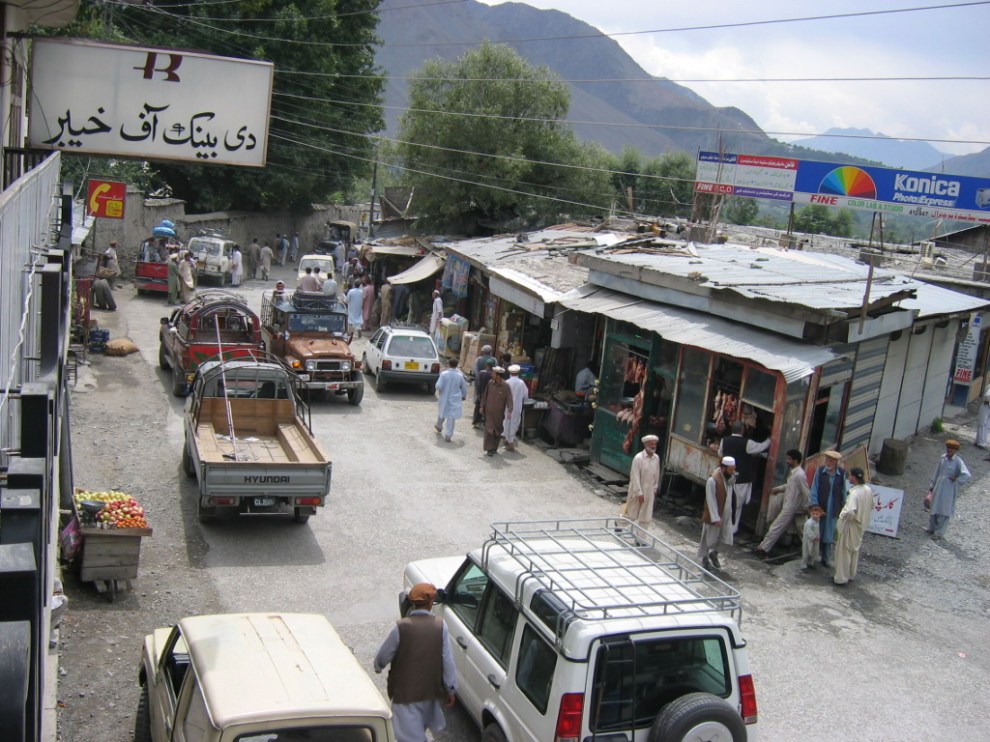
‘Bismillah’ by Henrietta Miers
Bismillah seemed an unlikely paramedic. I first suspected he was a hypochondriac too when I offered him a banana and he sternly replied, “No thankyou, Hanry, I’ve had experiences with bananas. They give constipation. And kebabs, they give diarrhea.” Bismillah was obsessed with his health. Whenever I asked him how he was, he’d reel off his illnesses like a waiter rattling off the specials on some exotic Eastern menu: hepatitis; colonostitis (I think he meant colitis); tonsillitis; a bad knee; high blood pressure, you name it, the list went on.
Bismillah had lived in Kabul. When the Russians left and the mujahedeen set about tearing each other part, the city became far too dangerous for his family. So he had escorted them to his village in the Panshir Valley, four years earlier, North East of Kabul, in the middle of the Hindu Kush. From there he crossed over the border into Chitral, in search of work. Bismillah often spoke of returning to Afghanistan to fight, although somehow he seemed as unlikely a fighter as a paramedic. Once I asked him if he really meant it and he curtly replied, “I have no information on that.” He could never give an outright ‘no’ to anything. If Bismillah didn’t know the answer to something, he’d just say he had no information on it. That day he added, “There’s too much blood. Our children they eat blood from our soil and grow strong to fight.”
Thoughts of Kabul were never far from Bismillah’s mind though. I remember once when we were driving along together and had to stop for a herd of goats wandering across the narrow, dusty road. Bismillah frowingly announced, “This goat come all the way from Afghanistan. He lucky to escape the rockets, but now he get eaten in Peshawar!” “You mean these goats,” I said, helpfully. Bismillah was always eager for me to correct his grammar. “Sorry for my error and thank you for the plural, Hanry,” he smartly replied. “I live in singular because I only have one wife. When fighting stops I return to Kabul and take second wife. Then I think in plurals and say – Hello wives, how are yous?” With that thought he stopped the jeep, grabbed a pen from his pocket, and scribbled down his address. It went on for about half a page, ending ‘just next to botle shop oposit barbar.’ “You must come and visit me, Hanry, when the fighting is over,” he insisted, thrusting the page into my hand. Bismillah often spoke of returning to Kabul. After that he lapsed into silence, just muttering “I talk too much. My larynx hurts and my left buttock has numbness.”
I first got to know Bismillah when I grew ill in Chitral, and was forced to visit the clinic for Afghan refugees, where he worked, carefully carrying my delicate stool sample with me for analysis. The clinic was run by a tall, languid Danish doctor and staffed by Afghan paramedics, who had received some sort of medical training in Afghanistan, before the war. When I returned for the results of my test, a triumphant Bismillah gleefully informed me, “Miss Hanry, you have many many amoebas, bacterias and worms, where do we start?” Then, as if to confirm this glorious news, added “I examine your stool extra carefully because I know it belong to English lady.”
Bismillah despaired of the number of times I fell ill. “Hanry, you not strong enough for this mountain life,” he declared one day. Maybe he was right, but my afflictions seemed so trivial compared to what I used to see while I waited for my regular stool results to be announced. Refugees would stream in from over the border in Afghanistan, many with limbs dangling off, after stepping on or bending over mines. One poor woman came in with a stomach ache which refused to go away. When the Danish doctor opened her up he found a surgical towel scrunched up inside her – the size of a bath towel.
On one of my visits to the clinic, Bismillah announced I would teach him and his fellow Afghan medics English. “We need English words for illnesses and medical matters. You teach us one time a week. We learn quickly,” he said and I could think of no reason to refuse. I grew to look forward to my once-a-week sessions at the clinic hugely. We would sit together on the floor of a large single room, lounging on fat cushions and colourful Afghan carpets, while I delivered up the basic building blocks of English grammar. As Bismillah predicted, my Afghan students were quick to learn. Bismillah was always the quickest of the lot though. He would say eagerly but respectfully, “OK, OK, Hanry, thankyou for the common noun, now learn us the pro-noun.” Then, “Thankyou for the pronoun, thankyou for the possessive pronoun. More nouns?” It was as though I always taught too slowly. But whenever the lesson slipped into laughter, as it often did, he’d shout seriously, “quiet now, Hanry teaches us”.
After the lesson we would feast on plates of Afghan pilau, then someone would start to sing an Afghan song or two. They always sang my favourite just for me, Man Yek Sarbazam, (I am a solider) which they told me was about the Mujahadeen struggle for freedom against the Russian occupation of their country. One day an English friend came to stay from Peshawar and we had a party. The paramedics turned up, all of them, led by Bismillah. “We are ten,” he announced sheepishly, as I opened the door and in they all trooped. They’d brought Abdul the cook, with his Zityr, and Aziz the chowkidar, with a bright red drum. They lined the spaces around the side of the room and immediately began to play and sing. Soon the dancing started. One by one, each Afghan would be tossed into the centre of the room, feigning resistance for a little while, before giving in. He wouldd move slowly at first, quickening with the drum beat, working to a crescendo of dervish-like whirling, before collapsing in a shattered heap back on the floor. “We disturb you? You give us permission to leave,” Bismillah said suddenly. According to Afghan culture, you can turn up at any time of the day or night at someone’s house, but you cannot leave until your host permits you to. “You may go,” said I, not wanting them to go at all.
One day Bismillah invited me to his home. He lived in one of the Afghan refugee camps along the river, in a tiny two-room house that he shared with his cousin, Javed. The camp was a shabby cluster of half-deserted mud-built houses, clinging to the river’s edge, tucked beneath the looming shadow of the mountain, where the narrowness of the valley hides the sun completely. During the rains, the houses would slide over the bank and straight into the river. “You fall in here you finish in Kabul,” Bismillah warned me, with a touch of longing in his voice, as we drove over a rickety bridge and into the camp.
As soon as they saw us, children raced out to greet us, with grubby little faces full of hope. Hope for a treat, a sweet or just a crumpled ruppee note, something new to brighten up the greyness of their days, even a chewed biro top would do. I spied a little boy wearing a once pure-white t-shirt, with ET barely visible through the grime. “Ask this little boy if he knows who ET is,” I said to Bismillah, remembering that famous ‘PHONE HOME’, and he bent down and spoke to the little boy in Farsi. Bewildered, the boy remained dum, so Bismillah turned to other children in the crowd and tried to coax them into speech instead. They stared at him just as blankly, mouths agape and perfectly silent. Bismillah stood up. “They don’t know ET. They don’t know any film, these children. They have no VCR, no papers, no country.”
In the end Bismillah was laid off from the clinic for selling medicines in the bazaar. He decided to return to Afghanistan to join his wife and children, fed up with being a refugee. “Chitral is jail,” he told me. “Even the water here is dirty.” I asked him what he’d do though, when he returned home, thinking of a fighting Paramedic. “I have no information on that!” he replied. “I do whatever I can for my family, to survive. We are desperate people, us Afghans, we are flotsam and jetsam of world“, and with that he bade me goodbye.
Copyright Henrietta Miers 2011. Henrietta Miers was an aid-worker in Chitral, in the North West Frontier Province of Pakistan. Famous for fighting for difficult causes, and for telling the truth, she has worked in many countries, for the Agha Khan Foundation, and for Dyfed. She is a mum, and married to the War Correspondent Patrick Bishop, which just goes to show – ‘wisdom is a woman, and loves a warrior.’ She plans to write much more about all her travels and experiences, and we thoroughly recommend it. The picture is a public domain photo from Wikepedia of Chitral Bazaar.
Filed under Uncategorized
A REVELATORY INTENSITY
Is the News of The World fallout shaking the scenery? Not only Paul Mason, but the charming Mishal Husain dragging her mike behind her across the studio, with falting but determined dignity, to interview some bod on the sorrowful, but earned passing of a Master, Lucien Freud. In between virtual giggles, and glances at the camera crew, the phrase ‘revelatory intensity’ was used for Freud’s into the skin and often very harsh genius. We all know, but don’t show us too much, you’ll have to work at phoenix Ark, and it’s us who need the bailout!
Filed under Uncategorized
PAUL MASON’S NEWS DEFAULT
It was very funny watching Paul Mason on Newsnight tonight explaining the Greek Euro Bailout. With a bad line, and rising excitement, his enthusiastic banging of a document on the desk, right next to a microphone, kept breaking the action and any chance your thoughts could actually engage. But his explanation at speed, no doubt worthy of a Euro Zone of PHDs, got faster and faster and eventually it became absolutely incomprehensible. I’m sure it was brilliant, a whirling of ideas and possibilities, amid the banging, but does anyone know what’s going on in the world, let alone in Paul Mason’s head?!
Filed under Uncategorized
FOR THE POET’S SWEATSHOP
I’ve talked, on and on (!), about my own boring ‘agony’, or hell, but it is not the same as what we all suffer at times, when you own ability to make art is also taken from you, or so blocked at your own publisher. What kind of front dominates now, to hide the very humanity books are supposed to represent? I talked about some mismatch in the world of children’s books for me, and my experience, or perhaps the scope I tried to approach. But never give up, and perhaps a poem pair I ‘blogged’ at the beginning of Phoenix Ark might express something of trying to come through the most enormous darkness:
The Corner Spider
My tiny legs are threaded through your lives,
So many eyes, there, in the corner, watching,
I am a spider, universal, utterly particular,
Small as a bead of angry virgin’s blood,
Black as the holes of mind, that swallow light –
A singularity.
Tiny, unnoticed, insignificant, perhaps,
And yet my mouth is bigger than the stars,
And speaks in tongues, though spiders have no tongue.
So there I whisper, watch, and listening, wait for what?
The room to change, a wedding feast to come,
The paintings, windows, straightened on the walls,
But in all corners, in all rooms, all halls,
I weave the blowing shape of all your are – the gatherings of dust.
My endless fear is woven through your cells,
The helixes of searching, joining threads,
Combining webs of intrigue, and of life,
Spun with the cruel tension of a boy,
And hanging my future in your doorways –
My webs for catching lies.
I cannot love, or know your burning souls,
I cannot hate, or fight for pure ideals.
I cannot pierce into your mystery at all,
Yet I am wanton too, and bite with poisoned teeth.
I am the question sitting in the crevices, the one you must not ask,
The thing between the gaps, the name of loss.
Sometimes I hurry, ink-like, through your lines,
Seeking your point; a colon, coma – dash, but waiting for your stop.
Until some hired maid, buxom with life,
Decked out to form your power,
Runs in to sweep my startled forms away.
Your homes are cleaner now, the corners freshly painted,
The hobs new bought, with all the shiny brilliance of hope.
The linen sheets lie crisp for blood and night,
Yet me you cannot kill, for I am curled in time itself,
Sad as a lover’s sigh, on blowing dandelions,
Harnessing the wind, travelling inside the dark, strong as a stain,
Spreading once more, like fear, across your world.
I must return, and take my rightful place,
And there I sit, and wait, for all your eyes,
To turn and stare, in horror, at the corner.
The Corner Spider II
Why do your tiny, tragic words accuse,
Buzzing like hopeless flies inside the pot,
Wasting your real ink?
Do you not see the secret, marvellous patterns.
The brilliance of gossamer, the gentleness of time,
The lovely web of life?
What makes us, makes you too,
And all that travels on the wind, fearless of death.
Our point is not some fatal, pointless question,
Trapped inside the chasms of your mind,
The point is all there is, which has no point of failure, loss or hurt.
Some say it is the violence of the start,
Others the moon-kissed fullness of the night.
It is the secret thread of light,
Held between the finger and the thumb, of careful lovers,
Drawn from the delicate belly of the dark.
Energy you cannot harm, it is immortal.
Time itself, it spins
Out of the marvellous threads of bursting light,
That deck eternity.
Behold then, in your corners, not our spaces,
But your turning galaxies and fiery chains of life,
Far stronger than your walls.
The fulcrum of their movement is the dark.
Black spiders sit at the centre of everything,
Holes that give you blessings, genius and luck.
Try again, we say, and be your exiled Kings,
And so return, but this time love your hopes.
And as we live, with you, we will make meaning.
Our clever, tiny legs will cross the tyranny of each page,
Making the new connections.
Like ants that name the structure of an arch.
It is your frightened eyes that spy, not ours,
For we remove the flies, from cruel and wanton little fingers.
While seeing only maids, or paintings, feasts and halls,
You miss exactly what you are,
Alive – weaving with passion, light and blood,
Joining the beauty of your tender hands,
Piercing the womb of fear,
And worthy to lie on sacred sheets and live.
David Clement-Davies 2010 All Rights Reserved
Filed under Uncategorized
SQUEAK, SQUEAK!
A little mouse called Jotto has very sweetly snuck into the Phoenix Ark soup kitchen to say, ‘NO Maestro Michelangelo, you just can’t give up in despair by going backwards AGAIN, or we will run out of cheese and never be FAMOUSE. Not notoriousmouse, but famouse, clever and very happy indeed. I draw perfect circles, I don’t go in them…’
Publisher’s Note: Please see Michelangelo’s Mouse on EBook.
Filed under Uncategorized
SHAKESPEARE’S PSYCHE
I still haven’t read a book that I want to, The Closing of The Bi-Cameral Mind, but was told about another last night that argues the ‘Left Brain’ function has triumphed in the West, especially in the greedy and aggressive brutalities of super capitalism, so ‘rights’ driven and so battle front creating, and how does that make anyone alive really whole? Bill the Bard’s being the most complete example of a full consciousness to me, when the left and right were clearly still so united, here’s one to remind of the noblest purpose of the poem, the book, or the drama, apart from that vital purpose of entertaining, and especially in that measured distinction of ‘art’ and ‘reality’. Polixines’ crisis in The Winter’s Tale is an astonishing example of the collapse of a male psyche, written in the 16th century, yet with startling ‘modernity’, long before the wounded language of therapy, and of course through his own error too. So again Bill Shakespeare uses all his art and understanding to heal, breathing through nature’s power too, that culminates in that famous trick of the play I’ve mentioned before: ‘strike music’ and a ‘statue’ coming to life, as total harmony and love is restored. All art aspires to music! They staged Polixenes’ mounting tyranny brilliantly at the Round House, and his loss of truth, when his entire court turned their back on him, one by one. The first rule of fantasy fiction is that you cannot explicate on your own fiction, as you do it, because it’s very purpose is to allow the psyche it’s natural flow. But when a full and balanced consciousness is doing it right, it becomes fully aware of the staging of its own psychic props. Perhaps it’s why good storytelling really is kind of ‘magic’ and starts to sing and echo all over the place. When I was scruffing around as House Manager of Regent’s Park’s Open Air Theatre in London years ago I saw a man leaving during ‘Time’s’ Chorus, to sit under a tree and simply sob his heart out. I wish I was the mad knight in Monty Python and The Holy Grail, as both arms were lopped off, then legs, then the head, amid gruesome spurts of ketchup blood. – “A nothing”, “a scratch’, “Pah, a mere flesh wound.”
TIME:
“I, that please some, try all, both joy and terror
Of good and bad, that make and unfold error,
Now take upon me, in the name of Time,
To use my wings. Impute it not a crime
To me or my swift passage, that I slide
O’er sixteen years, and leave the growth untried
Of that wide gap; since it is in my power
To o’erthrow law, and in one self-born hour
To plant and o’erwhelm custom. Let me pass
The same I am, ere ancient’st order was
Or what is now receiv’d: I witness to
The times that brought them in; so shall I do
To the freshest things now reigning, and make stale
The glistering of this present, as my tale
Now seems to it…; “
Filed under Uncategorized
 Phoenix Ark's Blog
ANDERS BREIVIK AND THE CHILLING TWITTER
One of the most chilling things about the Norwegian tragedy is a single tweet from Anders Breivik on twitter, dated July 17th – ‘One person with a belief is equal to the force of 100, 000 who have only interests.’ It hangs there in cyber space, the absolute prologue to decision and horror. So it appears that the madness of a ‘will’-driven, right wing Christian fundamentalist took so many lives, especially young lives, but also orchestrated a massive bomb attack in the centre of Oslo. Another Anders Breivik, a computer systems developer at Know IT in Oslo, laconically tweeted ‘Wish I had a different name today. What a sad day.’ It probably says it all.
The eyewitness accounts of the shootings on Utøya Island, which went on for an hour and a half, are terrible, as Breivik, dressed as a kind of policeman, but with red ‘Naziesque’ twinges to the outfit, and armed with an automatic weapon, killed at least 69 people, and the toll has been rising, taking part in the Labour party’s summer camp. It was calm, cold blooded and benefited from people thinking he was in authority, and the distraction of police attention to the capital, where 7 died in the car bomb attack, right outside the Prime Minister’s offices.
Mature, gentle, open minded Norway may have to review security, and police responses too, persue any potential links to active groups, of course, yet it surely can’t let this drive terror into the soul of a country, as was obviously intended. Fear only breads fear, and gives fuel to the extremists in any camp. It also gives energy to much bigger agendas. It was why the single greatest comment on 9/11 and perhaps 10 years of war, is how on earth do you think the terrorists wanted you to respond, except exactly as you did? It may be hindsight, but the photo of Breivik, in all his Arian weirdness, has the hallmarks of the sad and lonely lunatic. Will can indeed do a great deal, but actually Breivik was wrong, Hitler triumphed out of the darkness present in an entire society, in economic freefall, not just his own brilliant but psychotic ‘Kampf’, and madness only triumphs when collective madness is engaged. Peace to Norwegians today, and a blessing, in the strictly non Conservative Christian, non right wing fundamentalist sense(!), but it is a ghastly story and thoughts should be with all those families.
Addendum: The original figures on what happened have been revised down, which also shows the importancee of good journalism and getting your facts right.
Share this:
Leave a comment
Filed under Community, Culture
Tagged as Anders Breivik, Comment, Norway, Tragedy, Utøya Island