
 Phoenix Ark Press are delighted to announce the publication of Ice the first novel by the historical crime writer Dominic Sands, under our adult Thumbmarks Imprint and exclusively to Kindle, available at Amazon. Ice is an extraordinary little novel, beginning in the year of 1632, when the peasants go into the high mountains above Rome, to gather ice for the Prince’s miraculous new work of art and science; an Ice House. So begins the strange testament of Michele Pisiano and the story of his obsession with Lorenzo Barberini, in a tale of love, art, murder, witchcraft, faith, male pain and a dark secret at the very heart of the Ice House itself. The Phoenix founder believes it has a touch of John Fowles’ The Magus.
PHOENIX ARK PRESS RELEASE
Filed under Adult Fiction, The Arts, Thrillers
PHOENIX PRESS RELEASE
 Phoenix Ark are delighted to announce the publication of a brand new book by best-selling Children’s author David Clement-Davies, Michelangelo’s Mouse. The enchanting story of a little artistic mouse called Jotto, and his great adventure with the Renaissance genius Michelangelo, it is a lesson in belief, fighting on, art and courage and how to become famouse! For reading ages 7 to 11, but to be read by parents too, it is a wonderful romp, written with charm and huge humour, and all the story telling brilliance of a great animal writer. Young and old will delight in the first new book to be published by David in three years, brought exclusively to eBook and available from Amazon.
Filed under Childrens Books, The Arts
ALL WATCHED OVER BY MACHINES OF LOVING GRACE?
‘Series of films exploring the idea that humans have been colonised by the machines they have built,’ is the tag line to the BBC’s brilliant new series, ALL WATCHED OVER BY MACHINES OF LOVING GRACE, and so ‘seeing everything in the world through the eyes of computers.’ Its premise is also the dangerous and ruthless movements of capital at the top, further enhanced by the digitalised, information age. But for a little publisher forced to recover it’s writer’s work and voice first through the medium of eBooks, it is extremely relevant to what is happening in modern publishing. It also shows the potential disaster of people thinking they are really communicating through the web, the great liberal dream of silicone valley, but finding they are actually completely swallowed up by it, as pure entertainment ‘commodity’, in the grip of the money making ‘platforms’ like Amazon and WordPress, and have even less say because of the swamping of opinion and information. Here we have argued that is does not matter about the medium, the ‘how’ stories are relayed, as long as the stories are worth reading, though we love real books. A friend speaking of his wife and her thrill as a great reader in getting a Kindle supports that. What does not is the fact his father gave him a disk with 40,000 pirated books on it, and the mass proliferation of junk to try and catch markets! To protect against that, and the corruption of form every publisher seems engaged in now, it must be about dual medium publishing, but above all the spirit of the people who create and also nurture real and important stories. How else will we hear anything valuable or true, and how will committed writers survive?
Filed under Uncategorized
PHOENIX ARK PRESS RELEASE
 Phoenix Ark are delighted to announce that the sequel to The Sight, Fell by David Clement-Davies, will be published digitally this June. Fell is at the very heart of what happened in America to a real writer, and sadly what some readers have described as its ‘beauty’ was in marked contrast to the ensuing battle, and some very unbeautiful behaviour and politics. But that is over, and the founder may be struggling like so many writers to get financial backing, but at least he has complete say back in his own novels. The call for an independent publishing Ombudsman in the UK and America remains, to protect authors and editors too, but in many ways this is a great achievement, and one in the eye against a publishing machine that too often walks over talent, commitment and truly original voices.
Filed under America and the UK, Childrens Books, Publishing
THE 9TH PHOENIX ARK CULTURAL ESSAY
Dragoman Memoirs: searching the East for ‘Elands’ by Barnaby Rogerson
Generation after generation, a steady stream of merchant-venturers, mercenaries, miners and Celtic scholar-saints have gone questing off into the far horizons. The steady emigration of many of its more ambitious and curious souls has spared Britain from unnecessary revolutions, perhaps – and filled its library shelves with travel books! There is no particular need to consult a history book over this statement, since tea with an aunt will confirm the statistics just as well. To cite my own example, I grew up with an uncle mining for silver in Siam, another one governing a small portion of East Africa, whilst a naval father spent much time afloat on the High Seas. The same pattern is repeated through previous generations, confirmed by my own. So I (a so-called travel-writer) am exposed as the stay-at-home, compared to my hippy sister in the Burren hills of Ireland (surrounded by feral goats, blonde children, ponies, blonde grandchildren and a variety of husbands), an elder brother in darkest Venezuela (near the gold-mines in the southern jungle) and a polo-playing younger brother, plotting a techno-empire in the middle of the Alps. This story will be replicated by the tales of many millions of other British aunts, dutifully holding together the fraying strands of their family tapestry, through conversation, correspondence and Christmas cards.
Most emigrants from Britain have no wish to come back (which is one way in which to explain the astonishing bravura of America and Australia) but those that do are often compelled by the bleakness of the British winter to write down their memories. This is where Eland Press, the reviver of travel literature, we cry, comes in. Doughty travel-writers have taken to dropping in on our office (especially after-lunch) to check what we have been up to and then, in exchange for some sobering black coffee, have left behind well-thumbed favourite old travelling companions. This is one of the least predictable but most efficient ways for small publishers to stumble across a lost classic. With such intrepid visitors as William Dalrymple, Michael Jacobs, Dervla Murphy and Brigid Keenan – who have all climbed our grimy stairway in the last few months – we are seldom short of passionate endorsements. However, all too often these ‘road-tested favourites’ become buried under other ‘must reads’ and slowly rise up, to grow paper-towers of Pisa. These tottering piles are a necessary part of Eland, especially if one is trying to follow in the footsteps of the founder of Eland, John Hatt – who read his way through 167 recommendations, for every one that he considered worthy of becoming an ‘Eland’.
However, once I heard that ‘Slightly Foxed’ was looking for classic memoirs to reprint, I started briskly quarrying into some of these towers. Especially the ones I had named after Lesley Blanch and Philip Mansel, who have long championed the Dragoman-Consuls of the Levant. Now, at last, I would get to travel into the East, in the company of men such as De Gaury, Storrs and Grafftey-Smith, who spoke all languages and befriended all creeds, at the service of their nation. Men who knew the streets, bars, palaces and hotels of Cairo, Constantinople, Mosul, Basra, Jeddah and Aleppo, better than any map or guidebook, and who formed the type of Man who had plotted the creation of a new Balkan Empire in the 19th century and helped create Arabian Kingdoms in the 20th. Fortunately, I quickly realised they wouldn’t do for either Eland or Slightly Foxed, so would not have to make any agonising moral choice, between imprints. But, in a way, that cleared the decks for a romp, relaxing back into the sofa as a reader, rather than a potential publisher twitching the editorial blue pencil.
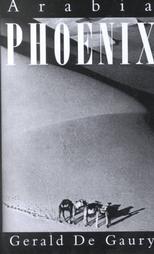
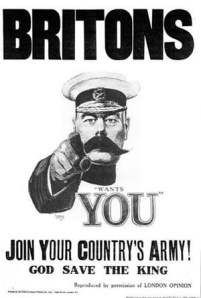
I had read some of Gerald de Gaury’s works before, as he is an important source for the Middle East, where he served between the war, both as a soldier, diplomat and as the British Political Agent in Kuwait, when the oil first started flowing. His own works of history and biography are thorough and well-researched but his memoir plunges you quickly into a highly scented world, dominated by duchesses, desert Kings, sacred relics, palace balls and precious instances of male beauty –all held together by De Gaury’s bravery, good looks and impeccable manners. So one soon gets used to swinging between ecstatic descriptions of Lord Kitchener as a ‘centaur of old’ who ‘sat there as if a God…precisely as the Roman Emperors had been worshipped’ immediately followed by an admirably restrained description of his own experience as an eighteen year-old soldier at Gallipoli. Just before going into combat, they were given an identity disk, the easier to identify battlefield casualties and instructed to shave off all body hair, crop their skulls and keep their stomachs and bladders empty, the better to help the field surgeons in their work. After such encouragement, they were landed by boat, then hidden in blisteringly hot trenches for a couple of days before being led into the hills by their general who having first lost his way – eventually managed to stagger towards the battlefield, where for four days and nights the fighting raged continuously and uncontrollably. Gallipoli was arguably the last great medieval battle of the modern age, fought in the hinterland of Troy, without benefit of radio or motorization. Just 100,000 men left to kill each other amongst hills and ravines, supplied with water and shot by mule trains. Both the Allies and Turks suffered from the terrifyingly powerful, but inaccurate, naval bombardments from the line of French and British battleships. De Gaury’s battalion lost every officer and sergeant but still the soldiers fought on. He was fortunate to have been rescued by a gallant Australian giant and would recover from his wounds, at a hospital in Malta, where the only book he could find was an Arabic grammar – which accidentally prepared the way for his future career in the Middle East.
So, having survived three further wounds in the trenches, he was quite non-plussed to later find himself sitting down to dinner next to The Archmandrite at Julfa, the Armenian suburb of Isfahan, who confessed “that his three immediate predecessors all died in suspicious circumstances.”There were also many happy memories, such as a midnight supper party held in a palm garden outside Basra, where the grapes taste of roses, where water-pipes are smoked, araq is sipped and the local delicacy, an aphrodisiac sherbet made from the stamen of the male date palm, is served until dawn….when the minstrels cease their playing. His role as a diplomatic envoy involves one in a bit too much of the stifling protocol of palace life, though fortunately the savagery of political life keeps bursting through the plush velvet. For instance, the Regent of Iraq used a post-war state visit to exact his revenge on one of the Iraqi generals who attempted a coup back in 1941. The President of Turkey refused to hand this refugee general directly over, but eventually agreed to expel him into neutral Syria, where he was promptly seized by British agents and bundled across the border to Baghdad. There the Regent tricked him into betraying some more of the conspirators, before having his old adversary strung-up from the gatehouse of the army headquarters where his body was left to rot at the end of the rope for four days. On another occasion, the Sheikh of Mohammera (with whom the British may have been plotting to set up an independent Emirate which would occupy most of the oil-rich territory of southern Iraq and southern Persia) is left to make his own explanations to the Shah when summoned to the court at Tehran. He never returned from this audience – which left his old adviser, De Gaury, to try and create a financial settlement from out of the murdered sheikhs property for his 22 surviving sons.
His lifelong interest in precious objects takes us on many an eccentric quest, but in his company we get to look on the wand of the Prophet Muhammad, the holy grail – as seized by the Genoese during the Crusades, as well as an abortive attempt to track down the Archangel Gabriel’s feather. Boccaccio reported that this relic had been left behind after the Annunciation, an object William Beckford had described, back in the 18th century, as “of a blushing hue more soft and delicate than that of the loveliest rose’. Though not even this, a full three feet long, gets such an attentive description as De Gaury’s memories of a flogging – It seems quite clear from his elegant evocation he relished his command over the Iraq Levies, a volunteer force, which assisted the British occupation that had been largely recruited from the Marsh Arabs. He even elegises about the tedium of garrison life for “We each had a punkah boy who tugged away at his cord during the hot afternoons from his place on the verandah…we woke from siesta in time for an evening game of polo on the sun-baked field behind the camp. After it we would ride back on our sweating ponies to the Mess and there sit on the roof while the sun went down, trying to quench an unquenchable thirst.” If only he had carried on in this vein he might have produced something sufficiently idiosyncratic to rival the works of T E Lawrence, or Jean Genet.
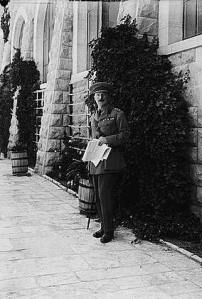
Ronald Storrs memoir, Orientations, is not so obscure a literary document, indeed it was briefly a runaway success, that went into many printings in the late 1930’s, just before the second world war. Storrs had been the ‘eminence grise’ behind many of the British pro-consuls of Egypt, such imperious Lords as Cromer, Kitchener, Gorst and Killearn. The Oriental Secretary to a succession of British Consul-Generals, Residents and Ambassadors, who whatever the modesty of their official titles ruled Egypt and the Sudan for almost a hundred years A good Oriental Secretary was required to combine a number of roles, from watching over the daily clippings of local Greek, Arabic and French newspapers, to running foreign and domestic intelligence, liaising with the secret-police, as well as working as a social secretary who knew who to invite, where and when – and also kept a useful tab on their weaknesses, indiscretions, secret vices and rivalries. The job required fluency in half a dozen languages, an acute, restless intelligence and an interest in every form and manifestation of life. Even as a young man, Ronald showed this. At Cambridge he was part of a debating club that included such future key members of the Bloomsbury group as Lytton Strachey and the young Keynes, while he also mingled with the Crabbet Park set, whose aristocratic host encouraged his guests to talk through the night and bathe at dawn, after which they played lawn tennis stark naked until breakfast intervened…
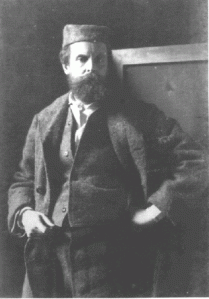
But in those halcyon days, before gossip columns drove all the free-spirits out of politics, the naked, prancing figures on the grass court would also include a future Viceroy of India, battling it out against a future Secretary of State for Ireland, amongst the care-free decadents. Their ancient host, Wilfrid Blunt, was one of the leading breeders of pure Arab racehorses, a travel-writer, a poet who had been the vociferous champion of independence for Egypt, Ireland and India in the late 19th-century, as well as a womaniser of heroic stamina. As we read our way through Storrs, we get to meet many other flawed heroes, such as Said Zulfikar Pasha, Grand Chamberlain and keeper of palace secrets to five Khedives of Egypt, not to mention Sir Rudolph Slatin Pasha, whose lifelong experience of government in the Sudan included ‘twelve years as a prisoner of the Mahdi, naked, often in chains.” We watch old Sir Evelyn Baring (who as Lord Cromer was the hated architect of British rule in the Middle East) leave Egypt for the last time,‘departing through streets lined with troops ‘amid a silence chillier than ice.” We also stumble, almost casually, across the making of modern history, for Storrs was intimately involved in plotting the alliances with traditional leaders that led to the Arab revolt as well as watching (with alarm) the creation of a Jewish homeland from out of British occupied Palestine. Without coming off his apolitical fence he observes the ability and ferocity of such leading Zionists as Vladimir Jabotinsky (who like many of the toughest Zionists had come from families that had been brutalized by Tsarist persecution) and also the chance incidents that bound so many leading British statesmen to the Zionist cause. They felt under an enormous debt of gratitude to the moderate British Zionist, Weizmann, who had invented a vital high-explosive known as Acetone (first made from horse chestnuts gathered by school-children). While it is also often forgotten that A J Balfour, of the Balfour Declaration, represented the parliamentary constituency of Manchester (which at this period was almost half Jewish in population) which naturally inclined him to listen to what Professor Weizmann of Manchester University, and so many other of the leading Zionists of Britain, proposed.
Arguably Storrs should have ended Orientations in 1926, on page 455 with his biographical review of his old colleague, T E Lawrence. It would have made a splendid finale, and spared us the long chapters on the slow transformation of the wicked, and camp young Oriental Secretary, into a married man, a knight and a colonial governor. One feels worried for his wife and for his library of rare manuscripts, first editions and private letters which was engulfed by a fire started by a mob of Greek Cypriots storming Government House in Nicosia.
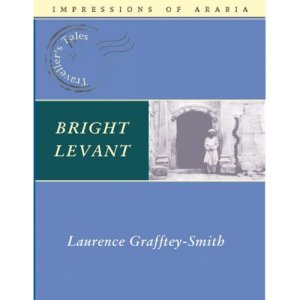
His life story is mirrored, aped and occasionally mocked by one of his juniors, Laurence Grafftey-Smith, whose career overlapped with Storrs for some ten years. So that ‘Bright Levant’ not only makes a perfect companion piece to ‘Orientations’ but continues the eyewitness story of Britain’s political intrigues in the Middle East until 1956. Apart from their shared intelligence, ambition and capacity for palace intrigue, Storrs and Grafftey-Smith shared an intriguingly similar background. They were both impecunious sons of clergymen, educated in good but not glamorously well-connected public schools (Storrs went to Charterhouse, Grafftey-Smith to Repton) who made the very best of their university years. They had need too, for the competition amongst graduates for a place in the old Levant Consular Service was fierce, with examination halls packed full of six hundred clever young-men competing for just four or five places. Grafftey-Smith was fortunate to be among the last to be educated by the great polymath ‘Persian’ E.G. Browne, who he describes with a ‘finely chiselled face… a radiance of intellect and of love for his fellow-man. I never met a kinder man.” Grafftey-Smith was not alone in this sense of gratitude. To honour a lifetime of work on Persian literature his 100th birthday was celebrated as a national holiday in Iran.
Constantinople, with its First, Second and Third Dragomans permanently attached to the staff of the British Embassy, was the most sought-after posting within the Consular Service – which could lead to terrible feelings of neglect to those Consuls languishing for years in less glamorous trading ports. The depressive condition of ‘Consulitis’ manifested itself through alcohol and an obsessive concern for rank – but could sometimes reach fatal proportions, like the time when Lord Dufferin had to call out from his office door for ‘lots of blotting paper quickly!” after one of his Consuls had capped his list of grievances by blowing his brains out over his Ambassadors desk in mid-interview. Grafftey-Smith’s first posting, to Alexandria, was with one such madman as a boss – a rites of passage initiation into British eccentricity on the cusp of madness. Having survived this test he was moved to Cairo to join the court of the British Consul-General guarded by canvasses in scarlet and gold and served by a team of foot messengers in uniforms of blue. But despite the collective brilliance of this colonial cabinet of mandarins, Grafftey-Smith also observed the dangerous isolation that race and class-obsessed British had imposed upon themselves, centred around the Turf or the Gezira Sporting Club.
They were all observed by the reigning Khedive, Fuad, who ran his own intelligence network through Ismet Bey, his Nubian valet who controlled the appointment of every door-keeper, house-boy and cook in Egypt. Fuad (his voice reduced to a bat-like shriek after he had been shot in the throat by his brother-in-law) resolutely attempted to claw back power to the Khedival throne throughout his reign. So the palace intrigued with both the nationalists and the British, who were themselves often divided in policy – between what the officials in Cairo desired, set against the different policies of the India Office, the Foreign Office and the politicians in Westminster. It was dangerous but exciting times for an intelligent young Consul in the 20’s and 30’s, with Egypt riven by nationalist agitation and assassinations, Arabia disputed between Britain’s two allies (the al-Saud and Hashemite dynasties) with both Iraq and Syria trying to throw off colonial tutelage and Palestine convulsed by the Jewish settlements. Grafftey-Smith is especially good on character assessment: how he considered the Hashemite Sherif of Mecca had been permanently marked by his youthful exile in Ottoman Istanbul (where he was closely watched by Ottoman agents), so that ‘his Proust-like gerundial clauses’ of his language had become so guarded and complex ‘that neither I or my translator could ever be sure what the King was trying to say.” Ibn Saud’s character by contrast, had greatly benefited by his own experience of exile in Kuwait, where he not only tasted poverty but developed friendships with Turks, Druze, Shia and Christian Arabs that he might never have been exposed to in the Wahhabist oasis strongholds of his Arabian homeland.
Grafftey-Smith was not a natural-born courtier (unlike Storrs or De Gaury) and so his anecdotes about monarchs can appear to have an almost republican flavour. Such as the tale of young King Farouk, pouring his tip of gold coins into a basin full of vitriol (to torture some porters with a choice between pain and greed) and how the saintly old Hasemite Emir of Mecca would sometimes descend into his underground dungeon and randomly club the chained inmates. Indeed the fascinating but grim tours of duty in Albania (just before the Fascist invasion), or in Iraq (just before a nationalist uprising would clove his successor in-two with a pick-axe on the Consulate staircase) and at the Red Sea port of Jeddah were clearly meant to be punishment for Grafftey-Smith’s outspoken views and policies. But at times of crisis, like the panic-ridden months when General Rommel appeared to be about to occupy Cairo with German tanks, Graffety-Smith more than proved his worth as a mastermind of propaganda. But his caustic wit comes through to leave few unscathed, whether he is observing W. Thesiger eating, J. Morris recording the wrong aphrodisiac recipe or Rosita Forbes faking her desert travels. Only the old desert warrior-King, Ibn Saud earns a consistently good word from Grafftey-Smith, who describes him as of ‘great physical strength, and the gentle hands and charming smile that made many love him’. This affection is confirmed in the ringing last paragraph of Bright Levant, “Tombstones and all other memorials of mortality are anathema to a true Wahhabi. His Majesty Abdul Aziz ibn Abdurrahman al Saud lies in the sands, wrapped only in a shroud; and today one must ask of the desert winds and of the cold Arabian stars to find his resting place.”
But even this grandiloquent conclusion might also be considered to be part of his long professional duel with Ronald Storrs who had ended Orientations, with this penultimate paragraph quoting one of Sufi heroes of mystical Islam, “Oh my Lord! If I worship thee from fear of hell, burn me in hell; and if I worship Thee from hope of Paradise, exclude me thence: but if I worship Thee for Thine own sake, then withhold not from me Thine Eternal Beauty.”
Plainly some of the wisdom of the East, not just its scents, palaces and politics had seeped into the veins of Britain’s great Dragoman-Consuls of the Levant.
Barnaby Rogerson May, 2011. The public domain photos show the cover of Arabia Phoneix by Gerald de Gaury, Lord Kitchener in the famous recruiting poster, Ronald Storrs, Wilfred Scawen Blunt and the cover of Bright Levant by Laurence Graffety-Smith. Barnaby is profiled below.
Filed under Books, Publishing
PROFILING BARNABY ROGERSON

Barnaby Rogerson is a traveller, writer, husband and father, and the Co-Publisher of Eland, probably the leading independent publisher of travel literature in the UK, which describes itself as ‘A company with a mission: to keep the great works of travel literature in print’. The founder of Phoenix first met Barnaby on the top of the Shandur Pass, in the North West Frontier of Pakistan, where everyone was trying to avoid watching the highest Polo match in the world. Eland has a remarkable list and you can visit their website by going to www.travelbooks.co.uk
Filed under Uncategorized
‘STORM FORCE’ WITH THE PLASTIKI AND HOME TO SYDNEY!

Documentary maker Max Jourdan’s fabulous diary from last year’s voyage of the environmental craft Plastiki, with excerpts from David de Rothschild and fellow crew members, sails on fearlessly and finally comes home:
Mid-June. Needlework (Max Jourdan)
4am again. Outside already. Average seas and drizzling rain running cold through briny hair. Chart littered with oceanic shelves, mounds and deep troughs named after French navigators. Just let me lie here on deck in the dark. No. I am awake, just resting a little. “Foresail’s ripping. Need to finish patching the other one before they’re all gone,” says Jo.
Inside. We sit opposite each other across the mess table. A roll of twine, bag of needles and strips of sailcloth. Eyes wide open and pupils dilated. We start to sew under the red glow of night lights. Pitching and rolling in our pod. Darkness all around. We could be in deep space or attending a Sunday patchwork class on LSD.
Patching is done. I take the helm. I could cycle across the Pacific faster than the Plastiki can sail. Maybe that’s why it’s taking me more than 2,000 miles of ocean crossing before deciding to try out the stationary bike bolted to the foredeck. We take turns on the bike. It’s a sit-down contraption that spans two cross beams. When you are in the saddle you are suspended over the big blue. I don’t know what this is doing to my fitness level, but the blind aggressive pace feels all wrong and out-of-place on this boat.
15 July. Storm force (Matthew Grey, expedition co-ordinator)
“It’s 3.51,” Graham sing songs in his most mumsy voice. “Urghh, thspp,” is all I can muster. He’s sent grabbing for the corner of the doorway, as a huge wave whumps against the boat. I went to ‘bed’ two hours and 45 minutes ago.
Wet means wet-weather wear and judging by the sound of the waves breaking across the deck, I’m gonna need it. Slipping into a wet pair of dungarees at 4am is no one’s idea of fun. The pants are like a halfway house: they ease you uncomfortably from warm sleeping bag to violent seas and driving rain. The last piece of the puzzle is the life-vest.
Welcome to winter in the Southern Hemisphere.
Last night we had a ‘blowout’ on our headsail and with 35 knots of wind tonight we can’t risk destroying the second and only spare. Instead we’re flying our utilitarian orange storm gib. A handkerchief-sized piece of fabric is strung up where our big billowing powerhouse once was. It’s designed for the worst; when all other options are exhausted and the wind is pummeling us at 50 knots we would point the boat away from the waves and tuck our tail between our legs with just this little sail to guide us.
16 July. Samoa to New Caledonia (David de Rothschild)
The temperature inside the cabin has just reached a distracting and uncomfortable 39C! The situation seems oddly perverse; on one hand I am surrounded by a horizon that holds all the promise of reprieve from the sweltering heat, yet on the other, the 15 knots of breeze means we don’t have the option of dropping sails in order to give way for some underwater activities. I am firmly trapped within the confines of a 20ft by 60ft floating plastic solar oven.
If only I’d had the prior insight to design some form of swimming platform; what was I thinking to miss that particular detail? But, then again, hindsight is a luxury of the now. Which makes me ponder the notion: would I even be here on this mission in the first place had Leo Hendrick Baekeland realised that by presenting the world with the first fully synthetic plastic, Bakerlite, back in 1909, he would be ushering in the modern era of plastics.
I wonder if at any point during his research and development he anticipated that the very durability he most likely worked tirelessly to engineer and perfect was in fact going to become an Achilles heel for all things organic and natural, invading and conquering almost every ecosystem worldwide in one way or another.
Hindsight or not, what’s crazy about the issues of these plastic fingerprints that are tragically tarnishing our natural environments is that it doesn’t have to be this way! If the development and build phase of the Plastiki taught me one thing, it was that innovation can come from the most unexpected places.
Late July. Epilogue (Max Jourdan)
Our arrival in Sydney on 26 July wasn’t what we had expected – we’d arrived in the Tasman Sea 10 days before, but much too late in the year, so the ‘Plastiki’ spent the last week of its voyage under tow. Which was a bit of an anticlimax. Was the expedition a success? David always said it’s not about the expedition, it’s about the message, and he certainly worked hard getting the message across, blogging, tweeting, working the press – he even went live on ‘The Oprah Winfrey Show’ mid-voyage. And we certainly spent a huge amount on satellite communications. In essence, David was at the office for about 80 per cent of the voyage.
But the more communication we had with the outside world, the less unity there was among the crew. And it’s a pity that we weren’t able to visit the plastic ‘garbage patch’. So, for me personally, the voyage of the ‘Plastiki’ wasn’t quite the adventure it might have been.
But we were treated to a phenomenal reception in Sydney Harbour: helicopters, police craft, and a flotilla of little boats, not to mention a huge press reception. After that, the crew went their separate ways. And the ‘Plastiki’? If current plans come to fruition, she will sail on, sort of, travelling the world in a showcase as an oceanic exhibition piece. Her voyage is far from over.
Documentary maker and photographer Max Jourdan’s film of the voyage of the ‘Plastiki’ was transmitted on the National Geographic Channel on 22nd April, to celebrate Earth Day. ‘Plastiki: An Adventure to Save Our Oceans’ by David de Rothschild was published at the same time. Photograph courtesy of the Plastiki crew. A version of these blogs has appeared in The Independent. For more information on the expedition, go to the web-site http://www.theplastiki.com
Filed under Books, Environment
GOD SAVE THE HAPPY COUPLE!
Um, with apologies to John Clare and the next Cultural Essay below, we may be getting a little soft at Phoenix, but that magnificent, beautiful wedding in the Abbey might recall Yeat’s line “in custom and in ceremony are innocence and beauty born“. Of course another poet, Blake, also did his bit with that ever great English hymn about mental fight, and arrows of desire, Jerusalem, but what was sweetest was William’s evident shyness, and Kate’s complete naturalness. Now, since we rudely weren’t invited, except that the cameras brilliantly asked us all, we can get on and have a party…
Filed under Uncategorized
The 8TH PHOENIX ARK CULTURAL ESSAY
I AM? by David Clement-Davies
With all the splendid regal hoo-ha today, perhaps the nicest blessing to a marrying couple would be not to write about the Royal Wedding at all. Especially avoiding the kind of trashy, invasive comments from a former-Sun editor on being bald young, or why a man, ‘Royal’ or ‘Commoner’, but in this case very rich, might actually win or love a beautiful woman. That particular celebrity editor’s empty beer-glass on something also private and intimate, and probably and hopefully completely wrong. On Royal Wedding days the difficult ‘private’ is what this Cultural Essay is about then, especially the inner mind and heart. Perhaps the ‘sacred’ too, in a world where we no longer seem to really know what it means, or how to value it privately, or collectively either.
Perhaps the Media strain on things like love is just the modern world, and the sometimes difficult hypocrisies of that vital ‘freedom of the press’ too. Too often debased by the hunt simply to sell papers, in no one’s real interest but Newspaper proprietors. Although journalist Andrew Marr did the right thing to apologise recently for his own injunction. Dodgy super-injunctions in mind, the law becomes an ass if you can just look up ‘restricted’ facts via Wikileaks, as Julian Assange well knows, or on the Internet. But Obama was right too about the idiocy of having to disport his birth certificate on the internet, and wanting to get on with far more important things. On the other hand, in former days of real Kingly power, in Hampton Court or Versailles, there would have been very little privacy, because then we owned our Kings and Queens too, and glared very intently, especially at the Royal bed. It’s just the audiences get bigger and bigger, and everyone’s holding the camera.
You might of course say that in the world of Einsteinian physics Royalty itself is nuts, and in very hard times, give a loud fanfare for the common man, and especially now, woman. It is something everyone comments on with Kate Middleton being ‘one of us’, although massive popular and moving support proves indeed we are still instinctive Monarchists, despite the little scandal of two Labour Prime Ministers not being invited to what is inevitably a ‘State occasion’. Or you might say that purely materialist communism was far madder and nastier than democratic Monarchy, where our figure heads to aspiring ‘us’ are a family, and real human beings, or that the American equivalent of royalty becomes a ‘class’ of pure money and connections, or Hollywood human inflation.
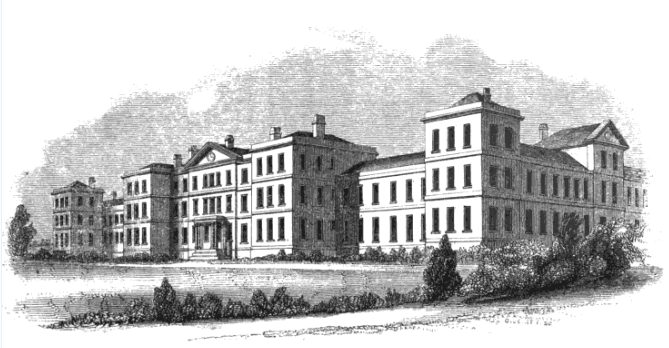
I don’t want to throw too much gloom into the fun, but there could not be a figure more removed, from royalty and it all, than the ‘Commoner’ and poet John Clare. I thought of Clare recently, researching a book about Rome, and writing about the figure of Violet Albina Gibson, who at 50 shot at Mussolini, in 1926, was released by the Fascists, and ended her days ‘back home’ in St Andrew’s Hospital, ‘up North’. St Andrew’s was, in a former incarnation, the Northamptonshire County General Lunatic Asylum, where John Clare had been locked up too, in 1841, and it brought back to mind his startlingly moving, very English sonnet ‘Lines written in a Northampton County Asylum.’
‘I am. Yet what I am none cares nor knows
My friends forsake me like a memory lost;
I am the self consumer of my woes,
They rise and vanish in oblivious host,
Like shades in love and death’s oblivion lost;
And yet I am, and live with shadows tossed’
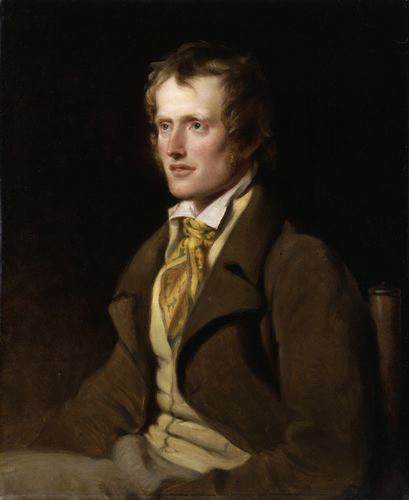
Perhaps it’s the very proof of Oscar Wilde’s quip about there being ‘only one thing worse than being talked about’, although of course one of the agonies of ‘madness’ must be how others, or society, perceives you. Although Clare was a poet who necessarily sought fame, his true story is much about that inner Kingdom of the mind and psyche, the dangerous, vital stuff of artists and writers, and perhaps ultimately Wiki-leaking inflationists too – or, variably, ‘media heroes’ – like Julian Assange. Clare has been described as ‘the greatest labouring-class poet that England has ever produced’ and his is the most remarkable story, in part recreated in the Booker prize-winning novel The Quickening Maze. In his own fracturing consciousness, his disconnection – that saw Clare moved from his first stint of private voluntary medical care, into that General Lunatic Asylum – he rewrote the whole of Byron’s Child Harold, but in his own image, and also told newspaper editors he was Shakespeare. It shows the danger of over identification, jealousy, or too much empathy, or maybe ‘years of poetical prosing’, as the dismissive admission report had it. Clare wanted to move in a sphere consummate with his talents though, torn between his illiterate countryside companions, and clever, critical London, but by then the ‘spirits’ of past and present writers were certainly moving inside Claire’s hurt mind and imagination. As Martin Amis had it, when the attacks on The Satanic Verses began, books and by extension writer’s minds are their own countries. Then, unlike your average hack, blogger, or rooter in Grub Street, Clare took great writing, the value of literature itself to really speak to all, much to heart…and obviously to mind too.
It’s interesting today though how many people aren’t royalists, and don’t believe in God either, but are going to wedding lunches. Quite right, because if Clare’s story means anything it is about the sometimes agonising inability to escape the Self, high or low, and the maxim ‘only connect’! It is also a testament to the eternal need to be involved in theatre, a theatre the British Establishment understands in its life blood. In terms of social connections, the real Shakespeare wrote much though on how the journey of ‘great ones’ – like those fairy powers of A Midsummer Nights Dream, flitting above all us ‘Rude mechanicals’ – can frame and inform lives, quite beyond the obvious facts of power, or of ‘cultural’ influence. Although a little in love with Princess Diana myself, as a teenager, too much champagne and Southern Comfort at a pre-nuptial party meant I missed that particular view of a Royal Wedding, groaning in the dark in my adolescent bedroom. Very rude indeed, and probably a little mechanical too, but perhaps my fairy-tale fantasies were already heartbroken, and I wanted to be a happy prince! Sixteen years later, a lost love meant that Sunday Times headline announcing Diana’s death in Paris was another kind of hard right of passage,that added to the crash of private experience, and grief, one the once lofty Royals took rather a long time to wake up to, in the public consciousness. William and Kate’s obvious and genuine openness to the crowd is just the right approach, backed by that police defence against the ‘fanatical’, ‘fixated’ and the ‘foolish’. Diana was loved for several reasons, a victim of an often nasty establishment, for several others, but perhaps the hurt and violence of famous celebrity deaths can be shattering, above all, because it slaps each of us in the face with the fact of our own mortality. Human grief is then iconised, and Elvis, Jim Morrison, or Princess Diana replace the saints of old, in our ache for comprehension, connection, and not to go down to the undertow. In fact, despite the BBC puff, as we all sell Business UK to the world, and people on the street last night wanting to be part of history, this is not a ‘truly historic moment’ at all. But William probably knows you’re nothing without a woman, and with Shakespeare in mind, today one could venture into intruding on the simple happiness of real human beings, with the words of unruly, dangerous Puck, when remastered by Titania-appeased Oberon, and not talk of the sad past at all.‘Not a mouse shall disturb this hallowed house, I am sent with broom before, to sweep the dust behind the door.’
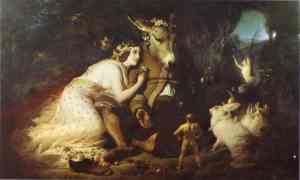
I suppose you could say that if Titania lost the plot by falling for a mortal commoner in her ‘dream’, today Will must be Kate Middleton’s upturned ‘Bottom’, except that the royals have succeeded in becoming rather real, too real if you take Furgy’s example, and you hope the authorities too do not make the law an ass today. If the novel on Clare though, The Quickening Maze, is noted for being brilliant on that shadow-land between the sane, the odd, and the truly or dangerously nuts, watching some of the ‘Wedding Fans’ on telly, getting their places near the Abbey, or indeed watching some of the Middletons themselves, you know that madness, or certainly out-of the circle eccentricity, is alive and well in merry Britain, and always will be. But then Mark Twain joked that when your realise everyone is mad, the mysteries of life disappear and life stands explained.
Most at ‘the top’ become adept at trying to keep it all out, even Andrew Marr, although if the lowly John Clare suffered from ‘madness’, one of the eternal problems of Kingship, indeed any extended forms of leadership, was always the potential imperfections of the individual. I always loved the fact that Henry VI, that ‘saintly’ King who so abhorred the fashion of exposed breasts at his Court, and would cover his eyes in horror at the good and no-doubt scheming ladies, spent most of the battle of Tewksbury talking to a tree. But then Henry was related to the French King Charles VI, who thought he was made of glass, and might soon shatter. Perhaps modern head doctors would simply talk about inflation, as possible for a leader like Gaddafi, isolated by power, as for a poet failing to be Shakespeare. One of the most profound takes though on a state that might afflict countries, parties and groups too, as much as people, travelling through time and change towards modern psychoanalysis, and individual freedoms, is Allan Bennet’s marvellously humane The Madness of King George. The tale of a royal line affected with porphyria, and touching the wild disconnection of King Lear, but with a take on the very healing power of theatre, the very point of writing, while Ian Holm’s stoutly ordered Doctor tries to keep George III ‘in his eye’.
As for any sad past stories though, John Clare’s own agony highlighted not inevitable or sometimes tragic mortality, that Undiscovered Country that ‘we know not of’ , but in that Northampton Asylum, alone, and without the union that is the very stuff of partnership and connection, or dare we talk marriage still, Clare faced something far starker, and in fact more relevant to David Cameron’s ‘Big Society’ too – a kind of living death, in isolation and disconnection, cut off from the vital world, and effectively powerless. A terrifying journey into…
‘…the nothingness of scorn and noise,
Into the living sea of waking dreams,’
How and why that disconnection happened had many reasons for Clare, himself a clarion voice on the unstable and alienated Self; reasons in his difficulties of supporting his family of eight, in the growing destruction by industrialisation of a rural idyll, in drink, and in his failure, a common failure for artists, to win his audience in his lifetime. Today writers might talk, in the face of Royal expenditure and a party, of the slashing of arts grants, a deep publishing crisis, the failure to lend to small business, and ordinary people of the closing of libraries, and above all the cost of education. But in terms of Phoenix Ark Press we might be warned too by the failure of Clare’s Shepherd’s Calender, in trying to beat the ‘system’, by peddling it himself! Don’t develop a kind of Tourette’s Syndrome either, in public outpourings – although writers are made to feel and speak – or stand up in the middle of a performance of The Merchant of Venice, like poor John Clare did, and have a rant at Shylock! But today art sensitive psychologists like Oliver Sachs might remind us too of the extraordinary and fragile nature of consciousness, and the very worst response to difficulty sometimes being the negative judgement in easy or dismissive terms like ‘madness’. Diana herself was accused of it, in the public eye. Sachs represents that growth of awareness that moved us out of brutal places like Bethlem Hospital, then to become Bedlam, and turned that General Lunatic Asylum in Northamptonshire into St Andrew’s hospital.
That journey Clare took into the shades though, although he was treated humanely by the enlightened head of the institution, and encouraged to write – and writing may have been his salvation because it to be allowed a communicator to communicate -was a tragic country where…
‘… there is neither sense of life nor joys,
But the vast shipwreck of my life’s esteems;
And e’en the dearest -that I loved the best –
Are strange -nay, rather stranger than the rest.
That ‘vast shipwreck’ is a phrase deluged in grief, and captures the true monumentality of his mental and emotional suffering. Why should ‘the dearest’ though, that Claire ‘loved the best’, be ‘rather strange than the rest‘? In the alienations of lost loves, and friendships too, the violent flipsides of temporarily grasped happinesses, and mutual understandings and confidences, that seem sacred at the time, we all know why. But then to be hipper ‘people are strange, when you’re a stranger, faces look ugly, when you’re alone.’ Those failures and losses seem to challenge the very meaning of the private trusts and vows we can make, or don’t make these days. As Yeats put it ‘tread softly, for you tread on my dreams.’But then it is clear that something had dislocated inside Clare, and for the masculine, perhaps it lay far beyond the beginnings and consumations of marriage, but always has something to do with the loss of connection with the feminine, inside and out.
King Lear knew it above all, in his blindness to Cordelia’s real, sane and balanced love, but Clare’s re-writing of Child Harold is a lament for lost love too, and Clare’s first love for a girl called Mary Joyce was blocked by her prosperous farm-owning father. The country boy Clare, who was a farm labourer as a child, a pub Pot-boy, a gardener, a lime-labourer, and a Gypsy camp follower too, had not yet made any impression as a poet. But even if he had, and there was more money then in poetry than now, while he was supported by friends and patrons, you can imagine the scorn Mary’s powerful dad might have thrown at poets. Walking home from his first ‘mental home’, Clare was lost in the kingdom of fantasy, believing he was returning not just to his wife, but Mary too.
There is a kind of tragic purity too in Clare’s yearning for peace, in that real asylum, a sort of holy innocence, beyond the potential scorn and noise of life, or mankind, politics or power, or today the ever-present invasion of the ‘news’ hungry cameras. Or what deeply sensitive Clare at least imagined in his head to be that scorn and noise; the nasty whispers of the nasty world. Clare’s great I AM, undercut though with that bitter and yet…, is the author’s revolutionary defence of his and human identity, and of the so-called ‘common man’ too, as relevant today as then. But perhaps the Ego itself had to inflate, and then retreat, to see life and the world once more, and restore its glory and wonder, as the filmstrip of memory flickered through his lonely consciousness, in a way that could certainly ruin a good party.
‘I long for scenes where man has never trod,
A place where woman never smiled or wept;
There to abide with my Creator, God,
And sleep as I in childhood sweetly slept:’
Sleep – ever the natural Shakespeare’s ‘balm of hurt minds’ – but then there is for Clare, beyond hurt and near suicidal pain, the desire no longer to affect or be affected by life, and agonised memory. He should have read Kundera’s Book of Laughter and Forgetting. As if the greatest drama though is the one where nothing happens, and in a sense perhaps love is actually just that peaceful ‘un-drama’ of absolute connection, and a journey achieved. Where far beyond a great structure like Westminster Abbey, and the connectedness or supposed connectedness of rightly happy public events, a rural poet and natural and much suffering commoner was bound and healed again in the arms of beautiful nature.
‘Untroubling and untroubled where I lie, –
The grass below -above the vaulted sky.’
David Clement-Davies April 2011. The public domain photos are John Clare, Landseer’s Titania and Bottom in A Midsummer Night’s Dream, and The Northamptonshire County General Lunatic Asylum in 1848. David is a best-selling fantasy author, a journalist and the founder of Phoenix Ark Press. You can visit his website by going to DavidClementDavies.com
A FREE SEA FABLE FROM THE PHOENIX PRESS – ENJOY
To celebrate Earth Day this April, and the intrepid voyage of the Plastiki – Max Jordan’s continuing blog is also below – best selling children’s author and Phoenix Ark founder David Clement-Davies is today publishing a free and unseen fairy-tale online.
THE LITTLE OYSTER
by David Clement-Davies
At the bottom of the Deep Blue Sea,
by the edge of the Great Barrier Reef,
there lived a little Oyster.
“You are the most precious thing in the Sea,” his mother would say, and she told him stories of the fishermen who risked their lives diving for his kind in the Ocean’s depths.
It made the little Oyster feel very special and important.
“Come and play with us, little Oyster,” the many coloured fishes would cry.
“Sing for us, little Oyster,” the coral would say, “sing to us on the dancing surf.”
But the little Oyster felt far too special to play with the other creatures.
“Don’t you know that I am the most precious thing in all the sea?”
The Oyster’s shell grew bigger and bigger, and older and older too, but still the Oyster would have nothing to do with the other animals.
So the fishes all moved away. The coral withered and died.
The little Oyster was left all alone, at the bottom of the deep Blue Sea.
Strange, crusty shapes settled on the Oyster’s back, while high above him a single Jelly Fish drifted by…
The Oyster grew sadder and sadder, and lonelier and lonelier too, there inside his shell, at the bottom of the dark, cold sea.
The Oyster did not know how to talk to anyone anymore.
Then one day a bright blue Clown Fish swam by.
“Hello, Oyster,” cried the funny Clown Fish, “and why do you look so sad?”
“Go away,” replied the Oyster, “Don’t you know that I’m…”
“The most precious thing in all the sea?” laughed the Clown Fish, kindly, with his great, wet lips.
Then suddenly the strange fish began to spin, and make silly faces, and blow bubbles at the Oyster through the blue.
The Oyster peered at him crossly, but then something extraordinary happened…
The Oyster began to tremble, and then to shake, and suddenly the Oyster started to laugh, just like the funny Clown Fish.
Suddenly there was a great CRACK and the Oyster’s shell split open wide.
There, inside, was a huge, beautiful pink-white pearl that sparkled like sunlight on the waves.
Now the little Oyster has many friends at the bottom of the Deep Blue Sea.
He plays with the fishes and sings to the dancing coral.
But best of all he likes talking to his friend the Clown Fish, for he makes him laugh.
Copyright David Clement-Davies 2011. First Published by Phoenix Ark Press. All Rights Reserved. The right of David Clement-Davies to be identified as the author of this work has been asserted by him in accordance with the Copyright, Designs and Patent Act 1988.
You may print up this free story courtesy of Phoenix Ark Press. If you would like to donate to a little publisher please click the donate button below.

Filed under Childrens Books, Fantasy, Free Story, The Phoenix Story
 Phoenix Ark's Blog