Category Archives: Culture

THE SHAKESPEARE BLOG – SOUTHWARK, SPIES AND SHAKESPEARE’S MISSING WOMEN

220px-The_Swan_cropped

One of the great problems about Shakespeare, and building up a realistic and factually correct picture of Southwark too, where his brother Edmund died, is working with such little evidence. That highly eccentric American couple, the Wallaces, came up with another piece in the jigsaw when, after reading through 5 million documents, they unearthed a court case involving Mary Mounjoy and Stephen Bellot, relating to Shakespeare lodging with the tirer, the theatrical wigmaker, Christopher Mountjoy on Silver Street, near the Criplegate. It saw Shakespeare giving evidence in court over the question of a promised and unpaid dowry to Bellot, where Shakespeare seems to have helped the couple plight their troth but to have withdrawn his testimony, saying he coud not remember the sum, probably proving an ultimate loyalty to Christopher Mountjoy. There were also all kinds of sexual shenanigans in the Mountjoy household, and Mountjoy was marked down by the judge as a rather disreputable character, adding the prick of scandal to the Shakespeare story. That tale also narrows the circle of Shakespeare’s intimates and ties him to the co-author of Pericles, the very unpleasant George Wilkins. Wilkins owned a tavern brothel on the corner of Turnmill and Cowcross ‘streets’, then outside London Wall and in a semi rural area in developing London. He was had up in court repeatedly for violence against women, including kicking a pregnant woman in the stomach and stamping on another, perhaps two of his working girls. When Stephen Bellot and Mary Mountjoy, whose mother was also called Mary, were pursuing their own love affair they had gone to stay in Wilkins’ tavern. It adds great interest to the brothel element so deep in Pericles, based on John Gower’s Confessio Amantis.

I think a much neglected story though is the other time Shakespeare had a run in with the law, in November 1596, when he was accused, with two mysterious women, Dorothy Soeur and Anne Lee, along with Sir Francis Langley, of ‘Murder and Affray’ by the local Surrey Sherrif Sir William Gardiner. It was standard legal language and had come out of a long standing tussle between Langley and Gardiner, who Langley had called ‘a perjured knave’ in a tavern up in Croyden. At the time Edmund was sixteen, whether he was in Stratford or London, quite the age to pursue a player’s career. To add to the Shakespeare presence in London rather than Stratford their brother Gilbert was a haberdasher for a time in St Bride’s, off Fleet Street. Langley of course was a highly succesful and rather disreputable Algener, who put official stamps on cloth bails to establish their quality and clearly benefited from seizing goods and the potential for bribery too. Who also got his title by buying the manor of Paris Gardens, that third little Liberty along the river Thames in Southwark, walking away from big St Saviour’s church, through The Clink and Bankside. He was fined by the city authorities for not keeping up the Manor properly, probably sitting in the Compter court in old St Margaret’s Church, that had been dissolved sixty years before, and whose Brotherhood of Our Lady of Assumption had once owned The Vine tavern where Edmund died. Langley took the commissioners out to lunch, but at least they kept their integrity by fining him again the following year.

Langely of course also built the Swan theatre in Paris Gardens in 1595 to cash in on the growing theatre trade that Henslowe’s Rose had well established on nearby Maid Lane, which was much more splendid and silvered on the outside. Both young Ben Jonson and Shakespeare were involved with Langely and the Swan then, two years before Shakespeare and the Burbage brothers decided or were forced to take down the oldest permanent London theatre, ‘The Theatre’, up in the Shoreditch. When the lease on Giles’s Alan’s land ran out and he tried to put up the price, so the players transported the valuable wood and their ‘house’ across the water. The newly named Lord Chamberlains Men used it to build the immortal Globe Theatre on Maid Lane, in the Liberty of Bankside, where The Vine tavern also stood. Just up the way from the Rose and ‘forced out of a Marish’, as Ben Jonson wrote in The Execration Against Vulcan. He also described the Globe as ‘The Fort to the whole Parish”. It is the Swan though that had the most interesting and unhappy fate of all the London theatres, because it never really succeeded, certainly after 1597, was sold on by Langley, who died in 1601, and would later be described as being very decayed and ‘hanging down its head, like a dying Swan’. Both the Rose, closed by 1605, and the Swan suffered from the success of The Globe.

But what happened that day when Langley and Shakespeare were caught up in an incident with Dorothy Seour and Anne Lee in November 1596 and who were they? As Horton wrote in his fascinating book on the case, alongside his idea about Justice Shallow in The Merry Wives of Windsor of 1597 being a satire of the deeply unpleasant Sir William Gardiner, who specialised in extortion, it is lovely to see Shakespeare giving him a piece of his mind, or perhaps even the glint of his sword. But why are those two women named and were they having some kind of merry party in a more colourful establishment in Paris Gardens, when an argument broke out? Of course the stewes ran along the river front in neighbouring Bankside, but Paris Gardens was certainly a brothel district too, that housed the famous Cardinal’s Hat, right next door to where the modern Globe reconstruction stands – not on its original site in Bankside, though two minutes walk away. It is very probable that the infamous Holland’s Leaguer, and there is still a Holland Street there, to testify to the influx of Dutch immigrants into the district, came to be in the moated manor house of Paris Gardens. In the reformation period especially remember that Sir names too, so often emerging from trades like Baker, Fletcher, Smith, Thatcher and so on, were really beginning to be defined, partly in the institutionalisation of records and us all. Take for instance the name of one of the carpenters working at St Margaret’s Church 100 years before, under the reign of Henry VI, who is simply called ‘Peter of the Bridge’. The bridge being great London Bridge, the only crossing point over the river into the City then. The Holland clan though, originally a Dutch family, certainly turn up elsewhere as being a kind of London crime family, much involved in prostitution but then business seemed to have involved a lot of people in crime. It is interesting Shakespeare puts a John Holland in Henry VI, as one of the less appealing rebels engaged in Cade’s Revolt. As for Dorothy Soeur and Anne Lee though, I found several Soeur’s in the Token Books from St Saviour’s relating to Paris Gardens. The name is obviously from the French for Sister, but whether that has a religious echo too, or was just a common emergence of a Sirname, I don’t know. Meanwhile of course one of the strongest comments on Paris Gardens, where the Royal Barge house also stood, that came to be owned by Philip Henslowe, in a city where literally everything was franchised, also comes from Ben Jonson, who described Paris Garden’s as ‘that accursed ground.’ There will be another blog on the intriguing figure of Kate Arden, Jonson specifically mentions, and also on who those ‘Sister’s’ are Jonson mentions going to investigate the supposed crime when the Globe burnt down in 1614, but was quickly rebuilt.

Don’t tar anyone, and especially not Shakespeare, with that brush of scandal or rumour, that had so tainted his near exact contemporary and great inspiration Christopher Marlowe. Who schoolboys still fancy was a brothel creeping carouser, not to mention a spy, who ‘died in a tavern brawl’. Francis Meres’ book of 1598, which first mentions Shakespeare as the most important writer of his day, and is critical for dating, specifically alludes to Marlowe’s unhappy fate, contemptuously too in the light of Marlowe’s atheism, as Shakespeare alludes to him in As You Like It, though in a very different voice, and speaking of “a great reckoning in a little room’. That little room was most likely neither a tavern nor a brothel though,but a far more respectable place, one of the many houses across London that offered bed, food and drink. It was in Deptford, where the Marine docks were, and belonged to Eleanor Bull. But there Marlowe was killed by three men who were certainly agents of Francis Walsingham: Apparently over the ‘reckoning’, the bill, but most likely in a semi authorised hit, related to the rivalry between Walter Raleigh and The Earl of Essex, the faked Dutch Church Libels that had been pinned up on the Broadgate wall attacking foreigners, in a UKIP style frenzy, and both Marlowe’s muted atheism and his possession of banned books. Marlowe’s spying credentials were pretty obvious when you remember he went to Cambridge (and the Master of his College would end up hanging himself by his britches) and was at one point in Flanders investigating Counterfeit coin. His murder clearly had an enormous effect on Shakespeare, and his wariness ever after of the public eye, or the disgrace of fortune and men’s eyes, that could be so fatal in Tudor England. Another indication that Shakespeare’s involvement with those two woman probably wasn’t lubricious either though is the fact that in his book on the doctor and astrologer Simon Foreman AL Rowse specifically names Anne Lee as the sister of Sir William Motson, who made a name in the navy.

Yet the stamp and thrill of intrigue certainly surrounds that court case too, and most especially the extraordinary events that unfolded in the coming year, 1597. Just follow the threads. Sir William Gardiner was clearly trying to bring disgrace on a local rival, Francis Langley, whose playhouse the next year staged ‘The Isle of Dogges’. That lost play co-authored by Jonson and Thomas Nashe satirised Elizabeth I’s palace on the Isle of Dogs, where Canary Wharf now stands over the water, or rather her blood hound courtiers. It saw the Swan closed, along with all the theatres that summer of 1597, for the writer’s ‘lewd and seditious’ work. Nashe, who later dismissed the play as an ’embryo’, fled London, and ‘our Tom’ is affectionately mentioned in Meres’ book early next year too as soon to be welcomed back ‘to Rome’, namely the favour of the court and London. By then the hoo-ha was blowing over. Jonson, along with two fellow actors at the Swan, were arrested and put in the Marshalsea prison on Long Southwarke for a couple of months. Francis Langely alone was denied a licence for The Swan though, when the theatres reopened, and though it was known for plays, and staged sword fights and bouts of extemporary verse too, it never really took off and within four years Langely was dead.

But the plot thickens when you discover that in the Marshalsea Ben Jonson was interviewed by Robert Poley, who was a notorious agent of Walsingham’s and one of the three men in that room in Deptford with Marlowe. It was a man called Nicholas Skeres who had stabbed Marlowe in the right eye. Then consider the fact that Langley was also caught up in a case involving a fenced diamond, which reached up to and displeased the Privy Council itself. Also that it is very likely that the order to close the theatres, not because of sedition but the general threat of plague, came down before any mention of sedition, or the actors’ arrest in mid summer. Was the Swan’s closure then and the scandal of that year in fact somehow drummed up and related to the conflict between Gardiner and Langely, by extension Shakespeare, jostling for local influence, in a climate where the control of the theatres was becoming more and more political? Driven too by the kind of cloak and dagger double-dealing, extortion and blackmail common to spies that might well involve fenced diamonds too and which Walsingham’s spy network constantly engaged in, especially his hired men in that little room. Was the report to the Privy Council of a seditious play much more about underhand efforts to hobble Langley altogether, by him, or someone else, including the ubiquitous and connected Phillip Henslowe? That year would certainly echo very darkly through Ben Jonson’s life, who in 1598 would kill his fellow player Gabriel Spenser in a duel on the Hogsmeade, on the edge of Hoxton. He pleaded Benefit of Clergy and was only branded on the thumb, although Spenser started it. But Gabriel Spenser had been one of the players performing the Isle of Dogges at the Swan and one of the three actors, including Robert Shaa, imprisoned in the Marshalsea too. It and the fate of the Swan, rather than any high moral concern with the seemier side of the little Liberty uncharacteristic of Jonson, is much more likely to be the reason he would so strongly label Paris Gardens ‘that accursed ground’ in The Execration Against Vulcan.

But now try to fit Shakespeare back into the jigsaw. The years 1596 to 1599 were certainly monumental in his life and career and by extension perhaps Edmund’s too. In 1596, apart from that court case over an incident with Langley, Dorothy Soeur and Anne Lee, his only son Hamnet had died in Stratford at the age of 11. The next year, as well as writing The Merry Wives of Windsor for the inauguration of their new patron George Carey to The Order of The Garter, the obviously by now highly successful and relatively affluent Shakespeare would buy the second biggest house in Stratford, New Place, although for the comparitively modest sum of £60. Meanwhile, though his plays had already played at The Theatre, The Curtain and Henslowe’s Rose on Maid Lane, Shakespeare was clearly involved with the likes of Jonson and Langley at the Swan in Southwark, as the case proves. That they were trying to form an independent company is suggested from the fact that several of the Henslowe’s players were accused of breaking their contracts for him, and later went back to perform for The Admiral’s Men. Meanwhile Shakespeare and the Burbages must have known that the lease on the land on which The Theatre stood north of the river and city would soon run out, rather than quite the sudden drama someone like James Shapiro describes in his excellent though perhaps too literal book ‘1599’. So was Shakespeare already looking for an independent venue in 1597, where he could lead his company to new heights, and also own the plays and take the house receipts, in a way that Henslowe’s writers and actors never did? Shakespeare’s presence in his own house is hugely important to his swelling confidence and authority. The events of summer 1597 clearly blackened the appeal of the Swan and Paris Gardens though, and just over a year later, in the spring of 1599, the new Globe theatre went up in Bankside instead, on the southern edge of marshy Maid Lane. Almost simultaneously Henslowe, whose diary is filled with the rivalry between his Admiral’s Men and The Lord Chamberlain’s later-to-be King’s Men, saw the lie of the land and rather than trying to compete directly in Southwark built the Fortune Theatre, following the Globe’s design, on Golden Lane north of the river. He would not really ‘return’ either, though he always lived in Southwark by the Church at ‘The Bell’ on Clink Street, until Shakespeare had retreated to Stratford after 1612, when Henslowe built The Hope, opposite The Globe on Maid Lane, in 1614.

The whole saga, along with that celebrated falling out with an original Globe sharer, the bawdy clown Will Kempe, who would later call Shakespeare a ‘shakes rags’ in print, highlights the difficulties and rewards of succeeding in the early theatre business, but also to me an underestimated conflict between Shakespeare and that most prominent Southwark man, Phillip Henslowe. Of course Ned Alleyn’s wife’s famous letter about the return of the players company safely to London after another bout of plague testifies to the closeness of those original actors and companies, while both Shakespeare and Henslowe both became Grooms of the Chamber under James I. But a closeness that could also have a very violent side, like Jonson’s duel with Spenser. Shakespeare was anything but the Puritan, divided self or not, inhabiting a world that was generally so lusty and lubricious, and much was about both independence and money. But it is hard to believe the kind of mind that penned Rosalind in As You Like It, or wrestled with the corruption of brothels in Pericles, described by the players as ‘not debauched’, could have much approved of that Warden of St Saviours, Master of The Game, Keeper of The Royal Barge House and major Southwark landlord, Henslowe. But of that more to come too.

David Clement-Davies 10 January 2015

For writers in the Sixteenth Century it was hard to survive, books and plays often supported by private donations. We seem to have returned to that time, in some ways, so please realise that the research on Edmund Shakespeare and Southwark represents two years of unpaid work.  If you enjoy these blogs then and can afford to support Phoenix Ark Press, please donate below.  Many thanks.

Donations

The picture is the 1595 sketch of The Swan Theatre in Paris Gardens, closed in the summer of 1597, around the staging of The Isle of Dogges and denied a licence.
Leave a comment

Filed under Culture, Education, London, Uncategorized

WRITERS START TO FIGHT BACK WITH A BIT OF LITERARY FIRE?

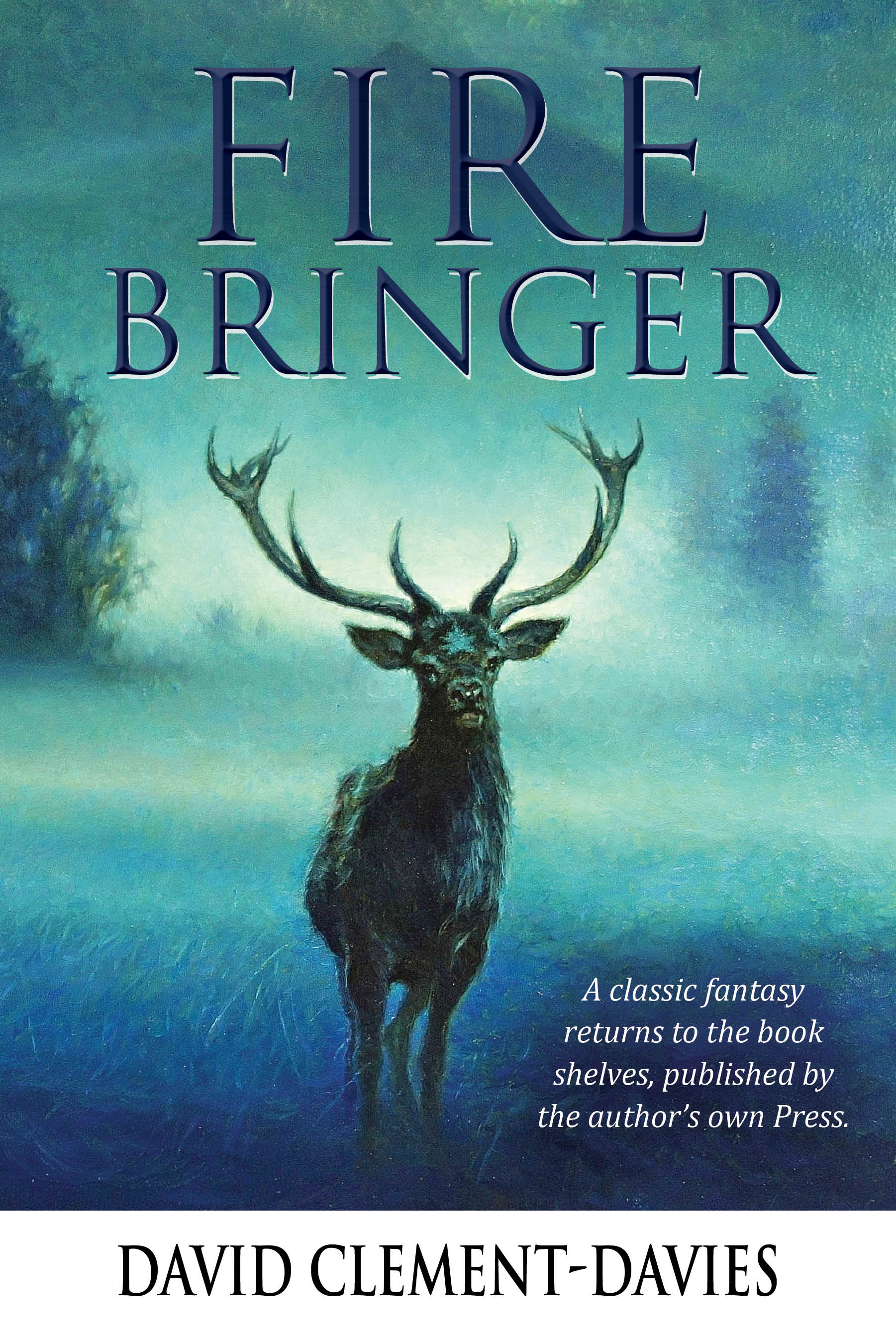
Front CoverPart of the little victory of crowd funding the novel Dragon In The Post this year was also bringing a classic like Fire Bringer back into print availability. Here then is the new cover and back page. I have very serious reservations about Amazon’s Createspace though. Firstly the very carefully designed mechanisms to charge you more for each new ‘package’ and the lack of coordination from design teams too, having to communicate all the time through message centres, meaning errors easily creep in. Far more importantly, unlike any old fashioned publisher, Amazon take no financial risks whatsoever. Meaning that they charge you to publish your book, also taking large percentages if it succeeds, but involving no risk whatsoever if it disappears. They also set the minimum price, which I think should be challenged by monopoly commissions, not least because of Amazon so gloating, when I first contacted them, about putting bookshops like Borders into Chapter 11 bankruptcy. With the dawn of eBooks and the Internet the face of ‘publishing’ changed dramatically and of course if you can build and control the platforms, the mediums of publishing, you also control the methods, the prices and to an extent what is said and produced. To be fair to Amazon they did respond to my complaints and improved their ‘service’ but on the whole it seems to me the emperor’s new clothes of modern ‘democratic publishing’, which means as long as we are giving the execs our money, the cats get fatter and how much do they really care what’s out there? We will see what their distribution is now like but whatever happens it’s a proud moment to have a book that was taken out of print in the UK by Macmillan after 12 successful years available once again, to people now and to future generations too. In that sense all books can always be ‘in print’. Thanks again to friends and readers then who made it all happen, because that’s the dedication in the front of the book too! The paperback of Fire Bringer will be on sale in a few weeks, all ready for Christmas.

Back Cover

Leave a comment

Filed under America and the UK, Books, Childrens Books, Culture, Publishing, The Phoenix Story

Albania – With a clear blue eye on the wounded ox, in the city of Nymphs…

“What Country, friend, is this?”
“This is Illyria, Lady.”
“And what should I do in Illyria?
My brother he is in Elysium.
Perchance he is not drown’d: what think you, sailors?”

Twelfth Night – William Shakespeare

IMG_0100 (2)

“And Hoxha did good and bad, but built 700,000 bunkers across our country of Albania”. It was possibly the most astonishing and depressing fact too, in an astonishing but only sometimes depressing day. It deserved a bit of the Borat treatment as well, from that ‘Cultural Learnings of America for Make Benefit Glorious Nation of Kazakhstan’, as our coach snaked up the Albanian coast to the ancient citadel of Butrint. Leaving behind the six story hulk of Cunard’s Queen Elizabeth Cruise liner, monstering it in the charmless port but more beautiful bay of Seranda. Which USA Today included this year as one of the top 10 undiscovered cruise destinations. We were making for a citadel anyone interested in history or civilisation simply cannot afford to miss though, especially at 56 Euros. But as our tour guide Davina, trained in the Albanian Capital of Tirana, spoke of the facts of her country and the place where ‘Our Dictator’ was born too, Enver Hoxha, in part of that all or nothing attempt at Tourism, you wondered if she might joke that if you didn’t like the food they’d be attaching electrodes to your privates or, if you did, selling you their younger sister. Hoxha’s 45 year rule may have brought rapid economic growth and improved literacy too, but it was notorious for the suppression of opposition, detainment camps and the use of the death penalty.

No such horror stories now, on an easy day out from Corfu, forty minutes on the hydrofoil. Although to me packaged coach tours (lunch included), are always depressingly ‘Communistic’ somehow. With the dodgy looking bloke in the white jacket overseeing us, that very human tendency to behave like sheep and the few Euros guided carefully from your pockets via the unnecessary early restaurant stop. In a town that is winning more tourists – the guide said 80,000 to Albania as a whole, although most to the riviera are Greek or Italian – but which is a skeletal facade of dreary half-built breeze block hotels and empty bars, that may well harm future tourism, and the faint sproutings of small ‘International’ businesses. Nearby Corfu’s charm is it’s living history, its style, it’s comparative complexity, while Sarande’s lack of it is its functional emptiness. Yet when you see how little there is around, you forgive the simple packaging, and enjoy the ride and views, especially with the glorious weather that October brought here, which forgives so much.

IMG_0168 (2)

So to dispense quickly with any depressing bits; Albania’s obvious poverty, especially compared to thriving and culturally rich Corfu, the romany shanti-towns on the reasonable roads, the lack of any skilled artisinal crafts to bring anyone real ‘Suvenir’ sales, over cheap plastic tourist tat, unlike all those crafts in Corfu’s old town, and the rubbish strewn not only on the verges but at supposedly natural oases too. Or the little girl begging at the coach, you see in London now too, and, at a harbour restaurant where all the moulded plastic chairs seemed to have broken their backs, the bruising looking guy in white socks who almost threatened to buy me a drink, to try and talk to me. “Where you from?” It might be no different in any struggling port, but I had just seen ‘Taken’ on TV. Then I felt guilty at the stereotyping of Albanians, so common across the water in Corfu, and on mainland Greece too, where something like a million emigrated after those iron ‘walls’ came down. In the old days the searchlights roamed the straights at Kalami and the small Albanian town beyond Seranda that means six, from the six mile gap of water, and people were shot too. While the husband of an English friend on Corfu had his boat stolen to be used by Albanian drug runners though, and crime has tarnished the image of some of whom have made it into the Greek Middle Classes, of course desperation and economic migration have happened a great deal in Italy recently as well.

Then to revelations though, only to underline my ignorance – that Albania, which uses the Lex, is Muslim, for instance, although its Communist past ruthlessly suppressed any faith. The guide defined it as 70% Muslim now, 20% Greek Orthodox and 10% Catholic, pointing at the church and simple hilltop mosque, as if atheists and agnostics had been eradicated in the new Dawn. She assured us folk live here in peace and intermarry easily too. Not much was said of Albania’s year long Civil War in 1997 then, although if I had a Euro for the number of times the guide used the word privatised, I could probably do a lot to help the Albanian economy.

How different the terrain on the mainland is to Corfu though, with those expansive, now half-drained and cultivated marshlands, where Gerald Durrell went hunting as a child and recorded it so elegiacally in “My Family and Other Animals”. From the coast, Albania is a four tiered hunchback of steep mountain ranges, feeding the many rivers that bring an astonishing variety of trees, giant bull-rushes and burgeoning flaura and fauna, among the dusty scrubland, burned by the Mediterranean sun. So we were quickly on the edge of the new 86 Square kilometer National Park and lake Butrint, ringed with half submerged cages for the huge mussel production here, in the brackish half-salt, half fresh water lake. The whole landscape suddenly seemed to glow a kind of electric mauve-green, dancing with vibrant, healing colours. Colour and light are the things I’ll remember the day for most, a draw to artists and water colourists for centuries. Like the Frenchman Dupre, and the limerick-writing Edward Lear, who came here in the 19th Century, along with those celebrated Grand Tourists, like Lord Byron himself. It pleased the Finnish Construction engineer, who had turned to painting and natural photography instead. Not least in our visit to the ‘Blue Eye‘, a bubbling natural spring that rises from more than forty metres through solid rock and is the visible source of the Bistritza river. When you’ve nothing you always make too much of something, perhaps. So the simple eco-cabins tried to compete with the broken down saw-mill and abandoned boats, or the Double Eagle of the Albanian flag, black on red, fluttered humbly but hopefully by the US and EU ones. Then Unesco’s intervention to define a world heritage site also helped create the national park. At first I wondered if the 40 minute excursion was worth it, for these ‘Naturalistic Learnings of Free Albania’, but that water is so pure it seems made of glass and in the afternoon light it suddenly looked as if you were gazing across a holy river in India.

IMG_0154 (2) IMG_0153 (2)

Perhaps above all though came the revelation that this is claimed to be the land of the ancient Illyrians, proud soldiers and master shipbuilders, which vaguely competes with the miserable image of modern Albanians, not least to many Greeks, as dirt poor Armenian peasants. “What do you call an Albanian peasant?” someone joked, “An Albanian.” So to a natural diversion though and that quote from Shakespeare’s Twelfth Night, when Viola is shipwrecked and believes her brother Sebastian has been drowned. “What country, friend, is this? – This is Illyria, Lady.” Whether Shakespeare ever traveled literally or not, his very English plays were vitally informed by the stories, legends and histories flooding into a Renaissance London, that also had very practical experience of seafaring and piracy in ‘Europa’, as England exploded as a maritime power in the late 16th Century and started competing with the likes of Venice. I believe the start of so much that is still not enough understood in the beginnings of World and American Capitalism. Of course Illyria, like Bohemia in The Winter’s Tale, is chosen as a place of exotic difference, for it’s mystery and otherness, to welcome and test a foreigner in a strange land, as Shakespeare usually proves himself a friend of strangers. Perhaps also as a kind of creative gateway to that dominating imaginative landscape inside Shakespeare’s mind and education though, before science had herded the forces of Psyche and Eros into the clothes of modern psychology – ancient Greece and classical Rome. ‘What Country, friend, is this?” is exactly the point of so many of Shakespeare’s themes, inner and outer. One that Greeks might not take for granted either, considering the disparate ethnic histories here and their own Nation only being founded in 1830, as Albania was in 1913. Yet the literary point for someone living on Corfu is that Illyria perhaps adds a bit of credence to the tale Gerald’s brother Lawrence’s scholastic friend relayed in his own little travel gem, Propsero’s Cell, claiming that Corfu was the magic isle that Shakespeare had in mind for The Tempest. I still think Shakespeare’s greatest bark was his avid reading and all assimilating imagination, devouring the patterns of storytelling and myth, that ran like a river through trading London, while the magic of Shakespeare’s isle is really his own art. But that imagination ranged so often back to this world, not only in Twelfth Night and The Tempest, but in Timon of Athens, A Midsummer Night’s Dream and A Comedy of Errors, that you start to wonder. Like the marshes though, at times it could all be taken for Elysian Fields.

First in the day we had made for Butrint though, by one of the castles of Ali Pasha and the old rope ferry over the canal, sparking in the sunlight, to discover the remains of so many days. Perhaps it is because Butrint is such a microcosm of competing civilizations and changing, impossible time. With its re-positioned doric columns rising in front of the sturdy Venetian tower, Butrint was a wonderful revelation for me. Only touched by visiting Epidavros, or the much under-rated port of Ostia outside Rome, that so tops treking even the Forum itself. The acoustically perfect little amphi-theatre here was re-built by Roman settlers, under Julius Caesar, who established a Roman colony eleven years after he had invaded Britain. So the original Greek Agora and Acropolis (hilltop City) expanded, beyond the huge 4th Century BC ‘Caeclopean’ walls that began the fortified settlement. Which you can also see in Etruscan fortresses in Lazio, like the one above Florence in Fiesole, as well as original settlements in Mycaenean Greece. To remind us that everything lasting began with fortified towns, before Nations or Ideologies, with tribes and City States. So to the Roman period though and those heads unearthed here of different kinds of dictators, that makes it all a more seamless and intimate tapestry. Like those of Augustus and Livia in the museum, that became as common and recognizable symbols as the Holy Family, or as an important a meme as the coinage. Then came the building of a pillared Baptistry nearly a half a millenia later, once Constantine had turned Rome to Christianity. With a very natural ‘Christian’ mosaic circle, sporting birds and flowers and animals, sadly covered at the moment by sand to protect it. The large Basilica too, which originally meant a kind of market and meeting place, rather than a Church. As a side note, it was fascinating too to find that Partridge as an early Christian symbol also used here, related to work at Phoenix Ark Press on that carol, the 12 Days of Christmas, and a Partridge in a Pear Tree.

IMG_0140 (2)IMG_0088 (2)IMG_0091 (2)

Like Shakespeare reaching back to the psychic source of the Gods though, it was the original remains that had the most power to me. Like the fine stone gate on the edge of the sleepy, lime blue and green lake, almost a secret scar in the rock, a magic doorway, that Virgil perhaps immortalised in the Aenead. Was it really here then that Aeneas himself, Trojan emmigree and mythical founder of Rome, after that 10 year war over a woman, landed on his way to Italy, in a still mythic world, that understood history as storytelling in a struggle between eternal fact and the needed journey and qualities of any individual life? – “I saw before me Troy in miniature, a slender copy of our massive tower…and I pressed my body gainst a Scaen Gate.” With that competes the much later carved gateway that at first I thought depicted a Wild Boar, but which is in fact a lion, devouring the head of a bull. Butrint’s name actually means Wounded Ox though, when the Greek foundation supposedly saw an Ox let ashore and killed by another animal, to prove auspicious omens. The city was also mentioned by Cicero though, after a friend with a country villa near here complained about Roman development and urged him to lobby against it in Rome, who in his letters wrote “Let me tell you that Buthrotum is to Corcyrca (Corfu) what Antium is to Rome…the quietest, coolest, most pleasant place in the world.” It shows how lively Corfu was at the time too.

For all the interest of the monuments though, and despite the aging guard in his overblown outfit blowing on his whistle as if Dictatorship had no tomorrow, or the fascinating artifacts in the little museum, so depleted by thefts in 1997, Butrint has something else that could wake Keats to his greatest song – “Thou still unravished bride of quietness, that foster child of silence and slow time………” It is the enchanted setting, on a sparkling day, wandering through sylvan groves blooming with wildflowers, edged by that wide blue-green lake, lifting with herons, as a fisherman tilted dreamily at the waters with his rod. Resources of fish were one of the reasons for the place’s ancient economic importance, though with those mussels Albania has other exports, like the wine on display in plush bottles in one of the port bars. For all the coachloads too, which must be far worse in high summer, you can hang back and find a space off beaten tracks to contemplate those vanished ghosts, of fact and mind and time. It is exactly what would have appealed to that 19th Century imagination obsessed with ‘the fragment‘ too. Those many ravished fragments of Butrint, crossing so much time, were picked out for me most in the sacred well of Minerva, bound by the hard rock, as firm as hope. Then the discovery of a Nympheum, a temple to those Nymphs and Dryads that sported through an ancient imagination, when Gods and Goddesses were living in everything. Then, to prove this was a City of Nymphs, by another well they found some Roman graffiti, in the achingly moving little dedication by one inhabitant “Julia Rufina – lover of Nymphs.” The painted head of Dionysus adorns one of the Nypheum’s alcoves, although I would take issue with the guide that he was just the God of Wine, rather than of natural Ecstasy and a transport to the Divine, unlike his debased Roman counterpart Bacchus.

IMG_0104 (2) IMG_0120 (2)

Of course those super efficient conquerors and engineers, the Romans, stole everything from the ancient Greeks, except the Aqueduct and the Arch. But there was an older ‘religion’ here then, since 400 years before Chirst Butrint was a votive centre to the healing God Aesclepius. Where real sacred snakes, to wind symbolically around the staff of the Cadeucus too, were kept in pens and laid on the stomachs of the sick to induce dreams. As those wrestling with life and mortality took baths and visited the theatre too, a sacred space, as Shakespeare knew it was a sacred space too, and a place of artistic magic, even in hungry, entertainment driven, Reformation London. Everyone came here though, from ancient Greeks, to Romans, to Byzantine Greek Christians, Ottomans, Venetians, the gruesome but effective Ali Pashi, by which time Butrint had near vanished under the mud and topsoil, to bad old Enver Hoxha. Who closed off Albania completely, as paranoia saw him building all those pointless concrete bunkers. Then that fear and militarism deep in the Soviet psyche too has a very long history among regional warlords in the Balkans.

Forget it. Time is trying to and if they had the money in Tirana, or could persuade either some philanthropic Oligarch or Unesco, they should pour in as much money as they can to exploit its archaeological heritage, in the best sense. Only 60% of Butrint has been excavated, for instance, and the ancient town of Finiq, obviously linked to those tribal and seafaring Phoenecians, hardly at all. Come to think of it Phoenix Ark Press has to discover the etimology of the Phoenix and whether there is any link. Yet before Hoxha was even fighting in the mountains as a Partisan, or Mussolini made Albania as cheap a conquest as Abyssinia for his Fascistic dreams of Ancient Rome and invasion of Greece, Italian Archaeologists had begun to uncover the City again, in the twenties and thirties. What a glorious experience it must have been for those archaeologists. Mussolini renamed Seranda Port Edda, after his favourite daughter, who turned against her father on the execution of her husband, Count Ciano, and fled to Switzerland. To sell her husband’s diaries to Alan Dulles and the Chicago Daily News. It is written up at Phoenix Ark. In fact Hoxha, from an important local family, crucially linked Archaeology to the creation of Albanian National Identity. He and the Fascists too were wrong though thinking it provided any convenient truth, in that such sites really link the movement of peoples across deep time, and the long process of real Civilisation. It could be an even more powerful gateway to tourism then, if uncontrolled building doesn’t ruin the riviera and they learn the charm of real local family bars and restaurants. But Albania has something else shared by Greece, Bulgaria, up into Romania too, perhaps Romania above all, that reaches back to the nature worship of the ancients. Namely astonishing natural scenery, wildlife that includes wolf and bear and some of the most pristine but now threatened forests in Western Europe. It is exactly why the Albanians must try to keep an enlightened and open blue eye on its wounded ox of a country, shutting tight in Seranda, if it is to develop and change, as it might. But they also need to remember too that real prosperity has a far deeper and wider meaning that just the ‘Capitalist’ discovery of quick cash.

IMG_0165 (2)

As the T-shirts saying ‘I Love Albania‘ flapped unconvincingly in the breeze then, the guide was cheerful, jokey but half apologetic, suggesting it would all be better in a few years and then those mosaics might be on display too. Like the man who apologised when I gave that little girl some Euros, or the waiter doing his damndest to offer good service, but looking rather small. Then there is a shame in that negative image of Albanians, its down-at-heelness and its recent past. But a great deal has changed too and in ‘Six’ families and kids were doing what everyone does, going to school or playing in playgrounds. Then the collapse of Communism opened another vital door to Butrint too and saw more archaeological work up to 2005, which has spruced up the museum and produced a National Park. More understanding and proactive engagement might come from Greece too, despite its own woes, meaning perhaps Greek efforts too to open up and make capital from a heritage where many people’s have intermingled for so long. Though the girl leading me to the hydrofoil was quick to point out she was part of the Greek Albanian minority, a community that revolted before the First War, and the association of religion with ethnicity has caused such harm around the world. As for Butrint, of course nothing especially important to the Greek lady who shrugged and said ‘it’s just a pile of stones’, to make my hair curl and remind me of an American who had said exactly the same thing years ago passing under the Lion Gate in Mycenae.

No, it is not just a pile of stones, it is literally one of the theatres of everything, so related to that healing son of the Sun God, Apollo, for those you like their sun worship intense. Where votive shrines to pure and natural wells first sprang up, as all settlements spring from rivers and clean waters. So came the burgeoning of trade, thought, literature, philosophy, and a symbolism that refers to everything still: the theatre of Gods and Man, the theatre of art, the theatre of magic and medicine, sadly the theatre of war too. It was only getting the Flying Dolphin back though, as the sunset burned the big white ships in Corfu Port a fiery bronze, making them look as if Vulcan had returned them to their smelting yards, that the full significance of Corfu’s Venetian Fortresses came into view in my head. Not so much on the tip of the Eastern headland, but the old Fort with its square, lionine eye to the little island of Vidos, and to Saranda and Butrint just beyond. Because it was dominating the straights of Corfu that was the key to shipping and trade, the gateway to the Ionian, and why the Venetians bought Butrint in the 14th Century to straddle those straights like a Colossus. Venice did so too, even as the Ottomans held Albania, Turkey and ‘Greece’ in their grip for five hundred years, at times pushing to the gates of Vienna. Until Napoleon marched into that “Drawing room of Europe”, St Mark’s Square, and the Venetian Empire came to an end, then the Balkans convulsed into the politics of ethnic hatred. Meat to remind you too though of the threats and unreformed horrors of now, and how significant that fall of Byzantium was in 1485, when Memmet II stamped his unreformed Islamic shields on the walls of the Hagia Sophia in Constantinople, today’s Istanbul. Then Monotheistic Religion is like Communism, it attempts to impose an absolute truth, which is why it should be separated from the State. Except perhaps that religion of the ancients, when the Gods were a reflection of the psyche of humans, good and bad, but magic forces lived so deeply in nature too. But so a fascinating and profoundly colourful day came to a close, back home on Corfu. In the end making me feel that if they keep that blue eye clear and open, this part of Albania and Butrint National park especially, could long be the quietest, coolest, most pleasant place in the world.

IMG_0147 (2)

David Clement-Davies October 1214

The photographs are in Copyright to Phoenix Ark Press – They show Lake Butrint, The Port of Seranda, The ‘Blue Eye’ spring, Bistritza river at its source, the ancient amphitheatre in the Temple of Aesclepius, the pillared circular baptistry, a fragment of lake and city, the ancient gate Virgil may have described as ‘Troy in Miniature‘, the later ‘Lion’ gate, the Albanian flag and a submerged boat opposite one of the little castles of Ali Pasha.

1 Comment

Filed under Community, Culture, Environment

CYPRESSES, CORFEATS, NAUSICAA AND A HOUSE ON PARADISE ISLAND

IMG_0069 (2)

The island, she won’t let you go,” whispered the hazel-eyed local on Corfu’s Agios Gordios beach, on the West Coast of my magic isle. She told me about her struggle and satisfaction in becoming a tourist rep, the legend of Nausicaa finding naked Odysseus here, washed up in the surf, and noticed the Disk of Phaestos hanging around my neck – Crete’s un-deciphered Linear B. I had bought it in my favourite artisan shop in Corfu town, where I get charming old postcards too. Then I’d been upset when it had tarnished in the bath and had taken it back to complain. “Life is never straight, my friend” the owner had twinkled nomicly, trying to convince me it made a better story too, as he assured me it was Stirling Silver, that very British hallmark. I was pleased above all that I hadn’t been lied to by him or been made a fool of either.

On Agios Gordios, this sudden Nausicaa and I joked about life, the real island of Corfu, ‘mad and wild’ Corfeats (according to other Greeks) and paradises naturally lost, or sometimes won again. If Corfu really was Homeric Scheria, at Thucydides claimed, home to those westernmost Phoenicians too, and so perhaps that link with the teacher of Zeno, Parmenides, she plays the strangest role in his rebirth and journey home. A symbol of half unrequited love, perhaps half mother figure, so much so one British scholar remarked that Nausicaa’s beach encounter and laundry scene is so realistic it meant that blind Homer was really a woman. Then the translations of Linear A on Crete turned out to be a laundry list! On Scheria cunning Odysseus, ship wrecked by Poseidon for tricking and blinding his one-eyed son Polyphemus, had to penetrate the palace of Nausicaa’s father, to get help, or breach what Wikipedia so anachronistically calls its magical ‘security systems’.

Since life is a beach though, what could be more magical then than to drink cold beer in the golden October sun, to swim in crystal waters but abandon some of the cliches too, as time and contact help me really experience a place. It has been a wonderful five weeks writing Dragon In The Post here, living in my rented house on Paradise Island, with its gentle garden, a place of recent barbecues and a new Dutch friend who was born here picking garden herbs for the marinade. So it was a bit of a shock to discover time rushing on, as ever, like Chronos eating his own children. The little ferry to Vidos from Corfu port has already stopped running, after three days of very heavy rains and gloomy skies. The Liston arcade in Corfu town still lights up and throbs at night, and the tourist shops bristle in the day, the electric evenings too, as a Maestre, a masterful Northerly wind, sweeps in to dispel the clouds around the great Venetian fort and the 18th century shuttered houses. But the season here is definitely winding to a pleasant autumnal close. Winter threatens in the falling leaves, the coming browns, the cooling airs, the death of each year’s life, but with something far less threatening than England and home.

On Agios Gordios we went swimming together at sunset in front of that burning red fire disk of exploding Hydrogen and Helium, so far beyond the real horizon, seemingly dissolving into a near-whispering, wine-dark sea. The bay held us like a friend, as the slanting afternoon sun painted our skins more golden and that renewed clarity of low afternoon light made everything sharp and real and very fresh and beautiful indeed. It picked out the shape of ‘Buddha Rock’ too, lying on his back on a nearby islet, beyond the Black Rocks, that to me looks more like a jolly Norwegian Troll, with a gigantic, bulbous nose. Then something of the ancient Gods descended, and light and sea and dying sun-disc became a filmy one.

The water does feel different suddenly, like warm silk, below the vaulting Cypresses climbing the slopes like markers to the island’s vigour, and as you stand in the sea, looking back at the hills, smiling or laughing, opening your arms, who would want her to let you go? The generous rains are the cause, and Corfu’s miracle micro climate, although with 10-15 days solid rain in September, it has not exactly been the perfect season. I’ve seen more of Corfu than I ever did last year though, swapping a battered bicycle that once kept me fitter for a sharp-engined white Mercedes (thanks to a free Airport upgrade, although with a struggle). So doing far more of the winding mountain roads, to Halikounas, Sinarades or Paliokastritsa, with its beetling Castello St Angelo and plunging, impossibly turquoise blues. Corfu always gives you a newly inspiring vista and opens your heart and mind, whenever you get locked too much inside yourself. “Oh, think twice, it’s just another day in Paradise” beats the Phil Collins song incessantly from Corfu Radio, of course, with its warning about forgetting other people’s problems. No, sorry, not at the moment.

It was driving up to a beer festival in Arillas in the North West this weekend though that I got to see much more of the ‘interior’ too – Those ever fascinating twisting, witch-hair olive groves, tipping down the slopes into mysteries of cool shade, the lifting massifs of hills, a sudden plain rich with wildflowers, pomegranate trees and pools of yellow sunlight, a flock of very smelly goats and, of course, among such lush vegetation, God-tall Cyprus trees everywhere, like perky sentinels, or officers of the watch. “Do you know their sex?” whispered someone in my garden, with a wink, as if introducing me to some great life secret, and of course the tall, straight ones are boys and the rounded, shorter, pear-like ones are girls. It’s all quite simple really.

I prodded my new friend on Agios Gordios and impressed her talking not about natural Phallic symbols, but the Omphalos, the World Navel and so the belly button. Also a time marker at ancient Delphi, once centre of the ‘known’ and imagined, where those weird women sat on their tripods, breathing in natural hallucinogenic vapours and whispering impossible oracles, or riddling warnings! She countered with talk of columns and the light on Delos, where the place seems to give birth to light itself. Perhaps then, while I learnt her real names are a feminized mix of the ever-present Orthodox Saint here and anti-Turkish intercessor Saint Spiridon and Alexander himself, such a green and fecund isle is an eternal antidote to that superstitious Greek association of Cyprus trees with death, misfortune and graveyards, like the sound of Scop’s Owls hooting in the night.

They are superstitions and legends much explored in the novel I’ve been reading here too, by Sofka Zinovieff, The House On Paradise Street. It is not a masterpiece, no Homer, with little of the literary panache or indeed sparkling charm of a Captain Corelli’s Mandolin, but it is compelling and more importantly valuable. In solid prose it moves between the present, especially that moment of recent Greek ‘crisis’ of 2008, where many worlds seemed to fall apart, and the Occupation by the Nazis, until 1942. Then the bitter tragedy of the Greek Civil War, through the dictatorship of The Colonels too. They could certainly make a far better film of it than that atrocious Americanisation of Captain Corelli with Nicholas Cage. Zinovieff writes like a journalist discovering fiction, which I believe she is, and with that name but also an agent in London, you wonder if English is her first language. She is married to a Greek and has two children. In a sense it is always a story somehow in exile from itself, seeking its own heart, but it is most fascinating both in providing a foreigner’s eye and experience too, with the detail of a tour guide and travel writer, sometimes a touch of the poet, and for its discussion of the British legacy too.

On Corfu they still play cricket!” is the patriotic hero Nikitas’s dismissive quip that references this island in the novel. Nikitas’s sudden death provokes the historical investigation by Antigone his mother, an exile to Soviet and then modern Super Capitalist and ‘Cowboy’ Moscow, forced to abandon him to her sister as a baby, and his English wife Maud, bringing up their children in the anguished environment of student riots and the modern ‘Crisis’ in Athens, while coping with death, loss, age and decay that springs out so suddenly in everyone’s little life. The novel moves chapter by chapter between their competing narratives and one of its biggest flaws is that as such it internalizes none of its male protagonists, perhaps men are the book’s real Greek mystery and threat, but also creates few characters you can really love and so passionately identify with.

Its two central stings in the tale, most clever in the use of the seeming acronym ‘Wasp’ to reference those endless political groups from ELAS to PASOC, and least emotionally satisfying in the revelation over the British protagonist Johnny’s real human love affair, could have been far better handled dramatically. Meaning their power, outrage or beauty are not sought out from within for the reader and so lose effect. Yet they sustain the action and the themes and help a book approach depth and sometimes passion too, if, and precisely because of it’s dark themes, it is perhaps an attempt to avoid passion and get at fact and clarity in recording events many don’t know about. “Passion,” sparkled the girl on Agios Gordios, “That’s what Greeks are.” Meanwhile a book relayed the story of the brave women of Souli opposite Corfu dancing to their deaths in 1803, rather than surrendering to the Turks, or the 400 pleats in the traditional costumes of freedom fighters to mark every year of Ottoman occupation, as it reminds you that passion also brings a talent for tragedy.

I felt peculiarly British then as I saw them playing Cricket the other day in white flannels on the green in front of the Liston and the beautiful Archaeological Museum in Corfu town. “Pakistanis” observed a Greek friend though, with more than a hint of that schadenfreude that sometimes brands all Albanians too, and which is far more prevalent, and redolent with a threat that you can’t feel on Britain’s little island, so much closer to that real fault line of modern Europe; Turkey and the Bosphorous. That evening we listened to Pink Floyd’s Wish You Were Here in the tiny Time Machine bar, then of course I saw the headline about UKIP’s victory back in the UK and its effect on the Tory Party and remembered the threat of atavism or real economic and cultural conflict is spreading everywhere.

That bar was part of the delight of getting to know Corfeats and a place though. Like tea and backlava with my friend and a young mathematician and Wikipedia guru opposite the Cafe Bristol. Or a game of ‘Gringlish’ and 1980’s Trivial Pursuit in my friend’s half built house with a view, as a storm fired lightening bolts across the bay, and too much booze after supper in my favourite restaurant here, Stimati in the village of Viros. There Spiros deals with his talent and ache as an artist by covering the walls with paintings bright with those ‘Iconic’ or primary Byzantine colours, although unfolding erotic Jungian dreamscapes, instead of God, in between the cooking. While his Scots wife Margaret bustles through with efficient practicality, stopping to discuss Scottish Independence, or to share some clear-eyed jokes and fun.

As for things being not quite cricket, or perhaps exactly Imperial Cricket, down in Corfu town I had noticed how I had noticed several young Pakistani players with surprise too, since this is what equates to a National Greek Cricket team. As the odd African peddles watches on the beaches, or there are so many cheap China stores here. Meanwhile a vastly tall, aging Greek Heavy-Metal hippy, with an Archbishop Makarios beard the length of a shaggy dog story, begs defiantly among the pretty cobbles and the wealthy trippers in the Old Town. Thankfully Corfu is no island to embrace the likes of Golden Dawn though, except perhaps in humorous talk of Independence for Corfu itself. Then, with its highly successful tourist industry and relative wealth, including a deal of British ownership, nor has it faced quite the hardships on the mainland. Despite complaints about sudden house taxes imposed, more than temporarily too, stories of local graft among doctors, to plump the Middle Classes, or that eternal accusation of political corruption at the top in Athens. More than that though, however bad things get, Corfu has an expansion and generosity that is in the landscape itself.

The British legacy is of course very strong on Corfu, the map of which looks a bit like Britain turned upside down. Not only with the cricket, but Prince Phillip having been born at Mon Repos, and celebrated English visitors here, from Edward Lear and the Durrell brothers to Joanna Lumley. ‘Kensington-on-Sea’ they call Kassiopi, South East of Sidari, the island’s most Northern point, bulging in the summer with rich Notting Hillites from London. Both of them above Kalami, where Lawrence Durrell and his lover had that White House on the sea, the property I think now owned by Lord Rothschild, or perhaps that’s above. Lawrence was of course a very different creature to his brother Gerald, that oh so British naturalist of the charming My Family and Other Animals. Whose practical, observant, scientific echo reminds you of the Brit care of local animals here; the tiny kittens like pocket watches and the battered cat families that survive around the dustbins. Perhaps I share fictional Nikitas’s prejudice against Right-Wing people, (except when you’re trying to get some decent service, or to fix my fridge, yet again), but I would translate it to people who don’t like animals instead.

Lawrence’s different kettle of fish to his brother, like some familial fault line at the centre of Paradise Street too, was in his attraction to Eastern philosophy, his protracted philandering, that help some remark he was ‘not a nice man’, but his skill too at history and very gorgeous travel writing, that did a great service to Greece. I’ve never read the Alexandria Quartet but know his painting the island of Corfu as ‘Prospero’s Cell’, referencing a bogus local legend a friend told him that Shakespeare’s The Tempest was set here. As if imagination and literature, from Homer to now, are not a country to themselves, as Martin Amis once remarked in shock at the Islamic reaction to Salman Rushdie’s Satanic Verses. Well, the art of the novel, and of course the older ‘God Consciousness’ of Myth too, in the very emergence of language and storytelling itself, is that they aren’t entirely separate countries either, if they have power and meaning.

As for the map, physical and internal, and my obviously scruffier end of the isle below the airport, whose open runway always gives me a strange buzz, it is apparently Agios Stephanos to the North of Kalami that attracts the true cognoscenti and the elite ‘Philhelenes’ so questioned in The House on Paradise Street. So the novel discusses that superiority of knowledge and power that in the eyes of Nikitas made the British almost as bad as other conquerors, from Lord Elgin to even mosquito-bitten Lord Byron, but especially Churchill, with his carving up of Europe with Stalin at Yalta. A pact that saw both British and American influence after 1947 go unchallenged by the Soviets, although a role that other Greek protagonists in the story are very grateful for. It made me think of the pretty waitress in the Tea shop who had said so warmly “I like the British”. In the factual historical postscript to the book and with regard to Metaxa and the Colonels, who I first heard about personally on holiday visits as a child with my parents, when Greece was still a Homeric dream, comes that phrase that has haunted the World from London to Iran since WWII – “supported by the CIA.”

Meanwhile my chance friend on Agios Gordios tried to mimic being so ‘verrrrry British’, although she hardly knew where to look when I told her that at Edinburgh University I had once visited a friend at Broom Hall, only to see a tiny bit of the Parthenon on the Drawing Room wall.  It was the Bruce home, and so Lord Elgin’s house and to be fare to myself I tried to pierce the grandeur of it by pretending to steal the cutlery. That Elgin Marble thing, or how you rewrite or correct history in a globalised World, or indeed if you should in a multicultural epicentre like London and The British Museum, serving so many visitors and scholars too, is an aspect that is intelligently dismissed by Nikitas in visiting Maud in London.

So instead to the human horror of war and especially Civil War and the atrocities on both sides, which was of course redefined by that super battle that began before World War II ever ended, the function and ideology of money and so power, Capitalism versus Communism, as the Cold War began. Fought with such vigour by the likes of Allen Dulles in Switzerland and then from America. That East Coast lawyer, OSS man and first Civilian director of the CIA, and great share holder in the American Fruit Company too. It is Churchill’s role I don’t really know about though, who incidentally was brought to power instead of Chamberlain partly through the offices of my grandfather Clement Davies, as Liberal leader and head of the All-Party Group in the UK Parliament.

The novel is fair minded by giving different voices and perspectives, just as one character says Greece was not a British Colony. Although what truth can be reached if Greece still thinks it was ‘them’ doing it all cynically, like modern day Politicians up at the top? When graft can go from top to bottom, all humans have potentially murderous instincts, the British Empire bankrupted itself fighting Nazi evils, for any Imperial evils, as America achieved a new Hegemony, and that ruling instinct was always towards law and order, especially in the vicious and tragic maelstrom of the Balkans. Churchill did not have the power to impose his will at Yalta and had to engage in real-politique, just as the Philhelene ideal was perhaps betrayed by the horrible realities of war, resources and survival. Something to wake up to, as much as Communist Idealists in softer countries woke up to the horrors of Stalin.

A historical postscript reminds you of the fact Greece did not become a country until 1830 either and then references the ‘catastrophe’ of Smyrna in 1927. Not so much Ethnic Cleansing as Ethnic Rearranging, shifting 500,000 Turks and 400,000 Greeks, always the problem of the Nation State, especially when religious identity and ideology steps in too – Christian versus Islam, that fault line so much clearer at the Bosphorous. One that competes with a ‘Greece’ that stretches back to Byzantium and the Eastern Empire. “I’m orthodox and respect their faith,” one waiter had grunted, looking out to sea and talking of ‘them’, after new beheadings on TV, as I failed to get the boat to Vidos. But he certainly didn’t agree when I gave him my weak-livered ‘One Planet’ liberalism. It was of course Ataturk though who tried to modernize a sclerotic Ottoman world, removed his mother’s headscarf in public saying she was too beautiful to hide her face, shifted the Capital to Ankara and tried to separate religion from the State.

Fatherland and God are defined as powerful forces in Greece in Zinovieff’s novel too, as they were in Spain, against those supposedly ‘Godless’ and youthful instincts to create a new world among the often Communist Partisans fighting the Nazis from the mountains or the idealistic Red Brigades. Meanwhile though The House on Paradise Street attempts a story that heals with the instincts of a woman and mother, while not sitting on the fence either. That phrase then – ‘atrocities on both sides’ – which is such a challenge in places like Syria now, is not quite good enough and is countered with the instinct to expose the Right Wing prison camps, the suffering in women’s detention centres, being much a book about women, and indeed the often ruthless support of the British Establishment up to 1947, that included decapitations of at least dead soldiers.

All potentially at the heart of modern debates too about the role of Greece in Europe, or Germany in Greece, just as a new German company was just exposed as one of the most corrupt of all. Or what happened when the European Troika insisted both on restructuring and savage cutbacks, and the actions of the likes of the Universal banking Spider, Goldman Sachs. It was interesting to see Zinovief take a differently slanted line then in the story of Maud’s children, echoing many things I have heard too, from my Economics teacher friend, or local mothers, about the old fashioned rote teaching methods here, in a sense the patriarchalism of history and National loyalty, and that much of it is about the frustrations and bewilderment of young people. So it references the murder of a young student by police, or the student deaths under the Colonels too, but balances that with a skepticism about ‘hoodie’ anarchy and lost generations. So too I’ve heard among new younger friends perhaps a worrying tendency to grow old or give up too soon, though it’s something many feel facing the vast capital gulfs of today. Don’t give up. Remember the light, the beauty, the future and the Gods that make you eternally young. Greece does have a working Democracy, it is investigating the crimes of Golden Dawn members and it also has a right to talk about the flaws of the European or Global Capital model too. Meanwhile Zinovieff can use the protection of fiction to address things that might cause offense here, or furious over-reaction, like why driving is so challenged, smoking is everywhere, or how the loud shouts of malaka at every slam of a backgammon piece sometimes frightens the non natives. Others might find it a quality of foreign difference and charm.

Much meat for my Greek guest at a barbecue who seemed convinced everything from to Ebola to Iraq is a global conspiracy and that old bug bear too, an Israeli one. With that you can’t really argue the facts though, as much as I might agree with the potential conspiracy of Capital and Corporations to always reproduce themselves, sometimes at deep human cost, because it usually descends into a kind of paralyzed mysticism. Yet I also wanted to chat to him about Parmenides, and one theory that the belief the entire history of Western Civilization is based on Socratic rationalism is in fact a misreading or writing of Plato, Parmenides writing just one fragmentary poem on Nature, and about the Snake and the Cadeucus, theatre, dream caves and Aesclepius too. Perhaps that was the lead in to the discussion too of how to learn and earn the joys of just living simply, free of the storms of the world, in such a beautiful place.

As for Britishness, my other experience of it here though was far less dramatic or imperial, at a friend’s birthday in the little Paradise bar overlooking ‘Mouse Island’, Pontikonisis, just below my house, where someone said the Albanian owner foolishly watered the wine. A group of fifteen English ladies, a German and my fiesty American friend, met for drinks and oily snacks. All of whom had married Greek husbands in the heyday of their romance with Paradise, like Shirley Valentines swept into a sea of passion and new possibility. Another English wife I talked to the day before in Corfu Town though now finds that roots are roots and that for her there remains a gulf of understanding or experience at times with her Greek man. The ladies at the supper are mothers, have jobs teaching, or working in the tourist industry, face the common issues of survival and every day life. Sometimes perhaps a cultural paucity too, or a lack of stimulation perhaps, common to young locals too, though Corfu Town is home to the Ionian University, that makes the likes of the Arillas beer festival a weekend must, engagement with the amateur theatre group vital, or talk of celebrity a place of a special frisson. The big, exciting world.

Now though, since the day Jude Law came, to be naughty or not in his villa, the reps have to sign special non-disclosure agreements. We all like the wild, the naughty and the indiscreet too, life-gossip, if not quite the loucheness of Kavos in the far South. I drove down one day, in search of who knows what, to find Kavos, even emptied of tourists, a gaudy horror story of strip pubs, indecorous lounge pools and Medical Clinics seemingly every 100 metres, to take in the drunk and the wounded, from the evening fights or the blow job competitions. The mayor complained loudly when a British Documentary about it was screened, as if it had offended Greek Honour, or Manhood. In that it probably does offer a cliche of a Brit Package Tour, ever pilloried as being the drunks or thugs abroad. But Corfu is big enough, sexy enough, roomy enough, to allow for that too, like a touch of the dark side in the Southern subconscious. I now call Kavos Corfu’s Torrid Zone.

So to sitting in the immortal Robins Nest in Agios Gordios, the charming little bar run by a sparky lady from Chicago who has been here 29 years, seems to have done everything, lets people flow through her place like magic and say’s she dislikes money and is ‘a trader’, the trade being human potential and fun. From dressing up parties, to the beautiful hand painted rocks that litter her place. “We don’t have Greek comedians” said the young car mechanic glumly, over a Trivial Pursuit question, and there are not many jokes in The House on Paradise Street either, but here there’s lots of laughter. So folk come, year in year out, friends and near family, Robin has four Greek children – from America, Britain, Norway, Serbia, although not everywhere. Since Robin thinks I’m far too posh, and that Pink Palace Hotel above is so very pink, it brings a slight yearning for the days when Sir Frederick Adam got so romantic with his Greek wife. As for how little I know, I never realized William Ewart Gladstone was a High Commissioner in Greece. But that world is gone, as the novel warns modern Greeks should embrace a new if however confusing world that they can only understand by jettisoning both some of the prejudices and especially bitter memories of the past, that essentially feed on the dead. The problem is that Greek identity or the search for it among the sense of pride and self worth is so mixed up in the past, and Soumian’s Marble Steep, that abandoning it sometimes seems like abandoning the Gods themselves, or the roots of language. On the other hand, one of my friends hates all that Greek Bazouki music and all life movement is a battle between past and present, localised or wider horizons. Last year my attempt to contact The Lawrence Durrell Society, for instance, as a Brit writer perhaps dreaming of Consulates, exotic Balkan Trilogies or sexy spies, resulted in a very desultory response. With not only the discovery that the budget had been slashed, and the lease on their building gone, but that lunch up North was far more appealing than making an effort to have a drink with a nosy Brit like me.

Hey ho, perhaps Corfu needs some brand new writers and poets, I thought, if anyone reads anymore, especially as I watched a gaggle of Russian sailors decamp around Corfu town last month, in those huge, flat, wide-brimmed sailor’s caps, that always look decidedly fascist. Apparently one of Russia’s largest warships was in port, The Moscow, docked among the giant ferries sailing between Turin or Venice, and bristling with missiles the size of White Mercedes. Young men in a foreign town, they sat politely in the Souvlaki restaurants, or gathered to drink beer and smoke cigarettes, as they got snaps and it all became part of their life memories too. Perhaps, with Mr Putin’s taste for muscle-flexing and the anguish in Ukraine, they’ll do what the Brits did, and not so long ago according to a nostalgic English friend at super who told me her husband’s stolen boat turned up on the news, used as transport for Albanian drug smugglers, and invite the growing phalanx of Russian package tourists swarming to the island on board for evening cocktails. You hear the Slavic voices in my local shop, Nikki Foros, or on the promontory below the big hotel beyond Mouse Island. It all seems so unreal though, on this generous, gentle island, where EasyJet plans to open Winter routes next year. Except when the sun sets and that nagging warning voice comes again, as you watch the News or look at Mr Putin’s face, that history not only repeats itself, but never learns the lessons of history.

So to what’s above me on the hillside, and apropos of a friend writing to ask me if I had been to the house and palace of Sisi. That rather bizarre and tragic woman, Elizabeth of Bavaria, Empress of Austria, murdered by a young anarchist in 1898, often lived in the Achilleon, the fine white marble mansion bursting with old curios, wide terraces with marvelous views and statues of the ancient Gods, to remind you of Germanic Philhelenism. Achilles is the centre piece, of course, the greatest of especially Greek warriors, only to remind you his wound was weak humanity, or mortality itself, as his mother dipped him in the river Styx, but had to hold him by that Achilles’ heal. Perhaps we should remember though that Athens, the home of those lost marbles, Democracy and Pericles, was also a warring City State, built by men and founded in slavery, or that the best of Greece, like the best of anything, was always a kind of myth.

The Achilleon is far better and more proudly preserved a place than the likes of the dusty museum on Mon Repos, open to 8pm everyday of the year, at 7 Euros a pop. It is of course also the place where the Greek experiment in Europe was first hammered out and then the bailout too. I didn’t visit again, but had an ice cream outside and enjoyed the Cypruses and the glowing evening sunlight, just beyond the sleepy village of Gastouri. Where thanks to lost English friends I first came to visit Corfu, three years ago. I thought of one whose father was murdered and told my new Dutch friend about it. “It happened” he said, “though it doesn’t really now. Often with two warnings and then a shotgun.” The crime has never been solved. That new friend of nostalgic British memories at the birthday supper had offered me a little flat to buy in Gastouri, but do up too, that wouldn’t exactly break a very down trodden bank yet, unless I got caught up in too much skimming off the top. Which my dutch friend remarked in his father’s experience of building, as he criticized the mentality here, especially in blaming others, planned to return for some Eco-living and bravely defended the honesty of his Albanian neighbour too.

Such things remind you always of real people and real lives beyond the borders, images and isms, washed up or not, which is what The House on Paradise Street is about too. I suddenly wondered and thought too it would not be remotely possible if the economy was not down. So to the real question, whether to stay on here writing through the winter, perhaps renting, and where any roots really are now? I thought of the little painting I had given my Scot’s friend for her birthday, a pleasant watercolour of Mouse island, bought in an art shop in Corfu town, then of that US girl who had so strangely wanted to get a very confusing tattoo – “Sail on Ulysses”. Then of the big eyed girl on Agios Gordios, who had so suddenly vanished that evening at Robin’s bar, with no reason and little rhyme, that put me in a bad mood for days. Who had told me of the ancient legend, that Pontikonisis had been the boat of Nausicaa, transformed by the Gods. It added to Nausicaa’s paradox, because while it was the Phoenicians who took poor, belabouring Odysseus home to Ithaca, and Nausicaa is said to have married his son Telemachus, that name never mentioned to patient Penelope actually means ‘burner of ships’. Hmmm, whatever the myths or truth, sometimes it is so lovely here I wonder if the island will let me go.

David Clement-Davies October 2014

Around the World? The photo is from the road above Agios Gordios on Corfu.

Leave a comment

Filed under Community, Culture, Education, Environment, Fantasy, Language, The Phoenix Story

WRESTLING DRAGONS ON CORFU AND QUESTIONING THE FISH!

photo (2) Hello, I haven’t run away with the cash, nor spent it celebrating the new United harmony of the British peoples, convinced the Welsh and the real Celts were always the warmest and the best, but flown off to live cheap on Corfu and write Dragon In The Post! Fire Bringer is coming too, thanks to you, although I have a lot to say about the packaged awfulness of Amazon and Createspace, while I’m pondering whether to try and Crowd Fund Light of The White Bear too, giving Phoenix Ark the USP (Unique Selling Point – eeeew) of being the only little publisher to be truly grass roots and completely Crowd Funded. Along with the tag line “The author they couldn’t kill!” I know it might strike terror in the hearts and wallets of backers, not to mention my own, but it would also make a grass roots publishing tale entirely real. Would it work though and how painful would it be?

But is the question now, never go back? I say it because after a lovely few days, following 15 solid days of rain out here and now sharp, Greek sun across that sparking blue, things are not as they seemed or were. The charming waiter on the little island of Vidos, opposite Corfu town, has vanished, to be replaced by a sullen old timer slamming down ashtrays, while I found the beautiful groved restaurant overlooking the sea, at Aloniki Bay, where we had a lovely home cooked lunch when I first arrived too years ago. Yet only to be jipped a vast 14 Euros on the tiny, oily, boggle-eyed fish. Ah me, all is change and sometimes too fast. It seems embarrassing and petty to complain when everyone is going through it, and the nice owner made some amends when he said ‘come back and eat free next time – if you don’t have the fish!” yet it troubled the perfection of this magic isle. But the place is beautiful and rich as ever, Prospero’s Isle, work is being done and the answer is, ever forward, with stories and real life too.

The picture is DCD’s, of the fishy grove and a writer’s lunch table, where at least some postcards have been written!

Leave a comment

Filed under Books, Community, Culture, Publishing, Stories, The Arts

SCOTLAND, INDEPENDENCE, GREAT BRITAIN AND THE IMPORTANCE OF NO

Flag_of_Wales_2.svg[1]150px-Flag_of_Scotland.svg[1]150px-Flag_of_the_United_Kingdom_(3-5).svg[1]150px-Flag_of_England.svg[1]
On the eve of this crucial vote what questions are we asking about Scotland, if those in Northern Ireland, England and Wales have a right to ask too? Perhaps a bit of history, and from Edmund Shakespeare’s time, might help. It was in 1607, the year of Shakespeare’s brother’s death, that a Scots King, James I, on the throne of England for only four years, failed in his vision of a ‘Greate Britaigne’, and an attempt to unite Scots and English laws, despite changing the flags. An Act of Union did not take place for nearly 200 years, in 1801, and after both a Civil War and that ‘Glorious Revolution’ that had brought Willian of Orange to the throne. None of those Scots monarchs though were especially laudable, despite the high romance of Bonnie Prince Charlie and the ’45. In the meantime, out of an Elizabethan genius, in a country that never had an Empire, and after the long and gradual loss of France, England sailed out to both explore and conquer the World, with a new mercantile imperialism founded in the City of London that was defined by those East and West India companies. Which built a rather unique Empire too, founded both in the idea of trade and law, with very many flaws, for sure, and yet, especially if we accept the idea of Capitalism at all and that always essentially privatised enterprise, a far better track record than many equivalent powers and Empires. Far more than my homeland of Wales, that truly suffered both from English repression and contempt and never had the Welsh Dragon incorporated into the flag (pause for thought for Dragon In The Post), Scottish genius and enterprise played its role in that too, just as it had an Enlightenment at home. It also involved poverty and cruelty and a Scottish world diaspora, much influenced by the fact or truth of English land ownership in the North.

But what are we really asking now, in a modern world that may need and benefit from kinds of devolution, and those local parliaments that have given cultures greater autonomy and identity, but which is also seeing such calamities of conflict, fear and hatred Worldwide? Do we really need to take that ‘Great’ out of Great Britain and further undermine a United Kingdom, as well as that ‘Mother of Parliaments’ at Westminster, when this highly opportunistic attempt at Independence by the likes of Alex Salmond has been badly thought through, with no plans for an army, nor a currency nor a true discussion of the costs and benefits of the entire enterprise? Not only are companies talking of moving back to that financial hub in London, but if oil prices fall with new technologies, or when those resources decline, the kind of plans Scotland’s ‘Yes Men and Women’ have will see resources drawn down to government both by cuts, that have already happened with the SNP, but raised taxes. It is in fact British money that has underwritten the progressive social policies like free University education. Isn’t it telling too that the likes of UKIP leader Nigel Farage should want an independent Scotland, furthering the kind of dangerous petty atavisms his stamp of politics indulge in? Is it not also extremely arrogant that the SNP should simply have expected to keep the pound, yet not show a similar responsibility to the future of a weakened Union, or all our voices on a highly integrated island? Countries and Kingdoms also need to find an appropriate scale, on this geographic island of ours, to be a power in the World, to find a united direction that supersedes localised interests and to talk with a truly strong or coherent voice. In the end it is not just a question of some ancient sentimentality then but the damage this will do to a rather unusual European centre in the sea, that needs to pull and work together, especially if Great Britain is that island bridge between Europe and America. It is already having echoes in tiny European regions that will not benefit the World or themselves in trying to pull away, but a Yes will lessen all of our identities and voices on a world stage. Whatever this brings up, and promises have already been made from Westminster, do not break the Union Scotland and let a new genius and sense of united confidence stand out instead.

PA PRESS

Leave a comment

Filed under Community, Culture, Environment, Uncategorized

DRAGON IN THE POST TRIUMPHS – WE DID IT! 100% FUNDED

Fire_Cutter_-_Dragon_in_the_PostHUZZAH! THE DRAGON IS 100% CROWD FUNDED BUT CAN WE KEEP GOING, WITH 18 HOURS LEFT, CREATE A MODEL FOR FUTURE BOOKS IN THE POST AND ALSO HELP THE RNIB, AFTER MY 100 MILE WALK DOWN THAT GLORIOUS SOUTH DOWNS WAY?

Thank you all, you’re brilliant! We’ve done it, or we’ve achieved that first major goal. DRAGON IN THE POST will happen and FIRE BRINGER will turn to print availability in the UK too. Where the editors so close to home could not protect classic books, or key principles surrounding the writer’s craft, you could. Now can we set sights on that wider ambition for a whole little publisher too though, other books and projects, and the exploration of crowd funding too, by a last big push and word spreading, in these 18 critical hours?

Of course the entire project, which those who have backed are a key part of, will also stay up as a record at Indiegogo, and new links will be put up before it ends. So it can also become a platform for pre-ordering and other perks this year. The story and adventure continue!

You can still “Join the story, become part of the adventure” right now of course by going straight to BUY YOUR SIGNED COPY OF DRAGON IN THE POST AT INDIEGOGO.COM

There is one other thing that would be really wonderful though and that is telling friends about my walking the South Downs Way, now 41% funded for the RNIB, and trying to raise some more money for the blind by pressing JustGiving - Sponsor me now!

Thank you all so much again. Yippee!

David Clement-Davies

The painting is Yasmin Foster’s FireCutter done especially for Dragon In The Post during the campaign. Art work and films are up on the platform.

Leave a comment

Filed under Books, Childrens Books, Community, Culture, Publishing, The Phoenix Story, Uncategorized

POPPIES, PYLONS, PEACE HAVENS AND THE GENTLE SHADOW OF BLYTHE SPIRITS!

DRAGON IN THE POST IS NOW CROWD FUNDED TO OVER 80 PERCENT, BUT ENDS NEXT WEDNSDAY, AUGUST 27th. YOU CAN SEE THE PROJECT, HEAR A BBC INTERVIEW AND CONTRIBUTE NOW BY CLICKING HERE

YOU CAN SPONSOR DAVID QUITE INDEPENDENTLY IN WALKING THE SOUTH DOWNS WAY FOR THE RNIB, THE ROYAL NATIONAL INSTITUTE FOR BLIND PEOPLE BY GOING TO JUSTGIVING.COM/David-Clement-Davies

imageIt’s an oddly proud and almost schoolboy feeling when a bloke with a slight hunchback on Pycombe golf course, with greens as smooth and trim as a Brazillian Wax, asks you how many miles you’ve come and you get a “Good man!” For walking the whole of the South Downs, I mean, and effectively in six days. The three golfing blokes even smiled, when I hailed them with “I was going to joke that you’re ruining a good walk, mates, until I realised your clubs are bigger than mine!” As I jokingly tried to stand up to five cyclists pouring down a narrow bit of the track, barring their racy road with my stick, though we all got it. Then many people on the way are admiring or interested to know you’re doing the entire thing on foot. If people, not being so time rich themselves, perhaps, or in a fit enough state, or wanting that kind of effort, often just do intermittent stretches and break the South Downs up into manageable chunks. I’m referring, of course, and with the increasingly confident tap of my tall hazzle staff on flint and white chalk, along these truly ravishing escarpments, through wooded groves or across occasionally murderous main metalled roads, to what I now see as ‘My Way’, as ol’ blue eyes had it – the magnificent South Downs Way. Which, in perfect weather almost throughout, since setting out on Monday, has surprised and delighted yet again.

Of course any presumptuous invitation to the good people of Hampshire, and West and a tiny bit of East Sussex here, nay to the very Nation, to throw off their chains of mounting illiteracy, or individual indifference, to read my blasted blog and even walk with me, for a personal protest against the machine, for crowd funding artists, for charity, for old style travel writing or whatever, has naturally fallen on deaf ears (though not entirely, because the Swiss professor from the Sustainability Centre has kindly backed). Then everyone has their own thang. Indeed though I’ve singularly failed to part the Red Sea of growing Internet miscommunication, or lead the Israelites to the promised land of real books, sent once again, in the post, I’m very near the end of two finishing lines now, with Eastbourne beckoning by Sunday and the Dragon In The Post campaign drawing to an end this Wednesday too, August 27th. Can we do it, still.

Despite the gloom of not breaking through with the Katie Martin show on Thursday then, here at least I’ve had a splendid try, along with an astonishing and still to be enjoyed walk. While it ain’t over till the Fat Lady sings, and I hope I’ve done some small service in writing up the lot too, as it happens. I have also ensured very personally that the good word of stories, dragons or Phoenix Ark Press is now echoing (well, perhaps whispering) from here back to Old Winchester hill, like news in the old days of French Invasion, or the price of corn in London. Not without a certain sense of fun and shared adventure too, I hope, but it means I have been telling virtually everyone I meet, of me, of dragons or the RNIB.

Then, like the pylons suddenly beginning to march worryingly overhead across the working farms, over the sheep and cows, gorse and wild poppies, from centres of so called Civilisation like Peace-haven or Brighton on the sea, and in what is one of the most thickly inhabited areas of England, today I’ve also met more people than ever before; always both good and bad, but mostly very good. It’s precisely getting closer and closer to bigger centres now and because folk use the South Downs National park in so many individual ways, to make it their beloved way too; from route marching it, mountain biking it, jogging and rambling it, to daily dog walking, wild picnics, orchid hunting or the hang gliders that soar out off the dramatic Devil’s Dyke, on this section of my walk between Upper Beeding and Blackcap (to be explained). The Devil’s Dyke of course has a devilish legend about it, but was in fact carved out of the downs as water melted out of the glacier Ice Age ten thousand years ago. It helps everyone approaching the way who start to wonder where they’d like to be, when time is blowing all our bones like chalk dust through the heather.

With talk at dinner in my B&B of the raves up there too, or the grizzly motorbikes that churn up soft ground and are thankfully banned, I bet it’s enjoyed for a lot else besides. Although I had got today’s planning wrong then, with little Pycombe being far closer than I thought from the House of The Rising Sun, making a hike to Alfriston of near 23 miles tomorrow muh more than I wanted, my own pure, exhilarated enjoyment was aided by the fact that at Hobb’s Cottage my hostess and I came up with a nifty contingency plan – Namely to leave an over-heavy rucksack with her just after lunch and walk on for seven miles, in the end to an appealing pub called The Half Moon in Plumpton, where she picked me up, to be returned there again tomorrow I hope – to the Way, not the pub!

It led to the loveliest uninhibited afternoon walk too, with sweeping views out across the richly wooded Weild to the East and the North downs in the distance, a growing sense of expansion, that almost makes me want to take the Monarch’s Way too, and a pace of a very decent four miles an hour. Parallel I went, past Pycombe Church, still needing £14,000 for their crowd funded restoration, to that Golf Course, up passed two wind mills that crown the hills, Jack and Jill. Jill, though not reached directly on the Way, in her sparkling Randal-and-Hopkerk White is open to the public on Saturdays. Then out across watery Ditchling Beacon and then to a sudden drop down near enchanted Harry’s Hill, at Black Cap, haunt of woodpeckers, badger and some former writer who rises to pure lyrical poetry in hhis description on the useful notice board. There to meet both a bearded Hungarian bicyclist and a couple learning the nearing middle aged freedom of travelling the world light, planning the Downs next year, but India too, lucky things. Whose son had crowded funded as well and not only reached his large goal of over £40,000 but in just six days! Then he was blessed by some patron who put in £20,000.

It was another warm hearted and interesting encounter, with a promise to have a look or spread the word, from here to the Himalayas. So perhaps I will see about it this Bank Holiday Weekend. Which had all really begun first thing with the old gent walking his Labradoodles, just above Upper Beeding and the river Arun, as I was thinking of Sue’s troubles at The Rising Sun, in trying to escape the clutches of her Brewery and morph into a Free House, one solution perhaps being a kind of local Crowd funding too, in making it a communal pub. Beyond the State Acquisition Notice flapping on a farm fencing, the man on Beeding hill touched another age by calling me ‘Sir’, and not with any shame. Then he told me about the new Power Plant at coastal Peacehaven, but also of that vast Victorian Cathedral-thing in the distance, that first crowned the skyline as I got to that pig farm of yesterday, perhaps to challenge or suppress so many pagan spots that line the Way with a Victorian certainty. Not in fact a Cathedral though, but Lancing College, where a mate of his had once worked and so knew that the piles for the foundations reach as deep into the soft chalk as those rather pompous flying buttresses climb to heaven! Apparently one of the reason it still stands though, after that War that is still such a deep part of the Way’s story too, and Britain and the World’s, is that the Germans used to use it as a handy grid point on their bombing runs to Portsmouth and Southampton.

“Be inspired” cried the motto from the very uninspiring breeze block Youth Hostel just up the way, and rather unconvincingly because we so often seem to do things with so little style in Britain. I was thinking of the brilliantly imaginative and part State sponsored Parador system in Spain. But there, perching on the verge before Perching Hill, as a cow led her calf up Fulking escarpment,came the very inspiring sight of five redoubtable ladies who call themselves The Blythe Spirits Book Club! Well, one seemed to have a reading club of more criminal interest, but we chatted about how scandal and gossip are the very life blood of any decent book club. Since one came from the bizarrely named Warning Lid though, where a gruesome murder happened a few years ago, we shared a little touch of Brighton Rock and the darker, sadder side of life, or the South East. Like the poor woman found hanged in the loos at Hampshire’s recent Boom Town Fair. As they spoke of real shootings and even a headless torso. Then, Elvira-like, these fine damsels, who got a bit irritated with my calling them Ladies and also turned out to be dedicated Orchid hunters, seemed to haunt my day’s walk, very pleasantly. In fact they were making for Pycombe too and so we met up around lunch again in a cafe called The Hiker’s Rest, where I advised them to look out for a film called Adaptation, all about writers and orchids and things.

Some sage advice, if you are on this part if the way, especially around lunchtime – miss out the dreary Devil’s Dyke pub beyond the broken down WWII pill box and forge on to Saddlescombe. What a little surprise that is, with its restaurant cafe, Elderflower and Raspberry sponge cake to commit murder for, home farm produce and jams. Also a settlement that stretches back to The Doomsday Book and one where there was a small Templar Monastery, and the near unthinkable record of a request for acceptance of a Lady Knight called Joan. It, like the Downs, stayed the same for thousands of years, until technology revolutionised everything and swept the old order aside. Now it’s kept up by The National Trust, not least because they bought it to protect a major aquifer into Brighton. It has a useful Information centre, a donkey wheel, even it’s own prison for transgressors, but is a place of special magic. I was talking of my encounters though, so, dear walkers, and not at all just for the money, as I had joked, but the constituency too and the sheer crac of it, I address this blessed blog to you! You,Blythe Spirits, you the fine hearted team just setting out through the litch gate to the Stud at Pycombe, you parents of successful crowd funders too – I and Dragons and Phoenix Ark hath need of thee, in this very hour! So come support, and help a little dragon story fly, because I have only five days left! Thank you, and if you take the higher pledge I’ll stride forth again and talk books to you all.

Communicating though is what has kicked off recently at Hobbs Cottage, with the most atrocious review left on the dreaded Trip Advisor, after one a couple of years back about a run in with the cat, among many that are very good. Vituperative doesn’t do it, although it’s length and passion certainly undermines itself. All I can say is I found the place, which stretches back to 1605, very nice, thoughtfully done, with a great breakfast and if Wendy’s husband Terry is a shoe in for Lez Dawson, a tad Forthright at times for us wayfarers, although with interesting tales of being country billeted as a boy during the war, humour is perhaps needed in these dark times and a reminder that that Way is 8000 years old, to give us all a sense of perspective. I couldn’t run a B&B or quite live the small village gossip life. But perspective is what comes again driving up the hill, among so many magpiesthat probably gave Pycombe it’s name, magpie valley, to look out through sweeping purple clouds at giant sunsets and free yourself into the journey of the Way. The problem with Trip Advisor is that people can say anything and it stays there, haunting you, although I’m sure others read through the noise and do what they do. The Half Moon pub is suffering from the very same Trip advisor phenomenon, which since I didn’t experience enough, I can’t say much more about than I like their style and menu, although a certain snootiness does waft about these genteel parts. So to waking early in the night to see gnarled trees and moonlit shapes and shadows worthy of a witch’s bothy and blogging this piece too, then to setting out again for the final race to the Seven Sisters and home. Even if it’s only in reading the word, I hope you come and join me for the next two days.

David Clement-Davies stayed courtesy of Wendy and Terry Desborough at Hobbs Cottage, very conveniently located on the edge of Pycombe, with a nice conservatory and very big garden. They have two twin bed rooms, though with pull down bed facilities too, at a very reasonable £30-£40 per head, breakfast and tea and coffee included. Contact 01273846150

Leave a comment

Filed under Books, Childrens Books, Community, Culture, Environment

PHOENIX ARK PRESS TURNS TO PRIVATE EYE!

Private_Eye_Cover
It won’t come out until there are only five days left to run of the heroic Dragon In The Post campaign, but you never know, so we’ve now turned to the funniest newspaper in the land, Private Eye, and placed an add in the back which reads as follows:

We’re nearly there, with a week to go! Help annoy nasty mainstream publishers
by crowd funding a once best selling author’s kid’s novel at
https://www.indiegogo.com/projects/dragon-in-the-post/x/8028980

Well, after being ticked off for words about ‘humdrum’ by The Hampshire Chronicle (shurely shome mistake – Ed), what can you do but chuckle and be creative? By the way, did I tell you about the school magazine I helped do in the age of the dinosaurs called ‘Private Parts’, that one of those donnish fellows at Westminster School called the best he’d ever seen? No? Thank God for that.

PA PRESS

The image and the cover of Private Eye is from the Wikepedia entry on the paper

Leave a comment

Filed under Books, Childrens Books, Culture, The Phoenix Story

DAVID CLEMENT-DAVIES READS FROM DRAGON IN THE POST!

Fire_Cutter_-_Dragon_in_the_Post

David Clement-Davies does his first reading from his crowd-funded novel and publishing project Dragon In The Post, that you can also read part of up on WATTPAD

To hear the author reading from Dragon In The Post click the audio arrow below. To go to Wattpad or Indiegogo click on the underlined links. To hear the second instalment just CLICK HERE

If you, your family and children enjoy this reading and story please help us start a grass-roots fire by spreading the word and crowd funding it into a real book, sent to you, in the post by CHOOSING ONE OF THE PERK LEVELS AT INDIEGOGO

Many thanks and although we are doing wonderfully at 53% funded, it ain’t easy, we have ambitions to raise more than the 4.5k target, to open the door on many things, coverage is coming in the Hampshire Chronicle and so the deadline has just been extended to the full-time limit available at Indiegogo of 60 days. That now ends on August 27th but momentum is always vital and remember if we do not hit the 4.5k target by then indiegogo will take a bigger percentage of any money raised.

PA PRESS

The painting is the wonderful image of a Fire Cutter, a dragon that cuts a door into another world for Gareth Marks, done specially for the project which you can own too as a signed print by being the highest of the next four contributors!

Leave a comment

Filed under Childrens Books, Community, Culture, The Arts, The Phoenix Story