Category Archives: London

THE SHAKESPEARE DEBATE, SOUTHWARK, FISHY THEORIES AND JOHN DONNE

THE BAIT, by John Donne

COME live with me, and be my love,
And we will some new pleasures prove
Of golden sands, and crystal brooks,
With silken lines and silver hooks.

There will the river whisp’ring run
Warm’d by thy eyes, more than the sun ;
And there th’ enamour’d fish will stay,
Begging themselves they may betray.

When thou wilt swim in that live bath,
Each fish, which every channel hath,
Will amorously to thee swim,
Gladder to catch thee, than thou him.

If thou, to be so seen, be’st loth,
By sun or moon, thou dark’nest both,
And if myself have leave to see,
I need not their light, having thee.

Let others freeze with angling reeds,
And cut their legs with shells and weeds,
Or treacherously poor fish beset,
With strangling snare, or windowy net.

Let coarse bold hands from slimy nest
The bedded fish in banks out-wrest ;
Or curious traitors, sleeve-silk flies,
Bewitch poor fishes’ wand’ring eyes.

For thee, thou need’st no such deceit,
For thou thyself art thine own bait :
That fish, that is not catch’d thereby,
Alas ! is wiser far than I.

It is just a pet theory here, but might be fun in talks about Shakespeare or Southwark. John Donne, soldier, poet, father of 12, and preacher, must have been a constant Southwark visitor and his daughter Constance married the actor manager Edward Alleyn, who lived with his father-in-law Philip Henslowe there, and became a warden at St Saviours. In trying to fictionally imagine London and Southwark of the time though, first in a film script, that Charles Dance promised to comment on and never did, though SKY thought it good (!), then a novel about Edmund Shakespeare, William’s unkown youngest brother, Donne’s poem The Bait suddenly sang of the area. It was part of that little poetic contest between Marvel and Marlowe, The Passionate Shepherd, but there is one line that sounds with brothel tenements and taverns in Southwark, and that is ‘windowy nets’, quite apart from the running river that speaks of the Thames. Then there are those sleeve-silk flies, factually accurate, but perhaps also redolent of an area swarming with Walsingham’s spies, in Elizabethan cuffs, or others betraying themsleves, or each other.

It was of course London’s most thriving tavern, brothel and theatre district, and Elizabethan or Henretian brothels, there for centuries, were also called the “stewes”. The medieval word seems to have dropped out of usuage during the Reformation, as it became better known as Bankside, but there has also been debate about the derivation of that term. Whether it stemmed from the Scandinavian for a stove, or the medieval ‘”stewes’, or Pike and carp fish ponds, that still existed in Southwark. The obvious link is the second, for many fishy reasons, and of course London bridge was a great centre for those fisherwomen, hawking their catch out of Billingsgate, with their pretty or lewd songs. If you are trying to imagine what the Shakespeare’s saw there at the time, in the face of the sturdy, power seeking City of London across the water, Fishmongers Hall stood right opposite St Saviours, now Southwark Cathedral. The Thames too, only beginning to touch the days of mass Urban pollution, long before the silted or darkened waters of Dickens, was a broad river many fished. Wand Mills had also grown up right along its banks to feed the new, and often Dutch, hop brewing trade in London, that spread down into Surrey and Kent. There, just a little food for Elizabethan thought and reality.

DCD

PA PRESS

Leave a comment

Filed under London, Poetry, The Arts

US PUBLISHING PRESIDENT MIKE JACOBSON ACTED CORRUPTLY

The simplest proof of corruption at Abrams is the fact that publisher Harold Rove is no longer Vice President, but David Clement-Davies’s career was held to ransom, he was ‘mobbed’, his work destroyed but no apology or compensation ever given, for what Harold Rove’s removal surely proves was so wrong and unnecessary. Unless CEO Mike Jacobson simply manipulated everything for his own ends and Harold should not have been removed. Harold was liked by all his authors, was exceptional in his liaison skills, unlike often arrogant and aggressive Sarah Van More, new Vice President, but he, like David, was made a scapegoat for Mike Jacobson’s dislike of him and Sarah Van More’s conflicts and vaulting ambition. Welcome to the world of Amulet children’s’ books, that produce huge bestsellers at Abrams like Hello Kitty and The Diary of a Wimpy Kid.

The long-term actions of CEO Mike Jacobson though were extraordinary. Over a situation that could have been resolved but was used to bully an author and he would not go on, could not, a half-hearted ‘enquiry’ was held, until Mike Jacobson tried to bully, his natural instinct, and a glaring stitch up and lock down was attempted, that within a week reversed words of promised support, right in the middle of a hopeless galley edit. That glaring lack of objectivity, even corruption, was resisted, repudiation of contract effectively admitted and work began again, in a situation where Sarah Van More should never have just removed support from a contracted author, on three books, because of her ‘power over her list’, bullied both personally and professionally herself, left a word like ‘evil’ at the centre of a creative firm, or masked a long-standing alliance with Tara Break, personal and professional, loudly sounded in the threat “we will protect our girl” months before. If she took revenge for Harold Rove’ slight amusement at the pressure she was under, David tried to move away, her sins became far greater, and perhaps a savage company culture in New York is to blame, fully justifying David’s fears, and experience of other publishing cyncisms, that makes the ideals fought for in fantasy literature, in any real writing, that authors not editors have to undertake, completely meaningless, despite the pretty covers. It had all started with the betrayals and personal and professional arrogance of Tara Break though, for any ensuing loss of control or despair on David’s part. A personal unilateralism, over-projected fear and blindness, that became an entire firm’s and in fact had to, once Susan Van Metre absolutely synthesised issues into “US” against “YOU”, that should have been kept separate, somehow, and Tara Break so arrogantly and destructively kept them there too, after an apology, in a situation that could be considered illegal and certainly psychologically damaging.

But CEO Mike Jacobson’s actions over a personal and professional nightmare, where David asked for the wisdom of Solomon and got Saddam Hussein, became dreadful, and in the end are also proved by a highly regarded and committed author having to force dialogue and any say in the work already at Abrams, via the US Authors Guild. It was appalling. As Abrams used an Oxford lawyer to intimidate, pretend it was just about Tara Break, which so long back it was not, and try and silence an author and publisher on far bigger issues, instructing an entire department not to read a blog. But David had left because of the breach of a hardly acceptable agreement and the unilateral arrogance of new Vice President Sarah Break, in refusing to respect purely the work she had held there so long, or to heal the impossible atmosphere they kept there, to mask their admitted legal mistakes, and in ransoming his life and work, as she said she could see at the time. So perhaps a CEO and VP should stand side by side in taking responsibility for how Abrams disrespected work, fundamental principles of contract law, basic justice, equity, truth, the essential humanity literature should be about, especially children’s’ literature, and destroyed the excellent spirit that was once there at Amulet under Harold Rove. Tara Break’s irresponsibility underwrote the lot, but they ignore that issue, since it undermines their defence of David’s ‘bad’, they would never just put away in some act of mutual forgiveness and working peace. But the only buck that ever stops at Abrams is with over kind publishers, or vulnerable authors trying to work into walls of threat and nonsense, proving the power of editors over writers and money over justice. Why did Sarah Van More leave Dutton and why did both she and Tara Break not stand up to defend the man who hired them both, and who cared deeply about Tara Break, let alone Susan Van Metre defend the proper, indeed essential working conditions and spirit with an author whose work she said so good? Tara Break’s own ever cowardly silence, selfishness and in-action throughout, indeed long before, made an entire firm dance around her. Perhaps they tried, we hope they did, but ambition, back stabbing, cynicism and the failure to respect the truth and value of the writing itself are written right across that story. David was the one who wrote to say he would not work there if anyone was harmed, and look what happened. Roll on the next pulp instalment of Diary of a Wimpy Kid, but throw literature and ten years work in a dustbin!

Phoenix Ark Press

Leave a comment

Filed under America and the UK, Books, London, New York, The Phoenix Story

DEREK JACOBI, RICHARD II AND THE EARL OF OXFORD ‘THEORY’

“Whatever they say I am, that’s what I’m not.” Alan Silitoe.

Always good to see Derek Jacobi, whose I Claudius made everything forgivable, and his programme about Richard II last night, despite that desire to roll the wooorld around the plum of his English tongue. But why, like great actor Mark Rylance, does he go on about the fatuous Edward Devere, Earl of Oxford authorship theory for Shakespeare’s work? Perhaps because both were in Anonymous,or because of strange chips on acting shoulders? He said, with that cheeky grin of supposed assumed knowledge, it would ruffle feathers, or something, but it only ruffles feathers because it is rubbish. We all know nowadays you have to sell a thing by supposedly being controversial, or coming up with the great conspiracy. Though the most moving elements in the programme were actors talking, through the insights of Richard II, of how we are all nothing, specks in eternity, simply a part of the mysterious pattern.

There is a great deal of evidence for the Stratford Shakespeare though, despite the difficulty of reading contemporary records and the obvious desire of a poet and playwright, unlike self trumpeting Ben Johnson, to remain forever mercurial, behind the dangerous, ever watching London scenes. That was about preserving the well-spring of his art itself, dark and light, and not being pinned by anyone. Also the delicate nature of his temperament. There is little or no evidence for the 17th Earl of Oxford, Edward Devere, who published under his own name during his lifetime, as a minor and rather bad poet. There is that little bit of interesting self flattery about Devere being called the ‘spearshaker’ at court, but this was an age of impresses and also the fluid change in the fixity of Sirnames themselves. Did Shakespeare think he was Shakespere, Shakesbye, Shackspere, or was he a mind and spirit on a great journey, capable of inhabiting everyone, who then sured up his own name, as spelling codified, and he found the right to survive and buy New Place in Stratford? To make good where his father had gone wrong.

It is continued social snobbery though that supports the Edward Devere authorship theory, that emerged in the nascent proto-fascist climate of the 1920’s, and incidentally an insult to today’s fluttering Free School movement too. It underestimates how advanced was the Edwardian and later Elizabethan Grammar school education, well beyond learning by rote from the school Horn Book, how grand were some of Stratford’s historical links to London and how a young Shakespeare could well have moved among very educated circles, as a young man, either as player or tutor, or in prominent Catholic families. Besides, if Tony Blair could go on about “education, education, education,” he might go on about what’s being taught, how the teachers around you, in school, life or home are inspiring or destructive forces, or, in the realms of freeing imaginations, sing snatches of “teacher, leave them kids alone.”

The conspiracy thesis of Anonymous, and those who must somehow vindicate lineage alone, perhaps a symptom of any actor’s search for identity too, is that Elizabethan society was highly stratified and players the scum of the earth. All the evidence suggests the opposite, at a time of huge mobility in London and the building of permanent playhouses under James Burbage and others, despite the rich City of London’s attempts to drive them out. The actor Edward Alleyn became a superstar of his day, as did James’ son and Shakespeare’s brother-in-arms, Richard Burbage. Indeed, in terms of the ‘celebrity’ values of their day, perhaps little changes, and it was Burbage’s not Shakespeare’s death that was so mourned in his time. But at least those celebrities set very high cultural standards and the whole of London thrilled to poets and writers, good and bad, as well as brothels, gambling dens, cockpits and bear pits.

As for any claim that writing plays was NQOCD, so not to be linked to an Earl, the Earl of Essex paid for the funeral of Edmund Spencer and writers processed proudly to the grave to throw in their quills. The idea that what was said in those plays could be dangerous, even fatal, so supporting secret authorship, might be more convincing, except for all the other evidence and arguments, and the fact that not only can Shakespeare be as conservative as radical, on the side of Kingship, as against its excess or madness, but he very carefully wrote and rewrote his plays in tune with the changing political weather vane of the time. No time-server, but aware, and also a writer trying to succeed, appealing to popular kinds of opinion, imagination and humour, and going beyond it all. Just as a very aware court protected the players, in part because of its need for the popular pulse and battles with The City of London.

As one commentator briefly said though, on Derek Jacobi’s programme of course, perhaps the most important thing is how all Shakespeare’s plays so breathe and resound with the working life and metaphors of theatre, of the fact of acting, seeming, playing, that you do not pick up as some clever or mediocre nob in the wings. They were written and semi-literally wrought in the revolutionary and thrilling climate of London playhouses, a largely nasty, brutish, dangerous and very smelly place. The Globe Theatre itself, built in 1599 out of the wood of the dismantled Theatre, across the river in Shoreditch, was partly Shakespeare’s owned triumph, and house of vital independence too, sounded out so loudly in plays like Henry V. His independence too from the likes of playhouse owner, bear baiter, Master of the Game, brothel owner, local grandee and all time creep Philip Henslowe. To be fair, Henslowe protected writers sometimes with loans, but fell foul of what he thought it was only about, money. You could go on about the metaphors of Arden forests though in As You Like It, the constant repetition of imagery of gloves or clothes, out of professional working people like his father John, very far from the bottom of any social heap. The journey too of the plays, from experimental bums on seats pot boilers like Titus Andronicus, worthy of blood-soaked Anonymous, through to such an astonishing flowering, speak of one man, one consciousness, rooted in the countryside, on a momentous journey, physical and metaphorical, who lived through his times, and out of Stratford. You do not get to the metaphysical astonishments of Hamlet, under magestical rooves fretted with golden fire, inside the physical echo chamber of his imagination, a working theatre, unless you have walked the boards and written for them too.

Why is it important? Because, apart from truth, given the right soil, and in revolutionary times, genius can grow from and come from anywhere, and die anywhere too, which is not to say Shakespeare did not take on aspirations of the Court, and move increasingly freely in those circles, as patrons fought political battles of patronage around the City of London, that were also about influencing public opinion. The power of imagination is also linked to real life power. As he got his coat of arms and his ceremonial sword that he wore at the accession of James I, and his mind went high to low, probably found more beauty in the high, though far from always, and as much energy in the low. Although Shakespeare died not a hugely rich man, but a moderately wealthy one. Jacobi is an actor who inhabits other’s words, but Shakespeare was actor, poet and playwright too, formative in his understandings and visions, increasingly distancing himself from players, or players that don’t know the purpose of the whole play, or ‘stand beside their part’, and there perhaps is the key. The writer distinguishing himself from the acting he also knew so well. A mind that so imbibed what Shakespeare is all about, living language, where the basic secret lies, of course, at a time of vital metaphorical richness and linguistic fluidity, living and flowering in and through it, completely in tune, perhaps at a time when such imagination was possible, in a way it no longer is. Science has compartmentalized and ‘rationalised’ language itself, so it is hard to even use it in the holist, organic way Shakespeare lived it. That organic connection of language is also about the sonnets and his being a poet.

But that personal relationship to language, a gift for everyone, is not the exclusive preserve of Earls of anything, and great poets and writers come from many soils. Shakespeare also very quickly consumed the sources of his day, in the revolutionary age of the printing presses, from Holinshed to Plutarch, to all the renaissance stories and legends that abounded. He ‘stole’ plots like an ‘upstart crow’, then made them his own, constantly translating through the glass of his soaring, refracting imagination. That attack on an ‘upstart’ came from one of the Oxbridge wits of the time, Robert Greene, who first proved you could make good money from scandalous diaries, as you can’t anymore, and it has marked the divide ever since, that leads straight into the weary Devere theory. So splitting editions between the Arden and Oxford Shakespeares, summoning attacks from the establishment ‘educated’ that ‘he weren’t half as good as them’ and marking a fault line in English consciousness and social values.

There is another element to the ‘proof’ and that is increasing evidence of Stratford links with that vital centre of London life and theatre, Southwark and Bankside. That is one of the themes of coming blogs and original work on Edmund Shakepeare, William’s youngest brother, who is virtually unknown, but was also a player in London, died at only 27, four months after his bastard baby son, in the greatest freeze London and the river had seen in decades, and is buried in beautiful Southwark Cathedral. He lived in a property near the Globe just before his death, called The Vine, that belonged to a Hunt family, and though the link has to be yet made, there were also prominent Hunts in Stratford, one of whom talked of William Shakespeare as the ‘Rocius’ of his time. The Berkeley Shakespeare academic Alan Nelson has highlighted the significance of that.

As Peter Ackroyd argues though, Shakespeare the London playwright was not only known in his day, but a phenomenon, as actor, playwright but also Globe theatre sharer. The secret of ‘no Shakespeare the playwright’ on Stratford documents is about how all signed themselves in legal documents as associated to the Guild trades that legally marked social status and London citizenship. In the country it was about land and property ownership. But many of those people, at a time when Henry VIII’s reformation was also systematizing parish records themselves, making the perceived structures of recorded history, for administrative and tax purposes, for reasons of power, often had very good cause to avoid being put on the record. Shakespeare avoided local London taxes and may possibly have been protected by the Bishop of Winchester, in the Liberties in Southwark. But if Joe Orton advised in Loot, ‘never get caught’, that vanishing act is also about the freedom of the artist, poet and writer. The knowledge of how powerful but also dangerous it can be at the creative centre of the circle.

The work on Edmund though brings to light fascinating unknown material too on players in Southwark, as far back as the reign of Henry VI, a cycle of History plays that have been completely underestimated in their importance in Shakespeare’s ingathering of a time, an age and very specific place too, radical and divided Southwark, an almost physical fault line of the Reformation in London. Henry VI very possibly began the whole history cycle, but it is Henry VI’s reign, really defining the ‘Wars of the Roses’, and what is said about London, power, faith and miracles in those plays, that also links the poet to Southwark, the Bishops of Winchester and the all important religious battles of his day. That makes them just as important as Richard II, if not as good artistically. As Catholicism and Rome were pushed out, or into the shadows, and Kit Marlowe played dangerous games with ‘God’ and the ‘Devil’, and English spying too, Shakespeare turned to the humanist playwright’s art, grounded in very secular themes, the stuff of life, but understanding it all as metaphor to summon the creative energy and visions inside himself, the magic of his art and characters, culminating in Prospero. It was also a journey to other ‘countries’ of reality and imagination, as ‘The Globe’ and England opened in the discovery of the Americas, the breach with Rome, the explosion of City trading expeditions, and Shakespeare felt the tectonic conflicts of his time in his blood.

It is another frustration of Phoenix Ark though that DCD, unagented, and damaged by the story in America, or perhaps it’s just today’s terrified or cynical publishing climate, could not get backing after months of work at the Metropolitan Archive. Perhaps a grand ambition is to make Phoenix Ark Press a ‘Globe Theatre’ for writers then(!), but we’re pleased to give it to readers for free instead. All the world’s a page!

New addition to Phoenix Ark in pages above: Shakespeare’s Brother, the story of Edmund Shakespeare, the missing player, and the biography of an unrecorded life.

Phoenix Ark Press

21 Comments

Filed under Culture, Education, London, The Phoenix Story

TARA BREAK, DAVID ROSEN AND THE BATTLE AGAINST ABRAMS

One of the things that became so extraordinary about Tara Break standing behind the cloak of an entire publishing firm, and standing over the destruction of an ex’s career too, one just taking off in America, was her own obsessive privacy and secrecy. It has an intimate cause, we believe, but was matched by an ability to seek permission for her actions among others, underlined by her warning of how ‘political’ work can be, but not face the music on things that really matter. Is that Abrams, New York, Tara Break or modern life? So she asked David once what she should do about an Abram’s colleague on the slide there, David Rosen, she said was drinking too much, as she would later say, like Sarah Van More, of the man who hired her and also loved her, Harold Rove . Tara Break had once been so seemingly sensitive to people, but over David Rosen, David C-D did a mime into a swimming pool once about being stabbed in the back, with teasing laughter at the time, but the point was perhaps being able to be a little tougher, yet to take responsibility for that yourself, and not ask everyone else. It became an issue about really standing beside the people you are with too and say you care about. Little did he suspect…

The crisis at Abrams though was always both personal and professional, but the so-called ‘protection’ of an employee at the expense of a contracted author, meant that vital aspect of the situation was blocked and denied and it totally distorted ensuing arguments about books too, and the right working relationship and conditions back. Instead a kind of ‘mobbing’ happened, that for a time was later supported by a CEO, as he started to see where the chips were falling. So a literally unanswerable ‘stalking’ charge was held in place, partly on grounds of privacy, and used to bully, in breach of fundamental principles of justice and ultimately the US Constitution. It was underlined by the arrogant words and actions of Sarah Van More, in so many ways, especially in accusing of betrayal and puting Satelite Tours into a catalogue that completely undermined a contracted author’s ability to promote and function in the US, as he had done so well, and support his future and past work properly and forcefully. Both valuable to a firm and essential to him, not to mention the deep emotions involved anyway. Also supporting Tara Break’s claim he alone was in the wrong.

The open threats to a contracted author, who had asked for help, apologised – though never put yourself even slightly in the wrong in New York business – and was seeking some power back in his work, including a novel that would have been held there four incredible years, were harmful and outrageous, David needed a way back to a far lighter storytelling and positivity too, like the wasted proposal he offered, but the fundamental issue was a senior editor refusing to allow any professional peace. Just go on hiding instead and stick your easy labels on others. Yet now the issue became a fight with his own editor too, that she saw wrongly as some attack on her “power over her list” and because he got so close to the heart of a firm over two years, David was talked to in a way they would never have dared get away with compared to any American author. Then there was the effective conspiracy that developed between people in a small department, to keep a secret from a CEO, that would have pushed a book into print that his own editor did not think good enough. Before that, they knew about it as it happened, and people David had worked with for years did nothing. That was surreal itself, as it was his own editor admitting she “saw what he meant” when he argued they were holding his entire life and work to ransom, but what later happened would make Kafka blush.

Tara Break ‘stabbed David in the back’ in several ways though. First over a ‘private’ medical issue, then over a relationship itself she spoke about to colleagues without asking him first. Then in her bizarre responses and failed priorities, when he was coming on tour to New York, and she was a major firm representative too, that made it so difficult to function. With words from her like ‘porn is evil’, from a woman who edits books on Rock n Roll, some real writing was on the emotional wall. That’s what makes the claim to privacies such a joke though, and it included Sarah Van More’s breach of private trust to an outside publisher at Penguin US. In Sarah Van More telling David once “loyalty is a tricky thing”, you might wonder where Sarah Van More’s loyalties lay, in terms not only of people, but basic editorial duties, now Tara Break was supporting her over her own personal crisis, but she could come out with a line like “we will protect our girl”, months before David’s issue reached a head, work dialogue already drying up, and she was hand in glove with Tara Break’s new man too. At the point where Susan Van Metre developed pneumonia, perhaps it was the atmoshpere inside New York firms that was very much to blame.

Tara Break knew something of previous publishing fights and difficulties though, why Abrams support had been so important and special to him, not to mention America, but seemingly nothing at all about the psychology of authors, the process of writing, the wider value of it, or someone she had been with two years, who had specific issues with the high handedness of some editors. One was the fact Macmillan had swapped editors on a third novel the same day he told them his father had died. But as ever intimate shared trusts were abused and then used in ‘evidence’ against the ‘bad guy’, behind the scenes. Try working in front of that. It seems Abrams editors are allowed absolute protection of their ‘private’ lives, but not expected to show one iota of professional care, intelligence or respect for working author’s private or professional lives. When they first met she came out with the line “don’t make me the last to know”, then did just that to David in every way imagineable. Just as they had shared ‘trusts’ about being hurt in other relationships, but she took a pick axe to real trusts, personal and professional, in her own ‘growing up’. If a relationship with a publisher itelf is like a kind of working marriage, especially in the language used in America, she should take a leaf out of the calendar book she did with the artist Donny Miller!

Then not only saying things that might have given anyone hope personally, yet going behind his back to friends in London, reversing even a friendship she asked for, admitting she had a fear of any kind of ’emotional confrontation’, and in the complete breach of professional trust too in allying with someone in London David specifically warned her about to do a ‘book’. That spat on a ten year fight to produce work of value and meaning, and to him a very ‘special relationship’ with an American firm. Her indigant claim “now you’re not respecting me” may have become true, but was laughable in terms of everything she had so disrespected in a life, friendships and work too. But then in the slam door absolutes there, she refused to even read Fell, or other obviously worthless work, compared to the ‘Hew, Screws and Glues’ she was producing at Abrams. She might by now have read “War and Peace”!

So the crisis happened, which was actually an argument both about love and friendship too, but also about work, surreal in the way it was pinned into one bad moment in time, or ‘truth’, voiding any honesty that ‘side’ about why it had happened or how, while David found it almost impossible to write. It was bloody obvious he went too far, but in comparison to Tara Breaks’s astonishing failure to ever take one single positive action, beyond the months of silent passive aggression of sitting at the heart of a firm, that David had also once so loved, and was doing so well at, culminating in a meeting where she told him “I give myself permission to change my mind”, before she took the whole thing to another guy in the background, he had to make all the gestures, when the real harm was all on the other side.

Espcially when it became “US” against “YOU”, so quickly, courtesy of Susan Van Metre, synthesising delicate personal issues and judgements and so-called working ‘rights’, as David was forced to work under contract, into a situation that was almost killing. His agent told him categorically “they will sue you” if he tried to walk away, days before she walked away on him, as he was about to take her professional advice, though he thought the principle of threatening a contracted author and blocking proper working conditions and dialogue wrong. That happened after whatever was said to her on the phone by his own editor Sarah Van More. Then a CEO’s right response was they had been in effective working repudition of a contract and potential defamation with regard to all previous working standards on his front. David has noticed how they talk merrily about ‘kicking ass’ at Abrams now, but you are not actually supposed to do that to your own authors, under contract and in the middle of three commissions, with two novels already at a firm.

He had apologised, and too generously, into a wall of complete silence from his publisher and editor too, in the next door office to Tara Break, but even then nothing could come back from the person who had declared “life is unfair”, to help just a work situation. But then the issues went on and at any moment Tara Break could have stood up at work and put them away, or even privately before a so-called ‘enquiry’, but again used the group, with ensuing damage everywhere. The cruelty of it became astonishing. Oh yes, but of course a contracted and supposedly valued and supported author at ‘Family Abrams’ was to blame for everything, trying to bring out his own truths or meanings in complex books, losing a persion, under conditions they could see were doing harm, or find some balance in his working life and respect again, as Sarah Van More replaced Harold Rove! In one way, in knowing the point of going wrong, he was to ‘blame’, he lost his better self, though he no longer thinks his better half, but in everything else that happened, welcome to Abrams, or Amulet, and the story of the scapegoat, although it seems Harold Rove became one too.

It was never just about Tara Break though. Why could Sarah Van More not even show the respect to an author, in looking at his rewrite of a second novel, or Abrams stick to its own forced agreements, in announcing to readers, in breach of that difficult agreement, a book was still cancelled? If it was all so obvious about ‘new people sending out emails by mistake’, or already failed trusts, how could they maintain such an appalling, military style insistence on contracts they themselves had already breached? Because basic publishing contracts are hardly worth the paper they are written on, as Ginger Clarke warned “you will destroy trust” if you even mention them. For reasons of deeply breached trusts on that side of the fence, it was already gone. There are two very simple questions though, if ‘they’ were right why is Harold Rove no longer Vice President, and why has David not been compensated for such unnecessary harm, to life and work, over so long, despite repeated attempts to make peace, and get on with work under the right conditions? The authors do not matter, unless right at the top, the publishers do.

DCD

Leave a comment

Filed under America and the UK, London, New York, Publishing

WIMBLEDON – ROSOL V NADAL

If we all secretly love the underdog, the Rosol v Nadal match was fantastic. The 100-to-one shot beats the number 2 seed, in unstoppable form! But the truth is the standard of tennis is now so extraordinary perhaps winners can come from anywhere. But yet again the beauty of tennis, that most intense gladiatorial game, without the bloodshed, was on display. Football is not the beautiful game, tennis is, and Rosol joins the league of heroes. Now temperament and psychology will decide if he is a champion too.

1 Comment

Filed under London

THE LONDON OLYMPICS AND A SPORTING THRILLER OF THE CENTURY

If you want a great read to accompany you to the London Olympics, then The Godhead Game by David Clement-Davies might well be your private medal winner, or way to get away from it all. One of its locations is the British Museum and the attempted theft of a real Crystal Skull there. Set around the apocalyptic Mayan Calendar, which ends this year, 2012, and a strange email inviting players to change their lives forever, it mixes fantasy and politics, to raise large questions about the world and planet today. But at its centre lies a deadly sporting game in the rainforests, that eventually involves the nations of the World, and a Game of Secrets, A Hunt for Skulls, a Battle of Spies.

The Godhead Game, centred strongly on the Internet, is availably exclusively to eBook and only from Amazon.com We are delighted to announce that it will be available for free download on Monday, July 2nd

Phoenix Ark Press

Leave a comment

Filed under Adult Fiction, America and the UK, Fantasy, London, Thrillers

Protected: US PUBLISHER ABRAMS BREACHED THE PRINCIPLES OF THE US CONSTITUTION

This content is password-protected. To view it, please enter the password below.

Enter your password to view comments.

Filed under America and the UK, Books, London, New York, Publishing

St PAUL’S, PIGEONS AND WAS JESUS A SOCIALIST?

No wonder Giles Fraser, the departing Cannon Chancellor of St Pauls has become a bit of a hero, in the face of the Church, as very much the establishment, invoking Health and Safety to defeat the voice of the unwashed crowd. ‘I can imagine Jesus being born in the Camp’ he said, invoking the age-old debate of whether Christ was or would have been a Socialist, that in an English tradition has proud antecedents that go back to the Civil War Diggers and Levellers. So, was he?

It is marvellous how many wealthy friends invoke that old saw about Rendering unto Caesar. Namely Christ was about another place, whether within or up there, and we can get on with all our greed and self-interest, and worry about Camels and Eyes of Needles later. On the other hand, one who did recently, and a Catholic, reminded me of the Priest in Rome last year who, at Christmas Time furiously ushered an old beggar woman from his porch opposite the Trevi Fountain, into the lashing rain, because she seemed to be upsetting the smart tourists.

Didn’t Christ drive the Money Lenders out of the Temple and wasn’t that Kingdom of Heaven, within or above, about the love of mankind? Even if that wasn’t a revolutionary fire, you can hardly imagine him siding with the Corporation of London. He may not have excluded the redemption seeking Tax Collector, but surely the point was the redemption, not the 49% pay rise! A Nigerian SuperPreacher on Unreported World last night, peddling Sunglasses and Prosperity, also a huge tradition in American Evangelism, would not agree either. He tried to claim that Jesus, that Carpenter’s son, had an accountant! Get thee behind me… But since this did all begin in New York, we wonder if American visitors and tourists realise that Socialism is not the dirty word here that it still is in America, though that is changing. It’s roots reach into the National Health Service, the Fabian traditions of the 19th Century, the Library and Schools movments, and the Enlightenments of Robert Owen. They also stretch into the report on Tuberculosis in Wales which the Phoenix Ark Founder’s Grandfather wrote, that influenced the Beveridge Report.

Not that the blitz spirit seeking Occupy London protestors would necessarily align themselves with the Church at all, and probably woke up to the sudden media coup, as the argument began. If God Moves in Mysterious Ways, perhaps he sent the Devil down in a dream to inspire the authorities to close their doors, so the Cameras would turn and actually hear what the protestors are saying. But since we publish Children’s Books and one, Michelangelo’s Mouse, involves St Francis, perhaps it’s best to remember not just people, but London’s other great tourist draw, pigeons, and quote from the Shermann Brother’s haunting song from Mary Poppins. Though its melancholy might only encourage those invested in the natural, enormous and increasing disparities of Capitalism, with their trickle down patronage and reluctant hand outs.

Early each day to the steps of Saint Paul’s
The little old bird woman comes.
In her own special way to the people she calls,
“Come, buy my bags full of crumbs.
Come feed the little birds, show them you care
And you’ll be glad if you do.
Their young ones are hungry,
Their nests are so bare;
All it takes is tuppence from you.”
Feed the birds, tuppence a bag,
Tuppence, tuppence, tuppence a bag.

1 Comment

Filed under Community, Culture, London

ANTI-SOCIAL NETWORKING AND THE CYBERVERSE

As Phoenix Ark have renamed the Internet – The Cyberverse, so something should be said about the newly named Anti-Social Networking, after some interest in the blog about London Burning and Boris Johnson. About the co-ordinated use of closed Blackberry Mobile Networks too, in rioting. The truth of human freedom is that we seem to demand many vicious ‘freedoms’ nowadays, and you cannot control the swirling democratic forces of communication, that clearly have both good and bad sides. Good sides when used to fight real injustice and tyranny, bad when used for criminality, violence and attempting to attack real ‘social’ networking – namely some kind of decent and really connected society.

There are many things to be said about thugs, and frustrated young men too, or women, but many about the seeming breakdown of any kind of real Social Contract too. It affects those people who would never think of rioting, as its spreads a rot into difficult corners of society too. There really is a breakdown of power and opportunity at many levels, as lenders turn the screw, and people who look at the bewildering game of Banks and Markets, as Capital always moves upwards in the nature of the machine, increasingly cuts them off from opportunity, chance and hope.

But it seems we are all rather dazed and confused nowadays, and perhaps the discussion should return to what ‘freedom‘ really means too, what values and responsibilities we really should share, and how ‘rights‘ are ridiculous without duties too. But how can that start at a grass roots level, the level of family and community, if we mistrust what is happening at a supra-economic level? Who knows the answer, because there are many powerful arguments on both sides, both for cuts, and the kind of Social plans of enlightened reinvestment that were deployed during the 1920’s Depression in America. In terms of Anti-Social Networks World Markets seem so interconnected now, they are enormously volatile and thus playable too by those ‘in the know’, and who knows who is leading what? But on any front, swept up as we all are by it, where is the real vision and real leadership?

Leave a comment

Filed under Community, London

A PERSONAL ATOMIC BOMB

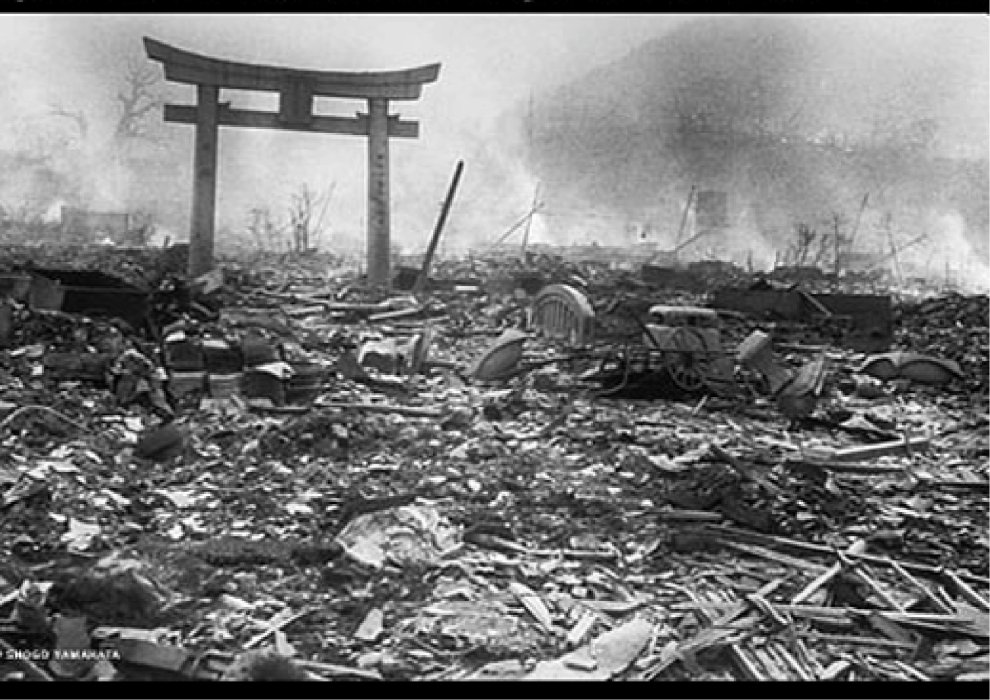
A friend compared what happened with a partner and my own publisher in New York to a kind of personal atomic bomb! Then they sent me these two remarkable photos of Nagasaki in 1945, and Nagasaki after the earthquake and tsunami this year. If, as they said kindly, I’m someohow the still standing arch, or you can’t really destroy a spirit, only push it terribly out of shape, I wonder what they left me with, and about the collatoral damage too. Yet it isn’t so irrelavent when you find yourself arguing with a publishing CEO, as I did, that if man’s mind can invent bombs, or split the atom, can create the ‘brilliance’ of neutron bombs, that wipe out thousands of people, but leave buildings standing, perhaps negative energy really can build up and transfer harm from a novel into the real world. Or it was at least worth trying to heal something, and worth channelling love to try and do real miracles. They just cancelled a book again, and after being labelled ‘evil’ by someone I loved and needed, either as partner or friend, what was more evil in that situation? Of course it was conventionally ‘mad’, but in the situation of an eyesight problem in a real person being written all over the pages of a novel, I still insist we are connected on levels we sometimes have no idea of, and that certain breaches of responsibility can do enormous harm. As Abrams and a group of people who knew each other did enormous harm, not only to an author’s career, and his stories, but in the world around me too. I lost myself very badly, went very dark, but refuse to carry a true story alone, especially if we are connected in certain unknown ways, and while I’ve just started doing Tai Chi again, perhaps we all need to study and follow the Tao. The problem is, as the Master says, if you think you know how to teach it, then you do not understand the Way at all! DCD

Leave a comment

Filed under America and the UK, London, New York, The Phoenix Story