Category Archives: The Phoenix Story

ABRAMS MUST APOLOGISE AND GIVE REDRESS OR TAKE PHOENIX ARK TO COURT

Writing is a struggle against silence” Carlos Fuentes

From rising interest in the Phoenix vs Abrams story, we believe a New York publisher are perfectly aware of renewed blogs at Phoenix Ark Press. A deal of time has elapsed, but on the so-called ‘principles’ of breach of privacy alone, Abrams should take us into court, or accept the charges, not that they will do anything about it. It was threatened by Oxford Law firm Manches, that a US company could close us down and slap a £30,000 legal bill on our heads, quite regardless of any other issue, or the truth. As the approach taken, supposedly softly softly, but again dishonest, might be worthy of reporting to the Law Society. Apparently people come to London to exploit privacy laws, or European Human Rights Acts, all the time, though in the mysterious ether, WordPress is hosted in the US. We can always copy the lot to another cyber site, though we don’t particularly want to be Julian Assange, and besides, there is no more room at the Ecuadorian Embassy. What fun it is being a creative author these days though, and falling in love, or building ‘friendships’ in New York! Don’t do it, go and see Toby Young’s How to Loose friends and alienate people instead.

Well, if they can close us, and it is impossible to tell a whole story without ‘breaching privacy’, they won’t get any money, because there is none, greatly thanks to them. Perhaps they could try to send an author to prison, for trying to do his work in safety, emotional as well as personal, or indeed to protect his livelihood, write valuable fantasy, or for trying to tell the ‘truth’, difficult as that has been. He has certainly never engaged in the kind of easy, horrid and brutal labels each one of them did at Abrams, beginning with a senior editor calling her ex and then a betrayed friend ‘mad’, ‘deluded’ and finally ‘evil’, in circumstances that came close to breakdown, and it just being left there for months on end, unanswerable, as he tried to work, while other book arguments were so distorted too. They saw very well what was happening but rather than helping, as promised, threatened under contract, to keep a secret from a CEO and made an emotional situation ten times worse. In the face of an open and generous apology too, considering what an ex had done over a year, into a wall of sinister silence, a powerful editor then brutally left an impossible professional position in place, we believe was discussed inside a department as strategy. Tara Break and Abrams do not know the meaning of love, friendship or peace, let alone a love of literature, or real human decency. They are a big American publisher, so perhaps in the land of the free or the brave, they know the meaning of the Constitution, free speech, or the right to protect your own livelihood, and work in safety, especially under two contracts. Perhaps they know the meaning of ‘mobbing’, the right of anyone ‘accused’ to a proper, but objective defence and hearing, they denied too in trying to stitch up an ‘enquiry’, or the harm of supposedly grown up editors being allowed to throw around words like evil, after their callous behaviour, even dark history, might be considered the source of real ‘evil’. Certainly what they then allowed to ensue was monumentally cruel.

But after a year trying to get it right and surreal circumstances, when they breached another agreement, refusing to heal anything, CEO Mike Jacobson thinks he can defame an author behind the scenes to The US Authors Guild, speaking scornfully of “our relationship with Mr Clement-Davies“, when out of a destruction of many relationships, initiated by a completely hypocritical senior editor, Tara Break, as she ‘grew up’ into mounting ruthlessness, an excellent publishing relationship, indeed a joy, was just suspended, under two contracts for three novels. His own editor could see they were ‘holding his life and work to ransom’ but then, with a career just starting to take off in the States, a massive body of work was destroyed. Removing any vital dialogue on books already there too, until he took back his eBook rights with the help of the Author’s Guild. As his own editor was allowed to threaten politically, months before a crisis, breach privacies to another publisher at Penguin US, and an ex so close to her betrayed vital trusts. As a department reversed promises, conspired, made virtually criminal threats, in the circumstances, insulted personally and professionally, and glossed it all with lies or half-truths, around the blatant internal political manoeuvring there. You should try fighting a US firm and your own publisher for a year on your own, with the memories of love and friendship in the background, or right in the foreground, or your ex suddenly doing a useless book with a so-called male ‘friend’, Hew, Screw and Glue, he had specifically warned her about inside a relationship, but whose ‘respect’ in the industry saw his work cancelled at Bloomsbury and complained about loudly. Who was the one person in the world that could do maximum damage, personal and professional, and spit on a hard-fought and once wonderful relationship with a New York publisher, not to mention two happy years of partnership. A beautiful form of respect or professional standards! It saw the removal too, because we cannot believe he happily stood down at Abrams, of publisher and Vice President Howard Reeves, and quite dreadful pain this side of the deep, dark pond. But unless that is just cynical proof of internal ruthlessness, that very loud evidence about so much that has happened being wrong has produced no equivalent redress for an author, kept under conditions of psychological harm, trying to work there, for months on end and snatching away everything he had built over ten years. Tara Break could have taken responsibility and stopped it in a stroke. Harold Rove and their own contracted author were made the fall guys for something that could have been stopped so easily, except for the personal ambitions there.

As those who remain sit behind desks, take large salaries and shares in author’s work, the human and writing story within that is terrible too, although extraordinary, much to the ever vanishing Tara Break’s shame, if she were capable, or of ever bullish Sarah Van More, new Vice President and doyenne of Grimm Sisters, or Wimpy Kid Diaries, but not of any real publishing and editorial standards, in defence of the author they ‘owned’, who could not walk away for threat of being sued. It’s really a rather grown up story, this one. But Abrams neither understand basic psychology, real writing and its vitally needed environment too, David had literally to plead for and was denied, nor the most fundamental legal principles, let alone wider kinds of humanity or love. CEO Mike Jacobson, since some buck should stop somewhere, should apologise on a firm’s behalf, compensate, attack legally for breach of privacy, which we’ll have him know would be a corrupt defence of the wrong principle, or just accept the truth. Once again we call for an independent publishing Ombudsman, not on the side of author or editor, but a way of objectively resolving dispute as it happens. An author under contract is not responsible for the kind of awful fear or politics inside New York firms that could lead to all that, nor the obsessive ‘privacy’ of an ex and senior editor, whose disrespect of his privacies and also working life and books became absolute. We think it the saddest story ever told, but then we would.

DCD
Leave a comment

Filed under America and the UK, Publishing, The Phoenix Story

US PUBLISHING PRESIDENT MIKE JACOBSON ACTED CORRUPTLY

The simplest proof of corruption at Abrams is the fact that publisher Harold Rove is no longer Vice President, but David Clement-Davies’s career was held to ransom, he was ‘mobbed’, his work destroyed but no apology or compensation ever given, for what Harold Rove’s removal surely proves was so wrong and unnecessary. Unless CEO Mike Jacobson simply manipulated everything for his own ends and Harold should not have been removed. Harold was liked by all his authors, was exceptional in his liaison skills, unlike often arrogant and aggressive Sarah Van More, new Vice President, but he, like David, was made a scapegoat for Mike Jacobson’s dislike of him and Sarah Van More’s conflicts and vaulting ambition. Welcome to the world of Amulet children’s’ books, that produce huge bestsellers at Abrams like Hello Kitty and The Diary of a Wimpy Kid.

The long-term actions of CEO Mike Jacobson though were extraordinary. Over a situation that could have been resolved but was used to bully an author and he would not go on, could not, a half-hearted ‘enquiry’ was held, until Mike Jacobson tried to bully, his natural instinct, and a glaring stitch up and lock down was attempted, that within a week reversed words of promised support, right in the middle of a hopeless galley edit. That glaring lack of objectivity, even corruption, was resisted, repudiation of contract effectively admitted and work began again, in a situation where Sarah Van More should never have just removed support from a contracted author, on three books, because of her ‘power over her list’, bullied both personally and professionally herself, left a word like ‘evil’ at the centre of a creative firm, or masked a long-standing alliance with Tara Break, personal and professional, loudly sounded in the threat “we will protect our girl” months before. If she took revenge for Harold Rove’ slight amusement at the pressure she was under, David tried to move away, her sins became far greater, and perhaps a savage company culture in New York is to blame, fully justifying David’s fears, and experience of other publishing cyncisms, that makes the ideals fought for in fantasy literature, in any real writing, that authors not editors have to undertake, completely meaningless, despite the pretty covers. It had all started with the betrayals and personal and professional arrogance of Tara Break though, for any ensuing loss of control or despair on David’s part. A personal unilateralism, over-projected fear and blindness, that became an entire firm’s and in fact had to, once Susan Van Metre absolutely synthesised issues into “US” against “YOU”, that should have been kept separate, somehow, and Tara Break so arrogantly and destructively kept them there too, after an apology, in a situation that could be considered illegal and certainly psychologically damaging.

But CEO Mike Jacobson’s actions over a personal and professional nightmare, where David asked for the wisdom of Solomon and got Saddam Hussein, became dreadful, and in the end are also proved by a highly regarded and committed author having to force dialogue and any say in the work already at Abrams, via the US Authors Guild. It was appalling. As Abrams used an Oxford lawyer to intimidate, pretend it was just about Tara Break, which so long back it was not, and try and silence an author and publisher on far bigger issues, instructing an entire department not to read a blog. But David had left because of the breach of a hardly acceptable agreement and the unilateral arrogance of new Vice President Sarah Break, in refusing to respect purely the work she had held there so long, or to heal the impossible atmosphere they kept there, to mask their admitted legal mistakes, and in ransoming his life and work, as she said she could see at the time. So perhaps a CEO and VP should stand side by side in taking responsibility for how Abrams disrespected work, fundamental principles of contract law, basic justice, equity, truth, the essential humanity literature should be about, especially children’s’ literature, and destroyed the excellent spirit that was once there at Amulet under Harold Rove. Tara Break’s irresponsibility underwrote the lot, but they ignore that issue, since it undermines their defence of David’s ‘bad’, they would never just put away in some act of mutual forgiveness and working peace. But the only buck that ever stops at Abrams is with over kind publishers, or vulnerable authors trying to work into walls of threat and nonsense, proving the power of editors over writers and money over justice. Why did Sarah Van More leave Dutton and why did both she and Tara Break not stand up to defend the man who hired them both, and who cared deeply about Tara Break, let alone Susan Van Metre defend the proper, indeed essential working conditions and spirit with an author whose work she said so good? Tara Break’s own ever cowardly silence, selfishness and in-action throughout, indeed long before, made an entire firm dance around her. Perhaps they tried, we hope they did, but ambition, back stabbing, cynicism and the failure to respect the truth and value of the writing itself are written right across that story. David was the one who wrote to say he would not work there if anyone was harmed, and look what happened. Roll on the next pulp instalment of Diary of a Wimpy Kid, but throw literature and ten years work in a dustbin!

Phoenix Ark Press

Leave a comment

Filed under America and the UK, Books, London, New York, The Phoenix Story

DEREK JACOBI, RICHARD II AND THE EARL OF OXFORD ‘THEORY’

“Whatever they say I am, that’s what I’m not.” Alan Silitoe.

Always good to see Derek Jacobi, whose I Claudius made everything forgivable, and his programme about Richard II last night, despite that desire to roll the wooorld around the plum of his English tongue. But why, like great actor Mark Rylance, does he go on about the fatuous Edward Devere, Earl of Oxford authorship theory for Shakespeare’s work? Perhaps because both were in Anonymous,or because of strange chips on acting shoulders? He said, with that cheeky grin of supposed assumed knowledge, it would ruffle feathers, or something, but it only ruffles feathers because it is rubbish. We all know nowadays you have to sell a thing by supposedly being controversial, or coming up with the great conspiracy. Though the most moving elements in the programme were actors talking, through the insights of Richard II, of how we are all nothing, specks in eternity, simply a part of the mysterious pattern.

There is a great deal of evidence for the Stratford Shakespeare though, despite the difficulty of reading contemporary records and the obvious desire of a poet and playwright, unlike self trumpeting Ben Johnson, to remain forever mercurial, behind the dangerous, ever watching London scenes. That was about preserving the well-spring of his art itself, dark and light, and not being pinned by anyone. Also the delicate nature of his temperament. There is little or no evidence for the 17th Earl of Oxford, Edward Devere, who published under his own name during his lifetime, as a minor and rather bad poet. There is that little bit of interesting self flattery about Devere being called the ‘spearshaker’ at court, but this was an age of impresses and also the fluid change in the fixity of Sirnames themselves. Did Shakespeare think he was Shakespere, Shakesbye, Shackspere, or was he a mind and spirit on a great journey, capable of inhabiting everyone, who then sured up his own name, as spelling codified, and he found the right to survive and buy New Place in Stratford? To make good where his father had gone wrong.

It is continued social snobbery though that supports the Edward Devere authorship theory, that emerged in the nascent proto-fascist climate of the 1920’s, and incidentally an insult to today’s fluttering Free School movement too. It underestimates how advanced was the Edwardian and later Elizabethan Grammar school education, well beyond learning by rote from the school Horn Book, how grand were some of Stratford’s historical links to London and how a young Shakespeare could well have moved among very educated circles, as a young man, either as player or tutor, or in prominent Catholic families. Besides, if Tony Blair could go on about “education, education, education,” he might go on about what’s being taught, how the teachers around you, in school, life or home are inspiring or destructive forces, or, in the realms of freeing imaginations, sing snatches of “teacher, leave them kids alone.”

The conspiracy thesis of Anonymous, and those who must somehow vindicate lineage alone, perhaps a symptom of any actor’s search for identity too, is that Elizabethan society was highly stratified and players the scum of the earth. All the evidence suggests the opposite, at a time of huge mobility in London and the building of permanent playhouses under James Burbage and others, despite the rich City of London’s attempts to drive them out. The actor Edward Alleyn became a superstar of his day, as did James’ son and Shakespeare’s brother-in-arms, Richard Burbage. Indeed, in terms of the ‘celebrity’ values of their day, perhaps little changes, and it was Burbage’s not Shakespeare’s death that was so mourned in his time. But at least those celebrities set very high cultural standards and the whole of London thrilled to poets and writers, good and bad, as well as brothels, gambling dens, cockpits and bear pits.

As for any claim that writing plays was NQOCD, so not to be linked to an Earl, the Earl of Essex paid for the funeral of Edmund Spencer and writers processed proudly to the grave to throw in their quills. The idea that what was said in those plays could be dangerous, even fatal, so supporting secret authorship, might be more convincing, except for all the other evidence and arguments, and the fact that not only can Shakespeare be as conservative as radical, on the side of Kingship, as against its excess or madness, but he very carefully wrote and rewrote his plays in tune with the changing political weather vane of the time. No time-server, but aware, and also a writer trying to succeed, appealing to popular kinds of opinion, imagination and humour, and going beyond it all. Just as a very aware court protected the players, in part because of its need for the popular pulse and battles with The City of London.

As one commentator briefly said though, on Derek Jacobi’s programme of course, perhaps the most important thing is how all Shakespeare’s plays so breathe and resound with the working life and metaphors of theatre, of the fact of acting, seeming, playing, that you do not pick up as some clever or mediocre nob in the wings. They were written and semi-literally wrought in the revolutionary and thrilling climate of London playhouses, a largely nasty, brutish, dangerous and very smelly place. The Globe Theatre itself, built in 1599 out of the wood of the dismantled Theatre, across the river in Shoreditch, was partly Shakespeare’s owned triumph, and house of vital independence too, sounded out so loudly in plays like Henry V. His independence too from the likes of playhouse owner, bear baiter, Master of the Game, brothel owner, local grandee and all time creep Philip Henslowe. To be fair, Henslowe protected writers sometimes with loans, but fell foul of what he thought it was only about, money. You could go on about the metaphors of Arden forests though in As You Like It, the constant repetition of imagery of gloves or clothes, out of professional working people like his father John, very far from the bottom of any social heap. The journey too of the plays, from experimental bums on seats pot boilers like Titus Andronicus, worthy of blood-soaked Anonymous, through to such an astonishing flowering, speak of one man, one consciousness, rooted in the countryside, on a momentous journey, physical and metaphorical, who lived through his times, and out of Stratford. You do not get to the metaphysical astonishments of Hamlet, under magestical rooves fretted with golden fire, inside the physical echo chamber of his imagination, a working theatre, unless you have walked the boards and written for them too.

Why is it important? Because, apart from truth, given the right soil, and in revolutionary times, genius can grow from and come from anywhere, and die anywhere too, which is not to say Shakespeare did not take on aspirations of the Court, and move increasingly freely in those circles, as patrons fought political battles of patronage around the City of London, that were also about influencing public opinion. The power of imagination is also linked to real life power. As he got his coat of arms and his ceremonial sword that he wore at the accession of James I, and his mind went high to low, probably found more beauty in the high, though far from always, and as much energy in the low. Although Shakespeare died not a hugely rich man, but a moderately wealthy one. Jacobi is an actor who inhabits other’s words, but Shakespeare was actor, poet and playwright too, formative in his understandings and visions, increasingly distancing himself from players, or players that don’t know the purpose of the whole play, or ‘stand beside their part’, and there perhaps is the key. The writer distinguishing himself from the acting he also knew so well. A mind that so imbibed what Shakespeare is all about, living language, where the basic secret lies, of course, at a time of vital metaphorical richness and linguistic fluidity, living and flowering in and through it, completely in tune, perhaps at a time when such imagination was possible, in a way it no longer is. Science has compartmentalized and ‘rationalised’ language itself, so it is hard to even use it in the holist, organic way Shakespeare lived it. That organic connection of language is also about the sonnets and his being a poet.

But that personal relationship to language, a gift for everyone, is not the exclusive preserve of Earls of anything, and great poets and writers come from many soils. Shakespeare also very quickly consumed the sources of his day, in the revolutionary age of the printing presses, from Holinshed to Plutarch, to all the renaissance stories and legends that abounded. He ‘stole’ plots like an ‘upstart crow’, then made them his own, constantly translating through the glass of his soaring, refracting imagination. That attack on an ‘upstart’ came from one of the Oxbridge wits of the time, Robert Greene, who first proved you could make good money from scandalous diaries, as you can’t anymore, and it has marked the divide ever since, that leads straight into the weary Devere theory. So splitting editions between the Arden and Oxford Shakespeares, summoning attacks from the establishment ‘educated’ that ‘he weren’t half as good as them’ and marking a fault line in English consciousness and social values.

There is another element to the ‘proof’ and that is increasing evidence of Stratford links with that vital centre of London life and theatre, Southwark and Bankside. That is one of the themes of coming blogs and original work on Edmund Shakepeare, William’s youngest brother, who is virtually unknown, but was also a player in London, died at only 27, four months after his bastard baby son, in the greatest freeze London and the river had seen in decades, and is buried in beautiful Southwark Cathedral. He lived in a property near the Globe just before his death, called The Vine, that belonged to a Hunt family, and though the link has to be yet made, there were also prominent Hunts in Stratford, one of whom talked of William Shakespeare as the ‘Rocius’ of his time. The Berkeley Shakespeare academic Alan Nelson has highlighted the significance of that.

As Peter Ackroyd argues though, Shakespeare the London playwright was not only known in his day, but a phenomenon, as actor, playwright but also Globe theatre sharer. The secret of ‘no Shakespeare the playwright’ on Stratford documents is about how all signed themselves in legal documents as associated to the Guild trades that legally marked social status and London citizenship. In the country it was about land and property ownership. But many of those people, at a time when Henry VIII’s reformation was also systematizing parish records themselves, making the perceived structures of recorded history, for administrative and tax purposes, for reasons of power, often had very good cause to avoid being put on the record. Shakespeare avoided local London taxes and may possibly have been protected by the Bishop of Winchester, in the Liberties in Southwark. But if Joe Orton advised in Loot, ‘never get caught’, that vanishing act is also about the freedom of the artist, poet and writer. The knowledge of how powerful but also dangerous it can be at the creative centre of the circle.

The work on Edmund though brings to light fascinating unknown material too on players in Southwark, as far back as the reign of Henry VI, a cycle of History plays that have been completely underestimated in their importance in Shakespeare’s ingathering of a time, an age and very specific place too, radical and divided Southwark, an almost physical fault line of the Reformation in London. Henry VI very possibly began the whole history cycle, but it is Henry VI’s reign, really defining the ‘Wars of the Roses’, and what is said about London, power, faith and miracles in those plays, that also links the poet to Southwark, the Bishops of Winchester and the all important religious battles of his day. That makes them just as important as Richard II, if not as good artistically. As Catholicism and Rome were pushed out, or into the shadows, and Kit Marlowe played dangerous games with ‘God’ and the ‘Devil’, and English spying too, Shakespeare turned to the humanist playwright’s art, grounded in very secular themes, the stuff of life, but understanding it all as metaphor to summon the creative energy and visions inside himself, the magic of his art and characters, culminating in Prospero. It was also a journey to other ‘countries’ of reality and imagination, as ‘The Globe’ and England opened in the discovery of the Americas, the breach with Rome, the explosion of City trading expeditions, and Shakespeare felt the tectonic conflicts of his time in his blood.

It is another frustration of Phoenix Ark though that DCD, unagented, and damaged by the story in America, or perhaps it’s just today’s terrified or cynical publishing climate, could not get backing after months of work at the Metropolitan Archive. Perhaps a grand ambition is to make Phoenix Ark Press a ‘Globe Theatre’ for writers then(!), but we’re pleased to give it to readers for free instead. All the world’s a page!

New addition to Phoenix Ark in pages above: Shakespeare’s Brother, the story of Edmund Shakespeare, the missing player, and the biography of an unrecorded life.

Phoenix Ark Press

21 Comments

Filed under Culture, Education, London, The Phoenix Story

MIKE JACOBSON – PHOENIX ARK PRESS ACCUSES ABRAMS CEO AND PRESIDENT OF ABUSE

“Dance like no one is watching. Sing like no one is listening. Love like you’ve never been hurt and live like it’s heaven on Earth.” — Mark Twain

“The Warrior of light does not talk about his defeats.” Paulo Coehlo

Though we intend never to allow such a ‘defeat’ to any author, in the increasing ruthlessness and cynicism of modern publishing, most Abrams posts have again been suspended. We do not think readers are especially interested, it is a drain and waste of energy, at the moment, and everyone has their problems and injustices to face. We would rather help than talk on about our wound, so fight well and know your good friends! We maintain the firm challenge though that what happened at Abrams was betrayal, both personal professional, effective conspiracy, that has criminal implications, before it was forced before a CEO, humanly and creatively awful, breach and repudiation of contracts and astounding in the story that unfolded around it too, the good ‘miracle’ Abrams and worse, a Children’s imprint, denied, however ‘mad’ it was convenient to paint it as. Yet having had other evidence of strange ‘realities’ just yesterday, involving James Innes Smith, always look for the good, in everyone’s lives.

We invite Abrams CEO Mike Jacobson to show a modicum of courage and honesty though and explain why Harold Rove was removed, why David Clement-Davies was ‘mobbed’ and his work, person and contracts abused, and why the internal corruption continued. We invite them to make speedy redress too and give no guarantee not to persue and present the entire story in another, more suitable medium, until they do. But to slay Goliaths in the centre of bad foreheads, you need to polish the stone. The things those people have done, over so long, professionally and legally, are outrageous. In not challenging our blogs, monitored by an oxford lawyer, we suspect still, on some bogus and hypocritical ‘principle’ of breach of Privacy, still worse Human Rights, they are further underlining that they know full well they were massively in the wrong and adding ammunition to the case against them. We invite Abrams Vice President Sarah Van More to explain her actions, dishonest words, and why she now has Harold Rove’s job. We also invite Abrams to compensate over the loss of earnings surrounding Fell. We invite Harold Rove, Tara Break, Sarah Van More and Mike Jacobson to open their eyes, as well, inside and out, with a touch of love and intelligence, and to start telling the truth, or doing something good, either in publishing or in life. We invite Tara Break, editor of Peter Nimble and His Fantastic Eyes, daughter of an eye doctor, most especially to open her cynical eyes, or to read either Fell or the George Herbert poem sent in the middle of this – “Love bade me welcome, but my soul drew back.” Then to read Phillip Pullman’s amazing Trilogy His Dark Materials and understand something about her duty in this.

But as for life, forge on and try to help and inspire. Our means is telling better stories and returning to passion, intelligence and laughter, before being blinded by the people who look only with fear, with all the faith of knowing about something truly extraordinary. Well, it’s all extraordinary, so tune into the extraordinary! It really is under every stone. The next story coming soon is The Terror Time Spies.

Phoenix Ark Press

Leave a comment

Filed under America and the UK, Publishing, The Phoenix Story

THE PHOENIX OFFICE BIRD

There is a little bird sitting in the office who keeps looking at us with a raised eyebrow, wondering what exactly we are feeding it. If thoughts that the Phoenix Bird might have expired of late due to emotional exhaustion have been much overplayed, like reports of our death, it is of course obvious that you simply cannot kill a Phoenix. But what to feed this creature of power and delight, so that it grows into a creature of truly mythical plummage and protects writers who care about the art? Of course, new stories, so Phoenix Ark Press are delighted to announce that SCREAM OF THE WHITE BEAR will be published both as an Ebook and in paperback this Summer, August, 1st 2012.

1 Comment

Filed under America and the UK, Books, Childrens Books, The Phoenix Story

WILLIAM SLEATOR AND NOT BEING ALONE

Perhaps there’s some merit in blogging my own story, if it shows writers and artists that they are not always so alone. A friend sent me a New York Times link today to the obituary of William Sleator, who has died at 66. I haven’t read his stories, but they dealt in the realms of Young Adult fantasy too. They sound rather wonderful, and on the side of the difficult adolescent psyche, dealing with good and evil, and fighting the forces of the mind and imagination. But Sleator clearly had his private demons, his battle with addiction, his alcholism.

It is very obvious territory for the artist, and perhaps it is the threat of public shame that always becomes the worst. Full Nelsons, Half Nelsons, the personal cruicifixion between high idealism and the ‘real world’. Above all the difficult attempt for ‘Children’s Authors’ to make that wonderful journey, again and again, through the dark and the life denying, as we step from the naturally whole psyche of the child, through the difficult realms of growth, to the most fully adult and human. My father found it very hard to deal with my Grandfather’s alcholism, but it is always the secret and the hidden that is both the driver and the danger too, when it takes control. How balanced I was again in America, for a time, how free of the psychic weight of the past, but how the absolutes and opposites that my own stories have argued against, and the fears of others, meant I was probably always heading for the most monumental crash in New York City. There we are, it happened, but it might not if they and I had remembered we’re all human, and I had not become so disconnected.

I learnt that Sleator was blogged recently by an Abrams employee and wondered if they got him too. DCD

Leave a comment

Filed under Books, Culture, The Arts, The Phoenix Story

A PERSONAL ATOMIC BOMB

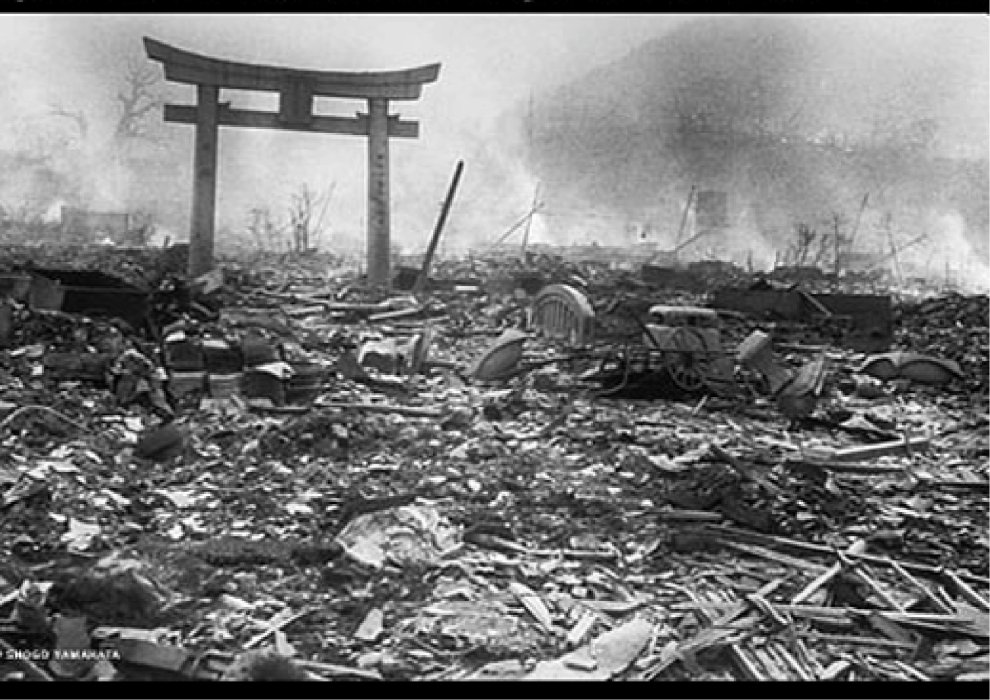
A friend compared what happened with a partner and my own publisher in New York to a kind of personal atomic bomb! Then they sent me these two remarkable photos of Nagasaki in 1945, and Nagasaki after the earthquake and tsunami this year. If, as they said kindly, I’m someohow the still standing arch, or you can’t really destroy a spirit, only push it terribly out of shape, I wonder what they left me with, and about the collatoral damage too. Yet it isn’t so irrelavent when you find yourself arguing with a publishing CEO, as I did, that if man’s mind can invent bombs, or split the atom, can create the ‘brilliance’ of neutron bombs, that wipe out thousands of people, but leave buildings standing, perhaps negative energy really can build up and transfer harm from a novel into the real world. Or it was at least worth trying to heal something, and worth channelling love to try and do real miracles. They just cancelled a book again, and after being labelled ‘evil’ by someone I loved and needed, either as partner or friend, what was more evil in that situation? Of course it was conventionally ‘mad’, but in the situation of an eyesight problem in a real person being written all over the pages of a novel, I still insist we are connected on levels we sometimes have no idea of, and that certain breaches of responsibility can do enormous harm. As Abrams and a group of people who knew each other did enormous harm, not only to an author’s career, and his stories, but in the world around me too. I lost myself very badly, went very dark, but refuse to carry a true story alone, especially if we are connected in certain unknown ways, and while I’ve just started doing Tai Chi again, perhaps we all need to study and follow the Tao. The problem is, as the Master says, if you think you know how to teach it, then you do not understand the Way at all! DCD

Leave a comment

Filed under America and the UK, London, New York, The Phoenix Story

A MEMORIAL TO ERIC YORK

I’ve mentioned the story elsewhere, but it this is a photo of Eric York, who died in the Grand Canyon in 2007, of Pneumonic Plague. I never met Eric, but I saw how colleagues, friends and his girlfriend were so shocked by his death, and especially perhaps the cause. I had walked down into that extraorindary ‘hole in the ground’ with one of the last people to speak with him, a teacher at the school where I was doing a writer’s in residence programme. When we learnt a Ranger had died that night, from colleagues at the ranger’s station in the Canyon, the mood was understandably sombre. Eveyone was speculating. It was extraordinary though to learn the next day that Eric had died of a strain of the Black Death, from skinning a mountain lion carcass.

Apparently plague exists in cats and rats, especially at certain heights around the Canyon, and they die of it too in Colorado, although ‘Zoonotic Transfer’ into the human population is very rare in America. Eric had passed away in his cabin, around Halloween, and parents at the school were especially and understandably worried. Anyone who had come into contact with Eric was put on antibiotics, as the top virologist from Washington flew down with his team, to allay fears. It was a surreal and nervy time, very unhappy in other ways too, with the authorities both trying to supress rumours, and put people’s minds at rest. It seemed to take a very long time to get into the National Press. I wanted to do a book on Eric, and the life of the Rangers, a rather special breed of American, with any number of stories of Canyon life, and the often rather crazy and unprepared tourists who visit too, but sadly it was not to be. One day I hope to go back, because it is a place that touches and inspires many of the themes in my own books. DCD

Leave a comment

Filed under America and the UK, Science, The Phoenix Story

An Agent and Scream of the White Bear

I have rather turned the spotlight on Abrams, or myself, but have never actually spoken up about that agent in New York, Ginger Clark. A tough, fiesty, fat little New Yorker, who I rather liked, when she jumped on me way back when, when I was trying to tour in America again. Already in such hard circumstances, because of the oddness and absolutisms of an ex, but also a senior editor at my own American publisher. One who would not even prioritise a drink, after a two year relationship, either as a somewhat responsible human being, or an ambassador for their firm to a novelist in a Foreign country and city, now starting to hum Sting’s – “Englishman in New York” turning quickly into “I’m an alien, I’m an illegal alien!”. So, by Ginger Clark, I was wined and dined in the best Chinese restaurant, and virtually handed an agent a deal that was almost already made, on a large plate, as I was pushed further and further back from people I had been so close to and needed.

It was my mistake not to tell Ginger about what had happened personally, for a very long time. But that was part of the secrecy that developed, actually in respect of a partner’s fears, and almost obsessive privacies too. But why exactly is it that Ginger abandoned me in the middle of a crisis, and so made it all far worse? Perhaps she disliked the swear words coming down the phone from London, as Abrams threatened and cancelled promised conference calls. I must say that I laughed out loud when she rather sneered at my talk of how hard writing had become, in her Gangs of New york voice – ‘Wot did she do ta ya, steal your laptop or turn off yer electricity?!”

But then agents usually are not writers, and would not understand why something that is most ‘animated’ in imagination and in storytelling, is directly related to the feminine ‘anima’, as Jung calls it. I had lost that externally, and inside myself too, and it was a crisis I was not ready for, at a very particular time in life. It made me rather think New Yorkers are vey mad indeed though when Ginger could so dismiss human grief, lost love, but simultaneously talk about her enormous pain at the death of her Chincilla! A bit like that editor Susan Van Metre had seen fit to discuss my private life with at another publisher, sending a Round Robin right across the publishing world, when her relationship ended. Perhaps she was right to do so, because people have very different ways of coping. So Ginger dumped me, though I thought writers were supposed to dump agents, at the worst possible moment, and before I could actually take the very good advice she had given, which I was about to. I watched in horror as the names of twenty publishers came down the wire, she had lined up to take Scream of the White Bear to around the world. A life fell apart in many ways, and sometimes the fall can be very far indeed. I do not think though she would have done it if the book was any good, which I think it nearly is now.

I was so strung out though, and so believed in the goodness of the people at Abrams, that I genuinely believed Abrams had consciously engineered it, to try and snap me out of a cycle. I am afraid my own fantasy driven hopes and idealisms were very mistaken indeed. Ginger Clark, I think, actually lied to me on the phone, and I say this because of the catch in her voice and perhaps I am wrong, about what was actually said between my editor and agent. It is a disaster when you give yourself completely up to other people.

As it became a very literal disaster trying to rewrite a novel, not away from all that entirely, but straight into the face of it. But then my fantasy books have always been extremely autobiographical, in trying to relate experience in nature, to human experience too, and take readers on a journey worth going on. My tragedy is that big books like FireBringer and The Sight have also been related to personal challenges, and been a way of finding my road through them again and to triumph. There could be no triumph, no wonderful resolution in Scream of the White Bear, because the source of hope, joy, light and life was right in front of me, but had already been stripped away. So came the most terrifying darkness, most specifically because I had been called evil by someone I loved, and tried to write about real evil again in a book, as I have done before. It was also claimed quite bogusly I was a difficult author, when the truth is, when a real dialogue is going on as it should, I have always been flexible and very easy to work with. But that is a vital trust between writer and editor, neither should ever forget.

In the politics of this story I ask just one very loud question. I argued with Abrams that in editorial all I have ever really needed, and it is true, is support and positivity, that electric connection that ends with the reader, and is sometimes so hard to find nowadays, because I am enormously committed, and know that I can get books and stories right. That is why the wall they put up, and the threats they issued, became so monumentally destructive. But editors make much of their ‘ownership’ of authors when they pay the money, but some quickly abandon that ownership and a real and almost sacred responsibility, if it does not suite their own ambitions inside a firm. I became a very big fool indeed for love, and not very nice at times, but I am not a fool and know that publishers are businesses, and books must succeed on their merits, although plenty succeed that have no merit. But the real question is this, if I were Shakespeare, JK Rowling or just Jo Bloggs, what real duty do editors, not to mention agents, actually show to writers, the very source of it all, especially when they have actually contracted them? I did find it shocking that Ginger Clark could so grandly inform me that trust would be destroyed if I dared to mention contracts, like the book they held for four years, and when they were not only threatening my real good name, but my entire livelihood and career. That duty internally though was distorted by the politics of a personal situation they could have resolved but refused to, or one person refused to, because they were trying to keep a secret from a CEO, I think, and because of the power struggles at work behind the scenes. Otherwise it is just raw arrogance about who is the important link in the chain in art and publishing – not writers but editors. The truth of who I really am though, why the wound of love became so harmful, or of the value of my novels was absolutely irrelevant in the end. If the human is lost in all the business then it is not worth having anything to do with at all. David Clement-Davies

1 Comment

Filed under America and the UK, Culture, Publishing, The Phoenix Story

A FREE SEA FABLE FROM THE PHOENIX PRESS – ENJOY

To celebrate Earth Day this April, and the intrepid voyage of the Plastiki – Max Jordan’s continuing blog is also below – best selling children’s author and Phoenix Ark founder David Clement-Davies is today publishing a free and unseen fairy-tale online.

THE LITTLE OYSTER
by David Clement-Davies

At the bottom of the Deep Blue Sea,
by the edge of the Great Barrier Reef,
there lived a little Oyster.

You are the most precious thing in the Sea,” his mother would say, and she told him stories of the fishermen who risked their lives diving for his kind in the Ocean’s depths.
It made the little Oyster feel very special and important.

Come and play with us, little Oyster,” the many coloured fishes would cry.
Sing for us, little Oyster,” the coral would say, “sing to us on the dancing surf.
But the little Oyster felt far too special to play with the other creatures.
Don’t you know that I am the most precious thing in all the sea?”

The Oyster’s shell grew bigger and bigger, and older and older too, but still the Oyster would have nothing to do with the other animals.
So the fishes all moved away. The coral withered and died.
The little Oyster was left all alone, at the bottom of the deep Blue Sea.
Strange, crusty shapes settled on the Oyster’s back, while high above him a single Jelly Fish drifted by…

The Oyster grew sadder and sadder, and lonelier and lonelier too, there inside his shell, at the bottom of the dark, cold sea.
The Oyster did not know how to talk to anyone anymore.

Then one day a bright blue Clown Fish swam by.
Hello, Oyster,” cried the funny Clown Fish, “and why do you look so sad?”
Go away,” replied the Oyster, “Don’t you know that I’m…”
The most precious thing in all the sea?” laughed the Clown Fish, kindly, with his great, wet lips.

Then suddenly the strange fish began to spin, and make silly faces, and blow bubbles at the Oyster through the blue.
The Oyster peered at him crossly, but then something extraordinary happened…
The Oyster began to tremble, and then to shake, and suddenly the Oyster started to laugh, just like the funny Clown Fish.

Suddenly there was a great CRACK and the Oyster’s shell split open wide.
There, inside, was a huge, beautiful pink-white pearl that sparkled like sunlight on the waves.

Now the little Oyster has many friends at the bottom of the Deep Blue Sea.
He plays with the fishes and sings to the dancing coral.
But best of all he likes talking to his friend the Clown Fish, for he makes him laugh.

Copyright David Clement-Davies 2011. First Published by Phoenix Ark Press. All Rights Reserved. The right of David Clement-Davies to be identified as the author of this work has been asserted by him in accordance with the Copyright, Designs and Patent Act 1988.
You may print up this free story courtesy of Phoenix Ark Press. If you would like to donate to a little publisher please click the donate button below.

1 Comment

Filed under Childrens Books, Fantasy, Free Story, The Phoenix Story