Category Archives: Books

POLAR BEAR ATTACK – A BETTER STORY

In such strange and sad times the hits at Phoenix Ark, after a blog about a Polar Bear attack got almost as many as the Norwegian, Anders Breivik. Well, you can’t control what people want to read about. The tragic case of the 17 year old Horation Chapple on Svarlsbad was exceptional, and the Polar Bear in question was shot and killed by their guide, who was himself badly injured.

Last time we blogged it, we talked of the needed respect of and even fear of wild nature. So crowded in on now, on a planet of ever expanding populations, that faces great and sometimes seemingly impossible paradoxes between the human and the animal. In fact, after spending an imaginative two years with Polar Bears, writing Scream of the White Bear, the founder is well acquainted with those remarkable animals, used as a ‘Flag Ship’ species, to attract interest to their own plight, in what is really a problem of biospheres, on a World scale. Though, apart from the Polar Bears that he used to see in London Zoo as a boy, a real inspiration was the sad and neurotic pair in Central Park Zoo in New York, one of which recently died. They are the largest carnivores on earth, and with such keen senses of smell and such fearlessness too, extremely dangerous. Which is why the inhabitants of Churchill, in Canada, the ‘polar bear capital of the world’, face regular problems with them coming into town.

For those who like their animals in happier stories though, we pointed to the great polar bear in Phillip Pulman’s sparkling trilogy, that begins withNorthern Lights, also partly set on Svarlsbad. How the story, brilliantly woven between real and fictional worlds, plays with the ideas of almost Jungian archetypes, and in the flow between ‘male’ and ‘female’ energy, and the changing animas of childhood growth and creativity, the bear who loses his honour and his armour finds his strength restored, thanks to the courage and love of brave Lyra Silvertongue. The pact between the two of them is enchanting. They are the most wonderful stories, and we recommend them to anyone.

Leave a comment

Filed under Books, Childrens Books, Environment

WILLIAM SLEATOR AND NOT BEING ALONE

Perhaps there’s some merit in blogging my own story, if it shows writers and artists that they are not always so alone. A friend sent me a New York Times link today to the obituary of William Sleator, who has died at 66. I haven’t read his stories, but they dealt in the realms of Young Adult fantasy too. They sound rather wonderful, and on the side of the difficult adolescent psyche, dealing with good and evil, and fighting the forces of the mind and imagination. But Sleator clearly had his private demons, his battle with addiction, his alcholism.

It is very obvious territory for the artist, and perhaps it is the threat of public shame that always becomes the worst. Full Nelsons, Half Nelsons, the personal cruicifixion between high idealism and the ‘real world’. Above all the difficult attempt for ‘Children’s Authors’ to make that wonderful journey, again and again, through the dark and the life denying, as we step from the naturally whole psyche of the child, through the difficult realms of growth, to the most fully adult and human. My father found it very hard to deal with my Grandfather’s alcholism, but it is always the secret and the hidden that is both the driver and the danger too, when it takes control. How balanced I was again in America, for a time, how free of the psychic weight of the past, but how the absolutes and opposites that my own stories have argued against, and the fears of others, meant I was probably always heading for the most monumental crash in New York City. There we are, it happened, but it might not if they and I had remembered we’re all human, and I had not become so disconnected.

I learnt that Sleator was blogged recently by an Abrams employee and wondered if they got him too. DCD

Leave a comment

Filed under Books, Culture, The Arts, The Phoenix Story

PHOENIX ARK PRESS RELEASE

Phoenix Ark Press are delighted to announce the publication of Leonardo’s Little Book of Wisdom, compiled and introduced by the historian Foreman Saul, who is profiled below. An essential guide to the Master’s life wisdom and wit too, this unique selection, from the translation of Leonardo’s notebooks by Jean Paul Richter, will lead you through a genius’ insights into science, painting, nature, religion, God, love and death. Interspersed with Leonardo’s mostly humorous prophecies, it brings the man to life in a vivid new way and is done to celebrate the Discovery Channel’s coming forensic series on Leonardo’s painting and, of course, the National Gallery’s ground-breaking exhibition in London this autumn. What better way to walk through life than in the company of a true giant?

Leave a comment

Filed under Books, Culture, Education, Non Fiction, Science, The Arts

PROFILING FOREMAN SAUL

Foreman Saul is one of Phoenix Ark’s more elusive and mercurial authors; a little like the great Leonardo himself. A journalist and historian , with a name you might think stems from across the Atlantic, rather than the Europe of his upbringing, he has specialised in both the Civilisation of the Italian Renaissance and travel throughout Europe and Italy.‘Who or why, or where or what?’ is Foreman Saul, we sometimes joke at the office, as he pops in and out, but he usually shrugs and certainly raises an eyebrow about some of the more exotic theories on one of his great heroes, Leonardo Da Vinci!

Phoenix are delighted to give you a taste of his Introduction to this little book of huge insights, far beyond their time:

Many have earned themselves little books of wisdom in collections of their sayings, but it is not something you might immediately expect from such a scientific figure as Leonardo da Vinci, who was born 1492 and died in 1519. The epitome of a ‘Renaissance Man’, Leonardo is best known for his paintings, drawings, and numerous practical and mechanical inventions. He also left 13,000 pages of notes and reflections, in jottings, observations and thoughts, mostly to aid his work, often disordered, so never intended for publication. That jumble is what most justifies a new approach to re-ordering some of his words, into categories of useful life reflections… We are flooded with ‘self help’ books and life guides purporting to supply ‘The Secret’, but what better way to walk through life than in the company of a truly towering genius?”

Leave a comment

Filed under Books, Culture, Phoenix Catalogue, Science, The Arts

PHOENIX ARK PRESS RELEASE

Scream of the White Bear by David Clement-Davies, the book that helped cause a horror story in New York, the complete disrespect of fundamental artistic, human and contractual principals there, and led to the birth of Phoenix Ark Press too, will also be published by this August, at the latest. Since David, with the help of the US Author’s Guild, took back his eRights from Abrams on two other novels, who when challenged to sue him backed down within a day, but also got his eRights from Dutton in America, he will go on fighting for his work and voice, for a far more transparent and human artistic world, and for the work of others too. Dear reader, you are all invited to join the Phoenix story and an adventure where fact became stranger than fiction.

1 Comment

Filed under America and the UK, Books, Childrens Books, Culture, Phoenix Catalogue, Publishing, Young Adult

THE 9TH PHOENIX ARK CULTURAL ESSAY

Dragoman Memoirs: searching the East for ‘Elands’ by Barnaby Rogerson

Generation after generation, a steady stream of merchant-venturers, mercenaries, miners and Celtic scholar-saints have gone questing off into the far horizons. The steady emigration of many of its more ambitious and curious souls has spared Britain from unnecessary revolutions, perhaps – and filled its library shelves with travel books! There is no particular need to consult a history book over this statement, since tea with an aunt will confirm the statistics just as well. To cite my own example, I grew up with an uncle mining for silver in Siam, another one governing a small portion of East Africa, whilst a naval father spent much time afloat on the High Seas. The same pattern is repeated through previous generations, confirmed by my own. So I (a so-called travel-writer) am exposed as the stay-at-home, compared to my hippy sister in the Burren hills of Ireland (surrounded by feral goats, blonde children, ponies, blonde grandchildren and a variety of husbands), an elder brother in darkest Venezuela (near the gold-mines in the southern jungle) and a polo-playing younger brother, plotting a techno-empire in the middle of the Alps. This story will be replicated by the tales of many millions of other British aunts, dutifully holding together the fraying strands of their family tapestry, through conversation, correspondence and Christmas cards.
Most emigrants from Britain have no wish to come back (which is one way in which to explain the astonishing bravura of America and Australia) but those that do are often compelled by the bleakness of the British winter to write down their memories. This is where Eland Press, the reviver of travel literature, we cry, comes in. Doughty travel-writers have taken to dropping in on our office (especially after-lunch) to check what we have been up to and then, in exchange for some sobering black coffee, have left behind well-thumbed favourite old travelling companions. This is one of the least predictable but most efficient ways for small publishers to stumble across a lost classic. With such intrepid visitors as William Dalrymple, Michael Jacobs, Dervla Murphy and Brigid Keenan – who have all climbed our grimy stairway in the last few months – we are seldom short of passionate endorsements. However, all too often these ‘road-tested favourites’ become buried under other ‘must reads’ and slowly rise up, to grow paper-towers of Pisa. These tottering piles are a necessary part of Eland, especially if one is trying to follow in the footsteps of the founder of Eland, John Hatt – who read his way through 167 recommendations, for every one that he considered worthy of becoming an ‘Eland’.

However, once I heard that ‘Slightly Foxed’ was looking for classic memoirs to reprint, I started briskly quarrying into some of these towers. Especially the ones I had named after Lesley Blanch and Philip Mansel, who have long championed the Dragoman-Consuls of the Levant. Now, at last, I would get to travel into the East, in the company of men such as De Gaury, Storrs and Grafftey-Smith, who spoke all languages and befriended all creeds, at the service of their nation. Men who knew the streets, bars, palaces and hotels of Cairo, Constantinople, Mosul, Basra, Jeddah and Aleppo, better than any map or guidebook, and who formed the type of Man who had plotted the creation of a new Balkan Empire in the 19th century and helped create Arabian Kingdoms in the 20th. Fortunately, I quickly realised they wouldn’t do for either Eland or Slightly Foxed, so would not have to make any agonising moral choice, between imprints. But, in a way, that cleared the decks for a romp, relaxing back into the sofa as a reader, rather than a potential publisher twitching the editorial blue pencil.

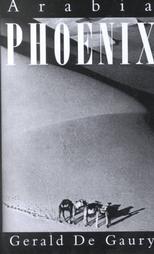
I had read some of Gerald de Gaury’s works before, as he is an important source for the Middle East, where he served between the war, both as a soldier, diplomat and as the British Political Agent in Kuwait, when the oil first started flowing. His own works of history and biography are thorough and well-researched but his memoir plunges you quickly into a highly scented world, dominated by duchesses, desert Kings, sacred relics, palace balls and precious instances of male beauty –all held together by De Gaury’s bravery, good looks and impeccable manners. So one soon gets used to swinging between ecstatic descriptions of Lord Kitchener as a ‘centaur of old’ who ‘sat there as if a God…precisely as the Roman Emperors had been worshipped’ immediately followed by an admirably restrained description of his own experience as an eighteen year-old soldier at Gallipoli. Just before going into combat, they were given an identity disk, the easier to identify battlefield casualties and instructed to shave off all body hair, crop their skulls and keep their stomachs and bladders empty, the better to help the field surgeons in their work. After such encouragement, they were landed by boat, then hidden in blisteringly hot trenches for a couple of days before being led into the hills by their general who having first lost his way – eventually managed to stagger towards the battlefield, where for four days and nights the fighting raged continuously and uncontrollably. Gallipoli was arguably the last great medieval battle of the modern age, fought in the hinterland of Troy, without benefit of radio or motorization. Just 100,000 men left to kill each other amongst hills and ravines, supplied with water and shot by mule trains. Both the Allies and Turks suffered from the terrifyingly powerful, but inaccurate, naval bombardments from the line of French and British battleships. De Gaury’s battalion lost every officer and sergeant but still the soldiers fought on. He was fortunate to have been rescued by a gallant Australian giant and would recover from his wounds, at a hospital in Malta, where the only book he could find was an Arabic grammar – which accidentally prepared the way for his future career in the Middle East.

So, having survived three further wounds in the trenches, he was quite non-plussed to later find himself sitting down to dinner next to The Archmandrite at Julfa, the Armenian suburb of Isfahan, who confessed “that his three immediate predecessors all died in suspicious circumstances.”There were also many happy memories, such as a midnight supper party held in a palm garden outside Basra, where the grapes taste of roses, where water-pipes are smoked, araq is sipped and the local delicacy, an aphrodisiac sherbet made from the stamen of the male date palm, is served until dawn….when the minstrels cease their playing. His role as a diplomatic envoy involves one in a bit too much of the stifling protocol of palace life, though fortunately the savagery of political life keeps bursting through the plush velvet. For instance, the Regent of Iraq used a post-war state visit to exact his revenge on one of the Iraqi generals who attempted a coup back in 1941. The President of Turkey refused to hand this refugee general directly over, but eventually agreed to expel him into neutral Syria, where he was promptly seized by British agents and bundled across the border to Baghdad. There the Regent tricked him into betraying some more of the conspirators, before having his old adversary strung-up from the gatehouse of the army headquarters where his body was left to rot at the end of the rope for four days. On another occasion, the Sheikh of Mohammera (with whom the British may have been plotting to set up an independent Emirate which would occupy most of the oil-rich territory of southern Iraq and southern Persia) is left to make his own explanations to the Shah when summoned to the court at Tehran. He never returned from this audience – which left his old adviser, De Gaury, to try and create a financial settlement from out of the murdered sheikhs property for his 22 surviving sons.

His lifelong interest in precious objects takes us on many an eccentric quest, but in his company we get to look on the wand of the Prophet Muhammad, the holy grail – as seized by the Genoese during the Crusades, as well as an abortive attempt to track down the Archangel Gabriel’s feather. Boccaccio reported that this relic had been left behind after the Annunciation, an object William Beckford had described, back in the 18th century, as “of a blushing hue more soft and delicate than that of the loveliest rose’. Though not even this, a full three feet long, gets such an attentive description as De Gaury’s memories of a flogging – It seems quite clear from his elegant evocation he relished his command over the Iraq Levies, a volunteer force, which assisted the British occupation that had been largely recruited from the Marsh Arabs. He even elegises about the tedium of garrison life for “We each had a punkah boy who tugged away at his cord during the hot afternoons from his place on the verandah…we woke from siesta in time for an evening game of polo on the sun-baked field behind the camp. After it we would ride back on our sweating ponies to the Mess and there sit on the roof while the sun went down, trying to quench an unquenchable thirst.” If only he had carried on in this vein he might have produced something sufficiently idiosyncratic to rival the works of T E Lawrence, or Jean Genet.
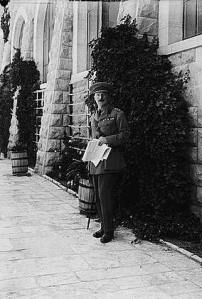
Ronald Storrs memoir, Orientations, is not so obscure a literary document, indeed it was briefly a runaway success, that went into many printings in the late 1930’s, just before the second world war. Storrs had been the ‘eminence grise’ behind many of the British pro-consuls of Egypt, such imperious Lords as Cromer, Kitchener, Gorst and Killearn. The Oriental Secretary to a succession of British Consul-Generals, Residents and Ambassadors, who whatever the modesty of their official titles ruled Egypt and the Sudan for almost a hundred years A good Oriental Secretary was required to combine a number of roles, from watching over the daily clippings of local Greek, Arabic and French newspapers, to running foreign and domestic intelligence, liaising with the secret-police, as well as working as a social secretary who knew who to invite, where and when – and also kept a useful tab on their weaknesses, indiscretions, secret vices and rivalries. The job required fluency in half a dozen languages, an acute, restless intelligence and an interest in every form and manifestation of life. Even as a young man, Ronald showed this. At Cambridge he was part of a debating club that included such future key members of the Bloomsbury group as Lytton Strachey and the young Keynes, while he also mingled with the Crabbet Park set, whose aristocratic host encouraged his guests to talk through the night and bathe at dawn, after which they played lawn tennis stark naked until breakfast intervened…

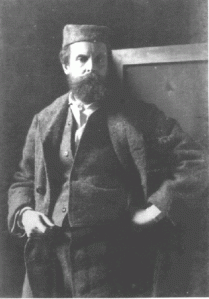
But in those halcyon days, before gossip columns drove all the free-spirits out of politics, the naked, prancing figures on the grass court would also include a future Viceroy of India, battling it out against a future Secretary of State for Ireland, amongst the care-free decadents. Their ancient host, Wilfrid Blunt, was one of the leading breeders of pure Arab racehorses, a travel-writer, a poet who had been the vociferous champion of independence for Egypt, Ireland and India in the late 19th-century, as well as a womaniser of heroic stamina. As we read our way through Storrs, we get to meet many other flawed heroes, such as Said Zulfikar Pasha, Grand Chamberlain and keeper of palace secrets to five Khedives of Egypt, not to mention Sir Rudolph Slatin Pasha, whose lifelong experience of government in the Sudan included ‘twelve years as a prisoner of the Mahdi, naked, often in chains.” We watch old Sir Evelyn Baring (who as Lord Cromer was the hated architect of British rule in the Middle East) leave Egypt for the last time,‘departing through streets lined with troops ‘amid a silence chillier than ice.” We also stumble, almost casually, across the making of modern history, for Storrs was intimately involved in plotting the alliances with traditional leaders that led to the Arab revolt as well as watching (with alarm) the creation of a Jewish homeland from out of British occupied Palestine. Without coming off his apolitical fence he observes the ability and ferocity of such leading Zionists as Vladimir Jabotinsky (who like many of the toughest Zionists had come from families that had been brutalized by Tsarist persecution) and also the chance incidents that bound so many leading British statesmen to the Zionist cause. They felt under an enormous debt of gratitude to the moderate British Zionist, Weizmann, who had invented a vital high-explosive known as Acetone (first made from horse chestnuts gathered by school-children). While it is also often forgotten that A J Balfour, of the Balfour Declaration, represented the parliamentary constituency of Manchester (which at this period was almost half Jewish in population) which naturally inclined him to listen to what Professor Weizmann of Manchester University, and so many other of the leading Zionists of Britain, proposed.
Arguably Storrs should have ended Orientations in 1926, on page 455 with his biographical review of his old colleague, T E Lawrence. It would have made a splendid finale, and spared us the long chapters on the slow transformation of the wicked, and camp young Oriental Secretary, into a married man, a knight and a colonial governor. One feels worried for his wife and for his library of rare manuscripts, first editions and private letters which was engulfed by a fire started by a mob of Greek Cypriots storming Government House in Nicosia.

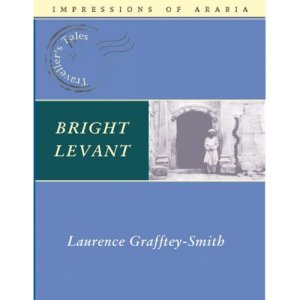
His life story is mirrored, aped and occasionally mocked by one of his juniors, Laurence Grafftey-Smith, whose career overlapped with Storrs for some ten years. So that ‘Bright Levant’ not only makes a perfect companion piece to ‘Orientations’ but continues the eyewitness story of Britain’s political intrigues in the Middle East until 1956. Apart from their shared intelligence, ambition and capacity for palace intrigue, Storrs and Grafftey-Smith shared an intriguingly similar background. They were both impecunious sons of clergymen, educated in good but not glamorously well-connected public schools (Storrs went to Charterhouse, Grafftey-Smith to Repton) who made the very best of their university years. They had need too, for the competition amongst graduates for a place in the old Levant Consular Service was fierce, with examination halls packed full of six hundred clever young-men competing for just four or five places. Grafftey-Smith was fortunate to be among the last to be educated by the great polymath ‘Persian’ E.G. Browne, who he describes with a ‘finely chiselled face… a radiance of intellect and of love for his fellow-man. I never met a kinder man.” Grafftey-Smith was not alone in this sense of gratitude. To honour a lifetime of work on Persian literature his 100th birthday was celebrated as a national holiday in Iran.
Constantinople, with its First, Second and Third Dragomans permanently attached to the staff of the British Embassy, was the most sought-after posting within the Consular Service – which could lead to terrible feelings of neglect to those Consuls languishing for years in less glamorous trading ports. The depressive condition of ‘Consulitis’ manifested itself through alcohol and an obsessive concern for rank – but could sometimes reach fatal proportions, like the time when Lord Dufferin had to call out from his office door for ‘lots of blotting paper quickly!” after one of his Consuls had capped his list of grievances by blowing his brains out over his Ambassadors desk in mid-interview. Grafftey-Smith’s first posting, to Alexandria, was with one such madman as a boss – a rites of passage initiation into British eccentricity on the cusp of madness. Having survived this test he was moved to Cairo to join the court of the British Consul-General guarded by canvasses in scarlet and gold and served by a team of foot messengers in uniforms of blue. But despite the collective brilliance of this colonial cabinet of mandarins, Grafftey-Smith also observed the dangerous isolation that race and class-obsessed British had imposed upon themselves, centred around the Turf or the Gezira Sporting Club.

They were all observed by the reigning Khedive, Fuad, who ran his own intelligence network through Ismet Bey, his Nubian valet who controlled the appointment of every door-keeper, house-boy and cook in Egypt. Fuad (his voice reduced to a bat-like shriek after he had been shot in the throat by his brother-in-law) resolutely attempted to claw back power to the Khedival throne throughout his reign. So the palace intrigued with both the nationalists and the British, who were themselves often divided in policy – between what the officials in Cairo desired, set against the different policies of the India Office, the Foreign Office and the politicians in Westminster. It was dangerous but exciting times for an intelligent young Consul in the 20’s and 30’s, with Egypt riven by nationalist agitation and assassinations, Arabia disputed between Britain’s two allies (the al-Saud and Hashemite dynasties) with both Iraq and Syria trying to throw off colonial tutelage and Palestine convulsed by the Jewish settlements. Grafftey-Smith is especially good on character assessment: how he considered the Hashemite Sherif of Mecca had been permanently marked by his youthful exile in Ottoman Istanbul (where he was closely watched by Ottoman agents), so that ‘his Proust-like gerundial clauses’ of his language had become so guarded and complex ‘that neither I or my translator could ever be sure what the King was trying to say.” Ibn Saud’s character by contrast, had greatly benefited by his own experience of exile in Kuwait, where he not only tasted poverty but developed friendships with Turks, Druze, Shia and Christian Arabs that he might never have been exposed to in the Wahhabist oasis strongholds of his Arabian homeland.

Grafftey-Smith was not a natural-born courtier (unlike Storrs or De Gaury) and so his anecdotes about monarchs can appear to have an almost republican flavour. Such as the tale of young King Farouk, pouring his tip of gold coins into a basin full of vitriol (to torture some porters with a choice between pain and greed) and how the saintly old Hasemite Emir of Mecca would sometimes descend into his underground dungeon and randomly club the chained inmates. Indeed the fascinating but grim tours of duty in Albania (just before the Fascist invasion), or in Iraq (just before a nationalist uprising would clove his successor in-two with a pick-axe on the Consulate staircase) and at the Red Sea port of Jeddah were clearly meant to be punishment for Grafftey-Smith’s outspoken views and policies. But at times of crisis, like the panic-ridden months when General Rommel appeared to be about to occupy Cairo with German tanks, Graffety-Smith more than proved his worth as a mastermind of propaganda. But his caustic wit comes through to leave few unscathed, whether he is observing W. Thesiger eating, J. Morris recording the wrong aphrodisiac recipe or Rosita Forbes faking her desert travels. Only the old desert warrior-King, Ibn Saud earns a consistently good word from Grafftey-Smith, who describes him as of ‘great physical strength, and the gentle hands and charming smile that made many love him’. This affection is confirmed in the ringing last paragraph of Bright Levant, “Tombstones and all other memorials of mortality are anathema to a true Wahhabi. His Majesty Abdul Aziz ibn Abdurrahman al Saud lies in the sands, wrapped only in a shroud; and today one must ask of the desert winds and of the cold Arabian stars to find his resting place.”

But even this grandiloquent conclusion might also be considered to be part of his long professional duel with Ronald Storrs who had ended Orientations, with this penultimate paragraph quoting one of Sufi heroes of mystical Islam, “Oh my Lord! If I worship thee from fear of hell, burn me in hell; and if I worship Thee from hope of Paradise, exclude me thence: but if I worship Thee for Thine own sake, then withhold not from me Thine Eternal Beauty.”

Plainly some of the wisdom of the East, not just its scents, palaces and politics had seeped into the veins of Britain’s great Dragoman-Consuls of the Levant.

Return to Cultural Essaya

Barnaby Rogerson May, 2011. The public domain photos show the cover of Arabia Phoneix by Gerald de Gaury, Lord Kitchener in the famous recruiting poster, Ronald Storrs, Wilfred Scawen Blunt and the cover of Bright Levant by Laurence Graffety-Smith. Barnaby is profiled below.

Leave a comment

Filed under Books, Publishing

‘STORM FORCE’ WITH THE PLASTIKI AND HOME TO SYDNEY!

Documentary maker Max Jourdan’s fabulous diary from last year’s voyage of the environmental craft Plastiki, with excerpts from David de Rothschild and fellow crew members, sails on fearlessly and finally comes home:

Mid-June. Needlework (Max Jourdan)

4am again. Outside already. Average seas and drizzling rain running cold through briny hair. Chart littered with oceanic shelves, mounds and deep troughs named after French navigators. Just let me lie here on deck in the dark. No. I am awake, just resting a little. “Foresail’s ripping. Need to finish patching the other one before they’re all gone,” says Jo.

Inside. We sit opposite each other across the mess table. A roll of twine, bag of needles and strips of sailcloth. Eyes wide open and pupils dilated. We start to sew under the red glow of night lights. Pitching and rolling in our pod. Darkness all around. We could be in deep space or attending a Sunday patchwork class on LSD.

Patching is done. I take the helm. I could cycle across the Pacific faster than the Plastiki can sail. Maybe that’s why it’s taking me more than 2,000 miles of ocean crossing before deciding to try out the stationary bike bolted to the foredeck. We take turns on the bike. It’s a sit-down contraption that spans two cross beams. When you are in the saddle you are suspended over the big blue. I don’t know what this is doing to my fitness level, but the blind aggressive pace feels all wrong and out-of-place on this boat.

15 July. Storm force (Matthew Grey, expedition co-ordinator)

It’s 3.51,” Graham sing songs in his most mumsy voice. “Urghh, thspp,” is all I can muster. He’s sent grabbing for the corner of the doorway, as a huge wave whumps against the boat. I went to ‘bed’ two hours and 45 minutes ago.

Wet means wet-weather wear and judging by the sound of the waves breaking across the deck, I’m gonna need it. Slipping into a wet pair of dungarees at 4am is no one’s idea of fun. The pants are like a halfway house: they ease you uncomfortably from warm sleeping bag to violent seas and driving rain. The last piece of the puzzle is the life-vest.

Welcome to winter in the Southern Hemisphere.

Last night we had a ‘blowout’ on our headsail and with 35 knots of wind tonight we can’t risk destroying the second and only spare. Instead we’re flying our utilitarian orange storm gib. A handkerchief-sized piece of fabric is strung up where our big billowing powerhouse once was. It’s designed for the worst; when all other options are exhausted and the wind is pummeling us at 50 knots we would point the boat away from the waves and tuck our tail between our legs with just this little sail to guide us.

16 July. Samoa to New Caledonia (David de Rothschild)

The temperature inside the cabin has just reached a distracting and uncomfortable 39C! The situation seems oddly perverse; on one hand I am surrounded by a horizon that holds all the promise of reprieve from the sweltering heat, yet on the other, the 15 knots of breeze means we don’t have the option of dropping sails in order to give way for some underwater activities. I am firmly trapped within the confines of a 20ft by 60ft floating plastic solar oven.

If only I’d had the prior insight to design some form of swimming platform; what was I thinking to miss that particular detail? But, then again, hindsight is a luxury of the now. Which makes me ponder the notion: would I even be here on this mission in the first place had Leo Hendrick Baekeland realised that by presenting the world with the first fully synthetic plastic, Bakerlite, back in 1909, he would be ushering in the modern era of plastics.

I wonder if at any point during his research and development he anticipated that the very durability he most likely worked tirelessly to engineer and perfect was in fact going to become an Achilles heel for all things organic and natural, invading and conquering almost every ecosystem worldwide in one way or another.

Hindsight or not, what’s crazy about the issues of these plastic fingerprints that are tragically tarnishing our natural environments is that it doesn’t have to be this way! If the development and build phase of the Plastiki taught me one thing, it was that innovation can come from the most unexpected places.

Late July. Epilogue (Max Jourdan)

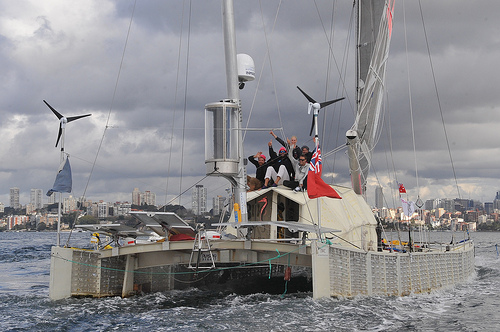
Our arrival in Sydney on 26 July wasn’t what we had expected – we’d arrived in the Tasman Sea 10 days before, but much too late in the year, so the ‘Plastiki’ spent the last week of its voyage under tow. Which was a bit of an anticlimax. Was the expedition a success? David always said it’s not about the expedition, it’s about the message, and he certainly worked hard getting the message across, blogging, tweeting, working the press – he even went live on ‘The Oprah Winfrey Show’ mid-voyage. And we certainly spent a huge amount on satellite communications. In essence, David was at the office for about 80 per cent of the voyage.

But the more communication we had with the outside world, the less unity there was among the crew. And it’s a pity that we weren’t able to visit the plastic ‘garbage patch’. So, for me personally, the voyage of the ‘Plastiki’ wasn’t quite the adventure it might have been.

But we were treated to a phenomenal reception in Sydney Harbour: helicopters, police craft, and a flotilla of little boats, not to mention a huge press reception. After that, the crew went their separate ways. And the ‘Plastiki’? If current plans come to fruition, she will sail on, sort of, travelling the world in a showcase as an oceanic exhibition piece. Her voyage is far from over.

Documentary maker and photographer Max Jourdan’s film of the voyage of the ‘Plastiki’ was transmitted on the National Geographic Channel on 22nd April, to celebrate Earth Day. ‘Plastiki: An Adventure to Save Our Oceans’ by David de Rothschild was published at the same time. Photograph courtesy of the Plastiki crew. A version of these blogs has appeared in The Independent. For more information on the expedition, go to the web-site http://www.theplastiki.com

Leave a comment

Filed under Books, Environment

EARTH DAY, APRIL 22, WITH A LOT OF PLASTIKI BOTTLE!

When David de Rothschild sailed across the Pacific last year, the voyage became a model of the media-savvy eco-adventure. But what was life like aboard the ‘Plastiki’, inspired by Thor Heyerdahl’s trail-blazing expedition on the balsa wood raft ‘Kon-Tiki’, sixty-two years ago? On board the ‘Plastiki’, a 20ft by 60ft press office was strapped to 12,000 plastic bottles, as documentary maker and photographer Max Jourdan and his crew mates kept the ship’s blog.

Max’s film of the voyage of the ‘Plastiki’ will be transmitted on the National Geographic Channel on 22nd April to celebrate Earth Day. ‘Plastiki: An Adventure to Save Our Oceans’ by David de Rothschild will also be published at the same time, with an event at the Paragon Sports on Broadway in New York. Phoenix Ark Press are delighted to re-blog a version of an article that appeared in the Independent, and extracts from the diary will be blogged over the coming week.

A lot of bottle: Life on board the Plastiki by Max Jourdan

“Do you want to cross the Pacific on a boat made of plastic bottles?” I was asked a year-and-a-half ago. “Yes,” I replied, without hesitation. I figured it wasn’t a question that would come up again soon. The ‘Plastiki’ adventure began when David de Rothschild, the British adventurer and environmentalist, came across a United Nations report on the state of the world’s oceans, which pointed to the fact that our seas and their ecosystems are dying, suffocated by millions of tons of human waste, in particular, plastics. There was also the ‘discovery’ of huge gyres of plastic waste ‘the size of Texas’ trapped in oceanic vortices. Sailor and environmentalist Charles Moore had sailed through one of these Pacific ‘garbage patches’ in 1997 and brought back grim samples: a briny soup in which plastic nano-particles outnumbered plankton by a ratio of six to one.

Inspired by the famous ‘Kon-Tiki’ expedition, David decided to build a one-of-a-kind expedition vessel, incorporating that ubiquitous item of rubbish, the plastic bottle, and sail it across the Pacific to encourage the world to ‘beat waste’. He was keen to show that with more efficient design, and a smarter understanding of how we use materials, waste can be transformed into a valuable resource. The ‘Plastiki’ is the result of nearly four years of design, boat-building, hipster environmentalism and cutting-edge research into plastic polymers.

I started documenting the adventure for a National Geographic Channel film nearly two years ago, when the Plastiki was still just a bunch of wild sketches on a naval architect’s notepad and a pile of dirty recycled bottles in a San Francisco workshop. Work at the construction site was slow and disorganised. All of the plastic materials used to build the boat’s structure were untested and, to his credit, David insisted on a hull design that incorporated recycled plastic bottles in their original form. Whatever vessel was going to emerge from this zany endeavour would have to be strong enough to sustain months of battering and ultra-violet degradation under the punishing equatorial sun.

I went 100 miles out to sea for a weekend trial, with a crew I barely knew. Five men and one woman. Most of us hadn’t ever sailed before. David spent the entire time vomiting his guts out and we lost a few bottles from the hulls (which we retrieved); but skippers Jo Royle and Dave Thomson reckoned the ‘Plastiki’ was ready as she would ever be. The morning we set off in March last year, a hard-boiled sailor warned me I was mad to be taking part; the ‘Plastiki’ would never make it past the Golden Gate Bridge, let alone 8,398 miles across the Pacific.

Could we prove him wrong? One thing we did have to give up on was sailing to the infamous northern ‘garbage patch’; the ‘Plastiki’ couldn’t get us there. Despite its sci-fi appearance, the boat is more like a raft than a conventional sailing vessel. It can’t sail up wind, nor can it really battle against currents and weather systems. It can only go with the flow, in our case, from East to West following the Pacific currents and trade winds. The garbage gyre lies north of Hawaii and from our launch in San Francisco it was beyond our reach.

Cooped up for weeks on end in a sweaty plastic cabin the size of a tent or roasting under a fierce equatorial sun, I tended to forget what the mission was all about. Life boiled down to basics: sleeping, eating and helming around a 24-hour watch system or tending to nautical chores (and coping with the interminable noise of the ‘Plastiki’s’ 12,000 odd bottles dragging against the sea and the rest of the boat).

I was also distracted by my own self-centred emotional experience of life at sea and hypnotised by endlessly changing vistas of sky and ocean wilderness. But I wasn’t there to change the world; I was aboard to film a bunch of people trying to make it across the Pacific on a crazy plastic boat. And to blog and tweet just about every nautical mile of the way…

23 March. Leaving San Francisco (David de Rothschild, expedition leader)
So, we’ve made it, day two on board the ‘Plastiki’! Seems I got away with it on the first day but have started to feel sick again due to what seem to be massive swells surrounding the ‘Plastiki’, although the sun is out, which makes it really amazing to be out here. Spray seems to be hitting every part of the boat covering the decks, cabin and us with salt water.
We have a new crew member – a flying fish hanging out in the bottles. Olav [Thor Heyerdahl’s grandson] is trying desperately to prise it out for dinner. Max is talking to himself on the helm – which is entertaining the rest of us. Off to get a sleep before dinner, although with Olav cooking I might give it a miss; got a feeling it could be flying fish….

READ ON SOON….

Photograph courtesy of the Plastiki crew. For more information on the expedition, go to the web-site http://www.theplastiki.com or by clicking

Leave a comment

Filed under Books, Environment

PROFILING ANTHONY GARDNER

Anthony Gardner is an Irish author and journalist based in London. He edits the Royal Society of Literature’s magazine RSL, is a Fellow of the Society, and writes for a variety of newspapers and magazines, including the Daily Telegraph and the Sunday Times Magazine. The Rivers of Heaven is his first novel and published by Starhaven. He is also founder of http://www.tomorrowsbooks.com.

For Anthony’s website click

Leave a comment

Filed under Adult Fiction, Books, Publishing

ANSWERING A LETTER FROM A READER

‘Hello. I am a big fan of your stories. I especially loved Fell, and the scene with the salmon.
I was wondering though… This is the first time I’ve been to this site, and excuse me for saying that I am a little confused as to what is going on. I have never heard of Phoenix Ark, and would like to know when it started, and by whom. I think it’s a great idea to focus on writers and sharing the stories they work so hard on. I am very interested in it (being a hopeful writer myself). I hope that you succeed in letting your voices be heard, and that everything works out. When Scream of White Bears comes out in Canada, I’ll be anxious to read it.

Helene

Dear Helene,

many thanks for writing. Phoenix Ark was founded by David Clement-Davies, mid last year, in response to the awful publishing climate, and the politics inside many big publishers too, to talk straight to readers, and allow writers’ voices, even beyond their works, to be heard, shared, and to hope that writers and artists are really respected and protected too. The problem we faced and face is the very difficult financial climate, and so raising the necessary investment, not only to survive, but to really get books published properly, David Clement-Davies’s, and others. It was blogged that in fact we can only afford to get Scream of the White Bear, and probably other books, out electronically, to Kindle and elsewhere, though if investors came in, that could and would change. The founder, while trying to make a living himself, and come out of an awful and unneccessary battle in New York, is still looking for the right people though. We hope you like all there is on the website though, cover designs, cultural essays, personal blogs, articles, and a free story, and great to hear from you.

Very best,

Phoenix Ark Press

Leave a comment

Filed under Books, Community, Publishing