Category Archives: Books

THE 6TH PHOENIX ARK CULTURAL ESSAY

ART AND HISTORY: BLURRING THE LINES by Saul David
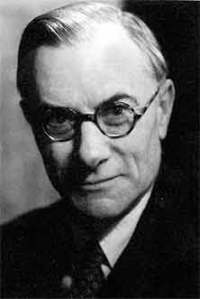
It is 40 years since the liberal Marxist historian E.H. Carr published his celebrated ‘What is History?’ As a young student in the 1980s I was intrigued, and slightly alarmed, by Carr’s contention that all historians are subjective, in the sense that they choose which ‘facts of the past’ to turn into ‘historical facts’; and that you should always study historians – and the potential bees in their bonnet – before the facts. ‘When you read a work of history,’ he wrote, ‘always listen out for the buzzing. If you can detect none, either you are tone deaf, or your historian is a dull dog… By and large, the historian will get the kind of facts he wants. History means intepretation.

Yet Carr was convinced that history was a social science and not an art, because historians, like scientists, seek generalizations that help to broaden their understanding of a subject. He felt that while historians could not predict the exact future, their generalizations could give an insight to both the present and the future. It all sounded pretty convincing to me – as a student. But as someone who has since taught history at university, written both popular history and historical fiction for commercial publishers, and presented history programmes for TV and radio too, I find it increasingly hard to see history as an academic discipline, let alone a science. Most professional (or academic) historians are taught, and teach in our turn, that the unpublished and preferably untouched archive – first-hand and contemporaneous – is king. But is it really to be trusted? Most works of history are constructed from a mixture of incomplete and often partial sources – both primary and secondary – that can mislead, as well as illuminate. The very records themselves available have often been ‘written by the winners’ and even at its best and most reliable (in the sense that the author has not actually made anything up, or deliberately omitted details he knows will undermine his argument), history can give no more than a hazy artist’s impression – almost like an early daguerrotype – of a past event or period.
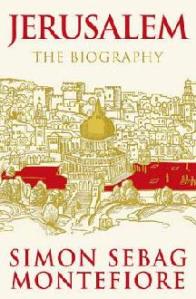
Does this make the writing and study of history a pointless exercise? Not at all. Even in its typically biased and unsatisfactory form, the best history can still give us some insight into the past and, potentially, the present and the future too (and to do that it does not require Carr-ite ‘generalisations’). Certainly most political crises are rooted in recent (and occasionally longer-term) history, and can only be properly understood (and potentially fixed) if decision makers are aware of the historical context. The key players in the Palestine peace process, for example, would do well to read Simon Sebag Montefiore’s even-handed Jerusalem: A Biography. Yet it is of course a cliché that the greatest lesson of History is that no one learns the lessons of history. If that were not so it would be to imply that there is something teleological to History itself, moving to a Telos, an unfolding purpose, and giving some perfect ‘lesson’. Much as Fukayama tried to imply, with his rather idealistic best-selling thesis on ‘The End of History’, by suggesting the liberal Nation State is now the accepted solution to those supposed lessons. But what happened after 9/11 and in Iraq might suggest the opposite and, of course, unless you are a Marxist, History is not deterministic, things not inevitable, though they may seem so viewed in hindsight. Which is why the ‘artistic’ and ‘intellectual’ values of good histories themselves, to influence culture and insight, and affect contemporary decision-making, so vitally comes into play. That is History as dialogue and living culture.
Which brings me though to the concept of history in fiction and literature. Since the recovery of the past is to an extent an act of imagination, involving the prejudices and capacity of the beholder, can the novelist, with their perceptions of reality, character, why and how things happen, not get just as close to a possible reality of ‘what really happened’, or ‘what it was like’? Tolstoy believed so, being the kind of auto didact who would brook no other perceptions of truth. People famously marvel at the human truth of his fiction, War and Peace or Anna Karenina, yet dismiss his theories on history, which at times approached the almost scientific, the atomically deterministic, in his ideas on the lack of free will, or the mysterious actions of the Russian soul in defeating Napoleon. Yet actually those dismissed ‘Historical’ ideas were probably essential in turning him into the kind of prophet he became, who ended up dismissing the value of fiction too. There is the theory too that History should actually just be a growing collection of personal biographies, although again comes the question of how good, true or biased is the biographer, since you tend to fall in love with your subject. From the artist’s perspective, a great writer like Bulgakov believed that you could only get to the truth of an artist’s life by trying to inhabit his very style, much like Keat’s ‘Negative Capability’, and hence his glorious ‘storytelling’ of Moliere’s life.

Must there not be rules or at least standards though, beyond the complete acceptance of the subjective, and moving towards the purely fictional? If history itself often becomes a fact of cultural bias, or propaganda, do the problems of Historical truth make it acceptable that Hollywood often takes such extraordinary liberties with historical fact, or that dictators do? I do not think so, British writers on the Second War do not think so, especially for serious ‘world’ histories. Or is there a fascinating cultural space in the Dream Factory where American or British voices, playing Roman generals, in language suitable for 1920’s Chicago, proves that we are all always being strangely translated, like Bottom in a Midsummer Night’s Dream?
Then you might move intellectually into the realm of modern scientific insights into Space-Time, and ‘reality’ at the subatomic level, the Quantum perception that the viewer affects the experiment, and wonder what it is we are truly perceiving, and with what mechanism, or who gets closer to truth, the historian, the scientist or the artist? Perhaps only all together, and of course ‘truth’ itself is a loaded concept. Like Wittgenstein’s perception of the imprecision of language then, should we just define truth as a guiding ‘tool’ to that ‘which is not false’? That is the rigour of not falsifying fact, yet the motivations of human character and action are always filled with falsehood, as truth, and influenced by prevailing beliefs too.
Studying A-Level history, I had two very different teachers: one who gave me a stock answer to particular questions; the other insisted there was no one answer, and that we were to construct the most plausible scenario from the evidence available. I thought the latter lazy and misguided; only later did I understand that history’s value is to train you never to shut your mind to an alternative scenario. It really is, as Carr put it, ‘an unending dialogue between the past and the present’; and one that relies more on a historian’s instinct (particularly about human behaviour and motivation) than is generally admitted. Maybe this is why so many historians (myself included) have recently turned their hands to fiction. For only by removing the shackles of so-called historical methodology – including the strict embargo on supposition and extrapolation – are we able, finally, to get close to the ‘truth’. I suppose, for each of us, its value and quality, in a living cultural sense, depends on both the rigour and depth of our own imaginations and, as in many disciplines, what really matters are the kind of questions we are willing to ask about what is ultimately important to us all. Saul David March 2011, with suggestions and editorial by David Clement-Davies.

Return to Cultural Essays

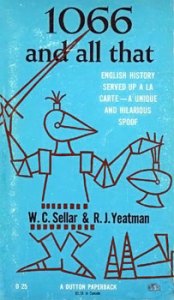
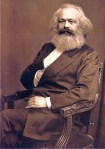
The pictures are public domain photos from Wikipedia and the Guardian bookshop and show EH ‘Ted’ Carr, a rare cover of Seller and Yeatman’s classic, Jerusalem the Biography, The Tao of Physics, and Karl Marx. Saul is profiled below.


Leave a comment

Filed under Books, Education, The Arts

PROFILING SAUL DAVID

Saul is the author of several critically acclaimed history books including The Indian Mutiny: 1857 (shortlisted for the Westminster Medal for Military Literature), Zulu: the Heroism and Tragedy of the Zulu War of 1879 (a Waterstone’s Military History Book of the Year) and, most recently, Victoria’s Wars: The Rise of Empire. His latest work of history – Soldiers: The Redcoat from the Glorious Revolution to Waterloo – will be published by Penguin in February 2012. Saul is professor of War Studies at the University of Buckingham, and Programme Director for Buckingham’s London based MA in Military History.

An experienced broadcaster, Saul has appeared in history programmes for all major TV channels and is a regular on Radio 4. He has also written two historical novels, set during the wars of the late Victorian period and featuring the Anglo-African soldier George Hart. The first, Zulu Hart, was published last year. Praised by Bernard Cornwell, it was chosen as Waterstone’s New Talent in Fiction title, and reached number 4 in the Daily Telegraph hardback fiction bestsellers. The follow up, Hart of Empire, will be published on August 5.

For reviews and Saul’s website click HERE

Leave a comment

Filed under Adult Fiction, Books, Culture, The Arts

THE 4th PHOENIX ARK CULTURAL ESSAY

LOVING ANIMALS by Eugenia Anastassiou

From the legend of Androcles and the Lion, to Kipling’s Jungle Book, through the moving story of social alienation and redemption in Paul Gallico’s Snow Goose the theme of the deep bonds and devotion between animals and humans has been explored many times in literature.

Yet last week, in Helmand in Afghanistan, life seemed very poignantly to imitate literature. Twenty-eight year old Lance Corporal Liam Tasker, an Arms and Explosives Search dog-handler in the Royal Army Veterinary Corps, was shot on mission. As his body was being taken back to Camp Bastion, a comrade-in-arms, his own search dog Theo, who witnessed Lance Corporal Tasker’s death, died from a seizure. Reports from battle-hardened soldiers in the field mentioned that Theo had ‘died from a broken heart’. Today the soldier-master and his dog are being repatriated together, making their final journey back home, as a team. Lance Corporal Liam Tasker and Theo died on Tuesday March 1st 2011. His death brings the total number of UK military personnel to have died in Afghanistan to 358, and Theo is the sixth British military dog killed in action in Iraq and Afghanistan since 2001.

Even as human beings, we often cynically question the theory of people (let alone animals) dying from a broken heart. How does Shakespeare’s Rosalind have it in As You Like It? ‘No one ever died for love’. Certainly art, poetry and literature though go a long way in perpetuating that naturally romantic, idealised form of death. Can animals feel such a thing as heartbreak, or is it just anthropomorphic clap-trap, worthy only of the Daily Mail?

There are undoubtedly many well-known instances where animals, especially dogs it seems, have grieved and mourned the death, both of their own and their owners. Phoenix Ark’s founder told me how, visiting a wolf sanctuary in Colorado, an alpha wolf who had lost his mate, dug a half hole in the sandy ground and lay down to grieve. That night, when the pack usually picked up each other’s haunting evening wolf song, the others stayed eerily silent, as he howled, as if in a mark of respect. Howl, howl, howl. Wild elephants are known to pass around the bones of their dead , as though the touch of their trunks is transferring some deeper pereception of life and death.

As for our emotional relationship with animals though, the touching 19th century tale of the Scottish Skye terrier, Greyfriars Bobby, made into a rather over-sentimentalised movie, a statute and virtual industry, is the true story of a dog whose love for his dead master John Gray, a night watchman for the Edinburgh City Police, meant he spent every day sitting on Jock’s grave in Greyfriars Kirk, for fourteen years until his own death. More recently, in 2002, during Mugabe’s violent attacks on both his own people and white farmers in Zimbabwe, the image of Squeak, a Jack Russell staunchly guarding the mutilated body of his owner and refusing to move, made headlines across the world.

Apart from anecdotal evidence, and the instincts of writers, scientists are now beginning to analyse higher feelings in animals, especially the strong attachment between man and dog. Heading some of this research is neuro-psychiatrist and leading autism specialist Professor Jaak Panksepp, who has attempted to map out animal brains and further confirms emotions such as happiness, even possibly humour, as well as sadness and separation anxiety, as part of their fundamental psychological make-up – just like humans. To many it is quite obvious and rather makes a mockery of supposedly vital research grants being spent on studies that can lead British scientists to the remarkably obvious conclusion that a stag actually feels stress during a hunt!

But at last science bears up a level of anthropomorphism. Indeed, while we perhaps can see everything, and sometimes too much, of ourselves in the great mirror of nature, it would be impossible to understand animals without the intrinsic langauge of emotion, that is so much part of ourselves. Various dog experts, animal psychologists and vets commenting on ‘The Curious Incident of the Dog With A Broken Heart’ find it unusual or impossible, since dogs, like all pack animals, have a strong survival instinct, and eventually adapt to new situations or new owners. But in this case, especially because of the heightened circumstances of Theo being a war-dog and working with Lance Corporal Tasker in such stressful conditions as Afghanistan, the bond would surely become even more intense. Just look at their photograph above.

As for emotion and its destructive effects, Dr. Roger Mugford, an animal psychologist who also happens to treat the Queen’s corgis, offers the explanation that ‘dogs being highly sociable animals, suffer from a form of depression which inhibits not only their appetites but also their immune system. This makes them susceptible to infection and can be fatal’. But isn’t this also the way humans can weaken, and even die of a broken heart, with apologies to Shakespeare?

Other animal experts and behaviouralists will probably put up endless arguments against Theo dying of a broken heart, dismissing it as trite sentimentality, made up to make people feel better about a tragic outcome. Why should humans be so limited and arrogant though, as to presume that Lance Corporal Tasker could not instil such an extraordinary bond, a tribute indeed, and that Theo never sensed, as Anaïs Nin put it: ‘Love (which) never dies a natural death. It dies because we don’t know how to replenish its source…..it dies of illness and wounds; it dies of weariness’. March 2011 Eugenia Anastassiou. Eugenia has worked in Television and Film on many political and sociological documentaries and is passionately involved in ideas and culture. Her essay is a very welcome edition to a little publisher, that prides itself on its animal stories.

Return to Cultural Essays

1 Comment

Filed under Books, Culture, Science

WORLD BOOK NIGHT

World Book Night, launched in London’s Trafalgar Square last Saturday, brainchild of Cannongate’s Jamie Byng, in alliance with the BBC, and the wonderful idea to give away one Million free books to readers has certainly created a buzz, and hopefully will do so in future. For the culture of reading it is tremendous, despite the carping about affecting the perceived price and value of books, for the culture of authors though it seemed dominated by the heavy weights, from Yan Martel to Philip Pulman. It would have been nice to see more independents taking a role, more indy voices, and a bigger voice for those who think that publishing is in crisis, in part because some big publishers have been so ruthless in following lead titles and lead authors.Today’s publishing challenge though is as much about changing technologies and the disappearance of traditional ‘gate-keepers’ in the best sense. It is the eternal paradox of the publishing industry, that financial need and desire to forge forward with success stories, but also to try to promote the unheard, the original, and the off-the-wall literary challengers. Still, when Phoenix Ark began, and called on Independents to join together to create some kind of wider cultural debate, there was hardly a stampede, and this has got people talking, and reading too, always a good thing.

To find out more about World Book Night and perhaps prepare for next year, just click

Leave a comment

Filed under Books, Culture, Publishing

LIGHT BREAKS WHERE NO SUN SHINES

The previous post needs almost instant up-dating because, with a little support from The Author’s Guild of America, Phoenix are thrilled to share the fact that Abrams in New York have just given back the eRights to both Fell and The Telling Pool. It means that Phoenix Ark Press can now also publish, to Kindle and Ipad, a special joint edition of The Sight and Fell, by David Clement-Davies, novels that should sit naturally together, and which were once separated by publishers.

It feels like the end of a terrible road, and although losing someone you love is probably the only thing that really matters in a human life, a tiny victory for one author to get a reputed and powerful publisher to truly respect an author’s work again, at some fundamental level. David Clement-Davies now has the say back in his own creations, the expression of years of hard and highly committed work, and this little Phoenix might fly after all.

Leave a comment

Filed under America and the UK, Books, Childrens Books, The Phoenix Story

THE PHOENIX GNOMES AT WORK

Over the next three days the Phoenix Gnomes will be hard at work, like the elves in the weary shoemaker’s shop, cleaning up the valiant work of the founder. So the black text bleed against red, a famous design blip, and the hazing of text, will disappear.

NAVIGATION: Incidentally, for those not quite used to WordPress, to get around you can virtually click on anything. For instance, if a post has been ‘pressed’, click it, and the full blog page will appear. To get back to the Blog, from individal ‘pages’, listed at the top, just click the Blog title, Phoenix Ark.

Leave a comment

Filed under Books, The Phoenix Story

WELL, SAYING IT BLUNTLY!

Leave a comment

Filed under America and the UK, Books, London, New York, The Arts, The Phoenix Story

BACK ON THE REAL JOB

Phew, with all that creative thingamy out of the way, now it’s time to get back on the real job, with a simple pen, and thoughts of Dragon in the Post, then on to re-edit Scream of the White Bear! DCD

2 Comments

Filed under Books, The Phoenix Story

COMPANY LOGOS

and incorporating

Leave a comment

Filed under Books, The Phoenix Story

FOUNDER’S BLOG

Many apologies for continuing delays, especially with new instalments of Dragon in the Post, but apart from crashing computer systems, pretending I’m an International Corporation, and failing to raise cash, I’ve discovered the miracle of Inkscape, which as a design package is astounding. Since I went head to head with the control freaks in New York, I now realise part of it was about an ache to be directly involved creatively, beyond the long-distance-running sort of loneliness that so affects authors. Oh the joys, not only of writing and conceiving a novel, brilliant or awful, but then designing a cover, finding a facility for banners, logos, whatever, and then seeing work moving towards being realised again. Beyond that, while trying to create your own cottage industry publisher, there are the pearled pleasures of not having to listen to some moronic agent, or even a brand-slotted editor. The only draw back of course is money! Still, hardly the only thing in life. What is absolutely essential to a writer though is the belief that partial work will actually get to some kind of audience. Much coming this week, from instalments to catalogues. A ‘Founder’s Blog’ logo has also been created to distinguish personal posts from the work of the Company. DCD

Leave a comment

Filed under Books, Publishing, The Phoenix Story