
Scream of the White Bear by David Clement-Davies, the book that helped cause a horror story in New York, the complete disrespect of fundamental artistic, human and contractual principals there, and led to the birth of Phoenix Ark Press too, will also be published by this August, at the latest. Since David, with the help of the US Author’s Guild, took back his eRights from Abrams on two other novels, who when challenged to sue him backed down within a day, but also got his eRights from Dutton in America, he will go on fighting for his work and voice, for a far more transparent and human artistic world, and for the work of others too. Dear reader, you are all invited to join the Phoenix story and an adventure where fact became stranger than fiction.
Category Archives: Culture
PHOENIX ARK PRESS RELEASE
Filed under America and the UK, Books, Childrens Books, Culture, Phoenix Catalogue, Publishing, Young Adult
The 8TH PHOENIX ARK CULTURAL ESSAY
I AM? by David Clement-Davies
With all the splendid regal hoo-ha today, perhaps the nicest blessing to a marrying couple would be not to write about the Royal Wedding at all. Especially avoiding the kind of trashy, invasive comments from a former-Sun editor on being bald young, or why a man, ‘Royal’ or ‘Commoner’, but in this case very rich, might actually win or love a beautiful woman. That particular celebrity editor’s empty beer-glass on something also private and intimate, and probably and hopefully completely wrong. On Royal Wedding days the difficult ‘private’ is what this Cultural Essay is about then, especially the inner mind and heart. Perhaps the ‘sacred’ too, in a world where we no longer seem to really know what it means, or how to value it privately, or collectively either.
Perhaps the Media strain on things like love is just the modern world, and the sometimes difficult hypocrisies of that vital ‘freedom of the press’ too. Too often debased by the hunt simply to sell papers, in no one’s real interest but Newspaper proprietors. Although journalist Andrew Marr did the right thing to apologise recently for his own injunction. Dodgy super-injunctions in mind, the law becomes an ass if you can just look up ‘restricted’ facts via Wikileaks, as Julian Assange well knows, or on the Internet. But Obama was right too about the idiocy of having to disport his birth certificate on the internet, and wanting to get on with far more important things. On the other hand, in former days of real Kingly power, in Hampton Court or Versailles, there would have been very little privacy, because then we owned our Kings and Queens too, and glared very intently, especially at the Royal bed. It’s just the audiences get bigger and bigger, and everyone’s holding the camera.
You might of course say that in the world of Einsteinian physics Royalty itself is nuts, and in very hard times, give a loud fanfare for the common man, and especially now, woman. It is something everyone comments on with Kate Middleton being ‘one of us’, although massive popular and moving support proves indeed we are still instinctive Monarchists, despite the little scandal of two Labour Prime Ministers not being invited to what is inevitably a ‘State occasion’. Or you might say that purely materialist communism was far madder and nastier than democratic Monarchy, where our figure heads to aspiring ‘us’ are a family, and real human beings, or that the American equivalent of royalty becomes a ‘class’ of pure money and connections, or Hollywood human inflation.
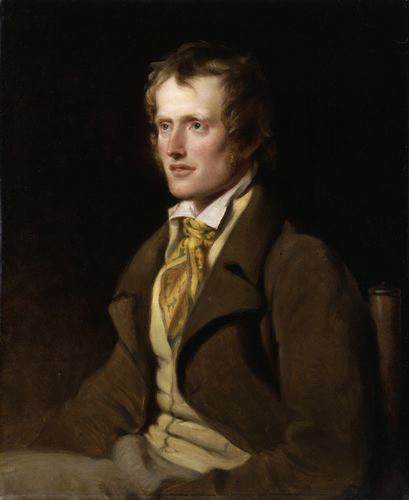
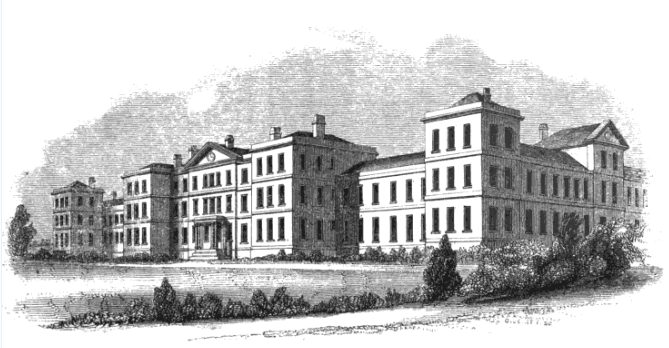
I don’t want to throw too much gloom into the fun, but there could not be a figure more removed, from royalty and it all, than the ‘Commoner’ and poet John Clare. I thought of Clare recently, researching a book about Rome, and writing about the figure of Violet Albina Gibson, who at 50 shot at Mussolini, in 1926, was released by the Fascists, and ended her days ‘back home’ in St Andrew’s Hospital, ‘up North’. St Andrew’s was, in a former incarnation, the Northamptonshire County General Lunatic Asylum, where John Clare had been locked up too, in 1841, and it brought back to mind his startlingly moving, very English sonnet ‘Lines written in a Northampton County Asylum.’
‘I am. Yet what I am none cares nor knows
My friends forsake me like a memory lost;
I am the self consumer of my woes,
They rise and vanish in oblivious host,
Like shades in love and death’s oblivion lost;
And yet I am, and live with shadows tossed’
Perhaps it’s the very proof of Oscar Wilde’s quip about there being ‘only one thing worse than being talked about’, although of course one of the agonies of ‘madness’ must be how others, or society, perceives you. Although Clare was a poet who necessarily sought fame, his true story is much about that inner Kingdom of the mind and psyche, the dangerous, vital stuff of artists and writers, and perhaps ultimately Wiki-leaking inflationists too – or, variably, ‘media heroes’ – like Julian Assange. Clare has been described as ‘the greatest labouring-class poet that England has ever produced’ and his is the most remarkable story, in part recreated in the Booker prize-winning novel The Quickening Maze. In his own fracturing consciousness, his disconnection – that saw Clare moved from his first stint of private voluntary medical care, into that General Lunatic Asylum – he rewrote the whole of Byron’s Child Harold, but in his own image, and also told newspaper editors he was Shakespeare. It shows the danger of over identification, jealousy, or too much empathy, or maybe ‘years of poetical prosing’, as the dismissive admission report had it. Clare wanted to move in a sphere consummate with his talents though, torn between his illiterate countryside companions, and clever, critical London, but by then the ‘spirits’ of past and present writers were certainly moving inside Claire’s hurt mind and imagination. As Martin Amis had it, when the attacks on The Satanic Verses began, books and by extension writer’s minds are their own countries. Then, unlike your average hack, blogger, or rooter in Grub Street, Clare took great writing, the value of literature itself to really speak to all, much to heart…and obviously to mind too.
It’s interesting today though how many people aren’t royalists, and don’t believe in God either, but are going to wedding lunches. Quite right, because if Clare’s story means anything it is about the sometimes agonising inability to escape the Self, high or low, and the maxim ‘only connect’! It is also a testament to the eternal need to be involved in theatre, a theatre the British Establishment understands in its life blood. In terms of social connections, the real Shakespeare wrote much though on how the journey of ‘great ones’ – like those fairy powers of A Midsummer Nights Dream, flitting above all us ‘Rude mechanicals’ – can frame and inform lives, quite beyond the obvious facts of power, or of ‘cultural’ influence. Although a little in love with Princess Diana myself, as a teenager, too much champagne and Southern Comfort at a pre-nuptial party meant I missed that particular view of a Royal Wedding, groaning in the dark in my adolescent bedroom. Very rude indeed, and probably a little mechanical too, but perhaps my fairy-tale fantasies were already heartbroken, and I wanted to be a happy prince! Sixteen years later, a lost love meant that Sunday Times headline announcing Diana’s death in Paris was another kind of hard right of passage,that added to the crash of private experience, and grief, one the once lofty Royals took rather a long time to wake up to, in the public consciousness. William and Kate’s obvious and genuine openness to the crowd is just the right approach, backed by that police defence against the ‘fanatical’, ‘fixated’ and the ‘foolish’. Diana was loved for several reasons, a victim of an often nasty establishment, for several others, but perhaps the hurt and violence of famous celebrity deaths can be shattering, above all, because it slaps each of us in the face with the fact of our own mortality. Human grief is then iconised, and Elvis, Jim Morrison, or Princess Diana replace the saints of old, in our ache for comprehension, connection, and not to go down to the undertow. In fact, despite the BBC puff, as we all sell Business UK to the world, and people on the street last night wanting to be part of history, this is not a ‘truly historic moment’ at all. But William probably knows you’re nothing without a woman, and with Shakespeare in mind, today one could venture into intruding on the simple happiness of real human beings, with the words of unruly, dangerous Puck, when remastered by Titania-appeased Oberon, and not talk of the sad past at all.‘Not a mouse shall disturb this hallowed house, I am sent with broom before, to sweep the dust behind the door.’
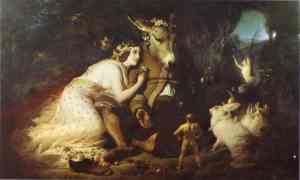
I suppose you could say that if Titania lost the plot by falling for a mortal commoner in her ‘dream’, today Will must be Kate Middleton’s upturned ‘Bottom’, except that the royals have succeeded in becoming rather real, too real if you take Furgy’s example, and you hope the authorities too do not make the law an ass today. If the novel on Clare though, The Quickening Maze, is noted for being brilliant on that shadow-land between the sane, the odd, and the truly or dangerously nuts, watching some of the ‘Wedding Fans’ on telly, getting their places near the Abbey, or indeed watching some of the Middletons themselves, you know that madness, or certainly out-of the circle eccentricity, is alive and well in merry Britain, and always will be. But then Mark Twain joked that when your realise everyone is mad, the mysteries of life disappear and life stands explained.
Most at ‘the top’ become adept at trying to keep it all out, even Andrew Marr, although if the lowly John Clare suffered from ‘madness’, one of the eternal problems of Kingship, indeed any extended forms of leadership, was always the potential imperfections of the individual. I always loved the fact that Henry VI, that ‘saintly’ King who so abhorred the fashion of exposed breasts at his Court, and would cover his eyes in horror at the good and no-doubt scheming ladies, spent most of the battle of Tewksbury talking to a tree. But then Henry was related to the French King Charles VI, who thought he was made of glass, and might soon shatter. Perhaps modern head doctors would simply talk about inflation, as possible for a leader like Gaddafi, isolated by power, as for a poet failing to be Shakespeare. One of the most profound takes though on a state that might afflict countries, parties and groups too, as much as people, travelling through time and change towards modern psychoanalysis, and individual freedoms, is Allan Bennet’s marvellously humane The Madness of King George. The tale of a royal line affected with porphyria, and touching the wild disconnection of King Lear, but with a take on the very healing power of theatre, the very point of writing, while Ian Holm’s stoutly ordered Doctor tries to keep George III ‘in his eye’.
As for any sad past stories though, John Clare’s own agony highlighted not inevitable or sometimes tragic mortality, that Undiscovered Country that ‘we know not of’ , but in that Northampton Asylum, alone, and without the union that is the very stuff of partnership and connection, or dare we talk marriage still, Clare faced something far starker, and in fact more relevant to David Cameron’s ‘Big Society’ too – a kind of living death, in isolation and disconnection, cut off from the vital world, and effectively powerless. A terrifying journey into…
‘…the nothingness of scorn and noise,
Into the living sea of waking dreams,’
How and why that disconnection happened had many reasons for Clare, himself a clarion voice on the unstable and alienated Self; reasons in his difficulties of supporting his family of eight, in the growing destruction by industrialisation of a rural idyll, in drink, and in his failure, a common failure for artists, to win his audience in his lifetime. Today writers might talk, in the face of Royal expenditure and a party, of the slashing of arts grants, a deep publishing crisis, the failure to lend to small business, and ordinary people of the closing of libraries, and above all the cost of education. But in terms of Phoenix Ark Press we might be warned too by the failure of Clare’s Shepherd’s Calender, in trying to beat the ‘system’, by peddling it himself! Don’t develop a kind of Tourette’s Syndrome either, in public outpourings – although writers are made to feel and speak – or stand up in the middle of a performance of The Merchant of Venice, like poor John Clare did, and have a rant at Shylock! But today art sensitive psychologists like Oliver Sachs might remind us too of the extraordinary and fragile nature of consciousness, and the very worst response to difficulty sometimes being the negative judgement in easy or dismissive terms like ‘madness’. Diana herself was accused of it, in the public eye. Sachs represents that growth of awareness that moved us out of brutal places like Bethlem Hospital, then to become Bedlam, and turned that General Lunatic Asylum in Northamptonshire into St Andrew’s hospital.
That journey Clare took into the shades though, although he was treated humanely by the enlightened head of the institution, and encouraged to write – and writing may have been his salvation because it to be allowed a communicator to communicate -was a tragic country where…
‘… there is neither sense of life nor joys,
But the vast shipwreck of my life’s esteems;
And e’en the dearest -that I loved the best –
Are strange -nay, rather stranger than the rest.
That ‘vast shipwreck’ is a phrase deluged in grief, and captures the true monumentality of his mental and emotional suffering. Why should ‘the dearest’ though, that Claire ‘loved the best’, be ‘rather strange than the rest‘? In the alienations of lost loves, and friendships too, the violent flipsides of temporarily grasped happinesses, and mutual understandings and confidences, that seem sacred at the time, we all know why. But then to be hipper ‘people are strange, when you’re a stranger, faces look ugly, when you’re alone.’ Those failures and losses seem to challenge the very meaning of the private trusts and vows we can make, or don’t make these days. As Yeats put it ‘tread softly, for you tread on my dreams.’But then it is clear that something had dislocated inside Clare, and for the masculine, perhaps it lay far beyond the beginnings and consumations of marriage, but always has something to do with the loss of connection with the feminine, inside and out.
King Lear knew it above all, in his blindness to Cordelia’s real, sane and balanced love, but Clare’s re-writing of Child Harold is a lament for lost love too, and Clare’s first love for a girl called Mary Joyce was blocked by her prosperous farm-owning father. The country boy Clare, who was a farm labourer as a child, a pub Pot-boy, a gardener, a lime-labourer, and a Gypsy camp follower too, had not yet made any impression as a poet. But even if he had, and there was more money then in poetry than now, while he was supported by friends and patrons, you can imagine the scorn Mary’s powerful dad might have thrown at poets. Walking home from his first ‘mental home’, Clare was lost in the kingdom of fantasy, believing he was returning not just to his wife, but Mary too.
There is a kind of tragic purity too in Clare’s yearning for peace, in that real asylum, a sort of holy innocence, beyond the potential scorn and noise of life, or mankind, politics or power, or today the ever-present invasion of the ‘news’ hungry cameras. Or what deeply sensitive Clare at least imagined in his head to be that scorn and noise; the nasty whispers of the nasty world. Clare’s great I AM, undercut though with that bitter and yet…, is the author’s revolutionary defence of his and human identity, and of the so-called ‘common man’ too, as relevant today as then. But perhaps the Ego itself had to inflate, and then retreat, to see life and the world once more, and restore its glory and wonder, as the filmstrip of memory flickered through his lonely consciousness, in a way that could certainly ruin a good party.
‘I long for scenes where man has never trod,
A place where woman never smiled or wept;
There to abide with my Creator, God,
And sleep as I in childhood sweetly slept:’
Sleep – ever the natural Shakespeare’s ‘balm of hurt minds’ – but then there is for Clare, beyond hurt and near suicidal pain, the desire no longer to affect or be affected by life, and agonised memory. He should have read Kundera’s Book of Laughter and Forgetting. As if the greatest drama though is the one where nothing happens, and in a sense perhaps love is actually just that peaceful ‘un-drama’ of absolute connection, and a journey achieved. Where far beyond a great structure like Westminster Abbey, and the connectedness or supposed connectedness of rightly happy public events, a rural poet and natural and much suffering commoner was bound and healed again in the arms of beautiful nature.
‘Untroubling and untroubled where I lie, –
The grass below -above the vaulted sky.’
David Clement-Davies April 2011. The public domain photos are John Clare, Landseer’s Titania and Bottom in A Midsummer Night’s Dream, and The Northamptonshire County General Lunatic Asylum in 1848. David is a best-selling fantasy author, a journalist and the founder of Phoenix Ark Press. You can visit his website by going to DavidClementDavies.com
PROFILING SAUL DAVID

Saul is the author of several critically acclaimed history books including The Indian Mutiny: 1857 (shortlisted for the Westminster Medal for Military Literature), Zulu: the Heroism and Tragedy of the Zulu War of 1879 (a Waterstone’s Military History Book of the Year) and, most recently, Victoria’s Wars: The Rise of Empire. His latest work of history – Soldiers: The Redcoat from the Glorious Revolution to Waterloo – will be published by Penguin in February 2012. Saul is professor of War Studies at the University of Buckingham, and Programme Director for Buckingham’s London based MA in Military History.
An experienced broadcaster, Saul has appeared in history programmes for all major TV channels and is a regular on Radio 4. He has also written two historical novels, set during the wars of the late Victorian period and featuring the Anglo-African soldier George Hart. The first, Zulu Hart, was published last year. Praised by Bernard Cornwell, it was chosen as Waterstone’s New Talent in Fiction title, and reached number 4 in the Daily Telegraph hardback fiction bestsellers. The follow up, Hart of Empire, will be published on August 5.
For reviews and Saul’s website click HERE
Filed under Adult Fiction, Books, Culture, The Arts
Seeing with Samson and Delilah

I think it was Dr Johnson who said ‘nobody but a fool ever wrote for anything but money’. A chance quip doesn’t make the philosophy of a man, but perhaps that makes everyone at Phoenix Ark, and the 17 million daily word-processing WordPressers too, fools! Perhaps they should see it in ‘holy fool’ terms, like Dostoyevsky’s Idiot, or what Jung said of how we lose the wonder of being alive by not just leaning forward in a train and expressing what a beautiful day it is. In fact, whether lay person or professional author, the key is connection, and even having one engaged response to what you do can be hugely rewarding. It also gives you a chance to express without any wider intention, or need, and perhaps see in a different way.
Seeing, and the story of Samson and Delilah were and are a central theme in the unpublished Scream of the White Bear. A story about belief, the word, and the blinding loss of the redemptive feminine to the male psyche, inside and out. It was wonderful then to see Warwick Thornton’s spare little masterpiece Samson and Delilah. Set among Australian aboriginals, and a teenage love story, it is brutal and ultimately beautiful, stressing above all how so many lives are not lived in words at all, especially at a particular age, and in different cultures. The ‘religious’ themes, the supporting metaphor of story, are only glanced at, with mourning and the tradition of hair cutting reflecting Samson’s loss of power, and a rape and a haze of petrol sniffing, blocked opportunities and a poverty of connection, there to reflect the biblical blinding, the loss of hope.
This Samson is just a kid, trying to find a way, love too, and decidedly unheroic, except for his first tilt at a girl. His Delilah, who he loses sight of in his loss of power, is the heroine who turns everything around. Thornton is aboriginal, and says he hardly learnt to write at all, and the script is virtually non-existent. Instead we have a very raw reality, and the final redemption, the final understanding of what love might really be made of, is one of the most eloquent things I’ve seen. Though raising money was no problem, Thornton did not want the vast ‘circus’ of big budget film making and it is the integrity of the story, its truth, that inspires and wins the day. Perhaps where the heroine suddenly gets a gun from to hunt Kangaroo, in a story that is also partly about brutal economics, is glossed over, but it’s great, and hard to put into words. Thornton is also passionate and moving about the lack of chances and support given to kids, by whites and aboriginals alike. DCD
For the website just click
Filed under Culture, Education, Environment
THE 4th PHOENIX ARK CULTURAL ESSAY
LOVING ANIMALS by Eugenia Anastassiou

From the legend of Androcles and the Lion, to Kipling’s Jungle Book, through the moving story of social alienation and redemption in Paul Gallico’s Snow Goose the theme of the deep bonds and devotion between animals and humans has been explored many times in literature.
Yet last week, in Helmand in Afghanistan, life seemed very poignantly to imitate literature. Twenty-eight year old Lance Corporal Liam Tasker, an Arms and Explosives Search dog-handler in the Royal Army Veterinary Corps, was shot on mission. As his body was being taken back to Camp Bastion, a comrade-in-arms, his own search dog Theo, who witnessed Lance Corporal Tasker’s death, died from a seizure. Reports from battle-hardened soldiers in the field mentioned that Theo had ‘died from a broken heart’. Today the soldier-master and his dog are being repatriated together, making their final journey back home, as a team. Lance Corporal Liam Tasker and Theo died on Tuesday March 1st 2011. His death brings the total number of UK military personnel to have died in Afghanistan to 358, and Theo is the sixth British military dog killed in action in Iraq and Afghanistan since 2001.
Even as human beings, we often cynically question the theory of people (let alone animals) dying from a broken heart. How does Shakespeare’s Rosalind have it in As You Like It? ‘No one ever died for love’. Certainly art, poetry and literature though go a long way in perpetuating that naturally romantic, idealised form of death. Can animals feel such a thing as heartbreak, or is it just anthropomorphic clap-trap, worthy only of the Daily Mail?
There are undoubtedly many well-known instances where animals, especially dogs it seems, have grieved and mourned the death, both of their own and their owners. Phoenix Ark’s founder told me how, visiting a wolf sanctuary in Colorado, an alpha wolf who had lost his mate, dug a half hole in the sandy ground and lay down to grieve. That night, when the pack usually picked up each other’s haunting evening wolf song, the others stayed eerily silent, as he howled, as if in a mark of respect. Howl, howl, howl. Wild elephants are known to pass around the bones of their dead , as though the touch of their trunks is transferring some deeper pereception of life and death.
As for our emotional relationship with animals though, the touching 19th century tale of the Scottish Skye terrier, Greyfriars Bobby, made into a rather over-sentimentalised movie, a statute and virtual industry, is the true story of a dog whose love for his dead master John Gray, a night watchman for the Edinburgh City Police, meant he spent every day sitting on Jock’s grave in Greyfriars Kirk, for fourteen years until his own death. More recently, in 2002, during Mugabe’s violent attacks on both his own people and white farmers in Zimbabwe, the image of Squeak, a Jack Russell staunchly guarding the mutilated body of his owner and refusing to move, made headlines across the world.
Apart from anecdotal evidence, and the instincts of writers, scientists are now beginning to analyse higher feelings in animals, especially the strong attachment between man and dog. Heading some of this research is neuro-psychiatrist and leading autism specialist Professor Jaak Panksepp, who has attempted to map out animal brains and further confirms emotions such as happiness, even possibly humour, as well as sadness and separation anxiety, as part of their fundamental psychological make-up – just like humans. To many it is quite obvious and rather makes a mockery of supposedly vital research grants being spent on studies that can lead British scientists to the remarkably obvious conclusion that a stag actually feels stress during a hunt!
But at last science bears up a level of anthropomorphism. Indeed, while we perhaps can see everything, and sometimes too much, of ourselves in the great mirror of nature, it would be impossible to understand animals without the intrinsic langauge of emotion, that is so much part of ourselves. Various dog experts, animal psychologists and vets commenting on ‘The Curious Incident of the Dog With A Broken Heart’ find it unusual or impossible, since dogs, like all pack animals, have a strong survival instinct, and eventually adapt to new situations or new owners. But in this case, especially because of the heightened circumstances of Theo being a war-dog and working with Lance Corporal Tasker in such stressful conditions as Afghanistan, the bond would surely become even more intense. Just look at their photograph above.
As for emotion and its destructive effects, Dr. Roger Mugford, an animal psychologist who also happens to treat the Queen’s corgis, offers the explanation that ‘dogs being highly sociable animals, suffer from a form of depression which inhibits not only their appetites but also their immune system. This makes them susceptible to infection and can be fatal’. But isn’t this also the way humans can weaken, and even die of a broken heart, with apologies to Shakespeare?
Other animal experts and behaviouralists will probably put up endless arguments against Theo dying of a broken heart, dismissing it as trite sentimentality, made up to make people feel better about a tragic outcome. Why should humans be so limited and arrogant though, as to presume that Lance Corporal Tasker could not instil such an extraordinary bond, a tribute indeed, and that Theo never sensed, as Anaïs Nin put it: ‘Love (which) never dies a natural death. It dies because we don’t know how to replenish its source…..it dies of illness and wounds; it dies of weariness’. March 2011 Eugenia Anastassiou. Eugenia has worked in Television and Film on many political and sociological documentaries and is passionately involved in ideas and culture. Her essay is a very welcome edition to a little publisher, that prides itself on its animal stories.
WORLD BOOK NIGHT
World Book Night, launched in London’s Trafalgar Square last Saturday, brainchild of Cannongate’s Jamie Byng, in alliance with the BBC, and the wonderful idea to give away one Million free books to readers has certainly created a buzz, and hopefully will do so in future. For the culture of reading it is tremendous, despite the carping about affecting the perceived price and value of books, for the culture of authors though it seemed dominated by the heavy weights, from Yan Martel to Philip Pulman. It would have been nice to see more independents taking a role, more indy voices, and a bigger voice for those who think that publishing is in crisis, in part because some big publishers have been so ruthless in following lead titles and lead authors.Today’s publishing challenge though is as much about changing technologies and the disappearance of traditional ‘gate-keepers’ in the best sense. It is the eternal paradox of the publishing industry, that financial need and desire to forge forward with success stories, but also to try to promote the unheard, the original, and the off-the-wall literary challengers. Still, when Phoenix Ark began, and called on Independents to join together to create some kind of wider cultural debate, there was hardly a stampede, and this has got people talking, and reading too, always a good thing.
To find out more about World Book Night and perhaps prepare for next year, just click
Filed under Books, Culture, Publishing
THE SECOND PHOENIX ARK ‘CULTURAL ESSAY’
THE CHILD’S EYE by Donald Sturrock
Tom Stoppard once wrote that the person who carries their childhood with them throughout life never becomes old. In this he spoke for many artists and thinkers, past and present, who have been inclined to cast a suspicious eye over the notion of adulthood, and celebrate instead the child’s perception of the world.
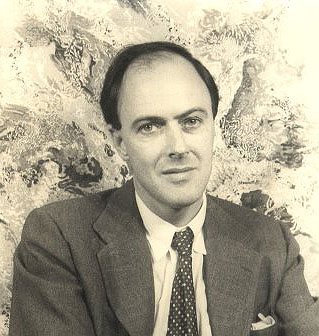 Roald Dahl was one of these. In old age, he often jokingly described himself as an ‘infantile geriatric’, or a ‘geriatric child.’ He was utterly confident that he still saw the world with a young boy’s eyes and once told me – with a proud twinkle in his eye – that he thought most adults were quite incapable of doing so. Dahl was an inventor of stories, and something of a fantasist, but he retained a razor sharp memory of his childhood. He could recall with ease the thrill of cycling down a hillside with no hands on the handlebars, the tedium of interminable Maths lessons, and the sensation of having a world of giants always looking down on you. More remarkable however was the fact that he also retained a child’s natural ability to invent and imagine, to live in the moment, to stop and stare and wonder at the marvels and mysteries of life – to recapture what Dahl’s friend and admirer John Betjeman described as the period “measured out by sounds and smells and sights, before the dark hour of reason grows.”
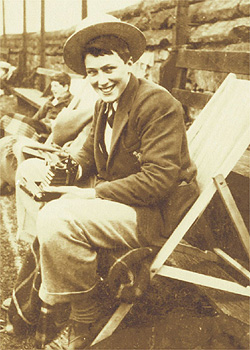 Dahl celebrated beyond measure the human capacity for fantasy, subversively exhorting his readers, young and old, to observe the world with “glittering eyes” because “the greatest secrets are always hidden in the most unlikely places.” In a similar vein he attacked the tyranny of contemporary information culture, when he argued that the nicest small children were those who have been “fed upon fantasy” while the “nastiest” were the ones who knew only a diet of facts. He was being deliberately provocative of course. But his celebration of playfulness, even of frivolity and silliness, had an important message – one that is all too easily forgotten in this current age, where observation and plain speaking are so out of fashion. Echoing many free thinkers before him, who tempered the sophistication of adulthood with the wide-eyed imaginative inventiveness of youth, he issued a plea to observe the world with fresh eyes, free of preconceptions and conditioned responses.
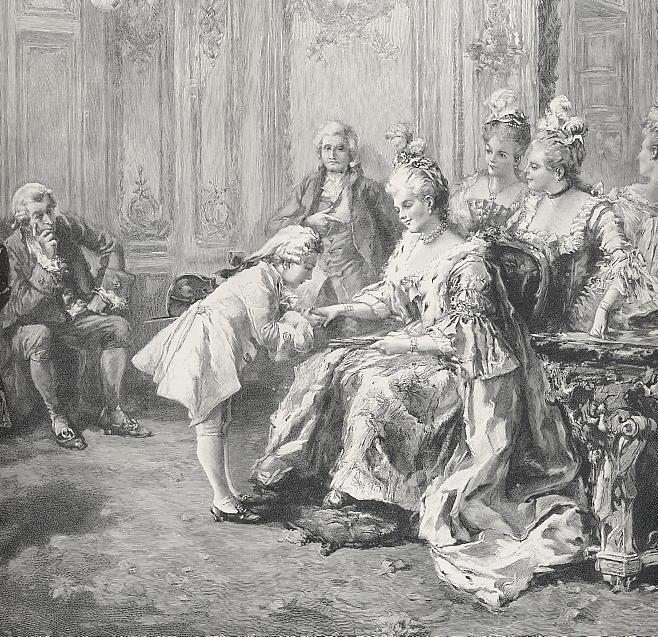
Some of the greatest composers possessed this aspect to their personality. Wolfgang Amadeus Mozart, for example, was composing operas of wit, elegance and refinement aged only thirteen. As an adult he became a revolutionary of refinement, whose compositions reached dizzying pinnacles of poise, finesse and urbanity. Yet alongside this cultivated wisdom, he treasured his child’s sensibility, delighting in pranks, jokes, scatology and invented languages until his untimely end, aged only thirty-five. The earthy wit of his final opera The Magic Flute remains testament to the sixteen-year-old, who on tour to Italy, joked to his father about the sights, sounds and smells of the Merdeiterranean.
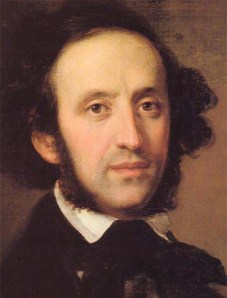 Not all child prodigies managed to hang onto that freewheeling joie de vivre. Like Mozart, Felix Mendelssohn Bartholdy was at the peak of his powers as a teenager. His magnificent Octet was composed in the autumn of 1825 when the composer was only sixteen and was partly inspired by the vision of an orchestra of flies, frogs, crickets, mosquitoes and a bagpipe blowing soap bubbles. It sent what one listener described as “an electric shock” through its first audience. Mendelssohn however would find that, in adulthood, his child’s eye grew dim. Though he too did not reach the age of forty, many of his later compositions lacked the wit, exuberance and daring originality of those from his chldhood. They became bogged down by a self-conscious desire to be serious.
But a desire for grandeur need not necessarily cloud the eyes of youth. Fifty years after Mendelssohn, Gustav Mahler was writing symphonies of unparalleled scale and ambition: works that he believed would embrace and express the universe. Yet he repeatedly drew on his childhood memories of nature, military bands and folk-songs when he needed inspiration. When analysed by Sigmund Freud. What did he talk about? His childhood. And many of his greatest and grandest symphonies drew on The Youth’s Magic Horn, a collection of poems which had thrilled him as a teenager. The verses are filled with innocence, humour, wit and perhaps, most of all a fantastical sense of wonder at the mysteries and strangeness of the world.
For Benjamin Britten too, childhood was a complex cocktail of emotions, among which was an acute awareness of the unexpected power of innocence and vulnerability. This also remained an ever-present force throughout his adult life. When asked why he wrote so often and so well for children, Britten is said to have replied: “Because I still feel like I am thirteen years old.’ It was something that also cemented his attraction to Christianity, with its regenerative belief that a ‘little babe so few days old’ alone had the possibility to ‘rifle Satan’s fold.’ Clearly all these writers and musicians retained their own distinct sense of childhood. However there was surely something in the child’s sense of magic, of an imaginative world untarnished by the compromises and cynicism of adulthood, that was also universal. This “spirit of youth” enabled each of them to be unselfconsciously original, daring and new. Each was always irrepressibly young at heart. It is a shame that this freshness of response is not more widely celebrated by more of today’s educationalists and politicians, who seem all too eager to see the world through the dull lens of examinations, targets, certificates and qualifications. In downplaying the importance of original thought, they would do well to remember the words of the mathematician and storyteller Lewis Carroll, who complained that he would “give all wealth that years have piled, The slow result of Life’s decay, To be once more a little child, For one bright summer day.”
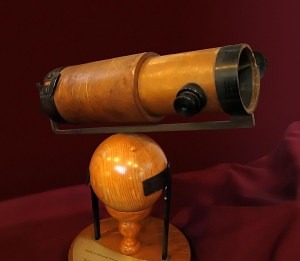
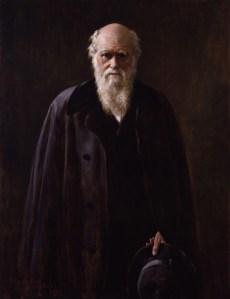
And it is not just the world of the arts that might benefit from such an approach. Two of Britain’s most brilliant scientists were sustained by their own child’s eye: Charles Darwin and Isaac Newton. As a child, the playful inventiveness of the former infuriated his teachers. As an adult, that same quality would enable him to rewrite the fundamentals of biology. Newton personified his attitude to knowledge as being that of a child, writing that he saw himself “like a boy playing on the sea-shore, and diverting myself now and then finding a smoother pebble or a prettier shell than ordinary, whilst the great ocean of truth lay all undiscovered before me.” If only more people could take this metaphor to their hearts, the world would surely be a happier, more imaginative and more exciting place in which to live. Donald Sturrock – Feb 2011 Donald is profiled below. The next Phoenix Ark essay will be by the Historian Saul David. The images are Dahl in adulthood, and in Repton School uniform, Mozart visting Madame Pompadour, Mendelsson, a replica of Newton’s telescope and Collier’s portrait of Charles Darwin.
Filed under Childrens Books, Culture, Science
 Phoenix Ark's Blog