Category Archives: Education

NOTES ON THE CIA AND OTHERS

We still think there is a fascinating book to be written on Allen Dulles in Switzerland and his involvement with a close group in Berne, including an American heiress and a Swiss Banker, as well as ALIU, the Art Looting Investigation Unit set up after the war. If you can ever get to a truth in the smoke and mirror world of spies, part of the story we believe is concealed in documents still classified under the Safehaven Papers. We did not find any smoking gun, indeed Dulles’s involvement is rather thrilling, but there is certainly a story to be told. It has been touched on in the academic collection of documents On Hitler’s Doorstep. But our story involves the diaries of Count Ciano, smuggled into Italy by his wife and Mussolini’s favourite daughter, Edda, British and American agents working together, Drew Heinz, the hugely rich American heiress and figures like Colditz escapee Pat Reid and the painter Balthus. It also involves a story that caused a spat on the Internet about how downed American airmen were treated at camps like Wilmeroose.

It was fascinating though how uninterested literary agents have been, and especially in America. Apparently they will not touch books on the CIA, though of course then it was still the OSS, unless handled by well known academics. Rather a waste of important historical documents too, like a letter by Mussolini’s daughter on Hitler’s attitude to women and of a very dramatic story in Switzerland. Sniffing into it at the National Archives in the UK we found reference to a wireless set installed at the British Legation in Berne, just as we have a record of Drew Heinz’s one time husband Dale Maher calling himself ‘Master of the Five by Five’, the best Nato radio signal possible, but requests for access to documents have simply been ignored. As official MI5 Historian Christopher Andrew once said, one of the richest sources of intelligence history is in neutral territories like Switzerland, for obvious reasons, namely they became critical vantage points.

Leave a comment

Filed under America and the UK, Education

DERREN BROWN AND ROBERT KENNEDY

The Channel 4 programme tonight, courtesy of that supreme hypnotist Derren Brown, in his new series ‘The Experiments’, was both extraordinary and terrifying. He hypnotised an ‘ordinary’ member of the public, which clearly means one most susceptible, to assassinate Stephen Fry on stage. Of course the bullets were fake, but the controlled ‘assassin’ believed everything was real, and was also immediately programmed to completely forget. He went into Marksman Mode, on hidden camera, which had also remarkably increased his capacity on a firing range, and then into Amnesia Mode, and went through with it right to the end, with Stephen Fry’s public collapse, complete with fake blood capsules.

But the point of the show, beyond the raw entertainment, was Robert Kennedy’s assassination in the Kitchens of the Ambassador Hotel on June 5th 1968. The assassin Sirhan Sirhan, a Palestinian immigrant, claimed, a claim still maintained in prison, that he did not and does not remember a thing, and for weeks before too, except the famous woman in the Polka dot dress. Polka dots where also used as a trigger by Derren Brown to bring on his subject’s hypnotic trance. So pointing to mind control programmes, to train and operate assassins, including those like MK Ultra, which were operated by the CIA.

Derren Brown’s mastery is to open up the whole truth to the public, probably as extraordinary about the human mind as any illusionism, but this programme must surely lead to a reinvestigation of the Sirhan Sirhan case. There was the theatrical element in Brown’s experiment, one of familiarity too, namely that it was still done in a theatre, where Stephen Fry was talking, and that the subject also believed he was participating in one of Derren’s TV shows, in a different capacity. But it was hugely convincing and very chilling indeed. Can Brown re-hypnotise such a person as Sirhan Sirhan – refused parole repeatedly, partly on the grounds of not showing enough remorse, let alone recall – to remember more of those tragic events, if that is what happened? Though if it was mind control, as now has been proved is entirely possible, the sinister truth has probably been long hidden in the files of secret controllers, who ever they might have been.

Phoenix Ark Press has published an article on Allen Dulles, WWII hero in Switzerland, much loved internally and lionized CIA Director, lawyer at Cromwell and Sullivan, and someone who during the Cold War became involved in assassination programmes. The CIA developed out of the OSS and Roosevelt’s proscription they should use any means, including Black Ops, to fight the Nazis and a World War, at every level. Dulles became supremely adept at it in Switzerland, the model for the character in the film The Good Shepherd, but it was of course Bobby’s brother, JFK, who famously said of the CIA that he wanted to ‘scatter the organisation to the four winds’. Dulles was also involved in programmes like Operation Mockingbird, to influence the American Media against his and the West’s post war obsession, Communists.

3 Comments

Filed under America and the UK, Education, Science

THE 9/11 MOSQUE

The documentary on the 9/11 mosque was rather sad. Firstly the anti camp, begun in a blogging campaign, fully using and enjoying the media hunger for story, it seemed to me, and talking about a ‘Victory Mosque’, and how Islam has always built on places of Jihad, and their conquest of ‘our’ holy sites. There is obviously a strain in unreformed Islam that has produced appalling militancy and extremism, and that needs to be talked about – isn’t it inevitable when you hold to Sharia Law? – but if we are talking about an ancient ‘clash of civilisations’ that those voices want to stress, try studying the history of the Crusades. One of its great lessons is the Christian Crusaders, armed with their own concept of Holy War, were astoundingly brutal and a lot more tolerance came out of Islam, at different times, not least allowing Christian and Jew to live and worship as ‘people of the book’, taxed of course! Look back in history and you can find many justifications for your argument, but try living in the now and the future. History is not a ‘fact’, it is a way of deepening, civilising and creating a living culture but their point, I suppose, is they enjoy that clash of civilisations.

One of those antis also mentioned another clash of civilisations, capitalism versus communism, and it is perhaps the key to modern American side-based thinking. But then you got the half polish New Yorker who is trying to establish it, two blocks from Ground Zero, saying ‘I’m naard (Not) a humanitarian, I’m a capitalist’, clearly seeking a meaning and community though, and comparing himself, as a property developer, to a ‘shark, used to gobbling up the seals’. So suddenly having to deal with something far more sensitive, was clearly a shock. In fact, though there is a lot commendable in protecting those innocent and frightened Muslims in New York who went underground, he did seem rather naive, and insensitive to the families of all those people who died, and others. Though I am not sure about the blogger’s comment ‘we’re all the families of nine eleven, they just took the hit for us.’His first Imam sponsor though was apparently talking about an ‘interfaith’ centre anyway, not a mosque, while another moderate Imam stressed that his own concept of Islam meant ‘peace‘ and demanded respect for other’s wishes and pain, so it was an insult to put it there. One of the best was the American father of one of the victims, saying something loudly about freedom and responsibility. ‘We know you have the right, but sometimes a hero is made by not exercising that right.‘ The fact is the guy’s personality did him very little favours and why not establish the right, on private property, as Obama supported, in a country that crucially defends the freedom of worship for all, but still take it somewhere else. If that is hard, in New York, seek help for it, and don’t worry about others who try to gloat.

1 Comment

Filed under Culture, Education, New York

RIOTS, WATERSTONES AND A BONEFIRE OF THE VANITIES

An American academic friend wrote today to ask me ‘so David, what’s up with your people?!‘ Good question. It seems to be one of the favourite moments in the movie Indianna Jones and The Last Crusade though, certainly mine, when Indy bumps into Hitler at the Berlin books burning and the Furher signs his diary. Someone pointed out that the sequence is set in 1938, and the book burnings really happened in 1933, but we already know that fantasy plays with fact, and Spielburg always does that brilliantly. Before the US or anyone starts to gloat about London though, I was, before my recent attempt to leave behind a bad ‘past’, going to use it to create a viral video and attack not what is happening in London, but my American publisher Abrams, for their own attitude to my books, and to free speech too. Because when a publisher does that to its own author and work, in a kind of bonefire of the vanities and values, something is seriously wrong.

But now London has been burning, a point came up on Newsnight yesterday from a ‘Free School‘ proponent about the search for ‘bling‘, quick cash and the fact that you have not seen looters attacking Waterstones, only the trainers stores, mobile phone shops and bookies nearby (as in the gamboling shops, not the printers or binders!). Of course, it makes the very good point that there is no deeper social statement being made, it is a mix of frustration, aggression and directed criminality, but it’s also a very middle class thing to say. It would be almost reassuring to see our angry youth trying to break into Waterstones, to get their hands on bundles of The Master and Margerita, The End of the Affair, War and Peace or Brazzaville Beach and flog them down the Old Kent road, or read them to each other by bonefire light. The bigger point, of course, is the frightening figures suggesting 17% of 15 year olds are functionally illiterate, fed by the addictions of the image, MTV values (coming out of America too) and all the hypocrisies that Big Brother, Celebrity and fame obsessed culture engenders. In the modern crisis of publishing too though, in the spawning of celebrity biogs, ‘ how I made it rich’ tales and the decline of writer’s voices in the democratisation of publishing methods, there are subtler ways of producing real book burnings at work. But people need to be literate in a great many ways. Reading literate, emotionally literate, professionally literate, legally literate and especially socially literate. Something like one in three London parents also say they are not confident enough to read aloud to their children, and that storytelling process is a key part of bonding, mentoring and sharing values.

Apart from the policing questions though, and political grand standing, apart from economic and moral arguments, especially about family and community structures and responsible mentoring, in the ‘am I my brother’s keeper?’ mould, there needs to be a very real debate about culture too and what, if anything, it means nowadays. About the decline of communities, the dislocations of social networking and perhaps, above all, about the shift from a reading culture, to a visual and news driven one, twenty-four hours a day, that is itself massively addictive. The eye finds it hard to resist a moving object. Not only are markets connected world-wide though, but so is a Western world ‘culture’, and to be frank, especially with my own New York publishing experience, there are many bad things to say about that too. I remember very well being in New York though when there were minor riots, because of a limit on the number of Playstations available, so perhaps no-one is immune. Wouldn’t it be nice if we could all sit down together and read a good book! In the pro-free speech and anti-book burning argument though, it is the paradox of freedom that we probably need less forms of entertainment and product, not more, just more of a sense of some shared culture and one that brings both value and meaning.

The photo shows the Wikepedia photo by David Shankbone of books burned by the Nazis, at the Yad Vashem memorial.

2 Comments

Filed under America and the UK, Books, Community, Culture, Education

CHARLIE WILSON AND THE ZEN MASTER

I saw Charlie Wilson’s War the other day, with that great actor who played Truman Capote, Philip Seymour Hoffman. He was very moving talking about his new film recently, and especially about love. With the risk that we just have to take each time of getting hurt, even if in five or ten years time people may not even like us, let alone love us. But the story in this film is of the almost privately begun covert war in Afghanistan, between the US and the Soviets, and is quite extraordinary. Charlie Wilson pushed the military precurements budget from $1 million to $1 billion. Afghanistan was one of the reasons for the collapse of the Soviet Empire.

Yet, of course, half the film’s point was the civil war that then began, the arrival of the ‘crazies’ in Kabul, who the Taliban were originally the heroes against, in bringing some kind of order, and the perhaps inevitable betrayal of various idealisms. It was tragic when you saw Wilson arguing hopelessly for a $1 million to rebuild a school, only to be told no one was interested in schools. So the budget was about the military industrial complex, and the judgeable victories of war waged in high places, but the history of the world has been others suffering the damage of international conflicts. No more American bashing, yet there is great truth in the observation that the US is a country of real and high idealisms, even innocences, that at times can be atrociously blinkered and superficial, masking the true hardball. As Wilson said “These things happened and they were glorious…and then we fucked up the peace.

I loved the CIA man played by Hoffman though, perfectly open about wanting to kill some Soviets and do his job, yet strangely humane. He tells the story of the Zen Master who, when an Afghan boy was given a horse, and the villagers asked him if he agreed it was wonderful fortune, answered ”We’ll see’. The boy promptly fell off the horse and broke his leg, and when the Zen Master was asked if he thought it was terrible, answered ‘we’ll see’. Then war came and half the young men went off to fight and got killed. Except the boy with the horse and the broken leg. Life’s that all over, and so’s love, so as for Afghanistan now, or the everyday, perhaps the only response is always ‘we’ll see!

Leave a comment

Filed under Culture, Education, The Arts

AN AMERICAN SENSE OF HISTORY?

I’m a bit worried that anything I say about the US might be tinged with events in New York three years ago! However, looking into the subject of ‘Spatial Humanities’ recently and a NY Times article on Gettysburg, The Salem Witch Hunts and the modelling of events, temporally and spatially, does remind me of the tours I did in American schools. It worried me that in many schools there History is not taught on its own, but as a ‘Social Science’.

It rather begs the question of what History is ‘for’. I realise that in the UK there has always been a cultural split between the ‘geeky’ scientists and the ‘poetic’ Historians. I actually love science as much as history, and on one level Spatial Humanities is attempting to unite all disciplines, and especially the ‘two languages’ we carry in the world, that I’ve talked about elsewhere. The problem for me is that somehow history must be an art, not a science at all, so be about listening to the mind and sensibilities of historians talking about the past, for no other purpose than deepening the human dialogue and creating cultural depth.

So to teach History instead as Social Science presupposes some kind of ‘Telos’, some unfolding purpose, just as the Marxist Historians argued for, or much like some of the voices that come out of Right Wing America, arguing that the US is the freest and greatest Nation ever, or that we must somehow all stop dead at the 11 O’clock school bell and swear allegiance to the flag. To us that is a kind of cultural brainwashing, and you might speak of the facts that came up last night on a repeat of the Quiz show QI, saying that America locks up one in a hundred of its citizens, on the ‘3 Strikes and You’re Out’ model, more than any Nation on eath, ever. The figures for young blacks in prison now are even more frightening. In one sense though, History, and the study of cultures, should have no obvious purpose at all, but like literature, be a chance to explore greater truths across time, and imaginatively examine, for good and bad, the entire human condition.

Since I clearly can’t resist a bit of New Yorker bashing, the depth of sensibility and awareness I met from my own partner, and then at my own American publisher too, was astoundingly limited. Almost instantly, and from my own editor of ten years, it became about ‘sides’, ‘You’ and ‘Us’, like re-fighting the Alamo when I was supposed to be in partnership with a firm, to create. A very onesided partnership because of all the money they generate elsewhere, and when another very personal partnership had been so harmed along side it. Some people call it ‘Ego Consciousness’, brilliant at arguing for individual ‘rights’, and snap decisions, or being shocked by something out of the mould, but terrible at seeing a bigger and truly human picture, warts and all. Terrible when you find that at the heart of a prominent publisher.

There are many exciting things about Spatial Humanities, which educationally is about the vivid engagement of the student in a world that is increasingly defined by technology, and this place you are looking at, the Cyberverse. Yet there is also the danger of turning all human history into some glorified Computer Game, and we all know the dangers and addictions of that. Actually, anything that takes us further away from the human, so contained in great history and great literature, is fraught with dangers. Keep to the human. DCD

Leave a comment

Filed under America and the UK, Culture, Education, New York

PHOENIX ARK PRESS RELEASE

Phoenix Ark Press are delighted to announce the publication of Leonardo’s Little Book of Wisdom, compiled and introduced by the historian Foreman Saul, who is profiled below. An essential guide to the Master’s life wisdom and wit too, this unique selection, from the translation of Leonardo’s notebooks by Jean Paul Richter, will lead you through a genius’ insights into science, painting, nature, religion, God, love and death. Interspersed with Leonardo’s mostly humorous prophecies, it brings the man to life in a vivid new way and is done to celebrate the Discovery Channel’s coming forensic series on Leonardo’s painting and, of course, the National Gallery’s ground-breaking exhibition in London this autumn. What better way to walk through life than in the company of a true giant?

Leave a comment

Filed under Books, Culture, Education, Non Fiction, Science, The Arts

THE 6TH PHOENIX ARK CULTURAL ESSAY

ART AND HISTORY: BLURRING THE LINES by Saul David
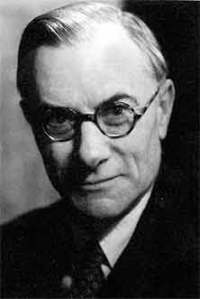
It is 40 years since the liberal Marxist historian E.H. Carr published his celebrated ‘What is History?’ As a young student in the 1980s I was intrigued, and slightly alarmed, by Carr’s contention that all historians are subjective, in the sense that they choose which ‘facts of the past’ to turn into ‘historical facts’; and that you should always study historians – and the potential bees in their bonnet – before the facts. ‘When you read a work of history,’ he wrote, ‘always listen out for the buzzing. If you can detect none, either you are tone deaf, or your historian is a dull dog… By and large, the historian will get the kind of facts he wants. History means intepretation.

Yet Carr was convinced that history was a social science and not an art, because historians, like scientists, seek generalizations that help to broaden their understanding of a subject. He felt that while historians could not predict the exact future, their generalizations could give an insight to both the present and the future. It all sounded pretty convincing to me – as a student. But as someone who has since taught history at university, written both popular history and historical fiction for commercial publishers, and presented history programmes for TV and radio too, I find it increasingly hard to see history as an academic discipline, let alone a science. Most professional (or academic) historians are taught, and teach in our turn, that the unpublished and preferably untouched archive – first-hand and contemporaneous – is king. But is it really to be trusted? Most works of history are constructed from a mixture of incomplete and often partial sources – both primary and secondary – that can mislead, as well as illuminate. The very records themselves available have often been ‘written by the winners’ and even at its best and most reliable (in the sense that the author has not actually made anything up, or deliberately omitted details he knows will undermine his argument), history can give no more than a hazy artist’s impression – almost like an early daguerrotype – of a past event or period.
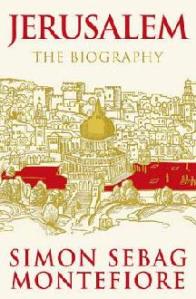
Does this make the writing and study of history a pointless exercise? Not at all. Even in its typically biased and unsatisfactory form, the best history can still give us some insight into the past and, potentially, the present and the future too (and to do that it does not require Carr-ite ‘generalisations’). Certainly most political crises are rooted in recent (and occasionally longer-term) history, and can only be properly understood (and potentially fixed) if decision makers are aware of the historical context. The key players in the Palestine peace process, for example, would do well to read Simon Sebag Montefiore’s even-handed Jerusalem: A Biography. Yet it is of course a cliché that the greatest lesson of History is that no one learns the lessons of history. If that were not so it would be to imply that there is something teleological to History itself, moving to a Telos, an unfolding purpose, and giving some perfect ‘lesson’. Much as Fukayama tried to imply, with his rather idealistic best-selling thesis on ‘The End of History’, by suggesting the liberal Nation State is now the accepted solution to those supposed lessons. But what happened after 9/11 and in Iraq might suggest the opposite and, of course, unless you are a Marxist, History is not deterministic, things not inevitable, though they may seem so viewed in hindsight. Which is why the ‘artistic’ and ‘intellectual’ values of good histories themselves, to influence culture and insight, and affect contemporary decision-making, so vitally comes into play. That is History as dialogue and living culture.
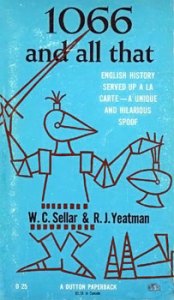
Which brings me though to the concept of history in fiction and literature. Since the recovery of the past is to an extent an act of imagination, involving the prejudices and capacity of the beholder, can the novelist, with their perceptions of reality, character, why and how things happen, not get just as close to a possible reality of ‘what really happened’, or ‘what it was like’? Tolstoy believed so, being the kind of auto didact who would brook no other perceptions of truth. People famously marvel at the human truth of his fiction, War and Peace or Anna Karenina, yet dismiss his theories on history, which at times approached the almost scientific, the atomically deterministic, in his ideas on the lack of free will, or the mysterious actions of the Russian soul in defeating Napoleon. Yet actually those dismissed ‘Historical’ ideas were probably essential in turning him into the kind of prophet he became, who ended up dismissing the value of fiction too. There is the theory too that History should actually just be a growing collection of personal biographies, although again comes the question of how good, true or biased is the biographer, since you tend to fall in love with your subject. From the artist’s perspective, a great writer like Bulgakov believed that you could only get to the truth of an artist’s life by trying to inhabit his very style, much like Keat’s ‘Negative Capability’, and hence his glorious ‘storytelling’ of Moliere’s life.

Must there not be rules or at least standards though, beyond the complete acceptance of the subjective, and moving towards the purely fictional? If history itself often becomes a fact of cultural bias, or propaganda, do the problems of Historical truth make it acceptable that Hollywood often takes such extraordinary liberties with historical fact, or that dictators do? I do not think so, British writers on the Second War do not think so, especially for serious ‘world’ histories. Or is there a fascinating cultural space in the Dream Factory where American or British voices, playing Roman generals, in language suitable for 1920’s Chicago, proves that we are all always being strangely translated, like Bottom in a Midsummer Night’s Dream?
Then you might move intellectually into the realm of modern scientific insights into Space-Time, and ‘reality’ at the subatomic level, the Quantum perception that the viewer affects the experiment, and wonder what it is we are truly perceiving, and with what mechanism, or who gets closer to truth, the historian, the scientist or the artist? Perhaps only all together, and of course ‘truth’ itself is a loaded concept. Like Wittgenstein’s perception of the imprecision of language then, should we just define truth as a guiding ‘tool’ to that ‘which is not false’? That is the rigour of not falsifying fact, yet the motivations of human character and action are always filled with falsehood, as truth, and influenced by prevailing beliefs too.
Studying A-Level history, I had two very different teachers: one who gave me a stock answer to particular questions; the other insisted there was no one answer, and that we were to construct the most plausible scenario from the evidence available. I thought the latter lazy and misguided; only later did I understand that history’s value is to train you never to shut your mind to an alternative scenario. It really is, as Carr put it, ‘an unending dialogue between the past and the present’; and one that relies more on a historian’s instinct (particularly about human behaviour and motivation) than is generally admitted. Maybe this is why so many historians (myself included) have recently turned their hands to fiction. For only by removing the shackles of so-called historical methodology – including the strict embargo on supposition and extrapolation – are we able, finally, to get close to the ‘truth’. I suppose, for each of us, its value and quality, in a living cultural sense, depends on both the rigour and depth of our own imaginations and, as in many disciplines, what really matters are the kind of questions we are willing to ask about what is ultimately important to us all. Saul David March 2011, with suggestions and editorial by David Clement-Davies.

Return to Cultural Essays

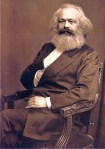
The pictures are public domain photos from Wikipedia and the Guardian bookshop and show EH ‘Ted’ Carr, a rare cover of Seller and Yeatman’s classic, Jerusalem the Biography, The Tao of Physics, and Karl Marx. Saul is profiled below.

Leave a comment

Filed under Books, Education, The Arts

Seeing with Samson and Delilah

I think it was Dr Johnson who said ‘nobody but a fool ever wrote for anything but money’. A chance quip doesn’t make the philosophy of a man, but perhaps that makes everyone at Phoenix Ark, and the 17 million daily word-processing WordPressers too, fools! Perhaps they should see it in ‘holy fool’ terms, like Dostoyevsky’s Idiot, or what Jung said of how we lose the wonder of being alive by not just leaning forward in a train and expressing what a beautiful day it is. In fact, whether lay person or professional author, the key is connection, and even having one engaged response to what you do can be hugely rewarding. It also gives you a chance to express without any wider intention, or need, and perhaps see in a different way.

Seeing, and the story of Samson and Delilah were and are a central theme in the unpublished Scream of the White Bear. A story about belief, the word, and the blinding loss of the redemptive feminine to the male psyche, inside and out. It was wonderful then to see Warwick Thornton’s spare little masterpiece Samson and Delilah. Set among Australian aboriginals, and a teenage love story, it is brutal and ultimately beautiful, stressing above all how so many lives are not lived in words at all, especially at a particular age, and in different cultures. The ‘religious’ themes, the supporting metaphor of story, are only glanced at, with mourning and the tradition of hair cutting reflecting Samson’s loss of power, and a rape and a haze of petrol sniffing, blocked opportunities and a poverty of connection, there to reflect the biblical blinding, the loss of hope.

This Samson is just a kid, trying to find a way, love too, and decidedly unheroic, except for his first tilt at a girl. His Delilah, who he loses sight of in his loss of power, is the heroine who turns everything around. Thornton is aboriginal, and says he hardly learnt to write at all, and the script is virtually non-existent. Instead we have a very raw reality, and the final redemption, the final understanding of what love might really be made of, is one of the most eloquent things I’ve seen. Though raising money was no problem, Thornton did not want the vast ‘circus’ of big budget film making and it is the integrity of the story, its truth, that inspires and wins the day. Perhaps where the heroine suddenly gets a gun from to hunt Kangaroo, in a story that is also partly about brutal economics, is glossed over, but it’s great, and hard to put into words. Thornton is also passionate and moving about the lack of chances and support given to kids, by whites and aboriginals alike. DCD

For the website just click

Leave a comment

Filed under Culture, Education, Environment

TRAVELLING VOICES

I thought of a great newspaper travel column idea once, walking along down Fifth Avenue in New York. Namely broadcasting snatches of conversations overheard abroad, foreign or home voices, in different places.

One just happened walking down the Via della Croce in Rome, with some American voices.
Gorgeous foreign scene: Tired, rucksack carrying family, walking towards the Spanish Steps.
Blonde woman: ‘Honey, I’ve no idea, I think we’re lost.’
Pause.
Dark man: ‘No honey, just up there’s the American Steps.’
Er – no, but hopefully just a slip of the brain!

Leave a comment

Filed under Education