Published work on Edmund Shakespeare, London and Southwark, back on July 1st 2012, was too long, so it has been reworked into short storytelling chapters, the first of which starts today. There are still a few errors, or slight mistakes to be checked back with our original notebooks, though there are very definitive elements to come too. It is a thrilling adventure in Shakespeare and local history. The chapters will become part of the project Shakespeare’s Brother, posted above. Readers are very much encouraged to write in with corrections, or to point out glaring errors.
SHAKESPEARE’S BROTHER – The biography of a borough and an unrecorded life
by David Clement-Davies
Our revels now are ended. These our actors,
As I foretold you, were all spirits and
Are melted into air, into thin air:
And, like the baseless fabric of this vision,
The cloud-capp’d towers, the gorgeous palaces,
The solemn temples, the great globe itself,
Yea, all which it inherit, shall dissolve
And, like this insubstantial pageant faded,
Leave not a rack behind. We are such stuff
As dreams are made on, and our little life
Is rounded with a sleep.
William Shakespeare
The Tempest, Act 4 Scene 1
Shakespeare’s Brother is an original and relevant look at Elizabethan Southwark, 400 hundred years ago, with new evidence in the search both for a poor player, Edmund Shakespeare, his brother William, and kinds of brother and sisterhoods in life and art. New discoveries, like the history of The Vyne, or pleyers on St Lucy’s day in St Margaret’s Church, a hundred and fifty years earlier, and links to the Bishop of Winchester, are, as far as I am aware, ground-breaking.
It also attempts an approach not taken, which is to go backwards through time, from perhaps inevitably sad endings, to brighter or more mysterious beginnings. The story will turn pages with all the energy and excitement of James Shapiro’s hugely readable 1599. Yet in a way more attuned to the spirit and language of a fluid time, and perhaps the wider purpose and mystery of art and theatre.
For you, them and your children
SHAKESPEARE’S BROTHER
CHAPTER ONE –
Down the Borough.
“The past is prologue.”
Like any traveller venturing onto the shifting sea of words, it’s wise to trim your sails in a squall, and make for some safe, if temporary harbour. My slack sheets started to flap when an agent said she would like to see a novel of late 16th Century London – Shakespeare’s Brother.
Brother? The number of people who have said they had no idea Shakespeare even had one made me at least confident of a cargo’s value. If not, like Antonio in The Merchant of Venice, of its certain arrival in port – Venice, Antwerp or London.
In fact, Will Shakespeare had three brothers – Richard, Gilbert and Edmund. This story, and part story it is, does not support any theory surrounding the 17th Earl of Oxford, Edward Devere, as real author, nor Francis Bacon or many others. Nor that we do not know enough to write about Shakespeare, or of a family either.
Although it does ask what gets into a public consciousness and how, and treads more carefully than Giordino Bruno, falling into a pool of London slop, that nearly drowned him, and with respect for original documented evidence too. While challenging what we know, how studies, controversies and shibboleths have developed, even what identity itself might be, and why art is so important and universal a human need.
It is why a project tacked in that rising wind though, from very imagined fiction, to some kind of detailed social history. Although, I hope with a sense of play and fun too, as Shakespeare is so playful, and so much fun. As an actor or director, indeed student, you should never approach him with too much worthiness. If, for any miscarrying cargo, perhaps everyone writing about Shakespeare needs a Portia bravely on their side, suing for some quality of critical mercy.
I certainly never knew William Shakespeare had a youngest brother, Edmund, and a ‘player’ in London too. Although Will, an actor himself, reached much greater heights than the sometimes considerable skills and courage of actors.
How much in the Shakespeare critical cannon though has been written about specific family contexts, beyond glove makers like John Shakespeare, Hathaways or second best beds? Much is dismissed as speculation anyway, shots at truth, which can often misfire and burn down the thatched roof of real ‘history’. Like that theatrical cannonball in 1612 that set fire to the first Globe. It was put up again immediately, in 1613, and better, so disaster has its benefits too.
At least it seems a truism that William Shakespeare shared the most fundamental template we all do, the vital experience of our own families. Unless orphans, or only children, the influences that can block or encourage very significantly indeed are siblings; brothers and sisters.
Not to say brothers naturally like one another, spend time together, or find the kind of Arden forest reconciliations achieved in As You Like It. Indeed, as men break out to find their own families, and make new worlds, or remake old ones, others are affected inside families and there is far more possibility for violent contention between brothers than between sisters. Although the experience and consciousness Shakespeare gives to his great women can be extraordinarily liberated and ‘modern’.
It is an obvious subtext of this book to ask what brotherhood means, in a family, but wider metaphor too, and if Shakespeare did not simply find an obvious and more important brotherhood far from home, among London artists and players. As it asks what kind of company we would all like to keep in life, and how we really define ourselves.
“We few, we happy few, we band of brothers.” Henry V’s very human rallying cries are addressed to the needed comradeship and loyalty of arms, but voiced in the performing comradeship of a theatre company, on a wooden stage. Of course, if in Elizabethan times often avoiding the nasty reality of actually being called to war, both writers and actors can be an extremely vain, back biting or competitive lot, cowardly too, and in a world where fictions had far more likelihood of erupting into dangerous fact.
In the 16th Century Ben Jonson killed a fellow actor in a duel in Shoreditch, and players got training at Rocco Bonnetti’s Fencing Academy in Blackfriars, it seems with a few spies, and with real swords. This was not our world of Health and Safety then, we often complain about, as another misfiring cannon in a theatre killed a woman and child in the audience. Small beer to a collapsing Bull Baiting ring that killed hundreds, in a kind of mini Hillsborough.
But just as the novelist and Shakespeare biographer Peter Ackroyd stresses the reforming of Lord Strange’s Men in 1596, or the bequest of mourning rings and some shillings to Shakespeare’s ffelowes in his will, so this book stresses that a rare little brotherhood, with exceptions, stayed together for over 25 years.
Even lovers rarely exist in a bubble though, or are always challenged in the ‘real’ world, and all relationships are about a matrix of others. I think Shakespeare’s immediate family a very neglected field of study, certainly an important glass to look through. Not only for a person, Will or Edmund Shakespeare, but for a city and a time too, that tells a largely unknown story. Indeed, I believe he is, as a writer of real human relationships, so much about families, or how you get to them or loses them, and the structures of his own family is written across the plays. Although this is not exactly an academic book, more a creative journey through facts and fictions.
I wasn’t hugely interested in Will’s family either, or disturbing the myths, beyond visits to Mary Arden’s House and the Shakespeare Birthplace Trust in Stratford-upon-Avon. Certainly now part of ‘the industry’ some have attacked it as being, like that sometimes odd “RSC Land.”.
Like many, I twitched at representations of Will on TV or in historical novels like At the Sign of the Bell. The tendency too is to make it Shakespeare’s time alone, because he gave us so much language and metaphor to speak of it, and ourselves, which it was not, and so in fiction at least, the danger of blundering into pastiche and anachronism.
Those were strangely sacred early visits to Stratford though, contemplating an author who is both rebellious but has a deep instinct for the sacred too. Perhaps a kind of secular sacredness, even if scholarship is returning to his ‘Catholic’ sentiments. But out of an instinct and inheritance that stretches far beyond any family experience too, even to the healing traditions of ancient Greek drama, in those cathartic rounds that also had gymnasia attached, and snake pits dedicated to the worship of the God Asclepius. Shakespeare’s ‘Gods’ of inspiration could be very big and potent indeed.
A sense of the sacred for me, like first walking into a theatre space itself; a writer, but once a hopeful actor too, and bit of a stage hand. A place that is itself enormously liberating, and must have been for Shakespeare as he began to build and walk about the echo chambers of his own imagination. But the plays were the thing, and still are, in so many regards. While my feeling was Shakespeare left his past behind in many ways. Perhaps it was a driving factor, even if “the past is prologue.”
While we know William Shakespeare of Stratford married Anne Hathaway at 18, the Bard had had four sisters too, in a family of eight children. Only one, Joan, survived to marriageable age. One, Anne, died at the age of seven, and two others, Margaret and another Joan, in infancy. He of course had his own children, a son, Hamnet, and two daughters, Susanna and Judith, the girl twin of Hamnet.
But it was this missing Edmund Shakespeare who first caught a storyteller’s imagination, and then a partly trained historian’s, perhaps because, like me, Edmund was a youngest son. William was the eldest, and we know his amazements, if we still stand in awe and astonishment at exactly how. But youngest children can be a very particular thing.
Whether or not they become Auden’s ‘spoilt third son’, although Ed was the fourth son of John Shakespeare and Mary Arden, they can also be in danger of picking up the underlying family issue, and failing, or turning to revolt, beneath the structures and expectations above them.
They are supposedly the ‘magical’ child, the apple of a mother’s eye, but the youngest might well find themselves in exile too, or always be there. In the fairly modern days of Empire they might have become vicars, or set off to India to administrate. This book is also very much about an idea that the world is not at all used to though – a Shakespeare as failure – even tragedy. Although Shakespeare’s vision encompasses the metaphysical fact that we all fail and die too.
Here though was a chance to imagine and research a time through the angle of an unknown player, but a Shakespeare, so look back at those great plays as well. It has become much more an attempt to feel my way into a living history of London’s Southwark, Elizabethan ‘theatre land’, and a very specific area indeed – Borough and Bankside. One that Black taxi drivers with all their ‘Knowledge’, insist came to give its name to all London boroughs.
The giving and discovering of names to things is very important, especially on the edge of officially recorded history, which in the very beginning of church and parish records, in the mid 16th century, was another legacy of the Henretian Reformation itself. But I think in significant ways Southwark became the vital borough of a poet’s working and changing imagination.
This book might have been called Shakespeare’s Brothers then, there could be one on Sisters, while it tries to tell some story of Richard and Gilbert Shakespeare. Although in still the best book on documentary evidence by Samuel Schoenbaum, the index notes to the two are virtually non existent.
We know their christening dates in Stratford, like Edmund’s, a day or two after their actual births, though they would have known their own birthdays, not least because of casting astrology horoscopes, or joking about such things, as Edmund does in Lear. But none of the three are mentioned in Shakespeare’s famous will, bequeathing that second best bed to Anne Hathaway, although by 23rd April 1616, all three brothers were already dead. Will survived them all and his work survived everything.
Of Richard Shakespeare there is so little evidence, except he was not married and stayed in Stratford to get involved with some dubious local characters, that he might as well not be there at all. So it is left to Anthony Burgess’s novel and fancy to have Will ‘cuckold’ Rich on the ship of said marital bed. That’s brothers for you, perhaps, or certainly playful novelists, summoning lusty energies, because Shakespeare has perpetually been reimagined or reinvented over the ages. He has a very personal quality for everyone.
Not that I deny Shakespeare’s ‘dark side’, in his own psyche, possibly in matters of the heart and sex, or sometimes in his involvements over money. It is also why I wanted to write about him as real man, actor, poet and playwright. But perhaps concentrating on brothers, rather than pursuing William again, is a safer way to explore just what I mean, above all about life, success and survival in the London of the time too.
As for Gilbert Shakespeare, from the Coram Rege Roll of 1597, he was working as a haberdasher in St Bridge’s, in a London of abutting field-edged parishes, trying to grow into an interconnected city. Around that very formidable and ancient walled City of London, stretching down to the river, that had its own chartered rights and banned players and theatres officiously from its precincts by 1575.
A move, although travelling players and theatre taverns certainly remained and operated inside, just as the Inns of Court staged revels and plays, that itself led to the building of permanent playhouses, right on its perimeter. Like that simply autolicous The Theatre, put up by James Burbage, which aided a theatrical and literary revolution. They were also crowding in on the money and potential audiences.
When Gilbert died in 1612 though he was marked down as ‘adolescens’ so at first dismissed as not being Gilbert at all. Then a brother was transformed into an invented nephew, because of the adolscens. Actually, even for a 45 year old man, it meant someone who had no children. Much is about the wary reading of documents, and supposed facts and connections, by only interpreting them in specific context.
In an age when child bearing women were still ‘churched’ though, 40 days later, to welcome them back into a community, it shows how much Elizabethans and Jacobeans, for the period straddles an age, equated being a man with having children, so reaching Man’s Estate that Feste sings of. Edmund Shakespeare would never have a New Place, unlike Will in their Stratford birth place, and lose that estate, even as he reached it, then lose everything.
Male children were of course often sought, with primogeniture in high places, especially by the powerful and Monarchs like Henry VIII. Although the role of daughters and women in that society is far more complex than imagined, at various social levels, even in a world where female roles in public theatres were strictly taken by men. .
Just as London law ensured that standard wills did not operate by Primogeniture, but divided property equally between living spouses and male and female children. A portion was left over to be parcelled out at the deceased’s discretion called “The Deadman’s Portion”. A city and its laws, and means of escape too, is a thing in itself, but there is also that Elizabethan age, out of the barren and bloody, if mercifully brief, agonies of her sister Mary Tudor, that saw the most extraordinary woman sit on a throne.
A queen who was childless too, unless conspiracy theories prove she had a child and heir out of wedlock. But whose conscious formulation of a political myth, in the worship of Glorianna, not only lasts to the present, but literally supplanted the Catholic adoration of the Virgin Mary and the Reformation throwing down of saints. It is a vision much related to that eloquence and forging of a consciousness and national identity in Shakespeare’s largely secular plays.
Will, the eldest, started to have his children at the age of 18 though, the older Anne Hathway probably going up the aisle pregnant, like very many couples, then got on with the rest of it. But it is important to remember that ‘Shakespeare’, William or Edmund, was not one fixed person either, but growing through life and time, which is again why contexts are so vital.
Neither Richard nor Gilbert built successful relationships we know of though, nor had children, and Edmund’s own issue in London is much the case in point. As Alan Nelson says, a theatre Professor from Berkeley University, the Shakespeares were probably a rather odd family.
Instant meat for any writer, that, although all families are probably odd. Exceptional is another way of putting it, in this very exceptional case, or you might quote Tolstoy at the start of Anna Karenina: “All happy families resemble each other, all unhappy families are unhappy in their own way.” It suggests suffering itself is a very individual thing, but that is the arc of tragedy and comedy seeks more inclusive resolution.
I rather dismissed Gilbert Shakespeare too, but pause a moment. Their father John, a glove maker in Stratford, and Gilbert, a London haberdasher, selling buttons and bows. Southwark too was a place of many haberdashers, related to but not specifically connected to the theatre trade. The Christie family, that later turned into the enormously wealthy jewellers, Christies of London, started there in felting and tanning.
Does that parental and sibling profession though not suggest some family dressing up box in Henley Street, back in merry Stratford? It is not the dignified simplicity of Elizabethan home life hinted at by Peter Ackroyd, in his plain remembrance of beds or hearths.
Though Peter Ackroyd says something very important about both a childhood and indeed any writer, in it being a vitally happy experience, if only because Shakespeare’s summoning and remembering of childhood experience could not have been false happiness, without some serious psychic disturbance on the surface of his work. I think those disturbances were to come, but later, and in London, especially in a play like Macbeth, not unrelated to his brother Edmund’s existence and death.
But children learn the delight and importance of playing through dressing up, although teaching in play that life is more than a game, and this was an age of many kinds of dressing up, and undressing too. The truth in Gilbert’s case though is that is more about valuable businesses at the time than any theatrics of his own, but it is important.
There is an obvious reason this story is about Edmund Shakespeare though, and only incidentally the others, and that is of all the three brothers, Edmund Shakespeare alone came to muddy London to be a player too, an actor, and in Southwark. He followed his eldest brother’s first, most heroic profession then, for me, sharing many haunts, giving a special affinity between youngest and oldest. I have always wondered what that must have been like for both of them.
What about names though, as clues in a possible life of Edmund, this effectively lost player Shakespeare? If you are following records, it is important to say that although the name Shakespeare was common enough in rural Warwickshire, as a source of confused identities there, it was very rare indeed in London. ‘One in a million’ says Alan Nelson, although in the London of then, probably three in two hundred thousand.
As for the name Edmund, its biblical association was to prove rather fateful, because it literally means “wealth bringer”. Edmund Shakespeare, unlike the famous eldest, with his experience of court or wealthy patrons, his triumphs and his purchase of New Place in Stratford, was not that at all.
In terms of the name in the plays, there is of course only one, apart from the historical Edmund Mortimer. He is that “Now, God Stand up for bastards” Edmund of King Lear, one of the most malign characters of them all. Both a youngest and a bastard son, who scorns “the monster custom” because of it, and blinds his own father Gloucester, to seize his inheritance and drive out Edgar, in the failure of Lear’s parental ‘Kingship’ and Gloucester’s own foppery. Or Lear’s misguided search for unconditional love from his own daughters.
An Edmund who, in the moral blindness of successive generations, also expresses some preternatural energy about life and Man, perhaps much about London of the time too, in a City now very financially minded and just founding Virginia and East India trading companies to conquer brave new worlds.
It makes Shakespeare’s villains also his heroes. Essential Anti heroes too, like anti-matter to matter, or the evil becoming almost attractive in terms of the inadequacies or hypocrisies of everyone else. Then Shakespeare, the natural philosopher-poet, the great observer, is a playwright, who knew the devil sometimes had the best tunes, trying to move, create and entertain. He is summoning drama, both fixed in life on a page and happening in a head. Being historian or scholar, as Shakespeare writes histories, and being a player-writer, working in a theatre, are very different enterprises. Just as that vital spring of poetry and inspiration is not unrelated to the experience of acting, and sometimes improvising, in the magic circle of a stage.
Although, in the context of Lear and Gloucester, Edmund is a secondary character and anything but a hero, if a villain also allowed the possibility of human redemption. That famous Lear speech of Edmund’s probably has nothing visibly to do with a real Edmund’s life, or personality either, let alone Edmund Shakespeare talking. Yet, from what we know of each other in our own lives, would it not sound loudly in a brother’s mind to hear his own name on a London stage, in his own brother’s play?
Perhaps Edmund Shakespeare our lost player was once cast in Lear, or wanted the role. Except that by now big parts were being taken by well tried actors, gaining status, while there is no mention of an Edmund Shakespeare in any extant play bill. Although the vast majority of those flimsy bits of paper were long trampled into the Elizabethan mud. The evidence though also suggests that Edmund was not in his brother’s troupe, at the increasingly successful Globe, but was or became associated with The Fortune theatre, north of the river Thames.
My search for a real Edmund started in London though, in a pub in Clapham, when a teacher told me she had made a visit with her pupils to Southwark Cathedral, and come across the tomb of an Edmund Shakespeare. It instantly suggested a documentary, film or book, so I made a little pilgrimage.
St Saviour’s Church, as it was then, not so distantly St Mary’s Ovaries Priory too, today squats below modern London Bridge, in a strange chink of time and space, by London’s first muse, the river Thames. A replica of Drake’s world circumnavigating ship The Golden Hinde, like Puck putting a girdle round the earth, sits in what was its river dock. It is I think one of the most beautiful and resonant churches in all of London.
A gentle Cannon showed me to the tomb stone, under the lifting central nave. It was a thrill seeing that deep scored name, Edmund Shakespeare, something like the tomb of the Unknown Soldier for actors and writers, although the stone was laid in the 19th Century.
Right next to it are stones for John Fletcher and Philip Massinger, two playwrights. ‘Ooh, they didn’t mind in those days’, said the goodly Cannon, talking about why Fletcher had asked to be interred next to his ‘boyfriend’, and, if he had, reminding me about debates about Shakespeare’s bisexuality, the game of the sonnets, or patrons like Leicester or Southampton. He also suggested that the Church was far more tolerant in those days, which was and was not true.
There is also an effigy of Will there, on the South wall, rather better and certainly more overtly literary than that puffy Father Christmas oddity at the shrine in Holy Trinity Stratford, that one commentator described as looking like “a pork butcher.” But it was Edmund’s marker, and the presence and proximity of other players and writers, that convinced me this, not Stratford, was the place any investigation should start.
So like any good scholar I looked up Edmund on the internet to find some immediately redolent or concrete facts. It is full of compounding mistakes, that relay the myths, yet in the vein of programmes like Do You Know Who You Are the opportunities for useful genealogical work are also invaluable.
An Edmund Shakespeare had certainly been baptized though, in the Church at Holy Trinity on May 3, 1580. Here was the first evidence he had really mewled into the world, but it did not go much beyond that. In fact there are only six discovered records that do, or might, refer to any Edmund Shakespeare. The first is that baptism record. All the rest refer only to the single year 1607, the year he died in Southwark.
One appears in something called a Token Book, in the Southwark Liberty of Bankside. Two more refer to a July and August birth and death of an infant son, in St Leonard’s Shoreditch and St Giles, Cripplegate, both neighbouring areas, over a mile north of the river, but directly linked to theatres too, especially Shorditch. Henry VIII’s own Court Jester, Will Summers, was buried in St Leonard’s in 1560, as was Richard Burbage later.
The last two are burial records, one a loose leafed document, the other in the main register, when Edmund Shakespeare died in the river side parish of Southwark at only 27. Although lives were much shorter then, development earlier, it spoke of a little tragedy, if not a fall from some great height.
There is a problem with these records too though, namely that they were not only in the hands of, but highlighted in significance by the famous disgraced 19th Century critic and forger, John Payne Collier. It is one of the reasons Edmund was rediscovered and a tomb stone laid. Collier himself is a fascinating character, perhaps too much maligned, if Kermode is right to remark that he might have left a record of where his inventions or reinventions are. But immediately the possibility of forgery sprang into view and perhaps the pointlessness of any such quest too.
I argue its value on other records alone, completely unrelated to Edmund Shakespeare, but giving astonishing insights into the life and history of Southwark at the time. As for forgery, after looking into it there is only one record which, in my view, might still be an addition, in that Token Book, because of the quality of the ink. It would undermine my research into where Edmund was actually staying, although a place itself independently valuable to studying the period and his brother.
Edmund’s name in the loose leaf burial note from St Saviour’s and then the official register too, also appear in a very striking place indeed, namely December 31st, 1607, and right at the end of other names. That immediately flags the possibility of later insertion. So it is the name and profession appearing in registers from north London then, also in 1607, where forgery is impossible, that makes Edmund’s presence in London and his profession undeniable.
The lingering doubt in the Southwark burial register is because of its fortuitous position, and because two other names of buried residents that occur after Edmund’s in the loose leaf record are missing in the main register.
I think both real too, because of ink and style, with the simple explanation that the person copying over into the main register neglected to turn over the loose leaf page. The last two are the most significant because they speak of a burial “inside ye church” and with a forenoon toll of the great bell – 20S; twenty shillings.
To turn too to the record of the birth and death of a child though, four months earlier in 1607. First comes that reference to a christening in St Leonard’s, Shoreditch of an infant son whose father was Edmund Shakesbye, although such a variation was very possible in mishearing’s. Not to mention that family names are somewhat held in dialect. Henslowe’s ‘diary’ calls the playwright that we know in ‘Received Pronunciation’ as Thomas Dekker – Dikker. Christenings were also the places where parental records of a profession are most frequent, actually only fathers mentioned. The entry has a side notation about where the parents were; Morefields. It is on July 12th, 1607, and though it says “on the same daye“, that does not refer to a christening on the day of the birth, thus urgency, but the same day as other children listed, ie July 12th.
It was not a happy christening, but it happens that it took place in a year that was a happy time for William Shakespeare, June 5th, 1607 seeing the marriage of his daughter Susanna to John Hall in Stratford. It would have taken him home from London, to give his favourite away.
Then, exactly a month later, on August 12th, 1607, there is a death in neighbouring St Giles, Cripplegate, of Edward, sonne of an Edward Shakespeere player. The confusion of first names is easy and I do not dwell too much on the spellings of Shakespere, Shakespeer or Shakespeare, because spelling varied wildly, and its codification, especially in being turned into printed and standardising English, is as much part of this story as the liberation of language and wordplay. At the death though Edmund’s child was marked out as being ‘base born’. That struck a very loud chord indeed out of King Lear’s defiant Edmund – “why bastard, wherefore base?” – although this was a dead infant child, a son, to unmarried parents.
The sixth record, in that Token Book, needs some discussion of what Token Books are. They were local parish tallies, made by roundsmen, roughly recording houses, streets and the names of residents buying Communion tokens, for shillings, that they would then hand back to the Church as proof of attendance.
They were thus simultaneously a kind of church tithe, a record of parishioners and became a potential means to guard against Catholic Recusancy too. It is important to note that the accusation of Recusancy was more common at times of threat, real or presumed, but attendance at Communion was officially expected probably no more than once a year. That the Token Books can be hard to decipher too and are rather scrubby, and that some even appear to have been copied out of a previous year’s Token Book lists.
In themselves though they are an enormous resource and also reflect fascinating forms of very local economics, just as tokens found in the area of Southwark, stamped with symbols like The Dogge and Duck, or The Frying Pan, allowed for commerce, credit and barter beyond the minted coin. If we think money is a real thing, in the physical fact of gold or minted money, just look at our credit driven world.
There is perhaps one more ‘record’ of Edmund Shakespeare, in a suitably gloomy portrait circulated on the Internet, though no precise reason to say it is him at all. It shows a rather mournful figure, as limp haired and faced as his Jacobean ruff, though with that high forehead of the Droshout engraving, or the Folio, perhaps one doomed to die young, like a Shakespearian bit part player.
But back to that burial, inside the Church, and with a forenoon toll of St Saviour’s great bell. The story had long tolled bells in local mythology and that friendly cannon confirmed the legend. Edmund Shakespeare had not been buried outside in the churchyard, at the standard cost of around 3 shillings, but inside a very great Church, in a freezing winter, and a church of deep significance in the story of the Reformation in London. With an expensive honouring toll of the great bell too, because it then cost a penny for a short river ride.
So then, in a story that happens in reverse, to evoke the alchemies and even magic that Shakespeare is always attempting inside himself, and in a theatre space, taking you from an end to brighter beginnings, let’s go back to 1607. To explain why Edmund Shakespeare’s little story, “The biography of an Unrecorded Life”, is so important, for itself, but just as importantly because it is the story of Southwark, of London, of William Shakespeare and the English language.
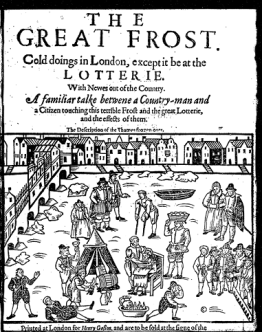
To come: The Deadman’s Portion: Cold Doings in London
Copyright David Clement-Davies 2012 – All Rights Reserved
Phoenix Ark would like to recommend that anyone interested in this or Southwark supports the work of John Constable and the petition he has started to turn Crossbones Graveyard into a memorial garden there. If you are interested Click Here<a href="Cross Bones Graveyard heritage site Petition | GoPetition“>
0.000000
0.000000


 Phoenix Ark's Blog