
How interesting that Barclays Bank in the UK have just refused a small business loan, both to back an established, award-winning author, with 300,000 sales behind him, and a whole little publisher. Despite billions in profits, reported scandals about paying little tax, and their glossy adverts on TV purporting to be at the heart of Mr Cameron’s Big Society, backing 4 in 5 start-ups, not only was it a no, but the potential interest rate was absolutely punitive. So what are the realities for real but small business people out there, as banks are reporting more record profits, continued bonuses, and harder and harder lending requirements? For the little guy, the small business, those absolutely key links in finding a truly healthy and not top-heavy business community and society, there are reports everywhere of doors slammed, and people being financially throttled to death. Vince Cable was absolutely right, that although banks are not charities and have to assess risk, the banks need to be forced to use some of those taxpayer ring-fenced profits to support people and good, viable new projects everywhere, especially those entrepreneurs who want not only to support themselves, if allowed to, but generate jobs, not to mention sales, ideas and real culture. Or perhaps the gurus behind the desks should have asked to read David Clement-Davies and Phoenix Ark books before assessing that risk! Barclays has a very bad name, from some of the people we’ve talked to, and we are starting to believe it, but will they ever take the lead and show a more reasonable and visionary way, unless somehow forced? If regulation isn’t the answer, then something is needed to shake them and wake them up. Where are you Vince Cable, and what is the Liberal-Con alliance really doing to help and protect?!
THE 3RD PHOENIX ARK CULTURAL ESSAY
THE LAW OF HUMAN RIGHTS: POINTING A VALUABLE FINGER by Murray Shanks

On Saturday the UN Security Council unanimously adopted Resolution 1970/2011, which among other things referred the situation in Libya since 15 February, the day of the first protests in Benghazi, to the Prosecutor of the International Criminal Court, the ICC. This reference enables the Prosecutor to start an investigation into that situation, and gives the International Criminal Court jurisdiction in relation to “grave crimes against humanity” committed in Libya after 15 February. Thus Gaddafi and others in the regime are exposed to possible prosecution before an international court for their treatment of innocent civilians during the current uprising. Were it not for the specific UN Security Council Resolution the ICC would not have any jurisdiction over him, because Libya is not a party to the Rome Statute, which is the treaty setting up the ICC, and the general jurisdiction of the court requires the relevant state to be such a party. It is a supreme irony of the situation that three of the permanent members of the Security Council who voted for the reference are themselves not parties to the Rome Statute, namely the Russian Federation, the People’s Republic of China and the United States of America. As with so many international treaties the US has not felt able to join in the Rome Statute, basically because it does not trust foreigners to exercise any jurisdiction over its citizens or affairs.
The Rome Statute, which established a permanent international criminal court for the first time, was adopted by 120 states on 17 July 1998 and came into force on 1 July 2002, after it had been ratified by 60 of them, and it is now fully functioning in the Hague, though it can only deal with crimes committed after the latter date. The international community had aspired to set up the ICC for decades and it represented the culmination of years of work agreeing on the court’s terms of reference and how it was going to be organised. Before the establishment of the permanent court various ad hoc international tribunals had been set up by the UN in 1990s to bring to justice those guilty of grave crimes arising out the terrible events in former Yugoslavia, Rwanda and other parts of the world.
Although it is hard to criticise the principle of international criminal tribunals (and now the ICC) being established to deal with such crimes, inevitably questions arise as to whether the whole exercise can be justified, given the practical difficulties and expense. On a visit to Cambodia in December with Prospero World I had an opportunity to see an example of a UN established court dealing with the appalling crimes against humanity committed there during the 1970s, which gave me further food for thought on this topic.
The extraordinarily named “Extraordinary Chambers in the Courts of Cambodia for the Prosecution of Crimes Committed during the Period of Democratic Kampuchea” was established under a 2003 treaty between the UN and Cambodia. It is a hybrid court containing Cambodian and international judges funded by the UN set up specifically to try the surviving Khmer Rouge leaders. The court is housed in a group of buildings (including a holding prison for those who have been indicted) located at the end of a strange finger of territory that is part of the city of Phnom Penh. It is in this finger because the treaty required the court to be sited within the city of Phnom Penh while the most convenient place for it was just outside the existing city limits, and so that particular dilemma was solved by the expedient of extending those city limits.
I took a taxi through the seemingly endless suburbs of Phnom Penh into that finger of territory to visit the court with Sinet Chan, one of the girls rescued from an abusive orphanage in Battanbang in 2006 by the remarkable Australian woman, Tara Winkler. Sinet was a very bright girl who has been sent to a good high school in Phnom Penh by Winkler and she is keen to become a lawyer one day. The day of our visit was World Human Rights Day and a national holiday in Cambodia so ironically only the UN appointed international staff were working at the court. We were met by a judge of the court, Rowan Downing, who spent two hours showing us round and explaining its workings. Judge Downing is an Australian steeped in the common sense of the English common law, but experienced too in the ways of international courts and the French system of criminal justice (on which the Cambodian is based).
We were shown the two court rooms, the vast public gallery, the judges’ retiring room, the holding cells below the court, and the court offices. The whole thing is a vast undertaking: the court operates in three languages (Khmer, English and French) so everything has to be simultaneously translated; it has the most extensive and sophisticated electronic communications system in a court that I have seen; there are hundreds of thousands of documents to deal with; up to seven judges at a time hear applications and trials; the French system involves the judges being responsible for the whole investigative and trial process so there are pre-trial, trial and appeal chambers; and the court’s statute entitles injured third parties to be heard and to seek compensation (and thousands have sought to do so).
So far only one trial has been completed: that of Kaing Guek Eav (alias “Duch”), the infamous Chairman of the S-21 interrogation unit in Phnom Penh. In July 2010 the trial chamber produced a 275 page judgment finding Duch guilty of crimes against humanity and grave breaches of the Geneva Conventions and sentenced him to 35 years imprisonment. Although he co-operated throughout the process and effectively accepted his guilt he is now appealing and seeking to resile from that position. He therefore continues to be held at the court prison rather than in a regular Cambodian jail.
The next (and possibly last) trial scheduled involves four senior Khmer Rouge party members, including Pol Pot’s “Citizen no 2”. The trial proper will start around April 2011, so the pre-trial chamber in which Judge Downing sits is busy with many issues that are arising before the cases are ready for trial. These four defendants (three men, one woman) are now old and infirm, a feature which adds to the logistical nightmare of holding the trials, not least because of the frequent need for rest breaks. The holding cells below the court room not only contain television links to the court room, but beds for them to rest on during breaks and a stair lift to get them upstairs to court.
Sinet’s reaction on seeing those holding cells was very telling; she was amazed to think that Duch had actually been there and that he had been held in such relative comfort. And she was sure when Judge Downing told us about the necessity for security arrangements in the courtroom to protect Duch from people wanting to take revenge and kill him that she would be among those who wanted to do just that. The good judge patiently reminded her that even Duch and his comrades were entitled to protection by the law and to a fair trial, before they could be considered guilty and worthy of punishment.
Whatever her private thoughts about that message were, I found it re-assuring to see that Sinet, who was born more than 10 years after the defeat of Pol Pot, cared so much about how her people had suffered at the hands of Duch and his comrades. It made the whole cumbersome and expensive process seem worthwhile. As we travelled in silence back to town and I tried to find my way around that 275 page judgement I could sense her sitting beside me wide-eyed at it all and perhaps determined to have her own better and sweeter revenge for her people’s suffering. MURRAY SHANKS February 22nd 2011
Murray is a circuit judge who sits in the Snaresbrook Crown Court in East London, hearing rather more mundane criminal cases than those which concern the ICC. The photo is of human victims from ‘the Killing Fields’ in Phnom Penh. An earlier version of this essay appeared as a blog on the Prospero World website and to visit it and see all the fund reaising work they do click
Filed under America and the UK
PHOENIX ARK PRESS RELEASE
Dear, gentle reader,
when we look back at our Cultural Essays, by Philip Mount, Donald Sturrock or Murray Shanks, so many of the contributions to The Poet’s Sweatshop, the little films we’ve done, and the blogs too, it’s with real pride we talk about Phoenix Ark Press, built from nothing and trying to be honest about the word, about publishing, about the climate we are creating. The sad truth though is that in their wrong belief in sure-fire bets, or the hunt for instant profits, the unbelievers haven’t come up with the backing needed to get our books out, to you gentle reader, and properly. So the dear, gentle founder has to turn to the business of getting a ‘job’ to keep afloat and fight on. But he’ll be damned if he’s going to give up on work already there, on the spirit of a Phoenix, that can only come again and again, and on a commitment to great story. So today he’s biting a difficult bullet and announcing that, mostly out of necessity, Phoenix Ark can currently only afford to publish straight to eBook. This means that our lead titles, Scream of the White Bear, Michelangelo’s Mouse, The Blood Garden, and Ice will be exclusively available on Kindle and other reading devices this year. I am truly sorry, especially to younger readers who may not have access to Kindles or Ipads, but it is the only way not to waste work, and get our stories out. David’s poor younger fans will probably have grown up and become head of Penguin by the time Scream finally comes out, but trust it will be all the better for that! On the other hand we think it may represent a new spirit, for a little Publisher to turn exclusively to ePublishing, but with a respect for story, and for quality that you do not see in so much of the tat that is being peddled in electronic format. We will see too if EBooks can get serious attention from the critical and reading public and perhaps Phoenix can lead the field in EPublishing. David is off to Rome again to ponder the muse, and find some inspiration for Phoenix, and Dragons in the Post.
Filed under Uncategorized
DON’T PANIC!
Don’t panic is the message from Margaret Atwood to authors trying to survive, at a recent technology conference in New York. In a generous, modest and totally straight presentation she talks about the ‘publishing pie’, and how writers can ever take a decent slice, even to subsist, and what happens if the internet becomes a phenomenon where so much is expected to be free. It stirs many emotions about a New York publisher and our founder’s books, but was inspiring when she talked about how many authors start by being ‘self-published’, showing her own attempts as a six year old. To watch a hugely impressive author and a fine mind click
Filed under Uncategorized
BE AMONG THE FIRST
David Clement-Davies is now re-editing Scream of the White Bear. Barnes and Noble lists David as the author of several highly acclaimed and bestselling novels, including The Telling Pool and The Sight. His books have been called “intricately crafted” (The Boston Globe), “a hurtling ride” (Kirkus Reviews), and “a masterpiece” (Booklist). Young readers are equally enthralled: His Amazon.com and Barnesandnoble.com kid reviews number in the many hundreds and include such praise as “an instant classic,” “too cool for words,” and “absolutely stunning.”
Be the first to own and review a Phoenix book – click
Filed under Uncategorized
THE SECOND PHOENIX ARK ‘CULTURAL ESSAY’
THE CHILD’S EYE by Donald Sturrock
Tom Stoppard once wrote that the person who carries their childhood with them throughout life never becomes old. In this he spoke for many artists and thinkers, past and present, who have been inclined to cast a suspicious eye over the notion of adulthood, and celebrate instead the child’s perception of the world.
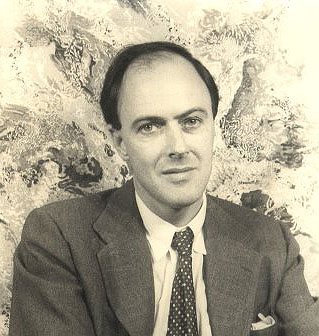 Roald Dahl was one of these. In old age, he often jokingly described himself as an ‘infantile geriatric’, or a ‘geriatric child.’ He was utterly confident that he still saw the world with a young boy’s eyes and once told me – with a proud twinkle in his eye – that he thought most adults were quite incapable of doing so. Dahl was an inventor of stories, and something of a fantasist, but he retained a razor sharp memory of his childhood. He could recall with ease the thrill of cycling down a hillside with no hands on the handlebars, the tedium of interminable Maths lessons, and the sensation of having a world of giants always looking down on you. More remarkable however was the fact that he also retained a child’s natural ability to invent and imagine, to live in the moment, to stop and stare and wonder at the marvels and mysteries of life – to recapture what Dahl’s friend and admirer John Betjeman described as the period “measured out by sounds and smells and sights, before the dark hour of reason grows.”
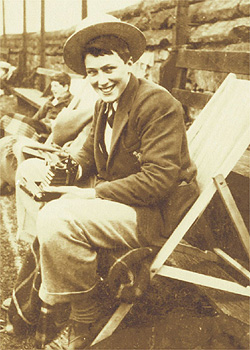 Dahl celebrated beyond measure the human capacity for fantasy, subversively exhorting his readers, young and old, to observe the world with “glittering eyes” because “the greatest secrets are always hidden in the most unlikely places.” In a similar vein he attacked the tyranny of contemporary information culture, when he argued that the nicest small children were those who have been “fed upon fantasy” while the “nastiest” were the ones who knew only a diet of facts. He was being deliberately provocative of course. But his celebration of playfulness, even of frivolity and silliness, had an important message – one that is all too easily forgotten in this current age, where observation and plain speaking are so out of fashion. Echoing many free thinkers before him, who tempered the sophistication of adulthood with the wide-eyed imaginative inventiveness of youth, he issued a plea to observe the world with fresh eyes, free of preconceptions and conditioned responses.
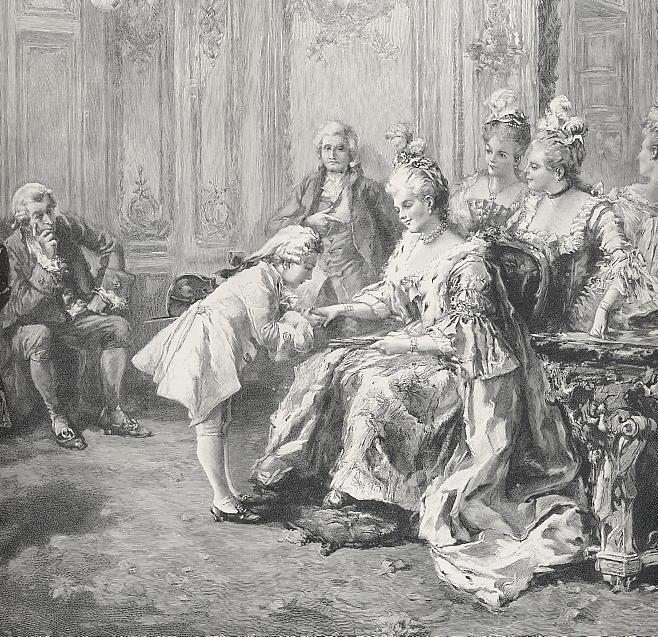
Some of the greatest composers possessed this aspect to their personality. Wolfgang Amadeus Mozart, for example, was composing operas of wit, elegance and refinement aged only thirteen. As an adult he became a revolutionary of refinement, whose compositions reached dizzying pinnacles of poise, finesse and urbanity. Yet alongside this cultivated wisdom, he treasured his child’s sensibility, delighting in pranks, jokes, scatology and invented languages until his untimely end, aged only thirty-five. The earthy wit of his final opera The Magic Flute remains testament to the sixteen-year-old, who on tour to Italy, joked to his father about the sights, sounds and smells of the Merdeiterranean.
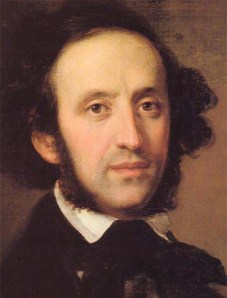 Not all child prodigies managed to hang onto that freewheeling joie de vivre. Like Mozart, Felix Mendelssohn Bartholdy was at the peak of his powers as a teenager. His magnificent Octet was composed in the autumn of 1825 when the composer was only sixteen and was partly inspired by the vision of an orchestra of flies, frogs, crickets, mosquitoes and a bagpipe blowing soap bubbles. It sent what one listener described as “an electric shock” through its first audience. Mendelssohn however would find that, in adulthood, his child’s eye grew dim. Though he too did not reach the age of forty, many of his later compositions lacked the wit, exuberance and daring originality of those from his chldhood. They became bogged down by a self-conscious desire to be serious.
But a desire for grandeur need not necessarily cloud the eyes of youth. Fifty years after Mendelssohn, Gustav Mahler was writing symphonies of unparalleled scale and ambition: works that he believed would embrace and express the universe. Yet he repeatedly drew on his childhood memories of nature, military bands and folk-songs when he needed inspiration. When analysed by Sigmund Freud. What did he talk about? His childhood. And many of his greatest and grandest symphonies drew on The Youth’s Magic Horn, a collection of poems which had thrilled him as a teenager. The verses are filled with innocence, humour, wit and perhaps, most of all a fantastical sense of wonder at the mysteries and strangeness of the world.
For Benjamin Britten too, childhood was a complex cocktail of emotions, among which was an acute awareness of the unexpected power of innocence and vulnerability. This also remained an ever-present force throughout his adult life. When asked why he wrote so often and so well for children, Britten is said to have replied: “Because I still feel like I am thirteen years old.’ It was something that also cemented his attraction to Christianity, with its regenerative belief that a ‘little babe so few days old’ alone had the possibility to ‘rifle Satan’s fold.’ Clearly all these writers and musicians retained their own distinct sense of childhood. However there was surely something in the child’s sense of magic, of an imaginative world untarnished by the compromises and cynicism of adulthood, that was also universal. This “spirit of youth” enabled each of them to be unselfconsciously original, daring and new. Each was always irrepressibly young at heart. It is a shame that this freshness of response is not more widely celebrated by more of today’s educationalists and politicians, who seem all too eager to see the world through the dull lens of examinations, targets, certificates and qualifications. In downplaying the importance of original thought, they would do well to remember the words of the mathematician and storyteller Lewis Carroll, who complained that he would “give all wealth that years have piled, The slow result of Life’s decay, To be once more a little child, For one bright summer day.”
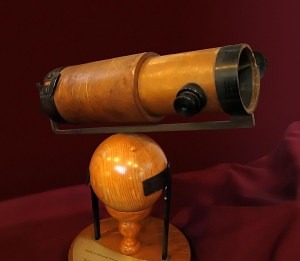
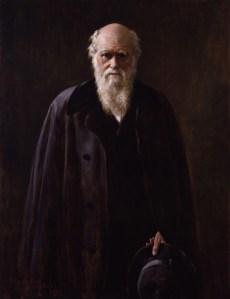
And it is not just the world of the arts that might benefit from such an approach. Two of Britain’s most brilliant scientists were sustained by their own child’s eye: Charles Darwin and Isaac Newton. As a child, the playful inventiveness of the former infuriated his teachers. As an adult, that same quality would enable him to rewrite the fundamentals of biology. Newton personified his attitude to knowledge as being that of a child, writing that he saw himself “like a boy playing on the sea-shore, and diverting myself now and then finding a smoother pebble or a prettier shell than ordinary, whilst the great ocean of truth lay all undiscovered before me.” If only more people could take this metaphor to their hearts, the world would surely be a happier, more imaginative and more exciting place in which to live. Donald Sturrock – Feb 2011 Donald is profiled below. The next Phoenix Ark essay will be by the Historian Saul David. The images are Dahl in adulthood, and in Repton School uniform, Mozart visting Madame Pompadour, Mendelsson, a replica of Newton’s telescope and Collier’s portrait of Charles Darwin.
Filed under Childrens Books, Culture, Science
PROFILING DONALD STURROCK
Donald is a writer, broadcaster and music impressario. His biography of Dahl – Storyteller: The Life of Roald Dahl has received tremendous critical reviews and is published by Harper Press. Donald grew up in England and South America and, after leaving Oxford University, joined BBC Television’s Music and Arts Department in 1983, where he worked as writer, producer and director.
He has made more than 30 documentaries, including biographical features about William Trevor, Robert Graves, Jennifer Johnston and Dahl.
Throughout the 1990s he continued to maintain a close relationship with Dahl’s work, the Dahl family and the Roald Dahl Estate. Since 1992, he has been the artistic director of the Roald Dahl Foundation, masterminding an ambitious project to create an international library of new orchestral works and operas for children, based on the stories of Roald Dahl.
In 1995 Sturrock directed an acclaimed BBC television version of his own adaptation of Roald Dahl’s LITTLE RED RIDING HOOD with Danny DeVito, Ian Holm and Julie Walters. And in 1998, at the Los Angeles Opera, Sturrock also directed the world premiere of FANTASTIC MR FOX, an opera based on Dahl’s book, adapted by Sturrock, and with designs by Gerald Scarfe. It was widely acclaimed for its sophisticated wit and comic invention. The Wall Street Journal praised the libretto’s ‘profound grasp of musical storytelling’, while the Frankfurter Algemeine described the production as ‘brilliant and flawless’. He is agented by Caroline Dawnay at United Agents.
For The Independent review of Donald’s biography click
Filed under Uncategorized
THE DIMBLEBY LECTURE – SET OUR CHILDREN FREE
Michael Murpugo’s Dimbleby lecture last night, ‘Set our Children free’, was passionate, inspiring, and delivered a blistering assault on library closures, social disconnection, the league-table mentality that denies children that basic life-blood, real education, and is grounded not in exams, but in healthy and inspiring relationships, at home, in school, and in society. He is a natural teacher. It was an encomium to connection and the notion of the ‘Liberal Education’ and spoke, beyond class or cultures, beyond Nations, to the responsibility of all adults, especially those who have succeeded, to give something back to all children. Murpugo knows how to use words, to live inside them, to tell stories we respond to through his talent for performance, and in that he is the poet he talked about being at the end, if he wasn’t reincarnated as an animal. His poetic sensibility lives and breathes in nature too, his home in Devon, and his relationship with his partner Claire, who started the School Farms project, getting inner city kids into the wild.
I found myself thinking how old-fashioned it was too though, forgetting the notion that ‘childhood’ itself is in part a Victorian invention, and, in the US especially I think, can become a glorification of childhood or supposed innocence, at the expense of the necessary journey into adulthood. That old-fashionedness is not necessarily a bad thing at all, especially as a rallying cry for idealism and action in an increasingly vicious, accountant led environment, but what would a children’s author like Roald Dahl have said, I wonder? His stories, though there is plenty of gentleness in many, are much more engaged with the darker elements of human and thus childhood psyches, as were the old Fairy Tales. So although Murpugo says in the real world all children are innocents, in Dahl’s world other children are often the enemy, as above all are adults. Think of all those horrid kids in Willy Wonka’s Chocolate Factory, falling foul of the nasty side of human nature and their own, before Charlie triumphs. Think of James’s journey with his peach, and the crawling things of life, made friends and allies now, or his brilliantly violent and irreverent Revolting Rhymes. Many have said that children’s brains, and especially teenagers, are actually constructed differently, presumably because they are still wiring, to adults. It is through stories that children are allowed to safely explore these darker elements of us, the world and themselves too, and so hopefully grow to full maturity and responsible adulthood, in a world that involves threat, competition, and the natural cruelty too that real children can sometimes engage in. Perhaps Dahl is closer to the child’s psyche, the exploration of which for a writer often begins in a place of sudden threat, like James’ parents being eaten by a rhinoceros at London Zoo, and Murpugo comes to it from the other side, more like Blake’s Songs of Innocence and Experience, talking with the at times nostalgic longing of the truly responsible adult, that brings an entire life baggage with him too, and a great deal of articulacy. What is certain is that both are great storytellers, and both are rightly and essentially on the side of the growing child. Perhaps that can indeed inspire an entire society with the wonder we once all felt, and many still feel, for life. DCD
Filed under Uncategorized
PRESS RELEASE
Phoenix Ark Press are proud and delighted to announce the publication today of our first book, to Kindle, across the world, Fire Bringer by David Clement-Davies. The next Cultural Essay, ‘The Child’s Eye’ by Donald Sturrock, will be published on Friday February 18th.
Filed under Uncategorized
A CHILDREN’S STORY
After the impressive and serious minded children’s author Michael Murpugo did his report today on children in the Gaza strip for Newsnight, I thought about something on Sebastian Faulk’s rather limited series on the novel. It was Martin Amis, sallow and precise in his own intelligence about himself, telling Faulks he could never write a ‘children’s book’, unless he had been somehow brain damaged, because for him language and the novel represents ‘freedom’. I quite understand that journey far beyond ‘childhood’, but he clearly does not understand the journey of so many committed ‘children’s authors’, often not placing themselves in that category at all, or their attempt to bridge the psychic worlds of childhood and adulthood. In that is an attempt to guide imaginatively towards adulthood, and to address the losses and challenges that are the very nature of fantasy fiction, because they are the challenge of imagination and freedom too, versus adult ‘reality’, responsibility and death. Murpugo’s report was moving, sad, and may have failed to address the problem of Palestinian children being used as suicide bombers, as well as the devastation the Israeli army has wreaked, or naturally inheriting the ideologies, hatreds and resentments of their parents. He did sensitively touch on that deepest instinct of children to play and connect, and how in the future it is protecting that idealism that may be a road to human peace. DCD
Filed under Uncategorized
 Phoenix Ark's Blog