
Ah, the day that really counts, St Valentine’s. Blind cupid, winged with his naughty arrows, is flitting around doing his mysterious transformations. There were fourteen blokes called Valentine matryred in Rome, it seems, and little or nothing is known about the one buried in the Via Flaminius, on February 14th, although perhaps his head was cut off for refusing to deny Christ, before the Emperor Claudius. The link to lovers doesn’t seem to have appeared until Chaucer, and then to have been established in the 18th Century. At least it’s more of a real tradition than that famous marketing fake, once so beloved of UK pubs – The Ploughman’s Lunch. Love, joy and luck to all lovers then, from Phoenix Ark.
THE HOUSE ALWAYS WINS?
I went to Vegas, and Reno, with editors at Abrams, but if the implication of the US Authors Guild’s article below is the House always wins, what exactly did Abrams win in my long battle? A waste of time and money, the destruction of a US career, the loss of a potentially winning or valuable book, indeed three, and above all a complete disrespect to me, and to my own fans and readership too. It is a point the Guild does not make, in talking only about economics. The relationship between editors and writers can be an extremely important and sensitive thing, while there is also a cultural pact, an act of trust, between readers and authors, and that the publishing industry very rarely respects, indeed often mutilates, unless a straight success story. It’s why when editors’ eyes turn like searchlights on their own internal political ambitions, led by the big marketing phenomenons, in Abram’s case Diary of a Wimpy Kid, Hello Kitty, or The Sister’s Grimm, they start to lose their souls, if they ever had any. It’s a money machine, especially in the US, that’s very hard to control, since the engine is so big, but of course editors rise too on their success stories. In terms of culture though, the House loses all round, because we’re all impoverished in the end by that tyranny. It is unique stories that really matter, books of wonder, forged by a writer, enjoyed by a reader, bottom line, not a publisher’s ‘power’ or profits, and in that the protection of the author is vital. Abrams should read the Guild’s last line, about the old partnership, that out of the disrespect to a private relationship too, they so distorted and abused. But, as they say in the US, what happens in ‘Vegas’ should stay in Vegas, so we can believe and express the values and ideals we find within the pages of books! DCD
Filed under Uncategorized
E-RIGHTS, THOUGH NOT A STORY FOR A READER!
THIS ARTICLE IS CIRCULATED BY THE US AUTHOR’S GUILD
February 11, 2011. To mark the one-year anniversary of the Great Blackout, Amazon’s weeklong shut down of e-commerce for nearly all of Macmillan’s titles, we’re sending out a series of alerts on the state of e-books, authorship, and publishing. The first installment (“How Apple Saved Barnes & Noble. Probably.”) discussed the outcome, of that battle, which introduced a modicum of competition into the distribution of e-books. The second, (“E-Book Royalty Math: The House Always Wins”) took up the long-simmering e-royalty debate, and showed that publishers generally do significantly better on e-book sales than on hardcover sales, while authors always do worse.
Today, we look at the implications of that disparity, and suggest an interim solution to minimize the harm to authors.
Negotiating a publishing contract is frequently contentious, but authors have long been able to take comfort in this: once the contract is signed, the interests of the author and the publisher are largely aligned. If the publisher works to maximize its revenues, it will necessarily work to maximize the author’s royalties. This is the heart of the traditional bargain, whereby the author licenses the publisher long-term, exclusive book rights in the world’s largest book market in exchange for an advance and the promise of diligently working to the joint benefit of author and publisher.
Now, for the first time, publishers have strong incentives to work against the author’s interests.
As we discussed in our last alert, authors and publishers have traditionally acted as equal partners, splitting the net proceeds from book sales. Most sublicenses, for example, provide for a fifty-fifty split of proceeds, and the standard hardcover trade book royalty — 15% of the retail price — represented half of the net proceeds from selling the book when the standard was established.* But trade book publishers currently offer e-book royalties at precisely half what the terms of a traditional proceeds-sharing arrangement would dictate — paying just 25% of net income on e-book sales. That’s why the shift from hardcover to e-book sales is a win for publishers, a loss for authors.
The Pushback
The publisher’s standard reply to this — which we heard yet again after last week’s alert — is a muddle, conflating fixed costs with variable costs. Let’s address that before we move on.
For any book, a publisher has two types of fixed costs: those attributable to the publisher’s operations as a whole (office overhead, investments in infrastructure, etc.) and those attributable to the particular work (author’s advance, editing, design). The variable costs for the book are the unit costs of production. These costs (print, paper, binding, returns, royalty) tell a publisher how much more it costs to get, say, 10,000 additional hardcover books to stores and sell them. The publisher’s gross profit per unit (unit income minus unit costs) is the amount against which the author’s royalties are traditionally and properly measured. With this sort of analysis, a publisher can compare the gross profitability per unit of, for example, a hardcover to a trade paperback edition.
Investments in technology change nothing. Publishers never argued, for example, that hardcover royalties needed to be cut when they began equipping their editorial and design staffs with expensive (at the time) personal computers, buying pricey computers and software for their designers, tying those computers together with ever-more-powerful Ethernet cables and routers, and hiring support staff to maintain it all. Publishers simply took their share of the gross profits from book sales and applied it to all of their costs, as they always have. What remains after deducting those costs is deemed the publisher’s net profit. Similarly, authors take their share of the proceeds of their book sales and apply it to their overhead (food, clothing, shelter, and computer technology) and costs (their labor and out-of-pocket costs to write the manuscript). What remains is the author’s net profit.
The proper question is this: how much better off is a publisher if it sells a book, print or digital, than it is if it doesn’t? That is what we measured. We then compared that to the author’s print and digital royalties per book.
Publisher’s E-Gains + Author’s E-Losses = E-Bias
Applying standard trade hardcover and e-book terms to Kathryn Stockett’s “The Help,” David Baldacci’s “Hell’s Corner,” and Laura Hillenbrand’s “Unbroken,” we found that publishers do far better by selling e-books than hardcovers (realizing “e-gains” of 27% to 77%), while the authors do much worse (suffering “e-losses” of 17% to 39%). Publishers can’t help being influenced by the gains; e-bias will inevitably drive their decisions.
Some simplified examples show how e-bias plays out in publishing decisions:
1. Promotional Bias. Assume a publisher is contemplating whether to invest a portion of a book’s limited marketing budget in stimulating the sale of digital books (paying for featured placement in the Kindle or Nook stores, perhaps) or in encouraging print sales through a promotion at physical bookstores. Either way, the publisher expects the investment to boost sales by 1,000 copies. A sensible publisher would spend the money to promote digital books, pocketing an additional $1,570 to $4,170 on those sales compared to hardcover sales. Such a decision, however, would cost Ms. Stockett, Mr. Baldacci, and Ms. Hillenbrand $1,470, $1,570, and $670, respectively, in royalties.
2. Print-Run Bias. E-gains of 27% to 77% become irresistible when a publisher looks at risk-adjusted returns on investment, as any businessperson would. Once a book is typeset for print, the publisher must invest an additional $30,000 to have 10,000 hardcover books ready for sale, using the figures from our prior alert. Once the digital template is created and distributed to the major vendors, on the other hand, there is no additional cost to having the book ready for purchase by an unlimited number of customers. Even the encryption fee (50 cents per book, at most) isn’t incurred until the reader purchases the book. In this environment a publisher is nearly certain to keep print runs as short as possible, risking unavailability at bookstores, in order to decrease overall risk and maximize the publisher’s return on investment.
Publishers, in short, will work to increase e-book sales at the inevitable expense of hardcover sales, tilting more and more purchases toward e-books, and their lower royalties. Publishers, as sensible, profit-maximizing entities, will work against their authors’ best interests.
An Interim Solution: Negotiate an E-Royalty Floor
This won’t go on forever. Bargain basement e-royalty rates are largely a result of negotiating indifference. The current industry standards for e-royalties began to gel a decade or so ago, when there was no e-book market to speak of. Authors and agents weren’t willing to walk away from publishing contracts over a royalty clause that had little effect on the author’s earnings.
Once the digital market gets large enough, authors with strong sales records won’t put up with this: they’ll go where they’ll once again be paid as full partners in the exploitation of their creative work. That day is fast approaching, and would probably be here already, were it not for a tripwire in the contracts of thousands of in-print books. That tripwire? If the publisher increases its e-royalty rates for a new book, the e-royalty rates of countless in-print books from that publisher will automatically match the new rate or be subject to renegotiation.
So, what’s to be done in the meantime? Here’s a solution that won’t cascade through countless backlist books: soften the e-bias by eliminating the author’s e-loss. That is, negotiate for an e-royalty floor tied to the prevailing print book royalty amount.
Turning again to our last alert for examples, here are the calculations of e-losses and e-gains without an e-royalty floor:
“The Help,” by Kathryn Stockett
Author’s Standard Royalty: $3.75 hardcover; $2.28 e-book.
Author’s E-Loss = -39%
Publisher’s Margin: $4.75 hardcover; $6.32 e-book.
Publisher’s E-Gain = +33%
“Hell’s Corner,” by David Baldacci
Author’s Standard Royalty: $4.20 hardcover; $2.63 e-book.
Author’s E-Loss = -37%
Publisher’s Margin: $5.80 hardcover; $7.37 e-book.
Publisher’s E-Gain = +27%
“Unbroken,” by Laura Hillenbrand
Author’s Standard Royalty: $4.05 hardcover; $3.38 e-book.
Author’s E-Loss = -17%
Publisher’s Margin: $5.45 hardcover; $9.62 e-book.
Publisher’s E-Gain = +77%
Here are the calculations with an e-royalty floor:
“The Help,” by Kathryn Stockett
Author’s Adjusted Royalty: $3.75 hardcover; $3.75 e-book.
Author’s E-Loss = Zero
Publisher’s Margin: $4.75 hardcover; $4.85 e-book.
Publisher’s E-Gain = +2%
“Hell’s Corner,” by David Baldacci
Author’s Adjusted Royalty: $4.20 hardcover; $4.20 e-book.
Author’s E-Loss = Zero
Publisher’s Margin: $5.80 hardcover; $5.80 e-book.
Publisher’s E-Gain = Zero
“Unbroken,” by Laura Hillenbrand
Author’s Adjusted Royalty: $4.05 hardcover; $4.05 e-book.
Author’s E-Loss = Zero
Publisher’s Margin: $5.45 hardcover; $8.85 e-book.
Publisher’s E-Gain = +62%
While this wouldn’t restore authors to full partnership status in the sale of their work, it would prevent them from being harmed as publishers try to maximize their revenues. This is only an interim solution, however. In the long run, authors will demand to be restored to full partnership, and someone will give them that status.
Filed under Uncategorized
THE THRILLING SPIRIT OF ART!
My one time editor at Abrams, Susan Van Metre, was once kind enough, before her metamorphosis, to pass on a sort of commission, doing the picture book of the Pixar movie – Spirit: Stallion of the Cimarron. It was not my story and I didn’t reap any huge benefits, certainly no royalties, but liked the artist who did the drawings, William Maughan, and going into Pixar too for a screening in London. It tells of a stallion, caught up in the ‘modern world’ of the Iron Horse, the American railway, and finding his freedom among native American Indians, and other wild horses, especially a lady. Many times readers of my animal fantasies have asked if I would write a novel involving horses, and while I love riding, I was also rather obsessed with Black Beauty as a boy. Very girly, I know, but it must have been the music, and you never know.
But a horse came up in a TV programme recently that so astounded, it must be blogged. It highlights so much of the ‘Emperor’s New Clothes’ guff that surrounds much modern and conceptual art, since Marcel Duchamp didn’t sit on his loo seat. I don’t for a moment mean the kind of work and ideas so brilliantly expressed in Philip Mount’s paintings and cultural ‘short story’, below, I mean the Neanderthal triumph of rubbish, and it’s orchestrated victory in the world of money. But if you want to know something of man, art, and the human mind too, then just take a look at a little piece of carved horse bone. The picture below is badly lit, so doesn’t capture the effect of the cross-hair mane, scratched at the top, but does catch the astoundingly simple line, the clarity of perception, the realism, and movement in the running creature too. The simple point is this, as art looks back at us in wonder at what we are – the ‘Ochre Horse’, found in Crewsell’s limestone gorge in 1876, and now housed in very industrial Sheffield, is thirteen thousand years old. DCD

Filed under Uncategorized
THE FIRST PHOENIX ARK ‘CULTURAL ESSAY’
‘OPULENCE’ – a cultural ‘short story’, by Philip Mount
Some time ago I was asked to write a piece of work regarding ‘Opulence’. I don’t really know what I wrote, or in fact if it really looks directly at opulence. I’m not really sure which of the below has any ‘truth’ in it. Which is truth – thought, memory or history? If any of it. Some of the people are, or were.

It is what it is
Living in New York offers the privilege of being a part of a wealthy family. A commune of one and a half million, in Manhattan alone. Of the many advantages to a large family, one is being privy to, and sharing, the collective turn of phrase. I left the city in 2006 – at this time the phrase on many a New Yorkers lips was: ‘Suck it up’.
One of my favourites was ‘This is not my movie’, or variations of: ‘This is turning into a bad movie’ or, ‘Thisisnotmymovie’ (in monotone, under breath). Of course there are the New York Staples: ‘…the f***?!’, shortened from ‘What the f***?!’ ‘Fergedaboutit, what are you gona do?’ There are more, many.
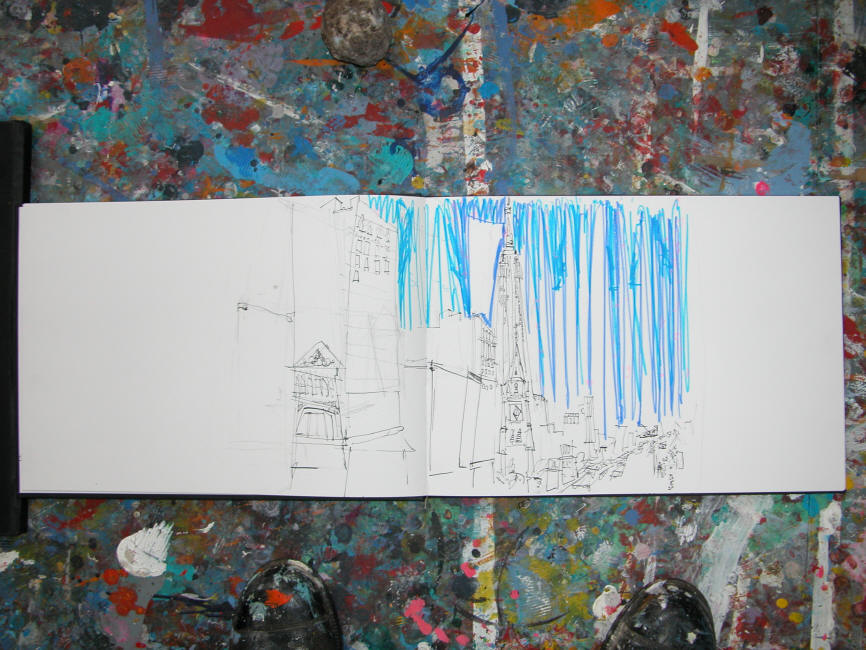
So, in my brief visit there, in early 2008, whilst delivering a new piece of artwork to collector Darren, and wife Margarete, and in the company of my young friend, Mary the Dancer, we decided we should celebrate with a drink and a bite. Dipping into fondue, whilst sitting around an elegant kitchen table, in their newly decorated minimalist Soho loft, I was pleased to be witness to the phrase of the moment, delivered to me from my young friend, Mary. Darren scans the artwork from a distance… ‘And have you titled this one, Philip?’
‘Ammiratore Vicis…Which, loosely translated, is the vicarious admirer… The painting is most happy when seen. It likes to be seen. Doesn’t hide away, it’s not introspective – it looks out, comes out – it’s bigger than the canvas. It demands you look at it and then sees itself through your eyes.’
 The eyes of the table move off me and look toward the painting, hanging above the fireplace, a few painful moments pass and, much to my relief, heads begin to nod a little in collective agreement…Mary comes to my rescue; ‘Yip, I guess… It is what it is.’ ‘It is what it is,’ agrees Darren.
The next morning I’m walking with my young friend, Mary the Dancer, back to the apartment on W19th; I’ve asked her if she’ll let me photograph and sketch her. As we cross our street South to North, through the jammed up traffic, a driver leans on her horn for a nerve breaking amount of time.‘…the f***?!’ hollers Mary, ‘Y’know, people have a greater sense of entitlement in New York more than anywhere else in the world. It drives me crazy.’

IT IS WHAT IT IS? by Philip Mount – Later that day I’m on my way to an apartment in ‘Nolita’. I pick up some perfect roses on the way to Mulberry Street and duck into Fanelli’s tavern on Prince Street for a quick sharpener. I see Bill, the NYU film professor, in his usual seat at the bar.
His head cranes a hypermobile 180.‘Hey there… take a seat!’ he beckons, patting the bar next to him. I ask him what movies he’s seen lately and what he thinks of it all – ‘Coen Brothers – Thieves, totally derivative. Kevin Costner – guy still can’t act. Diving Bell Butterfly – artists becoming filmmakers – what are you gona do? Favourite film of the year – without question – Ratatouille! Y’know who I bumped into the other day…? That actor… English guy… worked with Sean Penn…’
‘Gary Oldman?’ I try.
‘Naaah… Tim Roth! So we’re at the bar talking and I say ‘Is Roth your real name?’ He tells me – Nah! It’s Smith – he changed it to Roth out of respect, something to do with his father, who knows, maybe he liberated a camp back in the war…’
Equity of fear
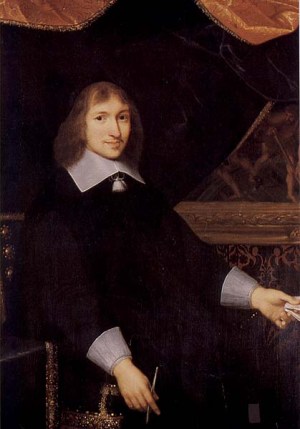
The motivation for Louis XIV to build Versaille, and to such Majestic splendour, was possibly brought about from an equity of absolute fear. The fund from which his inspiration sprang most likely derived from a glamorous party, hosted by Nicolas Fouquet (then finance minister), at his proud residence – the chateaux at Vaux-le-Vicomte.
In 1661, then green-eyed Louis claimed the finance minister had built this estate through embezzling from the crown. Louis confiscated Fouquet’s property and took into employment the talents used by Fouquet – the architects of his stolen dream; Louis Le Vau, André Le Nôtre (landscape), and decorator and painter Charles Le Brun, to build Versailles.

Don Trump
He was my first thought, as I walked into Darren’s loft. His new development , Tower Soho – 460 million dollars, 45 floors – is clearly visible from the north windows of the apartment. A couple of weeks before I arrived, Margarete heard a bang, an explosion, she called it – ‘well, after what happened… you hear a bang and think God no!’, but it wasn’t a bomb, or an airplane, it was a construction worker falling to his death, hitting the ground with such force that Margarete could hear his finality 4 blocks away. Some of the gaudy creations of Trump may put Midas at a loss for things to do. There is probably some other psychological or god-worship intention behind his wish to alchemize. Compromise comes when there are two elements in conflict. Doesn’t it? Following this logic, is Versailles compromised? And many other Grand Palaces I can think of.
I’m often lightly charmed at the amount of serious landed-gentry millionaires I know that ‘don’t know where the next pint of milk is coming from’ or announce they’re heading off to Barbados or Monaco in the ‘in-season’, but will walk around in worn out shoes, telling of how ‘vehy pooer’ they are at present. This false poverty serves the upper classes and their peers well – they have little need to show wealth, though this binary living may compromise their residences, their context.

So I looked to Waddesdon Manor. The Rothschilds, upon building it, were neither established nor noble, nor were they new money. Their Manor at Waddesdon, transformed a hill top into uncompromised and sheer sumptuousness. Opulence. In it’s pure form. A very rare thing. With no other intention, from what I can feel, no compromise or conflict, it simply is what it is.

Philip Mount – February 2011
Philip is profiled with his web link below. The second Phoenix Cultural essay will be another perfect addition to ‘The Storyeller’s Publisher’ and entitled ‘The Child’s Eye’ by Donald Sturrock, music impresario, and the hugely lauded biographer of Roald Dahl.
Filed under America and the UK, The Arts
PROFILING PHILIP MOUNT
Philip Mount is 39, and currently sporting a beard. He is of course a painter, and a remarkable one. You can see his mastery of the very texture of paint, the marvel of colour, form and space, right now, in the window of Codogan Contemporary in South Kensington (Below).
Among his many incarnations, he was Artist in Residence at the House of Commons, following in the noble footsteps of no less a genius than JM Turner. Philip though has taken many footsteps, wielded many brushstrokes, and will take and wield many more – we’re sure with the universal recognition such talent deserves. In the opinion of the editors at Phoenix Ark Press, he should also turn a hand to the short story too, but sadly, like poetry nowadays, there is no money in it – certainly not at Phoenix. Sorry, Philip! Philip has a studio in Shoreditch, and a heart in many artistic and intellectual houses, so is one of the young guns and true inspirers of the new artistic buzz emerging from the Phoenix Ark community. Bravissimo.
You can see his work, and learn more about the artist, by clicking here.

Filed under Uncategorized
DRAGON AND PHOENIX DELICIOUSNESS!
Well, to celebrate Chinese New Year, a ‘Dragon’ and ‘Phoenix’ recipe – with stir fry chicken and shrimp with ginger, onions, snow peas, carrots and broccoli, soy sauce and wine, all served in fried wonton skins shaped like a lotus flower – is simply too irresistable not to make the company dish, worthy of the great Bouchebold himself. So we’re posting Martin Yan’s recipe from the Today Show and it’s the Year of the Rabbit too, filled with prosperity and fun for all! For a little film (sorry about the toothpaste ad) and the full recipe just click
Filed under Uncategorized
DRAGON IN THE POST – NEXT INSTALMENT, AND A LITTLE MOVIE TO SPREAD THE ONLINE MAGIC!
Filed under Uncategorized
EGYPT – MUBARAK IS A CLASSIC DICTATOR
Mubarak has proved himself a classic dictator, who would rather Civil War than relinquishing power, and the West must step in. What cause do these obviously interested parties have, turning violence and intimidation against largely peaceful campaigners, in comparison to Egyptians demonstrating for change, Human Rights, against torture and for democratic structures? None. It is like the Miners being bussed in to Bucharest in Romania to beat people up. If Mubarak is a true leader and an Egyptian he must step down now, and go with dignity, for the future of his own country.
Filed under Uncategorized
THIS IS AN ARTICLE CIRCULATED BY THE US AUTHORS GUILD
How Apple Saved Barnes & Noble. Probably.
Happy blackout anniversary! Where were you when the lights went out? We’re sending out a series of alerts this week and next that look at the state of e-books, authorship and publishing to mark the one-year anniversary of the Great Blackout, when Amazon attempted to protect its near complete dominance of the rapidly growing e-book market through a stunning, punitive act against a publisher that dared to challenge its terms. (To see our account of this showdown as it happened — posted last Groundhog Day — go to “The Right Battle at the Right Time.”)
It was one year ago last Saturday that Amazon turned out the lights on nearly all of Macmillan’s books, removing the “buy buttons” from the print and electronic editions of thousands of titles. Macmillan authors, many of whom had linked their websites to Amazon pages that were suddenly disabled and useless, found themselves cut off from readers who frequented the dominant online bookstore.
Amazon’s stunning move was a preemptive strike, an attempt to keep Macmillan from going through with its plan to shift to an “agency model” for selling e-books. Macmillan, which immediately saw its online sales plummet, stood firm and prevailed: Amazon ended the blackout after a week.
The story of the blackout and its aftermath reveals much about the high-stakes device and format war that’s reshaping the publishing industry. Last year’s Amazon-Macmillan showdown was a critical battle in that war.
One Year Ago: Amazon’s 90% E-Book Market Share
By last January, Amazon seemed destined to retain an overwhelming share of the e-book market. It then, by most accounts, commanded about 90% of the U.S. trade e-book market. Barnes & Noble had entered the game just two months before, launching the Nook in time, barely, for the critical holiday season. Few in the industry were optimistic about Barnes & Noble’s e-book efforts, however.
Amazon’s strategy, it seemed clear, was to leverage its formidable advantages — including its dominance of the online print book market — to all but lock up the e-book market. If it was successful, Amazon would control the equivalent of a vast online book club. Any publisher wanting to sell to the club would have to agree to Amazon’s terms. This was an ugly prospect: book clubs tend to be resilient, but ultra low-margin enterprises for all involved, except the proprietor.
Amazon went all-in with the Kindle and its proprietary e-reading software. This commitment was most evident on Amazon’s home page — surely the most valuable retail space on the Internet — on which it featured the Kindle nearly every day since its launch.
Amazon’s most potent weapon in the e-book format and device war, however, was the strategy it deployed so effectively in its conquest of online bookselling: using its seemingly limitless financial resources to discount books at rates no competitor could long sustain. Amazon now pushed this tactic to a new level, routinely buying e-books at wholesale prices of $13 and $14 and immediately selling them at a loss, for $9.99. This not only built customer enthusiasm for the Kindle and e-books, but helped crush online and offline competitors that were selling physical books. Amazon could win the future as it finished off the past.
The prospects for Barnes & Noble in this environment were decidedly grim. Its net income had plummeted during the recession, falling 65% in two years. For Amazon, however, it was as if the Great Recession hadn’t happened. Its revenues had grown 65% and its net income increased 72% over the prior two years. Its market capitalization, which had climbed past $55 billion (it stands at $77 billion today), towered over Barnes & Noble’s $1 billion.
The e-book market, by all appearances, was for sale to the highest bidder — the retailer willing and able to sell the most digital books at a loss. Barnes & Noble was in no shape to compete against Amazon in that game.
Then the game shifted.
Enter Apple
On Wednesday, January 27, 2010, Steve Jobs announced the launch of the iPad and the iBookstore.
Apple wouldn’t sell e-books under the reseller model that Amazon had been using to lock down the market. (Under that model, the publisher sells e-books to a reseller at a discount of about 50%. The reseller can then sell the e-book at any price, constrained only by antitrust law and the reseller’s ability to absorb losses.) Instead, Apple would sell e-books under the same “agency model” it used for iPhone apps. Under the agency model, Apple acts as the publisher’s agent, selling e-books at the price established by the publisher and taking a 30% commission on each sale. To participate, a publisher would have to agree to a set of ceilings on e-book prices, generally $12.99 or $13.99 for new books. A publisher would also have to agree not to sell to others under more favorable terms.
If the agency model took hold, unfettered discounting of e-books would be out. Amazon would lose its ability to buy market share in a nascent, booming industry.
Five of the big six trade publishers (not Random House) allowed their logos to be displayed at Apple’s iPad announcement. The next day, Thursday, Macmillan CEO John Sargent informed Amazon that it would be shifting to the agency model when the iPad was released. It appears that he was the first publisher to do so.
If there were any doubts about the stakes in this battle, they were erased the following day, when Amazon retaliated by removing the buy buttons from all Macmillan titles (with exceptions for textbooks and scholarly books, where Amazon faced stiff online competition). It removed the buy buttons from all editions — not just the electronic version — in an attempt to use its clout in the print book industry to enforce its preferred business model in the e-book industry.
Though the e-book market was growing fast, cutting off Macmillan and its authors from Amazon’s print book market — Amazon controlled an estimated 75% of online trade book print sales in the U.S. at the time — was far more punitive than just severing Macmillan’s ties to the e-book market. Amazon had used this buy button removal tactic before to punish publishers in the U.S. and the U.K. who fail to fall in line with Amazon’s business plans, but it had never done so as boldly or comprehensively.
Amazon blinked, perhaps after consulting with antitrust counsel. After a one-week blackout, Amazon and Macmillan came to terms, and Macmillan could sell e-books through Amazon using the agency model. Four of the other big six would come to terms with Amazon on the agency model. Random House, the largest trade publisher, has chosen not to use the agency model, for reasons we will describe in the future (hint: Stieg Larsson).
One Year Later
Barnes & Noble is, unexpectedly, the biggest beneficiary of Apple’s entry into the e-book market. With five of the big six trade book publishers using the agency model, Barnes & Noble was able to enter the e-book market based largely on its customer relationships and on technological innovation, rather than on its willingness to burn through capital to subsidize book sales. Its share of the e-book market has grown rapidly over the past year, approaching 20% of trade sales. Its introduction of the Nook Color reportedly gave it a substantial lift over the holidays.
Barnes & Noble still finds itself subsidizing sales of Random House e-books — it generally matches Amazon’s price on those titles — but those costs appear manageable. Barnes & Noble faces substantial challenges, as do all physical bookstores, as publishing moves to its partly digital future, but it appears to have regained its footing. Should the agency model ever collapse, however, Barnes & Noble could quickly find itself at Amazon’s mercy. Amazon’s growth and profitability continue to soar, and its appetite for out-discounting competitors at any cost appears undiminished.
In the meantime, Apple is not standing still. According to numerous, but conflicting, reports Apple may be revising the terms for booksellers using iPhone and iPad apps as e-readers. We will be watching these developments closely.
Filed under Uncategorized
 Phoenix Ark's Blog