Category Archives: Publishing

MIKE JACOBSON – PHOENIX ARK PRESS ACCUSES ABRAMS CEO AND PRESIDENT OF ABUSE

“Dance like no one is watching. Sing like no one is listening. Love like you’ve never been hurt and live like it’s heaven on Earth.” — Mark Twain

“The Warrior of light does not talk about his defeats.” Paulo Coehlo

Though we intend never to allow such a ‘defeat’ to any author, in the increasing ruthlessness and cynicism of modern publishing, most Abrams posts have again been suspended. We do not think readers are especially interested, it is a drain and waste of energy, at the moment, and everyone has their problems and injustices to face. We would rather help than talk on about our wound, so fight well and know your good friends! We maintain the firm challenge though that what happened at Abrams was betrayal, both personal professional, effective conspiracy, that has criminal implications, before it was forced before a CEO, humanly and creatively awful, breach and repudiation of contracts and astounding in the story that unfolded around it too, the good ‘miracle’ Abrams and worse, a Children’s imprint, denied, however ‘mad’ it was convenient to paint it as. Yet having had other evidence of strange ‘realities’ just yesterday, involving James Innes Smith, always look for the good, in everyone’s lives.

We invite Abrams CEO Mike Jacobson to show a modicum of courage and honesty though and explain why Harold Rove was removed, why David Clement-Davies was ‘mobbed’ and his work, person and contracts abused, and why the internal corruption continued. We invite them to make speedy redress too and give no guarantee not to persue and present the entire story in another, more suitable medium, until they do. But to slay Goliaths in the centre of bad foreheads, you need to polish the stone. The things those people have done, over so long, professionally and legally, are outrageous. In not challenging our blogs, monitored by an oxford lawyer, we suspect still, on some bogus and hypocritical ‘principle’ of breach of Privacy, still worse Human Rights, they are further underlining that they know full well they were massively in the wrong and adding ammunition to the case against them. We invite Abrams Vice President Sarah Van More to explain her actions, dishonest words, and why she now has Harold Rove’s job. We also invite Abrams to compensate over the loss of earnings surrounding Fell. We invite Harold Rove, Tara Break, Sarah Van More and Mike Jacobson to open their eyes, as well, inside and out, with a touch of love and intelligence, and to start telling the truth, or doing something good, either in publishing or in life. We invite Tara Break, editor of Peter Nimble and His Fantastic Eyes, daughter of an eye doctor, most especially to open her cynical eyes, or to read either Fell or the George Herbert poem sent in the middle of this – “Love bade me welcome, but my soul drew back.” Then to read Phillip Pullman’s amazing Trilogy His Dark Materials and understand something about her duty in this.

But as for life, forge on and try to help and inspire. Our means is telling better stories and returning to passion, intelligence and laughter, before being blinded by the people who look only with fear, with all the faith of knowing about something truly extraordinary. Well, it’s all extraordinary, so tune into the extraordinary! It really is under every stone. The next story coming soon is The Terror Time Spies.

Phoenix Ark Press

Leave a comment

Filed under America and the UK, Publishing, The Phoenix Story

Protected: US PUBLISHER ABRAMS BREACHED THE PRINCIPLES OF THE US CONSTITUTION

This content is password-protected. To view it, please enter the password below.

Enter your password to view comments.

Filed under America and the UK, Books, London, New York, Publishing

A LETTER TO WORDPRESS ON ADVERTS

Dear WordPress,

it is a surprise to see adverts on our blog, and apparently their possibility was written into terms since 2006. Perhaps it is a compliment to the little success of a blog last year, with 18000 visits, with adverts clearly tailored to content too, but on the other hand, since we do not all want to turn into the Stepford Wives, you seemed to make much of freedom of speech, and a ban on WordPressers themselves adding adverts. What exactly is your policy? Since we have written to your editors several times to see if you might highlight a blog that was a fight for writers and artists’ voices in publishing, on some very interesting issues too, perhaps you can send us a little cheque to help support us! Not too grumpy in the ‘real’ world, but is not one truth of the Internet that you cannot get the profile and traffic, unless you have the resources to pump up the volume? Perhaps in the spirit of truth you will highlight this blog instead and turn us into an uncapitalised version of The Huffington Post. Actually, since we have given energy, stories, poems and articles completely free, and with no resources but the human, and have just seen an ad for Home Insurance for the Over Fifties, can you please take the bloody things away?

best wishes, Phoenix Ark Press

Leave a comment

Filed under Culture, Publishing

THE LOVE SONG OF HARRY N ABRAMS

The Love-Song of Harry N Abrams
With apologies to T.S. Eliot

“If I thought my reply were to one who could ever return to the world, this flame would shake no more; but since, if what I hear is true, none ever did return alive from this depth, I answer you without fear of infamy.”— Dante, Inferno

Let us go then, you and I,
When the Scraper’s reared against the sky
Like an author etherized upon a table;
Let us go, through certain Roman patterned streets,
Those harsh and sharp retreats
Of touring nights in small, Boutique hotels,
And Gainsvort restaurants, with oyster-shells:
Avenues that rush on like a vicious argument
Of most direct intent
To power you to an overwhelming question. . .
Oh, do not ask, “What is it?”
Let us move and make our visit.

In the firm the women come and go
Talking of Bad Pinnochio.

The yellow cab that rubs its lights upon the window-panes
The yellow smoke that rubs its muzzle on the window-panes
Licked its tongue into the corners of the evening
Lingered upon the pools that stand in drains,
Let fall upon its back the trash that falls from Galleys,
Slipped by the Brown Stone, made a sudden leap,
And seeing that it was a bright Eternal night
Curled once about its Publisher, and fell asleep.

And indeed there is no time
For the yellow cab that streaks along the street,
Flashing its eyes upon the window-panes;
There is no time, there is no time
To prepare a face to meet the falseness that you meet;
There is no time to murder or create,
No time for all the works and days of hands
That lift and drop a novel on your plate;

No time for you, no time for me,
No time yet for a hundred indecisions
And for a hundred visions and revisions
Before the ‘MOVE on’ for some Village tea.

In the room the women come and go
Talking of Bad Pinnochio.

And indeed there is no time
To wonder, “Was it fair?” or, “Did I dare?”
No time to turn back and descend the stair,
With some wood chip in the middle of my hair—
[They will say: “How his hair is growing thin!”]
My British coat, my collar fraying badly at the chin,
My Ink Pen rich and modest, but asserted by a simple grin—
[They will say: “But how his wooden legs are thin!”]
Did I dare
Disturb the Universe? It was disturbed.

In a minute there is no time
For decisions and revisions which a minute won’t reverse.

For I have known them all already, known them all;
Have known the evenings, mornings, afternoons,
I have measured out my life with lost dubloons;
I know the voices dying with a dying fall
Beneath the music from a happier room.
So how did I presume?

And I have known the eyes already, known them all—
The eyes that fix you in a nimble phrase,
Like, ‘Burns his bridges’,
or ‘Won’t avert his gaze,’
‘A kinda of own worst author,’
or ‘a heartbreak in a daze.’
And when I’m formulated, sprawling on a pin,
When I’m pinned and wriggling for them all,
Then how should I begin
To spit out all the butt-ends of my days and ways?
And how did I presume?

And I have known the arms already, known them all—
Arms that are amuleted, but white and bare
[Yet in the streetlight, downed with hard black hair!]
Is it perfume from a dress
That makes me so digress?
Arms that wait upon a proof, or edit out a scrawl.
And should I then presume?
And how should I begin?

Shall I say, I have gone at dusk through grid-lined streets
And watched the smoke that rises from the pipes
Of lonely CEO’s in shirt-sleeves, leaning out windows?

I should have been a pair of printed claws
Tapping across the floors of noisy seas.

And the afternoon, the evening, sleeps so fitfully!
Smoothed and edited by fingers,
Asleep . . . tired . . . or it malingers,
Stretched on the floor, here beside you and me.
Should I, after cupcakes and Bleeker ices,
Have had the strength to force the moment to its crisis?
But though I have wept and fasted, wept and prayed,
Though I have seen my wooden head (now bald) brought in upon a platter,
Perhaps I AM a prophet– and here’s great matter;
Yet I have seen the moment of my greatness flicker,
And I have seen the eternal Bellboy hold my coat, and snicker,
And in short, I was afraid.

And would it have been worth it, after all,
After the cupcakes, Margheritas, talk of being free,
Among the Galley Proofs, among some lies by you, of me,
Would it have been worth while,
To have bitten off the matter with a smile,
To have squeezed the universe into a ball
To roll it toward another overwhelming question,
To say: “I am Lazarus, come from the dead,
Come back to tell you all, I shall tell you all.”

If one, settling someone else’s novel by her head,
Should say, “That is not what I meant at all.
That is not it, at all.”

And would it have been worth it, after all,
Would it have been worth while,
After the sunsets and the meetings and the swarming streets,
After the novels, after the cupcakes, after the boots that stomp along the floor—
And this, and so much more?—
It is just possible to speak of what I mean!
But as if an emailed madness threw the nerves in patterns on a screen:
Would it have been worth while
If one, settling a cover, or throwing off my scrawl,
And turning toward the window, should say:
“That is not it at all,
That is not what I meant, at all.”

Yes! I was Prince Hamlet, and was sad to be;
Not just a branded author, one that once could do
To swell a progress, start a tale or two
Advise the prince; no doubt, an easy tool,
Deferential, mad to be of use,
Impolitic, outrageous, but meticulous;
Full of high sentence, but a bit obtuse;
At times, indeed, almost ridiculous—
Almost, at times, the Fool.

I grow old . . . I grow old . . .
I shall bear the dustjackets of my novels rolled.

Shall I part my wooden hair behind? Do I dare to grow a peach?
I shan’t wear All-Star Sneekers, or walk on Coney beach.
Yet I have heard bad mermaids singing, each to each.

I hear they will not sing to me.

I have seen them riding seaward on the waves
Combing the white hair of the waves blown back
When the wind blows the deep, loveless waters inky black.

We have lingered in the chambers of the sea
By press-girls wreathed with seaweed red and brown
Till New York voices wake us, and we drown.

DCD 2011

Leave a comment

Filed under New York, Poetry, Publishing

An Agent and Scream of the White Bear

I have rather turned the spotlight on Abrams, or myself, but have never actually spoken up about that agent in New York, Ginger Clark. A tough, fiesty, fat little New Yorker, who I rather liked, when she jumped on me way back when, when I was trying to tour in America again. Already in such hard circumstances, because of the oddness and absolutisms of an ex, but also a senior editor at my own American publisher. One who would not even prioritise a drink, after a two year relationship, either as a somewhat responsible human being, or an ambassador for their firm to a novelist in a Foreign country and city, now starting to hum Sting’s – “Englishman in New York” turning quickly into “I’m an alien, I’m an illegal alien!”. So, by Ginger Clark, I was wined and dined in the best Chinese restaurant, and virtually handed an agent a deal that was almost already made, on a large plate, as I was pushed further and further back from people I had been so close to and needed.

It was my mistake not to tell Ginger about what had happened personally, for a very long time. But that was part of the secrecy that developed, actually in respect of a partner’s fears, and almost obsessive privacies too. But why exactly is it that Ginger abandoned me in the middle of a crisis, and so made it all far worse? Perhaps she disliked the swear words coming down the phone from London, as Abrams threatened and cancelled promised conference calls. I must say that I laughed out loud when she rather sneered at my talk of how hard writing had become, in her Gangs of New york voice – ‘Wot did she do ta ya, steal your laptop or turn off yer electricity?!”

But then agents usually are not writers, and would not understand why something that is most ‘animated’ in imagination and in storytelling, is directly related to the feminine ‘anima’, as Jung calls it. I had lost that externally, and inside myself too, and it was a crisis I was not ready for, at a very particular time in life. It made me rather think New Yorkers are vey mad indeed though when Ginger could so dismiss human grief, lost love, but simultaneously talk about her enormous pain at the death of her Chincilla! A bit like that editor Susan Van Metre had seen fit to discuss my private life with at another publisher, sending a Round Robin right across the publishing world, when her relationship ended. Perhaps she was right to do so, because people have very different ways of coping. So Ginger dumped me, though I thought writers were supposed to dump agents, at the worst possible moment, and before I could actually take the very good advice she had given, which I was about to. I watched in horror as the names of twenty publishers came down the wire, she had lined up to take Scream of the White Bear to around the world. A life fell apart in many ways, and sometimes the fall can be very far indeed. I do not think though she would have done it if the book was any good, which I think it nearly is now.

I was so strung out though, and so believed in the goodness of the people at Abrams, that I genuinely believed Abrams had consciously engineered it, to try and snap me out of a cycle. I am afraid my own fantasy driven hopes and idealisms were very mistaken indeed. Ginger Clark, I think, actually lied to me on the phone, and I say this because of the catch in her voice and perhaps I am wrong, about what was actually said between my editor and agent. It is a disaster when you give yourself completely up to other people.

As it became a very literal disaster trying to rewrite a novel, not away from all that entirely, but straight into the face of it. But then my fantasy books have always been extremely autobiographical, in trying to relate experience in nature, to human experience too, and take readers on a journey worth going on. My tragedy is that big books like FireBringer and The Sight have also been related to personal challenges, and been a way of finding my road through them again and to triumph. There could be no triumph, no wonderful resolution in Scream of the White Bear, because the source of hope, joy, light and life was right in front of me, but had already been stripped away. So came the most terrifying darkness, most specifically because I had been called evil by someone I loved, and tried to write about real evil again in a book, as I have done before. It was also claimed quite bogusly I was a difficult author, when the truth is, when a real dialogue is going on as it should, I have always been flexible and very easy to work with. But that is a vital trust between writer and editor, neither should ever forget.

In the politics of this story I ask just one very loud question. I argued with Abrams that in editorial all I have ever really needed, and it is true, is support and positivity, that electric connection that ends with the reader, and is sometimes so hard to find nowadays, because I am enormously committed, and know that I can get books and stories right. That is why the wall they put up, and the threats they issued, became so monumentally destructive. But editors make much of their ‘ownership’ of authors when they pay the money, but some quickly abandon that ownership and a real and almost sacred responsibility, if it does not suite their own ambitions inside a firm. I became a very big fool indeed for love, and not very nice at times, but I am not a fool and know that publishers are businesses, and books must succeed on their merits, although plenty succeed that have no merit. But the real question is this, if I were Shakespeare, JK Rowling or just Jo Bloggs, what real duty do editors, not to mention agents, actually show to writers, the very source of it all, especially when they have actually contracted them? I did find it shocking that Ginger Clark could so grandly inform me that trust would be destroyed if I dared to mention contracts, like the book they held for four years, and when they were not only threatening my real good name, but my entire livelihood and career. That duty internally though was distorted by the politics of a personal situation they could have resolved but refused to, or one person refused to, because they were trying to keep a secret from a CEO, I think, and because of the power struggles at work behind the scenes. Otherwise it is just raw arrogance about who is the important link in the chain in art and publishing – not writers but editors. The truth of who I really am though, why the wound of love became so harmful, or of the value of my novels was absolutely irrelevant in the end. If the human is lost in all the business then it is not worth having anything to do with at all. David Clement-Davies

1 Comment

Filed under America and the UK, Culture, Publishing, The Phoenix Story

HARRY POTTER PREMIER

The Harry Potter premier in London’s Trafalgar Square yesterday was extraordinary. As if Britain had suddenly become Hogwart’s and little Wizards everywhere been morphed into Royalty. Tears, thrills, waving crowds. Phoenix’s founder has to confess to a twinge of jealousy, even Schadenfreude at it all. He remembers his agent when Fire Bringer came out, telling him to check out ‘the competition’, with the arrival of JK Rowling’s first book. So, as the thrill of seeing his own work in the shops turned to horror as Harry Potter books turned into piles like New York sky scrapers, in one way he has lived in that shadow more than most. At school presentations, especially in America, he would ask what kids thought of the books, and then do a very good impression of Septimus Snape, snarling at ‘PPPPOTTER.HARRY POTTER!‘ The truth is though he, like everyone else, adored the series, though also being a little grumpy in the Bloomsbury premier of the first movie. He also defended the books, especially in Christian America, against the absurd charge of being evil.

Yet Children’s authors, in fact all authors, have lived in the shadow of the Potter Phenomenon, and carefully orchestrated phenomenon it has been. Brilliantly stage-managed, and channelled towards movies and merchandising with an enormous degree of talent. But the reason for that is certainly not stage management alone. It was always said, and we believe quite rightly, that the books began as a word of mouth phenomenon in schools. Their power is their extraordinary narrative energy, their remarkable reinvention, drawing on all the great myths, their humour and joy, but their inclusive, highly sensitive values as well, in defence of the young, of imagination, and of the magic of life. Fully in tune with the inescapable opposites of Good and Evil, and perhaps above all filled with a great deal of love.

Sober writers, ‘great minds’, serious intellectuals wondered why children and adults were hunched on tubes reading not The Brother’s Karamazov, Crime and Punishment, War and Peace, or even Pride and Prejudice, but happy to pick up those colourful volumes. The truth is not only the essential child within, and the vital dialogue between adulthood and childhood that makes the world, but also makes ‘children’s literature’, so wrongly dismissed sometimes, as the very gateway to genius and imagination. There are many other books to be read and written, and now the hype tells us its all over. Of course it isn’t, because the books will always be there, and JK Rowling, fearsome in defence of her own copyright, has started her own online book world. We wonder if she will turn that to supporting other writers and stories, in a defence of reading itself, but can only smile approvingly at all she has achieved. ‘Harry Potter is dead – Long live Harry Potter!.’

Leave a comment

Filed under Childrens Books, London, New York, Publishing, The Arts

PHOENIX ARK PRESS RELEASE

Scream of the White Bear by David Clement-Davies, the book that helped cause a horror story in New York, the complete disrespect of fundamental artistic, human and contractual principals there, and led to the birth of Phoenix Ark Press too, will also be published by this August, at the latest. Since David, with the help of the US Author’s Guild, took back his eRights from Abrams on two other novels, who when challenged to sue him backed down within a day, but also got his eRights from Dutton in America, he will go on fighting for his work and voice, for a far more transparent and human artistic world, and for the work of others too. Dear reader, you are all invited to join the Phoenix story and an adventure where fact became stranger than fiction.

1 Comment

Filed under America and the UK, Books, Childrens Books, Culture, Phoenix Catalogue, Publishing, Young Adult

PHOENIX ARK PRESS RELEASE

Phoenix Ark are delighted to announce that the sequel to The Sight, Fell by David Clement-Davies, will be published digitally this June. Fell is at the very heart of what happened in America to a real writer, and sadly what some readers have described as its ‘beauty’ was in marked contrast to the ensuing battle, and some very unbeautiful behaviour and politics. But that is over, and the founder may be struggling like so many writers to get financial backing, but at least he has complete say back in his own novels. The call for an independent publishing Ombudsman in the UK and America remains, to protect authors and editors too, but in many ways this is a great achievement, and one in the eye against a publishing machine that too often walks over talent, commitment and truly original voices.

1 Comment

Filed under America and the UK, Childrens Books, Publishing

THE 9TH PHOENIX ARK CULTURAL ESSAY

Dragoman Memoirs: searching the East for ‘Elands’ by Barnaby Rogerson

Generation after generation, a steady stream of merchant-venturers, mercenaries, miners and Celtic scholar-saints have gone questing off into the far horizons. The steady emigration of many of its more ambitious and curious souls has spared Britain from unnecessary revolutions, perhaps – and filled its library shelves with travel books! There is no particular need to consult a history book over this statement, since tea with an aunt will confirm the statistics just as well. To cite my own example, I grew up with an uncle mining for silver in Siam, another one governing a small portion of East Africa, whilst a naval father spent much time afloat on the High Seas. The same pattern is repeated through previous generations, confirmed by my own. So I (a so-called travel-writer) am exposed as the stay-at-home, compared to my hippy sister in the Burren hills of Ireland (surrounded by feral goats, blonde children, ponies, blonde grandchildren and a variety of husbands), an elder brother in darkest Venezuela (near the gold-mines in the southern jungle) and a polo-playing younger brother, plotting a techno-empire in the middle of the Alps. This story will be replicated by the tales of many millions of other British aunts, dutifully holding together the fraying strands of their family tapestry, through conversation, correspondence and Christmas cards.
Most emigrants from Britain have no wish to come back (which is one way in which to explain the astonishing bravura of America and Australia) but those that do are often compelled by the bleakness of the British winter to write down their memories. This is where Eland Press, the reviver of travel literature, we cry, comes in. Doughty travel-writers have taken to dropping in on our office (especially after-lunch) to check what we have been up to and then, in exchange for some sobering black coffee, have left behind well-thumbed favourite old travelling companions. This is one of the least predictable but most efficient ways for small publishers to stumble across a lost classic. With such intrepid visitors as William Dalrymple, Michael Jacobs, Dervla Murphy and Brigid Keenan – who have all climbed our grimy stairway in the last few months – we are seldom short of passionate endorsements. However, all too often these ‘road-tested favourites’ become buried under other ‘must reads’ and slowly rise up, to grow paper-towers of Pisa. These tottering piles are a necessary part of Eland, especially if one is trying to follow in the footsteps of the founder of Eland, John Hatt – who read his way through 167 recommendations, for every one that he considered worthy of becoming an ‘Eland’.

However, once I heard that ‘Slightly Foxed’ was looking for classic memoirs to reprint, I started briskly quarrying into some of these towers. Especially the ones I had named after Lesley Blanch and Philip Mansel, who have long championed the Dragoman-Consuls of the Levant. Now, at last, I would get to travel into the East, in the company of men such as De Gaury, Storrs and Grafftey-Smith, who spoke all languages and befriended all creeds, at the service of their nation. Men who knew the streets, bars, palaces and hotels of Cairo, Constantinople, Mosul, Basra, Jeddah and Aleppo, better than any map or guidebook, and who formed the type of Man who had plotted the creation of a new Balkan Empire in the 19th century and helped create Arabian Kingdoms in the 20th. Fortunately, I quickly realised they wouldn’t do for either Eland or Slightly Foxed, so would not have to make any agonising moral choice, between imprints. But, in a way, that cleared the decks for a romp, relaxing back into the sofa as a reader, rather than a potential publisher twitching the editorial blue pencil.

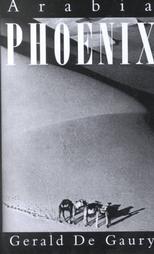
I had read some of Gerald de Gaury’s works before, as he is an important source for the Middle East, where he served between the war, both as a soldier, diplomat and as the British Political Agent in Kuwait, when the oil first started flowing. His own works of history and biography are thorough and well-researched but his memoir plunges you quickly into a highly scented world, dominated by duchesses, desert Kings, sacred relics, palace balls and precious instances of male beauty –all held together by De Gaury’s bravery, good looks and impeccable manners. So one soon gets used to swinging between ecstatic descriptions of Lord Kitchener as a ‘centaur of old’ who ‘sat there as if a God…precisely as the Roman Emperors had been worshipped’ immediately followed by an admirably restrained description of his own experience as an eighteen year-old soldier at Gallipoli. Just before going into combat, they were given an identity disk, the easier to identify battlefield casualties and instructed to shave off all body hair, crop their skulls and keep their stomachs and bladders empty, the better to help the field surgeons in their work. After such encouragement, they were landed by boat, then hidden in blisteringly hot trenches for a couple of days before being led into the hills by their general who having first lost his way – eventually managed to stagger towards the battlefield, where for four days and nights the fighting raged continuously and uncontrollably. Gallipoli was arguably the last great medieval battle of the modern age, fought in the hinterland of Troy, without benefit of radio or motorization. Just 100,000 men left to kill each other amongst hills and ravines, supplied with water and shot by mule trains. Both the Allies and Turks suffered from the terrifyingly powerful, but inaccurate, naval bombardments from the line of French and British battleships. De Gaury’s battalion lost every officer and sergeant but still the soldiers fought on. He was fortunate to have been rescued by a gallant Australian giant and would recover from his wounds, at a hospital in Malta, where the only book he could find was an Arabic grammar – which accidentally prepared the way for his future career in the Middle East.

So, having survived three further wounds in the trenches, he was quite non-plussed to later find himself sitting down to dinner next to The Archmandrite at Julfa, the Armenian suburb of Isfahan, who confessed “that his three immediate predecessors all died in suspicious circumstances.”There were also many happy memories, such as a midnight supper party held in a palm garden outside Basra, where the grapes taste of roses, where water-pipes are smoked, araq is sipped and the local delicacy, an aphrodisiac sherbet made from the stamen of the male date palm, is served until dawn….when the minstrels cease their playing. His role as a diplomatic envoy involves one in a bit too much of the stifling protocol of palace life, though fortunately the savagery of political life keeps bursting through the plush velvet. For instance, the Regent of Iraq used a post-war state visit to exact his revenge on one of the Iraqi generals who attempted a coup back in 1941. The President of Turkey refused to hand this refugee general directly over, but eventually agreed to expel him into neutral Syria, where he was promptly seized by British agents and bundled across the border to Baghdad. There the Regent tricked him into betraying some more of the conspirators, before having his old adversary strung-up from the gatehouse of the army headquarters where his body was left to rot at the end of the rope for four days. On another occasion, the Sheikh of Mohammera (with whom the British may have been plotting to set up an independent Emirate which would occupy most of the oil-rich territory of southern Iraq and southern Persia) is left to make his own explanations to the Shah when summoned to the court at Tehran. He never returned from this audience – which left his old adviser, De Gaury, to try and create a financial settlement from out of the murdered sheikhs property for his 22 surviving sons.

His lifelong interest in precious objects takes us on many an eccentric quest, but in his company we get to look on the wand of the Prophet Muhammad, the holy grail – as seized by the Genoese during the Crusades, as well as an abortive attempt to track down the Archangel Gabriel’s feather. Boccaccio reported that this relic had been left behind after the Annunciation, an object William Beckford had described, back in the 18th century, as “of a blushing hue more soft and delicate than that of the loveliest rose’. Though not even this, a full three feet long, gets such an attentive description as De Gaury’s memories of a flogging – It seems quite clear from his elegant evocation he relished his command over the Iraq Levies, a volunteer force, which assisted the British occupation that had been largely recruited from the Marsh Arabs. He even elegises about the tedium of garrison life for “We each had a punkah boy who tugged away at his cord during the hot afternoons from his place on the verandah…we woke from siesta in time for an evening game of polo on the sun-baked field behind the camp. After it we would ride back on our sweating ponies to the Mess and there sit on the roof while the sun went down, trying to quench an unquenchable thirst.” If only he had carried on in this vein he might have produced something sufficiently idiosyncratic to rival the works of T E Lawrence, or Jean Genet.
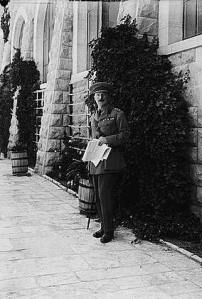
Ronald Storrs memoir, Orientations, is not so obscure a literary document, indeed it was briefly a runaway success, that went into many printings in the late 1930’s, just before the second world war. Storrs had been the ‘eminence grise’ behind many of the British pro-consuls of Egypt, such imperious Lords as Cromer, Kitchener, Gorst and Killearn. The Oriental Secretary to a succession of British Consul-Generals, Residents and Ambassadors, who whatever the modesty of their official titles ruled Egypt and the Sudan for almost a hundred years A good Oriental Secretary was required to combine a number of roles, from watching over the daily clippings of local Greek, Arabic and French newspapers, to running foreign and domestic intelligence, liaising with the secret-police, as well as working as a social secretary who knew who to invite, where and when – and also kept a useful tab on their weaknesses, indiscretions, secret vices and rivalries. The job required fluency in half a dozen languages, an acute, restless intelligence and an interest in every form and manifestation of life. Even as a young man, Ronald showed this. At Cambridge he was part of a debating club that included such future key members of the Bloomsbury group as Lytton Strachey and the young Keynes, while he also mingled with the Crabbet Park set, whose aristocratic host encouraged his guests to talk through the night and bathe at dawn, after which they played lawn tennis stark naked until breakfast intervened…

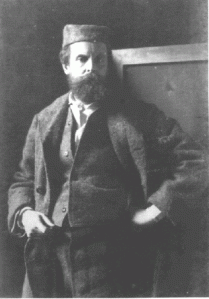
But in those halcyon days, before gossip columns drove all the free-spirits out of politics, the naked, prancing figures on the grass court would also include a future Viceroy of India, battling it out against a future Secretary of State for Ireland, amongst the care-free decadents. Their ancient host, Wilfrid Blunt, was one of the leading breeders of pure Arab racehorses, a travel-writer, a poet who had been the vociferous champion of independence for Egypt, Ireland and India in the late 19th-century, as well as a womaniser of heroic stamina. As we read our way through Storrs, we get to meet many other flawed heroes, such as Said Zulfikar Pasha, Grand Chamberlain and keeper of palace secrets to five Khedives of Egypt, not to mention Sir Rudolph Slatin Pasha, whose lifelong experience of government in the Sudan included ‘twelve years as a prisoner of the Mahdi, naked, often in chains.” We watch old Sir Evelyn Baring (who as Lord Cromer was the hated architect of British rule in the Middle East) leave Egypt for the last time,‘departing through streets lined with troops ‘amid a silence chillier than ice.” We also stumble, almost casually, across the making of modern history, for Storrs was intimately involved in plotting the alliances with traditional leaders that led to the Arab revolt as well as watching (with alarm) the creation of a Jewish homeland from out of British occupied Palestine. Without coming off his apolitical fence he observes the ability and ferocity of such leading Zionists as Vladimir Jabotinsky (who like many of the toughest Zionists had come from families that had been brutalized by Tsarist persecution) and also the chance incidents that bound so many leading British statesmen to the Zionist cause. They felt under an enormous debt of gratitude to the moderate British Zionist, Weizmann, who had invented a vital high-explosive known as Acetone (first made from horse chestnuts gathered by school-children). While it is also often forgotten that A J Balfour, of the Balfour Declaration, represented the parliamentary constituency of Manchester (which at this period was almost half Jewish in population) which naturally inclined him to listen to what Professor Weizmann of Manchester University, and so many other of the leading Zionists of Britain, proposed.
Arguably Storrs should have ended Orientations in 1926, on page 455 with his biographical review of his old colleague, T E Lawrence. It would have made a splendid finale, and spared us the long chapters on the slow transformation of the wicked, and camp young Oriental Secretary, into a married man, a knight and a colonial governor. One feels worried for his wife and for his library of rare manuscripts, first editions and private letters which was engulfed by a fire started by a mob of Greek Cypriots storming Government House in Nicosia.

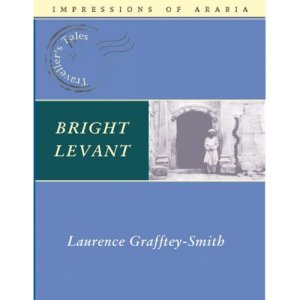
His life story is mirrored, aped and occasionally mocked by one of his juniors, Laurence Grafftey-Smith, whose career overlapped with Storrs for some ten years. So that ‘Bright Levant’ not only makes a perfect companion piece to ‘Orientations’ but continues the eyewitness story of Britain’s political intrigues in the Middle East until 1956. Apart from their shared intelligence, ambition and capacity for palace intrigue, Storrs and Grafftey-Smith shared an intriguingly similar background. They were both impecunious sons of clergymen, educated in good but not glamorously well-connected public schools (Storrs went to Charterhouse, Grafftey-Smith to Repton) who made the very best of their university years. They had need too, for the competition amongst graduates for a place in the old Levant Consular Service was fierce, with examination halls packed full of six hundred clever young-men competing for just four or five places. Grafftey-Smith was fortunate to be among the last to be educated by the great polymath ‘Persian’ E.G. Browne, who he describes with a ‘finely chiselled face… a radiance of intellect and of love for his fellow-man. I never met a kinder man.” Grafftey-Smith was not alone in this sense of gratitude. To honour a lifetime of work on Persian literature his 100th birthday was celebrated as a national holiday in Iran.
Constantinople, with its First, Second and Third Dragomans permanently attached to the staff of the British Embassy, was the most sought-after posting within the Consular Service – which could lead to terrible feelings of neglect to those Consuls languishing for years in less glamorous trading ports. The depressive condition of ‘Consulitis’ manifested itself through alcohol and an obsessive concern for rank – but could sometimes reach fatal proportions, like the time when Lord Dufferin had to call out from his office door for ‘lots of blotting paper quickly!” after one of his Consuls had capped his list of grievances by blowing his brains out over his Ambassadors desk in mid-interview. Grafftey-Smith’s first posting, to Alexandria, was with one such madman as a boss – a rites of passage initiation into British eccentricity on the cusp of madness. Having survived this test he was moved to Cairo to join the court of the British Consul-General guarded by canvasses in scarlet and gold and served by a team of foot messengers in uniforms of blue. But despite the collective brilliance of this colonial cabinet of mandarins, Grafftey-Smith also observed the dangerous isolation that race and class-obsessed British had imposed upon themselves, centred around the Turf or the Gezira Sporting Club.

They were all observed by the reigning Khedive, Fuad, who ran his own intelligence network through Ismet Bey, his Nubian valet who controlled the appointment of every door-keeper, house-boy and cook in Egypt. Fuad (his voice reduced to a bat-like shriek after he had been shot in the throat by his brother-in-law) resolutely attempted to claw back power to the Khedival throne throughout his reign. So the palace intrigued with both the nationalists and the British, who were themselves often divided in policy – between what the officials in Cairo desired, set against the different policies of the India Office, the Foreign Office and the politicians in Westminster. It was dangerous but exciting times for an intelligent young Consul in the 20’s and 30’s, with Egypt riven by nationalist agitation and assassinations, Arabia disputed between Britain’s two allies (the al-Saud and Hashemite dynasties) with both Iraq and Syria trying to throw off colonial tutelage and Palestine convulsed by the Jewish settlements. Grafftey-Smith is especially good on character assessment: how he considered the Hashemite Sherif of Mecca had been permanently marked by his youthful exile in Ottoman Istanbul (where he was closely watched by Ottoman agents), so that ‘his Proust-like gerundial clauses’ of his language had become so guarded and complex ‘that neither I or my translator could ever be sure what the King was trying to say.” Ibn Saud’s character by contrast, had greatly benefited by his own experience of exile in Kuwait, where he not only tasted poverty but developed friendships with Turks, Druze, Shia and Christian Arabs that he might never have been exposed to in the Wahhabist oasis strongholds of his Arabian homeland.

Grafftey-Smith was not a natural-born courtier (unlike Storrs or De Gaury) and so his anecdotes about monarchs can appear to have an almost republican flavour. Such as the tale of young King Farouk, pouring his tip of gold coins into a basin full of vitriol (to torture some porters with a choice between pain and greed) and how the saintly old Hasemite Emir of Mecca would sometimes descend into his underground dungeon and randomly club the chained inmates. Indeed the fascinating but grim tours of duty in Albania (just before the Fascist invasion), or in Iraq (just before a nationalist uprising would clove his successor in-two with a pick-axe on the Consulate staircase) and at the Red Sea port of Jeddah were clearly meant to be punishment for Grafftey-Smith’s outspoken views and policies. But at times of crisis, like the panic-ridden months when General Rommel appeared to be about to occupy Cairo with German tanks, Graffety-Smith more than proved his worth as a mastermind of propaganda. But his caustic wit comes through to leave few unscathed, whether he is observing W. Thesiger eating, J. Morris recording the wrong aphrodisiac recipe or Rosita Forbes faking her desert travels. Only the old desert warrior-King, Ibn Saud earns a consistently good word from Grafftey-Smith, who describes him as of ‘great physical strength, and the gentle hands and charming smile that made many love him’. This affection is confirmed in the ringing last paragraph of Bright Levant, “Tombstones and all other memorials of mortality are anathema to a true Wahhabi. His Majesty Abdul Aziz ibn Abdurrahman al Saud lies in the sands, wrapped only in a shroud; and today one must ask of the desert winds and of the cold Arabian stars to find his resting place.”

But even this grandiloquent conclusion might also be considered to be part of his long professional duel with Ronald Storrs who had ended Orientations, with this penultimate paragraph quoting one of Sufi heroes of mystical Islam, “Oh my Lord! If I worship thee from fear of hell, burn me in hell; and if I worship Thee from hope of Paradise, exclude me thence: but if I worship Thee for Thine own sake, then withhold not from me Thine Eternal Beauty.”

Plainly some of the wisdom of the East, not just its scents, palaces and politics had seeped into the veins of Britain’s great Dragoman-Consuls of the Levant.

Return to Cultural Essaya

Barnaby Rogerson May, 2011. The public domain photos show the cover of Arabia Phoneix by Gerald de Gaury, Lord Kitchener in the famous recruiting poster, Ronald Storrs, Wilfred Scawen Blunt and the cover of Bright Levant by Laurence Graffety-Smith. Barnaby is profiled below.

Leave a comment

Filed under Books, Publishing

PROFILING ANTHONY GARDNER

Anthony Gardner is an Irish author and journalist based in London. He edits the Royal Society of Literature’s magazine RSL, is a Fellow of the Society, and writes for a variety of newspapers and magazines, including the Daily Telegraph and the Sunday Times Magazine. The Rivers of Heaven is his first novel and published by Starhaven. He is also founder of http://www.tomorrowsbooks.com.

For Anthony’s website click

Leave a comment

Filed under Adult Fiction, Books, Publishing