SAILING INTO THE DOLDRUMS WITH THE PLASTIKI

Documentary maker Max Jourdan’s fabulous diary from last year’s voyage of the environmental craft Plastiki, with excerpts from David de Rothschild and fellow crew members, sails on fearlessly:

Late April. The Doldrums (Max Jourdan)

‘L’enfer, c’est les autres’ (‘Hell is other people’) purports the existentialist slogan. Inching our way along the seventh parallel under a blistering sun, I would tend to agree. The edge of ‘The Doldrums’. The ‘Plastiki’ is spinning around like a top going nowhere fast, even backwards at times. Some mornings you wake up with your entire soul in a minor key. Feeling like you just want to line the crew up on deck, make them beg for mercy and pop them all in the head with the flare pistol. Wham. 35 days at sea in a Tupperware box, like rancid cheese. What do you expect?

30 April. Christmas Island (David de Rothschild)

We arrived on Christmas Island yesterday, very early in the morning. We got a tow in (after overshooting the island) from one of the local ferry-boat handlers, who managed to pull us into the very shallow lagoon; getting in and out of these atolls can present real challenges. On shore we received a welcoming ceremony from the local community; there was an amazing dance from some local school kids to welcome us.

The first thing I did on land was eat some chocolate and drink a soda. We ate some local fare – coconut cakes and some coconut water. While we’re here we’re going to be meeting local environmental and agricultural groups, and visiting a number of bird sanctuaries and wildlife projects that have been funded by the New Zealand government. We will also be replenishing the hydroponic garden, maybe with some bananas. Community spirit here seems amazing; people are always smiling and very welcoming.

4 May. Leaving Christmas Island (David de Rothschild)

It’s been almost a week since we reached Christmas Island. Although it’s hard to tell really – we’ve all switched on to ‘Island Time’. It has been a very full schedule, lots of school talks and meetings. The boat maintenance consumes a lot of our days. Matt and Graham have been fixing the rudders which got a little damaged as we were towed into the dock. David T has been working on repairing the sail with Jo. We’ve also now replenished our kitchen stocks with some new food for the next leg of the journey.

We’re getting close to hitting the high seas again. We’ll be welcoming some new crew and fresh minds on board.

9 June. On Samoa (Jo Royle, skipper)

Mr T and I have been extremely busy since we got here; we’re trying to prepare the boat for another long leg towards Sydney, where we expect to see the worst weather we’ve seen on the voyage. I’ve serviced all the electrical gear. We’ve still managed to survive off 100 per cent renewable energy since we left San Francisco, which is incredible because we have lots of “Digital Dave [de Rothschild]” and “Digital Graham [Hill]” using our computers and communications.

After a few weeks with another female crew member, I will be back to being the only girl, which I’m a bit apprehensive about, as it’s always good to have another girl to giggle with. But I can’t moan too much; the guys are great. There are six of us living in this tiny cabin and we’ve been at sea for 60 days. To be honest, the most annoying habit is probably the boys showing me their spotty bums; they have very spotty bums from sitting down all the time and I don’t need to see that!

Western Samoa is actually environmentally leaps and bounds ahead of some English towns; we’ve got to catch up, otherwise it’s a bit hypocritical for us to go around the Pacific spreading this message. They already use biodegradable BioBags, as plastic bags were banned in 2006.

READ ON SOON…

Photograph of the boat’s navigation system courtesy of the Plastiki crew. For more information on the expedition and the message, go to the web-site http://www.theplastiki.com or by clicking

Leave a comment

Filed under Environment

CONTINUING VOYAGES OF THE PLASTIKI

Documentary maker Max Jourdan’s fabulous diary from the environmental craft Plastiki continues:

Early April. Dawn watch

Waking up for the 4am watch, feeling like the ship’s cat has peed in your mouth. You stumble around head bowed under a red glow looking for damp clothes in the cramped space. In the cabin you pass half-undressed members of the other watch. “Morning.” “Good night.”

Emerging into the strange night you venture to the deck’s edge and grab hold of a mast stay, flexing cold-metal with every movement of the ship. You fumble with layers and zips as you lean over the edge for a piss. Jo said, “Most sailors lost at sea are found with their tackle out.”You sit at the helm and steer the course: 150 degrees. “The Pacific covers an area larger than that of all of the Earth’s masses combined,” you read, and contemplate the curving horizon with rising emotion. There’s a full moon: mesmerising, huge, white, round – and dead ahead.

The hours flash by. You hand over the helm and stand up. Looking at the boat’s wake, you realise dawn is approaching. The ocean is iridescent purple, and lines of orange and blue edge the sky. The entire sky is humming, as light from the sun arcs through the atmosphere. Overwhelmed, you just want to scream, but the rest of the crew is asleep.

6 April. How to kill a tuna fish

1.4 billion hooks are deployed annually on long lines. Some of these can be as long as 75 miles, allowing a fishing vessel to gather 50 tons of fish in one haul. We are trawling one fluorescent, feathered, garish lure on the end of a line and rod. I’m the first to get to the rod after we become aware of the whine of reel. The rod is bent in half and it feels like I’m dragging an oil drum in the boat’s wake. “Make sure the line doesn’t snap,” someone advises. But I am confident in the gear. The lady at the Sausalito tackle store told me we needed 50 lbs test line. “There’s some big fish out there,” she had warned.

“Maybe we need something tougher, then,” I said.

“Let me tell you something…” she replied and paused.”Anything bigger you don’t want to be pulling up on your boat.”

I am inching monofilament back on to the reel. “I hope we haven’t caught a shark,” I think aloud. Finally it surfaces by the boat. Flashing silver and blue and yellow. “That’s the biggest tuna I’ve ever caught,” mumbles Olav who previously spent two-and-a-half months floating across the Pacific on a replica of the Kon-Tiki. “Must weigh nearly 25 kilos.”

The tuna flaps around the deck, spraying blood everywhere. Olav hits it with the bat and I plunge a knife into the back of its head to reach his spine. We don’t measure it, just start butchering it on deck. The flesh convulses powerfully in our hands and Olav and I look at each other. Conveniently the rest of the crew seem to have disappeared. We cut the whole fish up into steaks passing them through to the galley.

8 April. Notes from the ‘Plastiki’ tramp

23.3 degrees of latitude. Sounds exotic; so why is it so cold? Jo told me, “By day five you’ll be in a pair of shorts and T shirt.” I’ve woken up on deck wrapped in a wet, grey, wool blanket; the kind the Salvation Army hands out to homeless people in winter. Did I remember to brush my teeth last night? Mouth all dry. Hair stiff like salty rope. Glasses frosted with spray.

Trousers are torn and disintegrating. Maybe dragging them by a rope in the boat’s wake for a few hours and drying them in the sun was a mistake. But it’s better than wearing the smell of tuna blood. I’d like to see myself as a hobo riding the ‘Plastiki Pacific Slow Boat to Somewhere’; but really I’m the official ‘Plastiki’ tramp. Crawl through to my hutch. The cabin smells like six teenage, grubby, campers are living here. Five men. One woman. Poor Jo.

15 April. The middle of nowhere

I’m not out here on some jolly, organic, culinary cruise across the Pacific. I’ve got a job to do. So when Jo pops her head out of the cabin and looks out at the ocean and grey dawn with a ‘this-is-not-just-another-day-at-the-office’ expression I pick up the camera. Turn on, press record, frame, focus, re-frame. Jo’s blue eyes crystallise on the LCD screen. I can sense the thoughts formulating on her lips. “What’s up, Jo?” “We’re more than 1,000 miles from any landfall,” she says. Jo looks profoundly happy. “What does that mean, Jo?” “It means it would take someone quite a while to rescue us. It means we’re alone.” The announcement is electric.

This is precisely why I took this assignment on, I think. In my peripheral vision, I can sense some members of the crew don’t share our mutual delight.

19 April. Let them eat cake

24 days at sea and maybe 20 more to go before landfall on Christmas Island. There are some pressing concerns; water is being consumed too fast, toilet paper is running out, the furling system starboard side is broken and the foresail ripped. Running out of bread is a serious problem. Just look what happened to Marie Antoinette. I’m not saying this as a Frenchman, but because bread is part of the ritual of our daily lives; it provides sustenance, pleasure and even bonds people.

An ocean-crossing is all about being self-sufficient, from mending sails and water pumps to baking bread. Unfortunately, we’ve got only a solar oven (delusional dream of some wacky hippy baker). The wrapping and instructions displayed a perfectly roasted Thanksgiving turkey. It’s so hot out here you could fry eggs on the plastic deck, but I still haven’t got the temperature above 120C. “What bread can we bake with no oven and a miniature grill?” I ask Jo. We run through the naans, flatbreads, galettes, rotis and chapatis of our desires. Olav suggests the chunky Norwegian black rye bread of his youth. In the end we opt for pita.

READ ON SOON…

Photograph courtesy of the Plastiki crew. For more information on the expedition, go to the web-site http://www.theplastiki.com or by clicking

Leave a comment

Filed under Community, Environment

EARTH DAY, APRIL 22, WITH A LOT OF PLASTIKI BOTTLE!

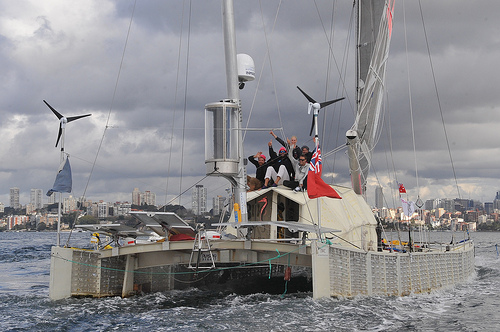
When David de Rothschild sailed across the Pacific last year, the voyage became a model of the media-savvy eco-adventure. But what was life like aboard the ‘Plastiki’, inspired by Thor Heyerdahl’s trail-blazing expedition on the balsa wood raft ‘Kon-Tiki’, sixty-two years ago? On board the ‘Plastiki’, a 20ft by 60ft press office was strapped to 12,000 plastic bottles, as documentary maker and photographer Max Jourdan and his crew mates kept the ship’s blog.

Max’s film of the voyage of the ‘Plastiki’ will be transmitted on the National Geographic Channel on 22nd April to celebrate Earth Day. ‘Plastiki: An Adventure to Save Our Oceans’ by David de Rothschild will also be published at the same time, with an event at the Paragon Sports on Broadway in New York. Phoenix Ark Press are delighted to re-blog a version of an article that appeared in the Independent, and extracts from the diary will be blogged over the coming week.

A lot of bottle: Life on board the Plastiki by Max Jourdan

“Do you want to cross the Pacific on a boat made of plastic bottles?” I was asked a year-and-a-half ago. “Yes,” I replied, without hesitation. I figured it wasn’t a question that would come up again soon. The ‘Plastiki’ adventure began when David de Rothschild, the British adventurer and environmentalist, came across a United Nations report on the state of the world’s oceans, which pointed to the fact that our seas and their ecosystems are dying, suffocated by millions of tons of human waste, in particular, plastics. There was also the ‘discovery’ of huge gyres of plastic waste ‘the size of Texas’ trapped in oceanic vortices. Sailor and environmentalist Charles Moore had sailed through one of these Pacific ‘garbage patches’ in 1997 and brought back grim samples: a briny soup in which plastic nano-particles outnumbered plankton by a ratio of six to one.

Inspired by the famous ‘Kon-Tiki’ expedition, David decided to build a one-of-a-kind expedition vessel, incorporating that ubiquitous item of rubbish, the plastic bottle, and sail it across the Pacific to encourage the world to ‘beat waste’. He was keen to show that with more efficient design, and a smarter understanding of how we use materials, waste can be transformed into a valuable resource. The ‘Plastiki’ is the result of nearly four years of design, boat-building, hipster environmentalism and cutting-edge research into plastic polymers.

I started documenting the adventure for a National Geographic Channel film nearly two years ago, when the Plastiki was still just a bunch of wild sketches on a naval architect’s notepad and a pile of dirty recycled bottles in a San Francisco workshop. Work at the construction site was slow and disorganised. All of the plastic materials used to build the boat’s structure were untested and, to his credit, David insisted on a hull design that incorporated recycled plastic bottles in their original form. Whatever vessel was going to emerge from this zany endeavour would have to be strong enough to sustain months of battering and ultra-violet degradation under the punishing equatorial sun.

I went 100 miles out to sea for a weekend trial, with a crew I barely knew. Five men and one woman. Most of us hadn’t ever sailed before. David spent the entire time vomiting his guts out and we lost a few bottles from the hulls (which we retrieved); but skippers Jo Royle and Dave Thomson reckoned the ‘Plastiki’ was ready as she would ever be. The morning we set off in March last year, a hard-boiled sailor warned me I was mad to be taking part; the ‘Plastiki’ would never make it past the Golden Gate Bridge, let alone 8,398 miles across the Pacific.

Could we prove him wrong? One thing we did have to give up on was sailing to the infamous northern ‘garbage patch’; the ‘Plastiki’ couldn’t get us there. Despite its sci-fi appearance, the boat is more like a raft than a conventional sailing vessel. It can’t sail up wind, nor can it really battle against currents and weather systems. It can only go with the flow, in our case, from East to West following the Pacific currents and trade winds. The garbage gyre lies north of Hawaii and from our launch in San Francisco it was beyond our reach.

Cooped up for weeks on end in a sweaty plastic cabin the size of a tent or roasting under a fierce equatorial sun, I tended to forget what the mission was all about. Life boiled down to basics: sleeping, eating and helming around a 24-hour watch system or tending to nautical chores (and coping with the interminable noise of the ‘Plastiki’s’ 12,000 odd bottles dragging against the sea and the rest of the boat).

I was also distracted by my own self-centred emotional experience of life at sea and hypnotised by endlessly changing vistas of sky and ocean wilderness. But I wasn’t there to change the world; I was aboard to film a bunch of people trying to make it across the Pacific on a crazy plastic boat. And to blog and tweet just about every nautical mile of the way…

23 March. Leaving San Francisco (David de Rothschild, expedition leader)
So, we’ve made it, day two on board the ‘Plastiki’! Seems I got away with it on the first day but have started to feel sick again due to what seem to be massive swells surrounding the ‘Plastiki’, although the sun is out, which makes it really amazing to be out here. Spray seems to be hitting every part of the boat covering the decks, cabin and us with salt water.
We have a new crew member – a flying fish hanging out in the bottles. Olav [Thor Heyerdahl’s grandson] is trying desperately to prise it out for dinner. Max is talking to himself on the helm – which is entertaining the rest of us. Off to get a sleep before dinner, although with Olav cooking I might give it a miss; got a feeling it could be flying fish….

READ ON SOON….

Photograph courtesy of the Plastiki crew. For more information on the expedition, go to the web-site http://www.theplastiki.com or by clicking

Leave a comment

Filed under Books, Environment

THE 7TH PHOENIX ARK CULTURAL ESSAY

THE TWO WILLIAMS by Anthony Gardner

Recent travels have brought to mind two poets. Several weeks ago I was in Ireland, and thought inevitably of Yeats, whose poetry illuminated my own upbringing there. A fortnight later I visited Wordsworth country, which I’ve come to know only in the past few years. What, I found myself wondering, would each of these great writers have made of the other’s milieu, had Wordsworth not died fifteen years before Yeats was born? And what would they make of their domains today?
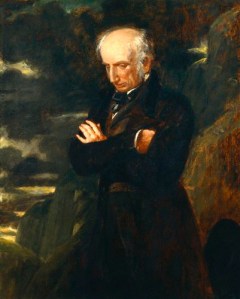
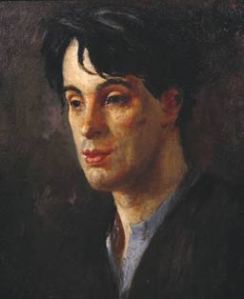
My Irish visit focussed on County Laois – not a region strongly associated with Yeats. But the Georgian mansion in which I stayed (now beautifully and painstakingly restored , as a hotel) was instantly evocative of his ‘Upon a House Shaken by the Land Agitation’, celebrating the virtues of gracious living:

‘…the sweet laughing eagle thoughts that grow
Where wings have memories of wings, and all
That comes of the best knit to the best…’
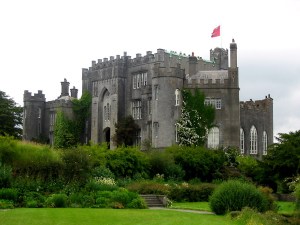
Many such houses were burned to the ground in the 1920s, and those that survived in the area have had widely different fates. Birr Castle remains the home of the Earl of Rosse, though its grounds and Victorian observatory are open to the public; Stradbally Hall is the setting for Ireland’s leading music festival, the Electric Picnic; Leap Castle (the country’s most haunted) is being restored single-handed, by a professional tin-whistle player, Sean Ryan.

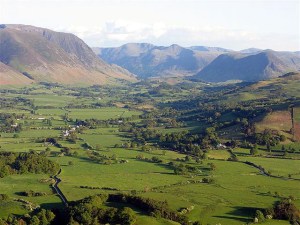
In the Lake District, I visited the village of Lorton, four miles from Cockermouth (the town in which Wordsworth spent his early childhood). Lorton’s most famous inhabitant is an ancient yew tree, to which Wordsworth devoted a short poem, including the lines

‘This solitary tree! A living thing
Produced too slowly ever to decay;
Of form and aspect too magnificent
To be destroyed.’

This has proved over-optimistic: the tree is only half the size it once was; but it is still an impressive sight, and the fact that Wordsworth made the pilgrimage to see it brings a small thrill.
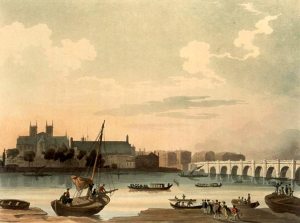
Wordsworth did not, to my knowledge, ever visit Ireland, nor Yeats the Lake District; the one place they had in common was London. The fact that Wordsworth, the great poet of nature, should have written the most famous of all poems in praise of the capital – ‘Upon Westminster Bridge’ – has always intrigued me. It is curious too (though in keeping with the tradition of the Irish artist in exile) that Yeats’s most famous poem, ‘The Lake Isle of Innisfree’, was inspired by a shop window in the Strand:

‘I will arise and go now, for always night and day
I hear lake waters lapping with low sounds by the shore.
When standing on the roadway, or on the pavements grey,
I hear it in the deep earth’s core.’
Wordsworth might have found in this an echo of his own ‘Lines Composed a Few Miles Above Tintern Abbey’, with its gratitude for memories of nature ‘’mid the din/Of towns and cities’. But I doubt that he would have thought much of Yeats’s lake and ‘bee-loud glade’: it’s far too tame, a world away from the grandeur of the Cumbrian scenery ,which formed his own sensibility with its ‘huge and mighty Forms’. The waterfalls and seascapes which characterise Yeats’s early West of Ireland poems would have left him equally unimpressed, for all the delight of fairies dancing

‘Where the wave of moonlight glosses
The dim grey sands with light…’

Yeats’s Celtic Twilight is a soft, dreamy thing which the harsh winds that blow with ‘strange utterance’ through Wordsworth’s ‘The Prelude’ might rip away in a moment.

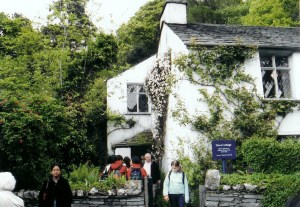
Let us turn the tables, though, and imagine Yeats visiting Wordsworth at Dove Cottage. He would certainly have approved of the domestic set-up – Mary and Dorothy Wordsworth, indulging William as he himself was indulged by his young wife Georgie. But the building itself? Surely not in keeping with Yeats’s notion of the poet’s role in society: for him the Duke of Urbino’s court or Lady Gregory’s Coole Park were where a great artist belonged, at once creating beauty and finding inspiration in beautiful things. Even the much larger Rydal Mount, to which Wordsworth moved in 1813, would hardly fit the bill.
Perhaps Wordsworth takes him across the fells to visit the family’s old home in Cockermouth. Now owned by the National Trust, it ranks second only to Cockermouth Castle in the town. ‘That’s more like it,’ thinks Yeats; but Wordsworth has a bitter tale to tell about the aftermath of his father’s death, and the failure of John Wordsworth’s employer, a landowner on a grand scale, to repay an enormous sum owing to the family. No wonder he doesn’t share his guest’s enthusiasm for the splendid dwellings of the rich.

He might approve, though, of the home Yeats creates for himself in later life. Thoor Ballylee in County Galway is a ruin restored

‘With old mill boards and sea-green slates,
And smithy work from the Gort forge…’

but even after refurbishment it’s pretty uncomfortable. To Yeats its greatest importance is as a symbol from which he draws inspiration for ‘The Tower’ and other great late poems. Wordsworth is stirred by ruins, too, from those of Tintern Abbey, to the ruined cottage which symbolises a peasant family’s suffering in the eponymous poem.

Can we picture the two men working side by side as Wordsworth did with Coleridge? Not easily. For one thing, Wordsworth likes to walk while he is composing, while for Yeats writing is ‘sedentary toil’. But from time to time he climbs to the top of the tower and looks about him. How different Galway in the 1920s is from the gentle countryside of his youth!

In the final part of ‘Mediations in Time of Civil War’ he sees phantoms of hatred sweeping across the sky in a ‘rage-driven, rage-tormented and rage-hungry troop’.

Perhaps Wordsworth accompanies him up onto the roof after dinner and they confront the tumult like a pair of King Lears, the wind blowing their white hair into halos. But I suspect not: Wordsworth has seen enough of bloody civil strife during the French Revolution – for him such things are best considered in the light of a new day, as in ‘Resolution and Independence’:

‘There was a roaring in the wind all night;
The rain came heavily and fell in floods;
But now the sun is rising calm and bright;
The birds are singing in the distant woods…’

For today’s visitor to the Lake District, these lines recall the terrible floods which assailed Cockermouth and Workington last winter. I think Wordsworth would be impressed by how his birthplace has picked itself up again, and reassured that the stoicism of the local people still endures – though saddened by the way in which traditional agriculture has been eclipsed by tourism.
As for Yeats’s homeland, it is significant that when Ireland was forced to accept the EU’s financial support a few months ago, the Irish Times quoted his ‘September 1913’ in its leader:

‘Was it for this…
…………that all the blood was shed,
For this Edward Fitzgerald died,
And Robert Emmet and Wolfe Tone,
All that delirium of the brave?’

Only Yeats at his most magnificently scathing could do justice to the ignominy brought upon his country and the spectacle of picturesque landscapes lost to thousands of unfinished houses.

It is possible that the two great poets would not have got on at all. Wordsworth was not known for his kindness to younger writers, and made a poor impression on Keats when the latter came to pay his respects. Yeats counted Wordsworth among his early heroes, but was more critical of him in middle age:

He strikes me as always destroying his poetic experience, which was of course of incomparable value, by his reflective power. His intellect was commonplace and unfortunately he had been taught to respect nothing else.

Nevertheless, roaming the countryside together, I think they would have found shared sympathies – for example, their concern for ordinary people, such as the shepherd deserted by his son in Wordsworth’s ‘Michael’, or the old pauper in Yeats’s ‘Adam’s Curse’ breaking stones ‘in all kinds of weather’. Indeed, if I had to choose the poem by Yeats that brought him closest to Wordsworth, it would be his description of his ideal reader, ‘The Fisherman’:

….his sun-freckled face,
And grey Connemara cloth,
Climbing up to a place
Where stone is dark under froth,
And the down-turn of his wrist
When the flies drop in the stream;
A man who does not exist,
A man who is but a dream…’

Return to Cultural Essays

Anthony Gardner April 2011. The public domain photos are Wordsworth by Robert Haydon, Yeats by Augustus John, Birr Castle, The Lorton Valley, Westminster Bridge and Hall, painted in 1808, a year after Wordsworth declared ‘Earth hath not anything to show more fair’ and Dove Cottage today. Anthony is profiled below and his novel ‘The Rivers of Heaven’ is published by Starhaven.

1 Comment

Filed under Community, Poetry, The Arts

PROFILING ANTHONY GARDNER

Anthony Gardner is an Irish author and journalist based in London. He edits the Royal Society of Literature’s magazine RSL, is a Fellow of the Society, and writes for a variety of newspapers and magazines, including the Daily Telegraph and the Sunday Times Magazine. The Rivers of Heaven is his first novel and published by Starhaven. He is also founder of http://www.tomorrowsbooks.com.

For Anthony’s website click

Leave a comment

Filed under Adult Fiction, Books, Publishing

ANSWERING A LETTER FROM A READER

‘Hello. I am a big fan of your stories. I especially loved Fell, and the scene with the salmon.
I was wondering though… This is the first time I’ve been to this site, and excuse me for saying that I am a little confused as to what is going on. I have never heard of Phoenix Ark, and would like to know when it started, and by whom. I think it’s a great idea to focus on writers and sharing the stories they work so hard on. I am very interested in it (being a hopeful writer myself). I hope that you succeed in letting your voices be heard, and that everything works out. When Scream of White Bears comes out in Canada, I’ll be anxious to read it.

Helene

Dear Helene,

many thanks for writing. Phoenix Ark was founded by David Clement-Davies, mid last year, in response to the awful publishing climate, and the politics inside many big publishers too, to talk straight to readers, and allow writers’ voices, even beyond their works, to be heard, shared, and to hope that writers and artists are really respected and protected too. The problem we faced and face is the very difficult financial climate, and so raising the necessary investment, not only to survive, but to really get books published properly, David Clement-Davies’s, and others. It was blogged that in fact we can only afford to get Scream of the White Bear, and probably other books, out electronically, to Kindle and elsewhere, though if investors came in, that could and would change. The founder, while trying to make a living himself, and come out of an awful and unneccessary battle in New York, is still looking for the right people though. We hope you like all there is on the website though, cover designs, cultural essays, personal blogs, articles, and a free story, and great to hear from you.

Very best,

Phoenix Ark Press

Leave a comment

Filed under Books, Community, Publishing

A LETTER FROM JAPAN, ONCE IN A THOUSAND YEARS

Dear World,

Let me try to tell you something about what I feel now.

18 days have passed since the earthquake, and what we know every day is much worse than we have imagined! We all knew that the big earthquake would come in near future in Japan, especially this SANRIKU area (north-eastern district). However it was much bigger than we thought, something like once in a thousand years, the specalist said.


As you know, one of the biggest problems is the trouble at the atomic power plant at FUKUSHIMA. Because of that, we have to be careful for water, vegetables, and so on. And saving electric is very important to do now. On the other hand, we afraid another earthquake may come to Tokyo, or Tokai area.

There are so many things to worry about, but what we must think about first, is how to help the people who are in a big sadness, losing family, or house, and everything. To clean and make the town again, is also important to do. All Japanese are on the same ship. We do the things we can, even if it is small. March is the season for School graduation, and everything starts from April in Japan. Of course, I’m afraid of many things, but must be strong to start making up our country, I think.

Yukari

Yukari is the wife of a Japanese Diplomat. The photos are from her best friend in Arahama, where the Tsunami washed away most of the town. They were sent with the following message about her friend:Her father is a traditional fisherman , and one of the big bosses of that area. It means they had such a big house, where they could have wedding or funeral of the area there. It is said it will take at least one year to clean the town. But she says even in this situation, all the family were saved, and just keep going on.

If words can bring a blessing, then we are listening and with you too.

Leave a comment

Filed under Environment

NEXT (VERY LATE) INSTALMENT OF DRAGON IN THE POST!

CHAPTER FIVE
Gareth’s heart was in his mouth, as he clasped the saddle pommel and the wind streaked through his hair, but despite his absolute terror, oh what joy, what bliss, what heaven, to be riding a real live dragon. He was a Dragon Warrior now, a lord of the air, and ahead of him the clouds and the blue swept out like a magic carpet, and in the distance rose the glittering towers of mighty Pendolis, like a hundred drawn swords.
The noise in his ears was of the rushing winds, but dimly below him, Gareth became aware of shouts and looked down proudly to see Sao and Sarissa, the Dragoman, Mordollon and all the others pointing up at him in wonder. He felt so proud to be astride this great black beast, after he had used the trick that he had read about in a fragment of The Very Dangerous Book, despite his mounting horror of how high he was now. The others must have been two hundred feet below, and even the dragons looked like sheep, with the terrifying change of perspective.
Gareth tried to calm his nerves, and breathe evenly, as his Godfather had taught him once climbing a tree in the country, but clutching that pommel, as the beast’s enormous scaly black wings flapped beside him, like two huge leathery sheets, Gareth Marks suddenly felt a little sick. The reason was, having no lasso, he had no reins either to steer the thing and now the dragon’s behaviour seemed to be changing. Underneath him, Gareth sensed the force of the gigantic, living animal, for the muscles along its spine seemed to be rippling beneath the saddle. Strange noises were coming from it too, grunts and groans, interspersed with great roars, as huge fire jets flashed out in front of it, warming the air that was streaming into Gareth’s face.
‘”Where are you going?” he cried suddenly, “isn’t this a bit fast?”
Gareth wished he hadn’t asked it because as it flew the beast’s back suddenly arched, as a roar came from its belly, as if from some terrible subterranean depth, and Gareth was bounced upwards in the saddle. It seemed the creature, climbing out of the stockade, had not even been aware of his presence and now that it was, Gareth sensed some evil, primordial light awake in its eyes and mind. It’s back bucked again, and then to the boy’s horror it’s great clubbed tail flicked up and forwards, smashing onto the saddle right next to him. It was trying to get its rider off, all right.
“Oh no you don’t” cried Gareth furiously, but even as he did, the Dragon dipped its right wing and to Gareth’s utter horror the creature flipped upside down in mid-air. What had been pure joy suddenly turned to near disaster, for Gareth was hanging in space, two hundred feet above his certain death. His left hand clutched the pummel though and luckily his right had managed to slip between the saddle and the dragon, so he had some purchase.
It was like riding one of those adventure playground pulleys, as the twelve year old was born along, feeling an agonising ache in his arms, but just as he was about to let go, the dragon flipped once more and he crashed back into the saddle with a winded groan. The Dragon had not given up trying to dismount him though, and now its roars and fire jets were getting stronger and more frequent, so poor Gareth was carried through a never-ending cloud of flame. But still the brave boy held on, clamping his legs as tight as he could to the saddle, determined to conquer the beast. The very thought seemed to travel through his gripping knees into the creature’s being and with that the black dragon suddenly roared and lifted, straight upwards, and began to climb.
It was like some rocket, and faster and faster it got, so now Gareth’s legs were trailing behind him. His eyes were watering furiously now, and he wanted to reach into his pocket to find some scrap of a clue as to how to handle this thing, but he knew if he let one hand go he would be lost. A terrible sadness suddenly enfolded him, that his dragon adventure should end like this, when the boy suddenly felt a tingling and then distinctly heard a voice. “Garreth. Listen Gareth Marks, and don’t think, just name it. You can only ride it if you name it.”
“Lethera,” whispered Gareth, “Is that you, Lethera? Where are you?”
“In Blistag, but outside, Gareth” came a distant, gentle female voice “For you are above the Seer guard now. I’ll try to cut a way in. But Quick. Your mind must talk to it.”
The reassuring voice was gone, and the furious wind was screeching, but as they rose together Gareth tried to think of the creature he was trying to ride. ‘”Name it?” he cried desperately, “But name it what?” Now Gareth started to think about the animal. About its giant scaly wings, and great black form, about its huge clubbed tail, and claws on four enormous feet. “Blear..” he sputtered, as the words seemed to come unbidden to his mind, “Blackeer”. But the infuriated dragon was still climbing.
There was something about the terrible intensity of the experience that made Gareth’s mind focus and now he began to think about what he had done in the compound. About its teeth, and its head pinned there by that line in the dust, and about the look he had seen in its bewildered eyes. But the dragon was almost vertical now, and Gareth’s hands were slipping and he was losing his grip. “Blaaa…Bleagar…”” but it was no good.
“BLARAGAK” the boy suddenly cried, and even as he did, it was as if he was becoming part of the creature, “Slow Blaragak.”
Instantly Gareth felt the creature relax and suddenly it was slowing and breaking out of its ascent. Again Gareth was sitting high on its back, as it dipped and its head swung left and right, as though it was seeking instructions.
“Turn, Blaragak,” cried Gareth Marks, commandingly, “Turn back to Pendolis.”
Almost before the words came out, the great black dragon was turning, like a mighty ship in the sea of air, tilting its wings only slightly, so that is descent was slow and measured and again Gareth began to enjoy the extraordinary feeling of riding a dragon. He thought he dimly heard the sound of cheers and clapping, from somewhere far below, but now Blaragak’s great wings were flapping slowly and gracefully, and Pendolis came into view again and began to grow in the young Dragon Warrior’s sight, the burning red ball of the sun like a fire-coal behind it.
“Thank you, Blaragak,” Gareth found himself saying in his mind, without even talking, and those muscles beneath him seemed to ripple approvingly, “I mean you no harm.”
“Good, Gareth,” heard the boy, but it wasn’t Blaragak’s voice, but Lethera’s again, “but there’s danger. HE is close, the Black Warlock, so beware, Gareth. I will try to come, but I…”
As the dragon descended though, the little voice was gone again and Gareth felt that ache.Gareth suddenly felt like a god though, high over the citadel, his mind crystal clear and in tune with the vast powerhouse of a creature beneath him. He sat upright, and now his fear had gone, his sight took in all around him, and with one free hand, his left, he found himself stroking the dragon’s scales.
Ahead, on the ramparts of Pendolis, he could see people pointing and shouting and enjoying the spectacle and, as they drew nearer, he saw a row of Dragon Maidens, and in the centre, none other than Mordana. Gareth remembered Bouchebold’s words about standing out in Pendolis, and felt even prouder and as he did found himself thinking how very beautiful the Lady Mordana was. The crystal on her forehead seemed to be glowing and as he saw the approving smile on her face, he seemed to hear Leretha’s voice again, though different and more beautiful. “Well done, young Warrior, we have need of your kind now.” But as Gareth began to look among the turrets and courtyards of the citadel for somewhere to land safely, he found himself talking to Blaragak again, as they sailed in towards a high balcony, and tall open window.
“I’m an Outlander, Blaragak, called Gareth. I’m from London. I know you’ve been wounded, but where did you originally…”
Even as he asked the question though Gareth felt a terrible cold in his left hand, the hand touching the dragon, and suddenly everything around Gareth was dark. In that void of night, Gareth saw a face, so cruel and furious it looked like the devil himself and the man had flame filled eyes, as terrible as any dragon.
“No,” cried Gareth “the Black Warlock. You serve the Black Warlock himself, Blaragak. The Evil is here.”
There was a bitter, offended scream, as if the dragon had been shot out of the air, and it lurched so violently to one side that Gareth, who had relaxed his hold of the pummel, was thrown off completely. He found himself flying straight through that window, on a turret in Pendolis, as Blaragak wheeled, shot out a jet of fire, and rose into the coming night, breathing smoke and flames.
The new Dragon Warrior was too occupied by his descent and what he would hit, to hear the gasps from the crowd below, but black Blaragak had not being going too fast, and Gareth found himself ploughing into a pile of cushions, that broke his fall. He slid to a stop on stone floor and as he got up felt another jolt of horror, for on the walls all around were the most terrible instruments of torture. There too stood none other than the mute boy though, who they had made the journey to Pendolis with, looking at Gareth in astonishment, in his rather torn school uniform, and quivering like a leaf.
“You,” whispered Gareth, as he got up, “the Dragoman brought you hear to torture you. Pretty stupid, if you can’t speak.”
“But I can speak,” spluttered the boy, bitterly, “and I want my FireCutter back. She’s wounded. Besides, we’ve all got to get out of here.”

David Clement-Davies Copyright 2010 – All Rights Reserved Published by Phoenix Ark Press

The right of David Clement-Davies to be identified as the author of this work has been asserted by him in accordance with the Copyright, Designs and Patent Act 1988

To catch up with a whole, free story, blogged as written, click

Leave a comment

Filed under Childrens Books, The Phoenix Story

THE 6TH PHOENIX ARK CULTURAL ESSAY

ART AND HISTORY: BLURRING THE LINES by Saul David

It is 40 years since the liberal Marxist historian E.H. Carr published his celebrated ‘What is History?’ As a young student in the 1980s I was intrigued, and slightly alarmed, by Carr’s contention that all historians are subjective, in the sense that they choose which ‘facts of the past’ to turn into ‘historical facts’; and that you should always study historians – and the potential bees in their bonnet – before the facts. ‘When you read a work of history,’ he wrote, ‘always listen out for the buzzing. If you can detect none, either you are tone deaf, or your historian is a dull dog… By and large, the historian will get the kind of facts he wants. History means intepretation.

Yet Carr was convinced that history was a social science and not an art, because historians, like scientists, seek generalizations that help to broaden their understanding of a subject. He felt that while historians could not predict the exact future, their generalizations could give an insight to both the present and the future. It all sounded pretty convincing to me – as a student. But as someone who has since taught history at university, written both popular history and historical fiction for commercial publishers, and presented history programmes for TV and radio too, I find it increasingly hard to see history as an academic discipline, let alone a science. Most professional (or academic) historians are taught, and teach in our turn, that the unpublished and preferably untouched archive – first-hand and contemporaneous – is king. But is it really to be trusted? Most works of history are constructed from a mixture of incomplete and often partial sources – both primary and secondary – that can mislead, as well as illuminate. The very records themselves available have often been ‘written by the winners’ and even at its best and most reliable (in the sense that the author has not actually made anything up, or deliberately omitted details he knows will undermine his argument), history can give no more than a hazy artist’s impression – almost like an early daguerrotype – of a past event or period.

Does this make the writing and study of history a pointless exercise? Not at all. Even in its typically biased and unsatisfactory form, the best history can still give us some insight into the past and, potentially, the present and the future too (and to do that it does not require Carr-ite ‘generalisations’). Certainly most political crises are rooted in recent (and occasionally longer-term) history, and can only be properly understood (and potentially fixed) if decision makers are aware of the historical context. The key players in the Palestine peace process, for example, would do well to read Simon Sebag Montefiore’s even-handed Jerusalem: A Biography. Yet it is of course a cliché that the greatest lesson of History is that no one learns the lessons of history. If that were not so it would be to imply that there is something teleological to History itself, moving to a Telos, an unfolding purpose, and giving some perfect ‘lesson’. Much as Fukayama tried to imply, with his rather idealistic best-selling thesis on ‘The End of History’, by suggesting the liberal Nation State is now the accepted solution to those supposed lessons. But what happened after 9/11 and in Iraq might suggest the opposite and, of course, unless you are a Marxist, History is not deterministic, things not inevitable, though they may seem so viewed in hindsight. Which is why the ‘artistic’ and ‘intellectual’ values of good histories themselves, to influence culture and insight, and affect contemporary decision-making, so vitally comes into play. That is History as dialogue and living culture.

Which brings me though to the concept of history in fiction and literature. Since the recovery of the past is to an extent an act of imagination, involving the prejudices and capacity of the beholder, can the novelist, with their perceptions of reality, character, why and how things happen, not get just as close to a possible reality of ‘what really happened’, or ‘what it was like’? Tolstoy believed so, being the kind of auto didact who would brook no other perceptions of truth. People famously marvel at the human truth of his fiction, War and Peace or Anna Karenina, yet dismiss his theories on history, which at times approached the almost scientific, the atomically deterministic, in his ideas on the lack of free will, or the mysterious actions of the Russian soul in defeating Napoleon. Yet actually those dismissed ‘Historical’ ideas were probably essential in turning him into the kind of prophet he became, who ended up dismissing the value of fiction too. There is the theory too that History should actually just be a growing collection of personal biographies, although again comes the question of how good, true or biased is the biographer, since you tend to fall in love with your subject. From the artist’s perspective, a great writer like Bulgakov believed that you could only get to the truth of an artist’s life by trying to inhabit his very style, much like Keat’s ‘Negative Capability’, and hence his glorious ‘storytelling’ of Moliere’s life.

Must there not be rules or at least standards though, beyond the complete acceptance of the subjective, and moving towards the purely fictional? If history itself often becomes a fact of cultural bias, or propaganda, do the problems of Historical truth make it acceptable that Hollywood often takes such extraordinary liberties with historical fact, or that dictators do? I do not think so, British writers on the Second War do not think so, especially for serious ‘world’ histories. Or is there a fascinating cultural space in the Dream Factory where American or British voices, playing Roman generals, in language suitable for 1920’s Chicago, proves that we are all always being strangely translated, like Bottom in a Midsummer Night’s Dream?

Then you might move intellectually into the realm of modern scientific insights into Space-Time, and ‘reality’ at the subatomic level, the Quantum perception that the viewer affects the experiment, and wonder what it is we are truly perceiving, and with what mechanism, or who gets closer to truth, the historian, the scientist or the artist? Perhaps only all together, and of course ‘truth’ itself is a loaded concept. Like Wittgenstein’s perception of the imprecision of language then, should we just define truth as a guiding ‘tool’ to that ‘which is not false’? That is the rigour of not falsifying fact, yet the motivations of human character and action are always filled with falsehood, as truth, and influenced by prevailing beliefs too.

Studying A-Level history, I had two very different teachers: one who gave me a stock answer to particular questions; the other insisted there was no one answer, and that we were to construct the most plausible scenario from the evidence available. I thought the latter lazy and misguided; only later did I understand that history’s value is to train you never to shut your mind to an alternative scenario. It really is, as Carr put it, ‘an unending dialogue between the past and the present’; and one that relies more on a historian’s instinct (particularly about human behaviour and motivation) than is generally admitted. Maybe this is why so many historians (myself included) have recently turned their hands to fiction. For only by removing the shackles of so-called historical methodology – including the strict embargo on supposition and extrapolation – are we able, finally, to get close to the ‘truth’. I suppose, for each of us, its value and quality, in a living cultural sense, depends on both the rigour and depth of our own imaginations and, as in many disciplines, what really matters are the kind of questions we are willing to ask about what is ultimately important to us all. Saul David March 2011, with suggestions and editorial by David Clement-Davies.

Return to Cultural Essays

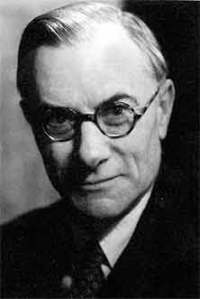
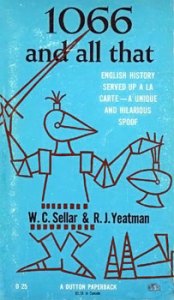
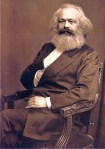
The pictures are public domain photos from Wikipedia and the Guardian bookshop and show EH ‘Ted’ Carr, a rare cover of Seller and Yeatman’s classic, Jerusalem the Biography, The Tao of Physics, and Karl Marx. Saul is profiled below.

Leave a comment

Filed under Books, Education, The Arts

PROFILING SAUL DAVID

Saul is the author of several critically acclaimed history books including The Indian Mutiny: 1857 (shortlisted for the Westminster Medal for Military Literature), Zulu: the Heroism and Tragedy of the Zulu War of 1879 (a Waterstone’s Military History Book of the Year) and, most recently, Victoria’s Wars: The Rise of Empire. His latest work of history – Soldiers: The Redcoat from the Glorious Revolution to Waterloo – will be published by Penguin in February 2012. Saul is professor of War Studies at the University of Buckingham, and Programme Director for Buckingham’s London based MA in Military History.

An experienced broadcaster, Saul has appeared in history programmes for all major TV channels and is a regular on Radio 4. He has also written two historical novels, set during the wars of the late Victorian period and featuring the Anglo-African soldier George Hart. The first, Zulu Hart, was published last year. Praised by Bernard Cornwell, it was chosen as Waterstone’s New Talent in Fiction title, and reached number 4 in the Daily Telegraph hardback fiction bestsellers. The follow up, Hart of Empire, will be published on August 5.

For reviews and Saul’s website click HERE

Leave a comment

Filed under Adult Fiction, Books, Culture, The Arts