As part of the POLLIPIGGLEPUGGAR collection Phoenix Ark Press are delighted to publish another poem for parents and young children by David Clement-Davies. Please read it with and to your kids, because if a Standard newspaper survey about reading in London is right, then one in three parents don’t feel confident enough to read aloud to their children, and it is a tragedy for all of us.
SPACE FLIGHT FOR TOTS
“Space flight for Tots,”
Said Professor Wot-Nots
“Is a question both grave and dark.
The problem you see
Isn’t Gravity
But the lack of some primal spark.
It seems mad to me
If you’re only just three
To rocket, straight up through the air.
The jolt would be cruel,
Not to mention the fuel,
That would surely ignite your hair.”
“But I’ve done the sums,”
Cried Professor Nun-Drums
“And I know I can conquer this race
To make Astro-Sports,
Of the Sevens to Noughts,
Then hurtle them out into space!”
“What ROT”, snapped Wot-Nots
“There isn’t a tot,
That could master your method of flight.”
Nun-Drums shook his head,
At what ‘Nots had said,
Then he cooed, like an owl in the night:
“First suck on your thumb,
As your lips start to hum,
Then sit with your knees in a ball
And jump up and down,
In your warmest night gown,
As you start to ascend the wall.
The problem’s not wings,
But the strength of the springs,
And the positive slant of the bed,
To provide a position
For natural ignition,
As you bounce up to Pluto instead!”
“I see,” said Wat-Nots,
As he looked at those cots,
And wondered where all the kids were.
Then Wat’s scratched his head
And turned lobster red,
As he saw what he now should infer;
The Num-Drumic Proof
Were those holes in the roof,
And the way that the beds were all bent!
With Nun-Drums – ecstatic
As he gazed through the attic
Straight up at the twinkling sky
For there, from that room
Was a trail to the Moon
And the children all learning to fly!
Copyright David Clement-Davies 2011. All Rights Reserved.
In the vein of having some fun and not just throwing rotten eggs at the disgrace that is modern Publishers, bottom feedings agents and the rest, Phoenix Ark Press are delighted to publish a Nonsense Verse for The Poet’s Seatshop, only somewhat inspired by Lewis Carrol, by the Founder and Children’s Award Winner David Clement-Davies
POLLIPIGGLEPUGGAR
Though PolliPigglepuggar is a nonsense kind of WORD
You CAN’T hunt down in any diction-reeeee,
‘THEPollipigglepuggar’ is a most exotic bird,
Which sleeps within the Pollipiggle tree.
She isn’t quite a Parrot
Though her plumage is akin
And her ears are thin and furry, as a bear,
Her tail looks like a carrot,
While she has a sort of chin,
And wears a set of curlers in her hair.
Her beak is made of lemon peel,
Her eyes are black and blue,
Her call is like the bleating of a goat,
Her favourite meal’s spaghetti
It’s weird, but still it’s true,
She loves to wrap so loosely round her throat.
While, on her Pollipiggle branch,
She perches day and night –
A look that says – there’s nothing else to do.
Though in those scented piggle leaves,
She’s dreaming of the fright
I gave her when I stole out and went – ‘Boo’.
But just before I tell you
What a racket THAT inspired,
There’s something else to show you all, for free,
Not the colour of those feathers
Or the way her feet are wired,
But the nature of the Pollipiggle Tree.
The Pollipig’s a cousin of the Lollipopple plant,
In the genus of the Ligglepipple root,
Its leaves are made of herbal tea,
Although the branches aren’t,
While its flowers sprout out in rubber, like a boot.
It sways there in the piggle breeze,
Just waiting on some fun
Or that Puggar bird to use it for her bed,
And, since this tree can’t walk with ease,
(The thing can’t even run!)
It’s fond of simply growing up instead!
So there it waits to ponder,
As it blossoms once a year,
When the swooping puggar-puggar will appear,
Until from out of yonder
The thing loops through the air
And settles with a whooping, on its ear.
Behold the Pollipiggle Bird,
A fowl that isn’t deep,
A-landing on its side within the shrub
A bird, you see, that’s so absurd,
It promptly falls asleep
And dreams of bathing nightly in a tub.
So there they snooze together,
Like a perfect pair of chums
A-deep within the pollipiggle wood
And there the tree gets bigger
While the Pollipuggar hums
A tune I can’t remember, though I should.
You see, I’ve quite forgotton
That thing I had in mind,
Namely WHAT the creature cried when given fright;
It screeched out something rotten
When I woke it from behind,
Then called out like an ostrich taking flight:
“oh, polli, pig AND puggar,
oh piggle, puggle, pol
oh, rallop, lipig, gopple, gup and gol
oh luggup, paggle, leppug, paaaa
And glipple loppgup too.
Which really meant no more than; ‘Who are you?”
Oh, I love my Pollipiggle bird
A-sleeping in her tree
With her multicoloured feathers on her wings
And her strange, but polli, habits
Which NEVER seem absurd,
Like those ears that grow like rabbit’s,
Or the piggle way she sings,
And the puggar way she knows just how to be,
While she’s snoring up her Pollipiggle Tree.
Copyright David Clement-Davies June 20i1 All Rights Reserved.
Scream of the White Bear by David Clement-Davies, the book that helped cause a horror story in New York, the complete disrespect of fundamental artistic, human and contractual principals there, and led to the birth of Phoenix Ark Press too, will also be published by this August, at the latest. Since David, with the help of the US Author’s Guild, took back his eRights from Abrams on two other novels, who when challenged to sue him backed down within a day, but also got his eRights from Dutton in America, he will go on fighting for his work and voice, for a far more transparent and human artistic world, and for the work of others too. Dear reader, you are all invited to join the Phoenix story and an adventure where fact became stranger than fiction.
Phoenix Ark are delighted to announce the publication of a brand new book by best-selling Children’s author David Clement-Davies, Michelangelo’s Mouse. The enchanting story of a little artistic mouse called Jotto, and his great adventure with the Renaissance genius Michelangelo, it is a lesson in belief, fighting on, art and courage and how to become famouse! For reading ages 7 to 11, but to be read by parents too, it is a wonderful romp, written with charm and huge humour, and all the story telling brilliance of a great animal writer. Young and old will delight in the first new book to be published by David in three years, brought exclusively to eBook and available from Amazon.
Phoenix Ark are delighted to announce that the sequel to The Sight, Fell by David Clement-Davies, will be published digitally this June. Fell is at the very heart of what happened in America to a real writer, and sadly what some readers have described as its ‘beauty’ was in marked contrast to the ensuing battle, and some very unbeautiful behaviour and politics. But that is over, and the founder may be struggling like so many writers to get financial backing, but at least he has complete say back in his own novels. The call for an independent publishing Ombudsman in the UK and America remains, to protect authors and editors too, but in many ways this is a great achievement, and one in the eye against a publishing machine that too often walks over talent, commitment and truly original voices.
To celebrate Earth Day this April, and the intrepid voyage of the Plastiki – Max Jordan’s continuing blog is also below – best selling children’s author and Phoenix Ark founder David Clement-Davies is today publishing a free and unseen fairy-tale online.
THE LITTLE OYSTER by David Clement-Davies
At the bottom of the Deep Blue Sea,
by the edge of the Great Barrier Reef,
there lived a little Oyster.
“You are the most precious thing in the Sea,” his mother would say, and she told him stories of the fishermen who risked their lives diving for his kind in the Ocean’s depths.
It made the little Oyster feel very special and important.
“Come and play with us, little Oyster,” the many coloured fishes would cry.
“Sing for us, little Oyster,” the coral would say, “sing to us on the dancing surf.”
But the little Oyster felt far too special to play with the other creatures.
“Don’t you know that I am the most precious thing in all the sea?”
The Oyster’s shell grew bigger and bigger, and older and older too, but still the Oyster would have nothing to do with the other animals.
So the fishes all moved away. The coral withered and died.
The little Oyster was left all alone, at the bottom of the deep Blue Sea.
Strange, crusty shapes settled on the Oyster’s back, while high above him a single Jelly Fish drifted by…
The Oyster grew sadder and sadder, and lonelier and lonelier too, there inside his shell, at the bottom of the dark, cold sea.
The Oyster did not know how to talk to anyone anymore.
Then one day a bright blue Clown Fish swam by.
“Hello, Oyster,” cried the funny Clown Fish, “and why do you look so sad?”
“Go away,” replied the Oyster, “Don’t you know that I’m…”
“The most precious thing in all the sea?” laughed the Clown Fish, kindly, with his great, wet lips.
Then suddenly the strange fish began to spin, and make silly faces, and blow bubbles at the Oyster through the blue.
The Oyster peered at him crossly, but then something extraordinary happened…
The Oyster began to tremble, and then to shake, and suddenly the Oyster started to laugh, just like the funny Clown Fish.
Suddenly there was a great CRACK and the Oyster’s shell split open wide.
There, inside, was a huge, beautiful pink-white pearl that sparkled like sunlight on the waves.
Now the little Oyster has many friends at the bottom of the Deep Blue Sea.
He plays with the fishes and sings to the dancing coral.
But best of all he likes talking to his friend the Clown Fish, for he makes him laugh.
Copyright David Clement-Davies 2011. First Published by Phoenix Ark Press. All Rights Reserved. The right of David Clement-Davies to be identified as the author of this work has been asserted by him in accordance with the Copyright, Designs and Patent Act 1988.
You may print up this free story courtesy of Phoenix Ark Press. If you would like to donate to a little publisher please click the donate button below.
CHAPTER FIVE
Gareth’s heart was in his mouth, as he clasped the saddle pommel and the wind streaked through his hair, but despite his absolute terror, oh what joy, what bliss, what heaven, to be riding a real live dragon. He was a Dragon Warrior now, a lord of the air, and ahead of him the clouds and the blue swept out like a magic carpet, and in the distance rose the glittering towers of mighty Pendolis, like a hundred drawn swords.
The noise in his ears was of the rushing winds, but dimly below him, Gareth became aware of shouts and looked down proudly to see Sao and Sarissa, the Dragoman, Mordollon and all the others pointing up at him in wonder. He felt so proud to be astride this great black beast, after he had used the trick that he had read about in a fragment of The Very Dangerous Book, despite his mounting horror of how high he was now. The others must have been two hundred feet below, and even the dragons looked like sheep, with the terrifying change of perspective.
Gareth tried to calm his nerves, and breathe evenly, as his Godfather had taught him once climbing a tree in the country, but clutching that pommel, as the beast’s enormous scaly black wings flapped beside him, like two huge leathery sheets, Gareth Marks suddenly felt a little sick. The reason was, having no lasso, he had no reins either to steer the thing and now the dragon’s behaviour seemed to be changing. Underneath him, Gareth sensed the force of the gigantic, living animal, for the muscles along its spine seemed to be rippling beneath the saddle. Strange noises were coming from it too, grunts and groans, interspersed with great roars, as huge fire jets flashed out in front of it, warming the air that was streaming into Gareth’s face.
‘”Where are you going?” he cried suddenly, “isn’t this a bit fast?”
Gareth wished he hadn’t asked it because as it flew the beast’s back suddenly arched, as a roar came from its belly, as if from some terrible subterranean depth, and Gareth was bounced upwards in the saddle. It seemed the creature, climbing out of the stockade, had not even been aware of his presence and now that it was, Gareth sensed some evil, primordial light awake in its eyes and mind. It’s back bucked again, and then to the boy’s horror it’s great clubbed tail flicked up and forwards, smashing onto the saddle right next to him. It was trying to get its rider off, all right.
“Oh no you don’t” cried Gareth furiously, but even as he did, the Dragon dipped its right wing and to Gareth’s utter horror the creature flipped upside down in mid-air. What had been pure joy suddenly turned to near disaster, for Gareth was hanging in space, two hundred feet above his certain death. His left hand clutched the pummel though and luckily his right had managed to slip between the saddle and the dragon, so he had some purchase.
It was like riding one of those adventure playground pulleys, as the twelve year old was born along, feeling an agonising ache in his arms, but just as he was about to let go, the dragon flipped once more and he crashed back into the saddle with a winded groan. The Dragon had not given up trying to dismount him though, and now its roars and fire jets were getting stronger and more frequent, so poor Gareth was carried through a never-ending cloud of flame. But still the brave boy held on, clamping his legs as tight as he could to the saddle, determined to conquer the beast. The very thought seemed to travel through his gripping knees into the creature’s being and with that the black dragon suddenly roared and lifted, straight upwards, and began to climb.
It was like some rocket, and faster and faster it got, so now Gareth’s legs were trailing behind him. His eyes were watering furiously now, and he wanted to reach into his pocket to find some scrap of a clue as to how to handle this thing, but he knew if he let one hand go he would be lost. A terrible sadness suddenly enfolded him, that his dragon adventure should end like this, when the boy suddenly felt a tingling and then distinctly heard a voice. “Garreth. Listen Gareth Marks, and don’t think, just name it. You can only ride it if you name it.”
“Lethera,” whispered Gareth, “Is that you, Lethera? Where are you?”
“In Blistag, but outside, Gareth” came a distant, gentle female voice “For you are above the Seer guard now. I’ll try to cut a way in. But Quick. Your mind must talk to it.”
The reassuring voice was gone, and the furious wind was screeching, but as they rose together Gareth tried to think of the creature he was trying to ride. ‘”Name it?” he cried desperately, “But name it what?” Now Gareth started to think about the animal. About its giant scaly wings, and great black form, about its huge clubbed tail, and claws on four enormous feet. “Blear..” he sputtered, as the words seemed to come unbidden to his mind, “Blackeer”. But the infuriated dragon was still climbing.
There was something about the terrible intensity of the experience that made Gareth’s mind focus and now he began to think about what he had done in the compound. About its teeth, and its head pinned there by that line in the dust, and about the look he had seen in its bewildered eyes. But the dragon was almost vertical now, and Gareth’s hands were slipping and he was losing his grip. “Blaaa…Bleagar…”” but it was no good.
“BLARAGAK” the boy suddenly cried, and even as he did, it was as if he was becoming part of the creature, “Slow Blaragak.”
Instantly Gareth felt the creature relax and suddenly it was slowing and breaking out of its ascent. Again Gareth was sitting high on its back, as it dipped and its head swung left and right, as though it was seeking instructions.
“Turn, Blaragak,” cried Gareth Marks, commandingly, “Turn back to Pendolis.”
Almost before the words came out, the great black dragon was turning, like a mighty ship in the sea of air, tilting its wings only slightly, so that is descent was slow and measured and again Gareth began to enjoy the extraordinary feeling of riding a dragon. He thought he dimly heard the sound of cheers and clapping, from somewhere far below, but now Blaragak’s great wings were flapping slowly and gracefully, and Pendolis came into view again and began to grow in the young Dragon Warrior’s sight, the burning red ball of the sun like a fire-coal behind it.
“Thank you, Blaragak,” Gareth found himself saying in his mind, without even talking, and those muscles beneath him seemed to ripple approvingly, “I mean you no harm.”
“Good, Gareth,” heard the boy, but it wasn’t Blaragak’s voice, but Lethera’s again, “but there’s danger. HE is close, the Black Warlock, so beware, Gareth. I will try to come, but I…”
As the dragon descended though, the little voice was gone again and Gareth felt that ache.Gareth suddenly felt like a god though, high over the citadel, his mind crystal clear and in tune with the vast powerhouse of a creature beneath him. He sat upright, and now his fear had gone, his sight took in all around him, and with one free hand, his left, he found himself stroking the dragon’s scales.
Ahead, on the ramparts of Pendolis, he could see people pointing and shouting and enjoying the spectacle and, as they drew nearer, he saw a row of Dragon Maidens, and in the centre, none other than Mordana. Gareth remembered Bouchebold’s words about standing out in Pendolis, and felt even prouder and as he did found himself thinking how very beautiful the Lady Mordana was. The crystal on her forehead seemed to be glowing and as he saw the approving smile on her face, he seemed to hear Leretha’s voice again, though different and more beautiful. “Well done, young Warrior, we have need of your kind now.” But as Gareth began to look among the turrets and courtyards of the citadel for somewhere to land safely, he found himself talking to Blaragak again, as they sailed in towards a high balcony, and tall open window.
“I’m an Outlander, Blaragak, called Gareth. I’m from London. I know you’ve been wounded, but where did you originally…”
Even as he asked the question though Gareth felt a terrible cold in his left hand, the hand touching the dragon, and suddenly everything around Gareth was dark. In that void of night, Gareth saw a face, so cruel and furious it looked like the devil himself and the man had flame filled eyes, as terrible as any dragon.
“No,” cried Gareth “the Black Warlock. You serve the Black Warlock himself, Blaragak. The Evil is here.”
There was a bitter, offended scream, as if the dragon had been shot out of the air, and it lurched so violently to one side that Gareth, who had relaxed his hold of the pummel, was thrown off completely. He found himself flying straight through that window, on a turret in Pendolis, as Blaragak wheeled, shot out a jet of fire, and rose into the coming night, breathing smoke and flames.
The new Dragon Warrior was too occupied by his descent and what he would hit, to hear the gasps from the crowd below, but black Blaragak had not being going too fast, and Gareth found himself ploughing into a pile of cushions, that broke his fall. He slid to a stop on stone floor and as he got up felt another jolt of horror, for on the walls all around were the most terrible instruments of torture. There too stood none other than the mute boy though, who they had made the journey to Pendolis with, looking at Gareth in astonishment, in his rather torn school uniform, and quivering like a leaf.
“You,” whispered Gareth, as he got up, “the Dragoman brought you hear to torture you. Pretty stupid, if you can’t speak.”
“But I can speak,” spluttered the boy, bitterly, “and I want my FireCutter back. She’s wounded. Besides, we’ve all got to get out of here.”
David Clement-Davies Copyright 2010 – All Rights Reserved Published by Phoenix Ark Press
The right of David Clement-Davies to be identified as the author of this work has been asserted by him in accordance with the Copyright, Designs and Patent Act 1988
To catch up with a whole, free story, blogged as written, click
The previous post needs almost instant up-dating because, with a little support from The Author’s Guild of America, Phoenix are thrilled to share the fact that Abrams in New York have just given back the eRights to both Fell and The Telling Pool. It means that Phoenix Ark Press can now also publish, to Kindle and Ipad, a special joint edition of The Sight and Fell, by David Clement-Davies, novels that should sit naturally together, and which were once separated by publishers.
It feels like the end of a terrible road, and although losing someone you love is probably the only thing that really matters in a human life, a tiny victory for one author to get a reputed and powerful publisher to truly respect an author’s work again, at some fundamental level. David Clement-Davies now has the say back in his own creations, the expression of years of hard and highly committed work, and this little Phoenix might fly after all.
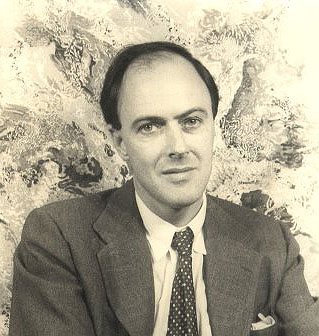
Tom Stoppard once wrote that the person who carries their childhood with them throughout life never becomes old. In this he spoke for many artists and thinkers, past and present, who have been inclined to cast a suspicious eye over the notion of adulthood, and celebrate instead the child’s perception of the world. Roald Dahl was one of these. In old age, he often jokingly described himself as an ‘infantile geriatric’, or a ‘geriatric child.’ He was utterly confident that he still saw the world with a young boy’s eyes and once told me – with a proud twinkle in his eye – that he thought most adults were quite incapable of doing so. Dahl was an inventor of stories, and something of a fantasist, but he retained a razor sharp memory of his childhood. He could recall with ease the thrill of cycling down a hillside with no hands on the handlebars, the tedium of interminable Maths lessons, and the sensation of having a world of giants always looking down on you. More remarkable however was the fact that he also retained a child’s natural ability to invent and imagine, to live in the moment, to stop and stare and wonder at the marvels and mysteries of life – to recapture what Dahl’s friend and admirer John Betjeman described as the period “measured out by sounds and smells and sights, before the dark hour of reason grows.”
Dahl celebrated beyond measure the human capacity for fantasy, subversively exhorting his readers, young and old, to observe the world with “glittering eyes” because “the greatest secrets are always hidden in the most unlikely places.” In a similar vein he attacked the tyranny of contemporary information culture, when he argued that the nicest small children were those who have been “fed upon fantasy” while the “nastiest” were the ones who knew only a diet of facts. He was being deliberately provocative of course. But his celebration of playfulness, even of frivolity and silliness, had an important message – one that is all too easily forgotten in this current age, where observation and plain speaking are so out of fashion. Echoing many free thinkers before him, who tempered the sophistication of adulthood with the wide-eyed imaginative inventiveness of youth, he issued a plea to observe the world with fresh eyes, free of preconceptions and conditioned responses.
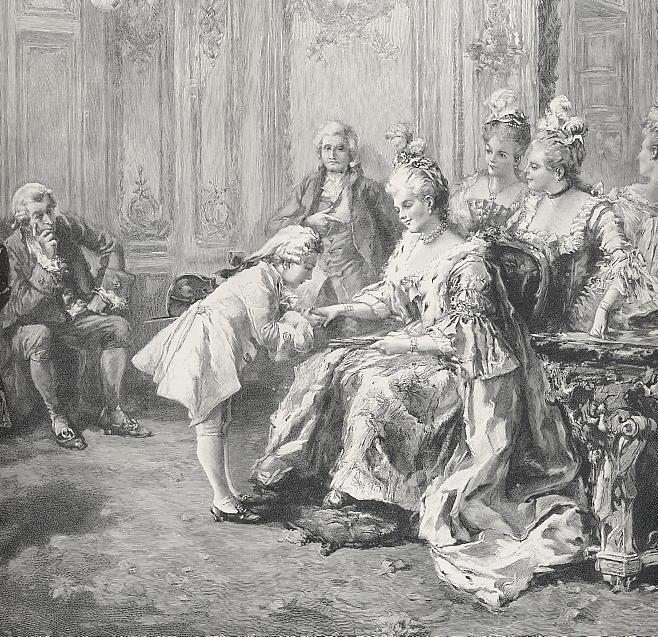
Some of the greatest composers possessed this aspect to their personality. Wolfgang Amadeus Mozart, for example, was composing operas of wit, elegance and refinement aged only thirteen. As an adult he became a revolutionary of refinement, whose compositions reached dizzying pinnacles of poise, finesse and urbanity. Yet alongside this cultivated wisdom, he treasured his child’s sensibility, delighting in pranks, jokes, scatology and invented languages until his untimely end, aged only thirty-five. The earthy wit of his final opera The Magic Flute remains testament to the sixteen-year-old, who on tour to Italy, joked to his father about the sights, sounds and smells of the Merdeiterranean.
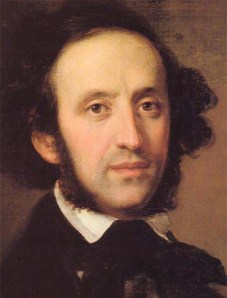
Not all child prodigies managed to hang onto that freewheeling joie de vivre. Like Mozart, Felix Mendelssohn Bartholdy was at the peak of his powers as a teenager. His magnificent Octet was composed in the autumn of 1825 when the composer was only sixteen and was partly inspired by the vision of an orchestra of flies, frogs, crickets, mosquitoes and a bagpipe blowing soap bubbles. It sent what one listener described as “an electric shock” through its first audience. Mendelssohn however would find that, in adulthood, his child’s eye grew dim. Though he too did not reach the age of forty, many of his later compositions lacked the wit, exuberance and daring originality of those from his chldhood. They became bogged down by a self-conscious desire to be serious.
But a desire for grandeur need not necessarily cloud the eyes of youth. Fifty years after Mendelssohn, Gustav Mahler was writing symphonies of unparalleled scale and ambition: works that he believed would embrace and express the universe. Yet he repeatedly drew on his childhood memories of nature, military bands and folk-songs when he needed inspiration. When analysed by Sigmund Freud. What did he talk about? His childhood. And many of his greatest and grandest symphonies drew on The Youth’s Magic Horn, a collection of poems which had thrilled him as a teenager. The verses are filled with innocence, humour, wit and perhaps, most of all a fantastical sense of wonder at the mysteries and strangeness of the world.
For Benjamin Britten too, childhood was a complex cocktail of emotions, among which was an acute awareness of the unexpected power of innocence and vulnerability. This also remained an ever-present force throughout his adult life. When asked why he wrote so often and so well for children, Britten is said to have replied: “Because I still feel like I am thirteen years old.’ It was something that also cemented his attraction to Christianity, with its regenerative belief that a ‘little babe so few days old’ alone had the possibility to ‘rifle Satan’s fold.’ Clearly all these writers and musicians retained their own distinct sense of childhood. However there was surely something in the child’s sense of magic, of an imaginative world untarnished by the compromises and cynicism of adulthood, that was also universal. This “spirit of youth” enabled each of them to be unselfconsciously original, daring and new. Each was always irrepressibly young at heart. It is a shame that this freshness of response is not more widely celebrated by more of today’s educationalists and politicians, who seem all too eager to see the world through the dull lens of examinations, targets, certificates and qualifications. In downplaying the importance of original thought, they would do well to remember the words of the mathematician and storyteller Lewis Carroll, who complained that he would “give all wealth that years have piled, The slow result of Life’s decay, To be once more a little child, For one bright summer day.”
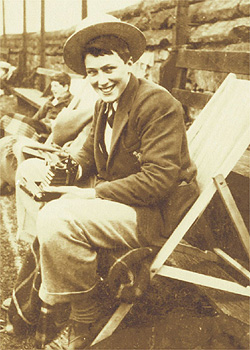
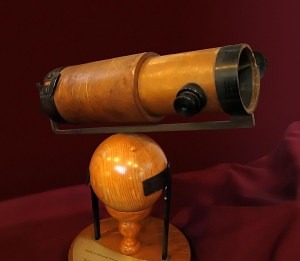
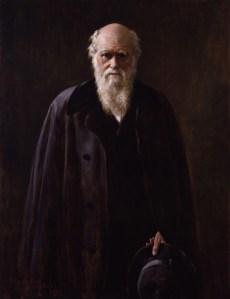
And it is not just the world of the arts that might benefit from such an approach. Two of Britain’s most brilliant scientists were sustained by their own child’s eye: Charles Darwin and Isaac Newton. As a child, the playful inventiveness of the former infuriated his teachers. As an adult, that same quality would enable him to rewrite the fundamentals of biology. Newton personified his attitude to knowledge as being that of a child, writing that he saw himself “like a boy playing on the sea-shore, and diverting myself now and then finding a smoother pebble or a prettier shell than ordinary, whilst the great ocean of truth lay all undiscovered before me.” If only more people could take this metaphor to their hearts, the world would surely be a happier, more imaginative and more exciting place in which to live. Donald Sturrock – Feb 2011 Donald is profiled below. The next Phoenix Ark essay will be by the Historian Saul David. The images are Dahl in adulthood, and in Repton School uniform, Mozart visting Madame Pompadour, Mendelsson, a replica of Newton’s telescope and Collier’s portrait of Charles Darwin.


 Phoenix Ark's Blog