Category Archives: The Arts

TO CELEBRATE A DRAGON STREET TEAM PHOENIX UNVEILS THE MUSICAL ‘CHEESE’!!!

Hello, in fact it’s called Mr Moliere’s Mouse (aka CHEESE or Les Mouserables!), written my David Clement-Davies and Michael Jeffrey and work shopped at The Royal Academy of Music in London. It’s about a family of mice who live under the stage of the old Paris Theatre, the Mousettes, and especially the youngest and bravest, our hero – Bobolan. Poor Bobolan has absurdly long ears he keeps tripping over and is teased mercilessly because of his terrible stutter. But who, while trying to avoid the rats led by the vicious Scarapino, high in the balconies, goes on dreaming of one day becoming a great actor. Just like the celebrated playwright Jean Baptiste Moliere, who returns one day to woo the whole of Paris with his genius. Never give up on your dreams!!!

This song is about Bobolan’s meeting with the pretty Colette, as the Mousettes flee down into the terrible Paris sewers – So the all important bit happens, falling in love, as they sing the duet ‘Now I know his face…“. Though the recording is scratchy, the young performers at the Royal Academy were wonderful and this is in honour of them and the young talent who have helped Phoenix Ark Press.

To return to the right place in the story too JUST CLICK HERE

LYRICS

What’s this, what’s this feeling,
Tell me, am I dreaming dreams?
Now I know his face
Now I’ve seen that smile
How my heart is racing
Shall I stay a while?

Now I’ve touched his hand
Now I’ve heard his voice
Is this understanding
That I have no choice?
No choice – but to love him, no choice – but to care
Is it true I love him, now I know he’s there?

Tell me, show me, is this love – that I feel?
Show me, tell me, can this be real?
Tell me, show me, is it wrong, is it right,
Am I feeling – love at first sight?
What’s this, such a feeling
Pinch me, am I dreaming – dreams?

Now I’ve seen that face
Like the summer skies
How my soul is pacing
Will he realize?

And how shall I love him
How should I care
Should I simply miss him
Till he’s standing there?
Tell me, show me, is this love – that I feel?
Help me, tell me, can this be real?
Tell me, show me, is it wrong, is it right,
Am I feeling, love at first sight?

Now I’ve seen his face
Now I love those eyes
This is understanding
That I’ve found the prize.

What’s this,
What’s this feeling?
Tell me,
Am I dreaming – dreams?

So Bobolan, lost in the sewers, further from the theatre, turns and sings of his love for Collette too. (The song is just over 5 and not 7 minutes)

Copyright Clement-Davies and Jeffrey 2014, Phoenix Ark Press. Story, book and lyrics by David Clement-Davies, Music by Michael Jeffrey. Unathorised redistribution of this work in any other form is strictly prohibited. All rights reserved.

1 Comment

May 17, 2014 · 1:21 pm

WE’LL GO NO MORE A’BEGGING AND THE COLLAPSE OF WESTERN CIVILISATION!

In turning to Kickstarter then getting cross about it, I also backed the Globe Theatre project with its world tour of Hamlet. I must admit there should be a little question mark around an institution such as The Globe turning to crowd funding, trumpeted in a very good film that sang the song ‘a’begging we will go‘ although it probably will be a model in future. Yet could there not be a more shining example of the impoverishment of our enormously wealthy and culturally ignorant society than the fact that the project will probably fail in 4 days time, and so little has come from the top? Just look at the statistics – Pledges of £5 or more 266 backers, £50 or more 66 backers, £100 or more 101 backers, £2500 or more 1 backer, £5000 or more 1 backer.

I’ve long said we’re returning to the kind of social differentials they had in the 16th Century, when actors were classed with the likes of vagrants, vagabonds and strangers to be whipped out of town and the walls of The City of London, but the difference is that society had a true sense of powerful patronage, especially towards literature and the new theatres. We have none whatsoever.

If you have a few grand to spare then, or just want to show some last minute solidarity with a £1 or £2 why not cheer them up by CLICKING HERE

1 Comment

Filed under America and the UK, Culture, The Arts

DAVID CLEMENT-DAVIES AND PHOENIX ARK PRESS THROW THE DOORS WIDE OPEN!

The one thing I hope you can trust about this blog and tiny publisher is the story is true and also happening now. I have said in a Kickstarter film for Dragon In The Post that I want to make this place ‘Your publisher‘. But what exactly does that mean?! It means that I haven’t stopped listening to people’s stories, even while going on too much about my own, and so I hope this site has a human face. It also means that I was very inspired by the warmth and support that has come from my own readers in all this.

But what has happened is that in the frustration of trying to make something work, amid all the noise, I have had some very acute bits of advice and wonderful offers of support too. Like what exactly is Phoenix Ark Press, from J, or any mission here? So I have re-written a Mission Statement above, pointing out I need first to protect my own work, stories and career again, if I am to do anything else. That will change and evolve itself, just as I put the idea of building in some charity element, but it was rejected at Kickstarter. But if it works, if you and I can really open a door, the idea in future is to go grass-roots, and to cross support writing, journalism and art among other creative people, with crowd funded projects. So I would have to become some kind of lightning conductor to that energy and passion. Let’s start a fire and burn down the Social Media house, or at least make it ours again!

In that vein, and because Y for instance has just so kindly offered her own artwork at Deviant Art to help, it’s time to throw the doors wide open, to you, amateur and professional, younger and older! It means possibly helping to redesign this website, to put up new artwork here, to redesign e-book covers and much more. At Kickstarter it means either Backing and/or spreading the word. At first I am afraid the reward, apart from rewards if we hit project targets, is an outlet for you, a chance to work with me, I hope something for your CV. But if we fly, we will see in the future. Would you like to do new e-book covers for Fire bringer, The Sight or Michelangelo’s Mouse? Here is your chance. Would you like to write articles here, on subjects that matter, with my help? I have a lot of journalistic experience. Would you like to learn marketing, at a grass-roots level, or re-design the face of Phoenix Ark Press itself? At every level then that message on the book of the animation for Dragon In The Post needs to become true: “Join the story, become part of the adventure.”

With 23 days to go but now at 30% you can join that story right now, by writing to me here and by BACKING DRAGON IN THE POST

DCD APRIL 2014

Leave a comment

Filed under Community, Culture, Publishing, The Arts

THE LAST WEEK OF KICKSTARTER AND IT AIN’T OVER TILL THE FAT LADY SINGS!

It was what a fan and backer in the UK said, about that singing lady, and yesterday’s April Fool about the UN was meant as part of some fun, though it would hardly hurt! But spurred by readers, rather than giving up, a last talk and film goes up about a Kickstarter project on the newly named Light of the White Bear.

I just won’t be silenced on what happened in New York and London, among ‘friends’ and colleagues, but it is a story that needs pushing into the background, so only appears in the second part of a film. If Abrams, which still publishes Fell, for those who talk of ‘the past’, wants to challenge on libel, I have also said I would prove it, but this is hopefully about the future now. There is also a free e-edition of Fell alone, available till Monday April 7th from Amazon.com

Likes are fantastic but it really needs your active support now and you can see a talk that raises the bar of ambition by CLICKING HERE

A warm thank you both to Backers and to readers at Phoenix too.

PA PRESS

Leave a comment

Filed under America and the UK, Books, Culture, Fantasy, The Arts, The Phoenix Story

KICKSTARTER AUTHOR GOES WILD AND STAGES OWN BOOK BURNING ONLINE

12_001

Hello all,

Well just two days into Kickstarting and fantastic first pledges! THANK YOU ALL SO MUCH. Private thanks will come to everyone but a special word to Miss Baker who has ever started the ball rolling.

If we can raise it to 10% by tomorrow though then we’ll be on a certain course. Which is to ask all those who have read free articles here, poems, stories and blogs and especially if you have ever clicked LIKE button to think about going to Kickstarter and clicking PLEDGE instead. I guess it’s not to promote yourself very well to suggest that will not cost a thing if I don’t hit the target, but at least that ensures if you pledge something, then there will be rewards and a certain finished book.

In the meantime my good friend Kate in Chile suggested I didn’t say enough in a first video. So I have just gone mad and burnt one of my own novels online, Nazi book burning style, as a tiny act of protest but certainly to convince all of a hot read! If this appalls you then I quite sympathize, do let me know if you think I should change it, while if you would rather eat polar bears than make a pledge it would be really wonderful if you could spread the word instead. Thank you all again.

You can see my sill face and the appalling act of self immolative book burning
by just CLICKING HERE

Leave a comment

Filed under Adult Fiction, Books, Childrens Books, Culture, Environment, Publishing, The Arts, The Phoenix Story

KICKSTARTER: THIRTY DAYS TO SAVE THE PLANET, POLAR BEARS AND EVEN AN ENDANGERED AUTHOR – PHOENIX ARK PRESS NEEDS YOU!

screamcoverpdf_page00112_001

Hello all! Well, nothing quite so melodramatic as planet saving, but just 30 days to pledge to a new project on Kickstarter and help an author publish the newly named Light of The White Bear, that certainly has very strong environmental themes.

It’s the book that has been held up so long, by people-killing publishers in New York City, but which now tests a Kickstarter model that has just reached 1 Billion in Pledges on the Internet! What’s great too is that in one sense it’s risk free, because, if you pledge and it doesn’t hit the investment target of 6k, you spend nothing at all. Meanwhile the smallest pledges are little more than what it would cost to buy the book anyway, which you will get on publication, signed too. There are several other types of pledges possible.

Readers and fans here have been an inspiration, and suggested such things as crowd funding before, but if you don’t want to get involved by pledging, or can’t afford to, it would be really fantastic if you could just alert friends and readers to this website and Kickstarter too, via blogging, emails, twitter, Facebook and Social Media, right after you’ve read this, if possible. 30 emails to friends, or even three, could make a big difference! Folk can even see an awful video of my ugly mug on camera.

But that 30 count down clock is ticking now, which could of course prove a little embarrassing(!), so thank you everyone for all your support. This might even be fun!

To link to kickstarter CLICK HERE

David Clement-Davies – Phoenix Ark Press

Leave a comment

Filed under Books, Childrens Books, Culture, Environment, Fantasy, The Arts, The Phoenix Story, Young Adult

THE GARDEN MUSEUM, THE TRADESCANTS AND GOING IN SEARCH OF THE ARK

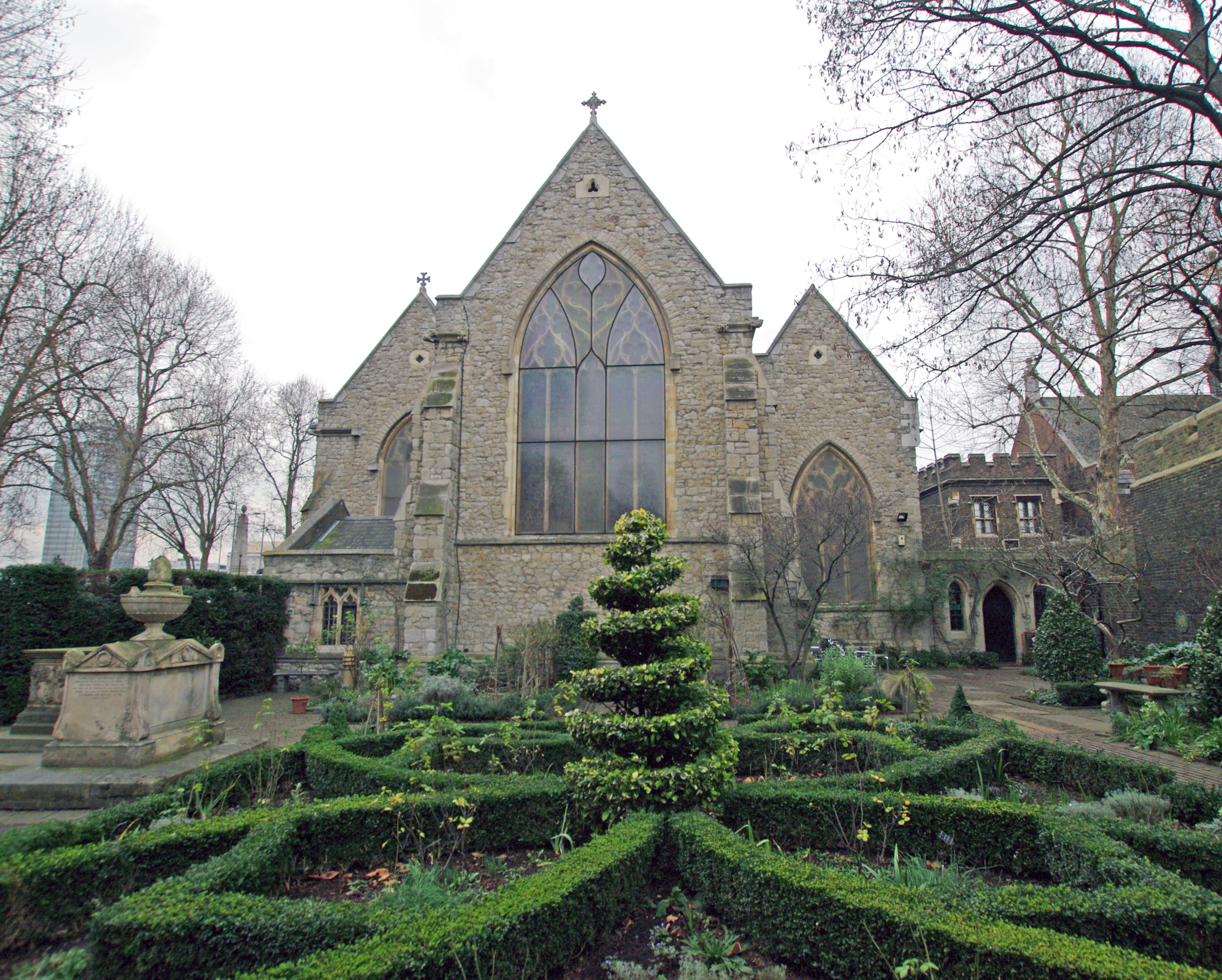
London_garden_museum_-20_garden_and_church
I had a very eccentric little treat this week, doing the Lambeth walk from my home, down to St Mary’s relatively recently deconsecrated church, right by beautiful Lambeth Palace, and thanks to the endeavours of a dedicated local couple today The Garden Museum. It takes its theme from the lovely and very rare tomb of the Tradescant family, in the traditional Jacobean Knot garden behind. John Tradescant senior being a man of many plants, plots, travels and fascinating schemes, first for Elizabeth I’s chief advisor Robert Cecil. They don’t make them like that anymore. Like father, like son, under King James I, but one of the testaments to a King’s many errors being the large, crook branched Mulberry tree nearby. The Scots King James, dreaming of his Greate Britaigne, the hope of legal Union with Scotland that foundered for 100 years and is perhaps about to collapse again, tried to compete with the silk trade but imported the wrong kind of mulberry, the black variety that silk worms do not like! So perhaps people have been making excuses about the wrong kind of snow or leaves ever since.

But the fascinating Tradescants, brought to life in a colourful historical novel by Phillipa Gregory, opened the very first public museum in what they called The Ark, on their estate on the edge of Lambeth Road. Appropriate stuff for Phoenix Ark Press then. It would become the basis for the Ashmolean Museum in Oxford when Elias Ashmole, mason, social climber, Herald at the College of Heralds and highly self-serving fellow, co-opted it from John Tradescant the younger, then fought a court case with his wife Hester, who was allowed to keep the contents for her life time. Hester died in somewhat questionable circumstances. A cabinet of rare curiosities, The Ark may have cost a hefty six pence to visit, when an average theatre ‘ticket’ was a penny, but it was technically open to all. Then the ‘democratic’ nature of that age before James I and then a Civil War ruined everything is also the fact that in 1612 The Virginia Trading Company had opened its first Free Standing Lotterie for anyone with a ready Twelvepence, to fund ventures in the Americas. It was soon taken up by all thirteen original colonies, so is a remarkably early origin to that so-called “American Dream” and straight out of that always very capital minded and adventuring London.

The Tradescant tomb stands right next to the monument to the Bligh family, and that Captain of The Bounty and mutiny fame, who lived just opposite the coming Imperial War Museum on Lambeth Road, a man of Bread Fruits, tough navy values and the most extraordinary feat of survival and navigation, when he was set adrift by his men. As my volunteer neighbour Kay and an ex ambassador to Mongolia pointed out though, the delicate carvings on the Tradescant tomb, restored four times now, have mythical rather than religious themes, like the seven headed and heavy breasted hydra guarding a skull, masonic pyramids, and curling stone groves and grottos. All good grist to the mill of Gary, another neighbour, friend, scholar of the esoteric and expert in Chinese textiles, who has a special interest in the likes of Dr John Dee and Simon Foreman. Foreman was a self taught astrologer, geomancer and proto Doctor, who was hounded by the licensed Doctors in the City over the water, with their surgeon’s hall on Silver Street, where Shakespeare lived a while, until he got his own licence to practice from Cambridge in 1603. Repeatedly locked up in those litigative spats so beloved of Elizabethans, constantly thinking of taking ship, and a man of somewhat rampant reputation with the ladies, who called sex to halek, Foreman lived in the house of a Mr Pratt in Lambeth, hence Pratt’s Walk, right over the road. A practicing Christian, while also casting his horoscopes, helping Elizabethans dig for buried treasure, providing love charms and tokens and tending to rich and poor, but not retreating from the great plagues either in that astonishingly fragile world, he was doubtless just as good as licensed Doctors of the time. He married in St Mary’s at 7am in the morning, in 1599. That year the famous wooden and thatched Globe Theatre rose on Bankside in Southwark and it is of course from Foreman’s diaries that we have one of the only accounts of visits to Shakespeare’s performances, in Foreman’s case Macbeth, Cymbeline and The Winter’s Tale.

Foreman, who is also buried somewhere in the church, was of course most interested in the witches in Macbeth but is a man whose reputation was especially blackened by being linked not just to that Occult that influenced so many, including Shakespeare, but to the famous Overbury murder, even though the poor man had himself been dead two years. As he was lampooned on stage by Ben Jonson, Foreman was described in court by Sir Edward Coke as “that devil Foreman“. Coke was of course the lawyer who changed the world, and built his own fortune too, when he gave the ruling in 1606 that the King could arrest no man except by good cause of the English law. Early soundings of a Civil War. A woodcut of Foreman with bristling necromantic beard adds to the dark myth, as does the legend that he predicted his own death in a journey across the Thames from Puddle dock, crying out “an impost, an impost“. As his biographer AL Rowse says, no doubt he had a natural intimation of the stomach ulcer that probably ended things in a straining boat trip, and in a world very fond of “mystergoguery and hermetic nonsense“. Perhaps it is about a different kind of language too. Elias Ashmole is buried in St Mary’s as well, although we only got closer in our pilgrimage when our guide kindly snuck us into the office, where his grave is somewhere below the photocopy machine. She also showed us the exquisite ‘Peddlar’s Window’ though, a little gem of stained glass and the bequest of a local man made good. Though it may be a restoration, since most of the Church windows were blown out when a WWII bomb droped on Lambeth palace, despite the Nazi’s famous avoidance of St Paul’s (not quite, in fact).

With strange purpose-built wooden exhibition rooms inside a remarkably large and impressive church, which in the days when Lambeth, or ‘the lamb’s bath’, was near open country must have dominated the edge of the river and that ‘horse ferry’ crossing that set the topography of today’s Lambeth Bridge, long after only covered London Bridge was the gate into the City, the Garden Museum is rather oddly done and awkwardly laid out too. Indeed, although I did not see the permanent exhibits, in such a place it is the suddenly discovered curiosities like that window that really delight, or a plaque to a D’Oily Cart, along with perhaps the finest cake in England, tasted at the nice little bar restaurant. It hums gently with older folk, pretty girls in their tiny jumbled office or students sketching plants in the garden, although it has the security and capacity now to have exhibited a Canaletto, among other things. But it should take the lead of John, Hester and their Ark, not nasty, grandiose Elias at all, and revel in sharing the eccentric, archaic and the curious.

It’s very existence is a testament to the moving tenacity of individual lives and passions, people who know that we are all really plants, that need good soil, nurturing and our time in the sun too. Perhaps then some of the pieces from the Ashmolean will be brought here, or an Ark will really sail the river’s edge once again. Get mayor Boris on the case and tell him to stop going on about Dragon Feasts, or protecting The City. Much meat for such a fascinating area as Lambeth, stretching, in that dramatic near Ox Bow bend of the river that made this such swamp land, and seems to fold the whole world back on itself, straight to Southwark and theatreland, that centre of our own research, based on lost St Margaret’s church there. This is an epicentre of study though for such an opaique and fascinating time and one that of course completely rewrote our internal and external landscapes. You can capture that in the 17th century plaque on the wall outside St Mary’s, courtesy of a Mr Turberville. The family made a bequest of £100 a year to support two poor local boys of an extremely poor but burgeoning district, of the ‘Stink trades’, like tanning, glass making, pottery and butchery too, kept on that famously detrops ‘South of the River’ side. An area of course dominated by thousands of watermen too, the spitting cabies of their day, and there is a Sail street by Pratt’s Walk, for the cottage industries serving the all important river. But that self proclaiming bequest was made with the proviso that the good offices of the parish should not be directed towards “fishermen, watermen, chimney sweeps or Roman Catholiks“! So of course the last words must go to the master, Shakespeare, and his line from Cymbeline that “All golden lads and lasses must, as chimney sweepers, come to dust”. At least with a Garden Museum we can all be reminded that life’s ashes are always good for the beauiful roses.

DCD Phoenix Ark Press

Admission to the Garden Museum varies from between £5 and £7.50 for adults and £3 for Student concessions. The cafe is its own delight. To visit their website CLICK HERE

1 Comment

Filed under Community, Culture, Environment, The Arts

DEATH COMES TO THE BBC, AND ON A WRITING SHOESTRING!

Oh dear Lord, if the cancelling of the tremendous and brilliantly written and acted Ripper Street is one sign of the corrupting cynicisms at the BBC, tonight’s Death Comes to Pemberley (pointless conclusion tomorrow) is the final proof. This loosely drawn and badly mocked up take on a future beyond Pride and Prejudice is exactly the corruption of awful commissioning editors and cynical writers, jostling for place and getting together to muse on what will sell. So they mix a take of now ‘popular’ characters, Mr Darcy, Elizabeth Bennet or Mr Whickham and cobble it together with a supposed detective drama, hence the introduction of decent actor Trevor Eave as the sleuth, like Shoestring in a wig.

It is so bad, so boring, so totally unrelated to the depth of Jane Austin’s marvellous characters and deep social understandings too, not only should the great lady be spinning in her grave but the creators should be hobbled together and pelted with copies both of Persuasion and Hercule Poirot. It aches with the tragic infections of Downtown Abbey too in the search for successful Christmas TV and is so full of anachronisms, cheap attempts to be ‘period’ and hollow references to the ‘duty of great ones’ or ‘I will not be constrained by place, Sir’ that all the actors should be shot or moved to an episode of Dr Who. There is no character, certainly any reflection of Austin’s vividly living people, no script and no point. It is empty prejudice that has none of the pride of Ripper Street and it, like its creators, should be garroted at source.

Leave a comment

Filed under Culture, Education, The Arts, Thrillers

SHAKESPEARE, DEER STEALING AND MOUNTED POLICE VOLUNTEERS

Charlecote_Park[1]

In the vein of not being so churlish about Stratford tourism, today’s trip to Charlcote house and grounds was eye-opening and again I met some very warm and interesting folk, as I have in other travels this week. Oh the lovely scale and proportion of Tudor houses, not to mention the colour of the stone, but the place is especially interesting because of that legend about Shakespeare stealing deer from Sir Thomas Lucy and having to flee Stratford for his fairly successful London career! Potential references to Lucy are all over The Merry Wives of Windsor, in the figure of Justice Shallow, so why do we doubt the word of mouth legends so much? The counter argument is it would have been too dangerous to expose such a thing, but are we not capable of imagining that by the time Shakespeare was a successful playwright, composing a work for Hunsdon’s inaugeration into The Garter, the Tudors too were not capable of forgiving the transgressions of youth? The spot was also two miles from the house itself, so Germaine Greer is wrong to knock it down on terms of it not being possible, having to bleed the meat and so on. It doesn’t matter, the legends are part of the fun, and Charlcote is fascinating, not least for the Lucy family themselves, with that Coat of Arms sporting three Luce, sometimes called Lice, a kind of Pike. Appropriate for fishy Shakespearean tales, although if it’s true and Shakespeare had been caught, at the time he could well have been hanged. Of course, being on the side of players, it begs the question what kind of landlord Lucy was, who died in 1600.

I suddenly had an idea to do a kind of Tudor Downton Abbey there, only to learn the Lucys married into the family that owned the home where it was shot, Highclare. They gave their home to the National Trust in 1946, just after the war. My version of Upstairs Downstairs would of course be a lot smellier, filled with plague, Pox and the battles of the Reformation. When Queen Elizabeth visited Charlcote though she liked the place so much she stayed an extra day, which must have worried Sir Thomas a bit, because her train of retainers stretched back down the Stratford road for something like eleven miles. The bill was over £10, a sixth of the price of Shakespeare’s purchase of New Place in 1597, but the Lucys got to put that carved Royal Crest over the doorway, with Honi Soit Qui Mali Pense and ER patterned in red stone. Still, it could be expensive being a Gent, because when the Lucys backed the wrong side in the Civil War, and Charles and Prince Rupert camped in the fields beyond, they kept their estates by paying Cromwell the equivalent of Six million.

The ‘modern’ family were just as interesting, because in the nineteenth century Grand Tour style the Lucys, children and a devoted footman suddenly set off around Europe, with a new-born infant in tow, who died on their two year travels. Another baby was conceived and born en route though and they finally returned, replete with foreign knickknacks and European influences to deck the rebuild on their home, creating a library and dinning room at the back. The great hall, complete with decayed Minstrel’s gallery, was completely remodelled, since Lady Lucy found it so dank and depressing. Back in the day the grounds were first rather oddly redesigned by Capability Brown, absurdly destroying the Tudor Water feature, and straightening the Avon too, right at the back, but they give a lovely sense of the open Warwickshire countryside and all sorts of ideas are underway to bring new things to the house. We learnt this on a very funny little walk with a charming ex mounted policeman, Bob, who had saddled up during the Miner’s Strike and was on his very first day as volunteer and highly enthusiastic tour guide. As we joked about what we did and didn’t know he took us past the Victorian Church, a bit unforgivably built on top of a Norman one, courtesy of Lucy droit de seigneur, where the actor Michael Williams, husband of Dame Judy Dench is buried. I met him when I was working at Regent’s Park Open Air theatre but apparently the great actress, and M in the Bond films, has a home nearby.

It was actually very moving too to see how the volunteer system works, not only there, but in places like the YHA, and Stratford’s is one of the most relaxed, and had given Bob for one a new purpose and lease of life. His house is on a distant hill opposite and we almost had a tour of that too! Bob also works at the RSC, and a good many of the houses and events in Stratford, including The Birthplace, both draw on people’s talents and help create living communities. At Charlcote they are raising the number of volunteers from 300 to 500, apparently, or perhaps that’s around the Trust, so I hope an exploitation culture is not too much underway in strapped times, a kind of 21st Century feudalism – The National Trust were not nearly as generous about letting me in as The Birthplace Trust – but down the Stratford Youth Hostal they were also handing out prizes and plaudits for long-standing volunteers. It reminded me of a trip to the Grand Canyon, and learning about how Roosevelt engaged regeneration with a national works programmes. Is there such a thing as National imagination these days?

Bob’s first little group of precisely three parted ways warmly, just by the bee hives and Tamworth pig enclosure, beyond the old eel trap that once-upon-a-time let through the elvas for their journey to the wide Sargasso sea, but caught the fatted parents for a bit of Tudor eel pie. To prove how the drama is as important as history though we agreed it was more fun making half of it up, and Bob promised to read the play Lettice and Loveage, that really thrills the crowds when the guides introduce a bit of Elizabethan flanneur, or just sheer romantic lies. Like the doubty spinsters of the piece perhaps we should all meet up again one day in London and plot to blow up Renzo Piano’s Shard in Southwark, to get back to Shakespearean basics on Bankside too. (Only joking, officer!)

The piture shows the Wikepedia image, which is NOT the original Stratford road. On Google Earth you can see that that avenue also runs beyond the Avon on the other side. Entry to Charlcote costs £10.50 for an adult, but a year’s membership will return the cost of entry

Leave a comment

Filed under Culture, The Arts, Uncategorized

TREES, TRUSTS AND GREER AND GRAVE MATTERS ABOUT WILL SHAKESPEARE! – THE PHOENX ARK CULTURAL ESSAY

New_place_house[1]

Last Saturday the large mulberry tree planted in 1965 by Dame Peggy Ashcroft, in the garden at the back of the site of Shakespeare’s house at New Place split in half, under the weight of the heavy rains. The Shakespeare Birthplace Trust were quick to erect a sign in front of the mournful wound in Stratford-Upon-Avon saying that it would be strapped back, in an attempt to save what flowered from a cutting of the larger mulberry tree, in its stone wall bedding in the same garden. That tree itself is said to be bred from an offshoot of Shakespeare’s original tree, or an offshoot of an offshoot, currently plump with the juicy blood red berries too. A tree which Germaine Greer in her book Shakespeare’s Wife suggests may have been planted by Anne Hathaway four hundred years ago, to begin the cultivation of valuable silk worms. It proves something has always been about money and survival, and certainly was in Shakespeare’s day, whether in Stratford or London. Meanwhile another mulberry tree in the front garden has caused a bit of bother in impeding the small archaeological dig underway for four years now, that has unearthed a small neolithic pit on the site of New Place, but little else, except shards of uninteresting pottery. In 2012 the Trust applied to remove the tree to get to the Tudor foundations.

The archaeologists cannot dig around or under it though, let alone fell the thing, not because trees are lovely and mulberries taste sweet, and stain your hands very theatrically too, but because it is the subject of a TPO, a Town Preservation Order. One archaeologist, perhaps echoing the sensitivities of what sometimes strikes you as a siege mentality from the Birthplace, was quick to point out that at least it will preserve whatever lies beneath for future generations of archaeologists. Everything is perhaps a vogue, and Time Team did much to bring in today’s spades, a series which should never have been axed. Yet as WH Auden said of discoveries about the facts of Shakespeare’s life being irrelevant to the living importance of the sonnets, for instance, whether involving real dark ladies or homoerotic affairs, I am not entirely sure the bits and pieces even matter that much to Shakespeare, or rather they are, like ‘real life’, always somehow a world apart.

For those in love with Shakespeare, not easy Bardolatry or heritage Britain either, Stratford-Upon-Avon can be a rather depressing place, at times, once the thrill of imagined proximity wears off, and you get stung by the LPA, the privatised Local Parking Authority, that has got into the Press for making such noxious profits. Much that is peddled to the tourists by the Trust too, if not exactly bogus, is also questionable to scholarship, or in getting you back to any kind of linguistic and social source matter. So even to dub the house on Henley Street with its awful concrete chimney stack ‘The Birthplace’, on that original wide market way, and now crowded with anything from The Food of Love cafe opposite, to a Harry Potter emporium, sometimes seems so pompous and makes Stratford a kind of over-sanctified Bethlehem-on-Avon, exploiting the mewling secular God of literature in a way the Bard would surely have laughed or despaired at. Perhaps the Victorians were to blame.

Shakespeare saw so much that it might just have been a knowing shrug, because it has been going on for rather a long time, as that window in Henley Street proves, scratched with some rather famous pilgrim signatures. All this is of course an annex to that behind the stage set work of the Trust’s important archive, which apparently the RSC for one has a very good relationship with, according to the dedicated archivists, the fruits of which are impossible to know until they crop. With a four hundredth anniversary peg approaching in 1616 though, and The Trust assessing the future, perhaps it’s time for a little plain speaking, without fear that it might result in new Midland Riots, or offend Prince Charles and Kate Middleton, now we’re all commoners really. Time to engage in some of Germaine Greer’s loudly flaunted heresies too then, that makes her book on Shakespeare, Anne and the role of Elizabethan women so refreshing and stimulating. Although for all Greer’s bristling attacks on other scholars and their mostly male assumptions, not necessarily less valid than female ones, Germaine is a little too keen to sell her own feminist line on Anne, Shakespeare, and womanhood, and makes some glaring mistakes too. In the same pages then that assure us that all the three un-wed brothers were back in Stratford in June, 1607, for Susanna Shakespeare’s wedding to John Hall, she overlooks the fact that Shakespeare’s youngest brother Edmund’s unknown lady was heavily pregnant at the time in London, in a poor part of the city too, and within weeks would give birth to a boy child, Edward, who died within the month. Four months later Shakespeare’s youngest brother, himself a player, at least in records, would be dead too, on Bankside, at only 27. If that underscores something of a dysfunctional Shakespeare family, or the problems of all families making new ones and their own way in the fighting world, it is in line with so much being written nowadays about the Bard and the times, with a grittier reality than Bardolatry has allowed and as important as getting back to the complexity and passion of the plays and poems.

Meanwhile people flock to Holy Trinity Church too, some to take in the signs assuring us Shakespeare was an active Christian, others to find their own meanings, inspirations and theories in Shakespeare’s grave. Hall’s Croft though, a building in fact dubbed a croft in the discovery of all things Scottish, in the 18th and 19th Centuries, naturally as bogus as BraveHeart, now has absurd and tasteless cut-outs upstairs peddling fun to the family and the kid’s market, in the Horrible Histories vein that seems to swamp everything. Also quite ignoring the rather fascinating story of who lived in that home and how the place itself becomes part of the mythos, that could make its own interesting exhibition. Like the actor Anthony Quayle or the two goodly ladies who owned Hall’s place and spent so much time in India with their Guru. Meanwhile, down the pub in Wilmcote, they mutter that Mary Arden’s house and farm was neither in the original building first claimed for it, in the Wilmcote complex, nor in smaller house down by the wall, today claimed as her house, but in the modest ruins over the road, by the field and overspill car park. Ho hum.

The Henley Street home, being ye holy Birthplace, Thomas’s Nashe’s house on the site of New Place, Mary Arden’s farm and the Hathaway Cottage, with the grave in the Church somewhat appended, are the five jewels in the crown of Shakespeareana for the Trust, at £22 a ticket for the grand tour (not including the £2 the Church asks for a donation, rather too officiously). For me only one of them really starts to touch a time though and that is the more off-the-beaten track working farm recreation down Mary Arden’s manor, whichever building it really was. Perhaps it is about getting away from the queuing crowds too, but there little living displays of archery, falconry, an apothecaries table and a fully served and eaten meal at dinner time, being lunch and the main meal, with real, smelly farm animals too, bring something back to life, and offer a lot of fun. I especially enjoyed learning from a jobbing actor about boys taught archery at the age of six, and the enormous strength needed to fire a Long Bow with a drawing power of a hundred and twenty pounds. The one I shot rather badly only has a drawer of forty.

What is good is not only some authenticity but the engagement of the folk putting on the show, usually not actors provided with lines, but mostly volunteers who are highly engaged and really know their stuff. I’m sure much of this is silly to scholars, when touching the texts of history, but it is important to smell some of the ‘simples’, or the delicious food we could not try because of tedious Health and Safety, to hear men and women call each other Master and Mistress, even to know that women wore no underwear, if Germaine will forgive the ‘Greer’ observation. It should be a new adjective, in talking about Shakespeare and women. But there are rumblings of uncertainty at the moment, not helped by today’s endless need for consultations, and if everyone has a gripe, perhaps its true what one local said, that at the Birthplace Trust at the moment there are “too many chiefs and not enough Indians“. If they are all fired for it, then perhaps we should restart the battle that was waged in Stratford over enclosures.

As for reality, nothing is quite true of history, perhaps, or there are always exceptions that could re-dub Henry VIII with the alternative title All is True. Time moves on too, until it becomes seized into those ‘Heritage’ sales that are sometimes so sad, but our world all over. Although that farm does give you a taste of a world that Shakespeare so often describes and feeds on in living detail, with the memories of his own childhood such a well spring of the magic and miracle that was to come. For me that is one key to a time, and to Shakespeare, that people forget, the mystery and effectively liberation of not any complete knowledge, but the very lack of knowledge, in a specific age before records made it all about death and taxes, or the Tourist shops. With the Reformation, printing and theatres, Shakespeare’s consciousness and delight in words and their making then exploded into the living language like never before. There are other good modern ideas that pop up too though, like the singing tree in the garden at the Hathaway cottage, even the recreation of John’s glover’s shop, although as clean and sterilised as the atrocious low-budget sets for the recent series The White Queen.

The Birthplace makes a mistake in not making more of true ‘scholarship’ too, which is about competing theories, and the fact the Henley Street home was quickly given over in part to a working tavern called The Maidenhead, but I suppose it would be foolish to bring back middens, hanging and quartering, or the Black Death, to get to authenticity and some flow of reality and time, and nor should Stratford be The London Dungeon. Talking of sets, what of course divides Stratford is also the presence of the RSC, The Royal Shakespeare Company, in that weird and rather ugly building by the river, if with those wonderful theatres inside. It is an institution that some of the folk working at the Trust say is a law unto itself and not at all engaged in what jobs and sales mean they have to peddle themselves, willing or not. Then snootiness can be everywhere in Stratford, from folk defensive of the truths they think they enshrine, to actors and artists far above the ‘awful’ tourism, to often rather patronising attitudes to tourists too, who they seem to blame for exactly what they are being sold. Don’t dumb down then, wise up and inspire, and people will always thank you for the ambition and still buy the books and trinkets.

Since everyone loves a play, and the garden of Henley Street came alive when some merry actors appeared, and drew in the visitors, perhaps the RSC might think of donating more of its energies, or some at least, to bringing to life some of the underused spaces at the Trust, like the generous gardens where those mulberry trees lie, split or not, in some spirit of creative frolic. After all, the production of Titus Andronicus is much about the currents of popular cultural success. Lynn Beddoe, head of Birthplace marketing, and it should certainly not all be about marketing, says that a rethink is underway for the 2016 anniversary, while other sources suggest that it will be in union with the local Stratford council, whether wanted or not. I bet many wish they did not have to walk on egg shells, even if a Trust somehow holds Shakespeare in Trust for us all, as suggested by a summer press release entitled SHAKESPEARE BIRTHPLACE TRUST HOLDS CONSULTATION ON PROPOSALS FOR A NEW LOOK AT NEW PLACE – SHAKESPEARE’S FINAL HOME IN STRATFORD-UPON-AVON.

Perhaps the Trust, that surely hardly needed to break a sweat over silly films like Anonymous, although patron Prince Charles was suddenly put up on-line as being on the side of a ‘Stratford Shakespeare’, not any other candidate for authorship, as if a future King was any better an authority than a player or a scholar, might drop their guard a little more and admit we all know Shakespeare was Shakespeare, of Stratford and London, just as his brother Edmund was a London player too, further evidence in the matter. But that marketing and the steady accretion of the bogus beyond that, or indeed the over defensive, does not tell us what the source of genius is, and sometimes simply fuels the silly and distracting counter theories, that also ache to get to harder truths of the times, like the fact of Edward Devere being dead by 1604 and anyone but The Earl of Oxford and a minor contemporary scribbler. (No, we’re am not going to engage again, but you can read some of the arguments here.)

That defensiveness can be a problem with the loftiness or certainty of scholarship too, that Greer takes such a pot shot at, and is often as much about jobs, arrogance, and hoped for gold in them there hills too, as any chauvinism. I don’t say it of the likes of Paul Edmonson, Stanley Wells or the legendary Bob Bearman at the Trust, whose books incidentally are all over the Shop, being the Birthplace Shop, simply because my own attempts to engage with them on Edmund Shakespeare failed, but admittedly on a visit in the middle of people’s hols. Though despite the excellent help of Amy Hurst it was a little odd to receive an answer to a member of the public’s enquiries that said it connected up with “The Shakespeare Circle” [Stanley and Paul’s next book], as though a warning off. If these people had just discovered Edmund or William were still alive and living in Graceland surely as servants of the Trust they would have a duty to divulge the fact if someone asked!

I have seen it elsewhere though, especially when a door shut so quickly from the US front, among a group linked to James Shapiro, as I tried to break new ground doing research in London and to share what is or is not known about Edmund and the players. Perhaps I’m at fault in not quite respecting a claim to ‘moral copyright’ there, but I had begun my search on Edmund Shakespeare quite independently, starting with fiction, and you thankfully cannot have copyright in hard facts, which aren’t ever quite as hard as you might think. The academic ground that really needs breaking then, or the earth turning and airing, is a little more openness, humility and fun about Shakespeare too, from many who could not write a line of poetry, and about the vital magic of art itself, against the questionable validity of biography too, or it being especially valuable or not in getting to the root of genius and inspiration. Indeed we need to ask what people are really trying to get at or defend in worrying about Shakespeare the man at all.

There are two main vogues nowadays. One is that growing attempt to prove Shakespeare a Catholic, led by the likes of the generally inspiring Michael Wood, who Greer also rightly challenges, although it depends what you mean by a Catholic, in those labels so recreated by Reformation, and the other a kind of revisionist history that suggests Shakespeare was either a villan, ‘tight’ with money, ‘ungentle’, a dastardly philanderer, or a man who may have been the most articulate ever, but who openly humiliated and effectively abandoned his own sterling wife, Anne, as Greer spikely suggests. Perhaps you should never meet the author, although with Will I imagine people are willing to forgive a great deal, while it is hardly sacrilege to suggest, as Peter Ackroyd does, that Shakespeare might have got a little fat later in life, or worried about money. Greer is simply wrong though to assume all men have thought women somehow the villains of the piece, or Shakespeare spotless either, and not to articulate more how the age itself, and a playwright who could produce Rosalind and so many other astonishing women, is so precious to that understanding of love, good and bad, or trying to understand what it’s all about. Oddly Greer seems something of the Puritan, when perhaps it was a Protestant Reformation that inhibited female liberation by hundreds of years, or time goes back and forward.

What Shakespeare’s Wife is so right to underline though is how the centuries of attempts to blacken Anne in order to justify or liberate Shakespeare are both nasty and puerile, when, for adults at least, life is surely more textured, rich and problematic too, whatever the meaning of that ‘Second best’ bed bequest in his Will. At times hers is perhaps the oddest book of all then, for the marvelous and valuable detail, since it simultaneously has Shakespeare in love with and dependent on Anne, betraying and neglecting, avoiding London stewes, or contracting syphilis there, and either not there in his own family’s life or there a great deal. So we are told Anne read the sonnets in 1609 to discover Will was homosexual, though also told the label did not exist and it is not possible to pin the sonnets to the cliché of a starting obsession with a man and then a Dark Lady. She neglects the legend about Sir William Davenant too, and a son born in 1606 to another woman, so Shakespeare as more free form about sex or love, but not necessarily in the darker or more sordid quarters of a London cess pit, so associated with players. What it does highlight is the power and importance of looking at Shakespeare through someone else’s perspective, someone so close and important, the same reason for my looking at Edmund and the family.

To be a little less churlish there are many ways of enjoying Stratford too, and one is not to be too obsessed with the points of famous focus, or rather enjoy them near closing time and towards evening too. Make a special pilgrimage to Charlcote too, and that wonderful house and grounds where Shakespeare was rumoured to have been caught poaching deer, wend about the town, to the old Guild Chapel, the Edward VI grammar school, and find your own nooks and crannies in some wonderful buildings. Walk by the river too, feed the swans and take in the singular and usually gentle magic of the Warwickshire Countryside. Then there’s always a play.

Finally to even graver matters though, that tombstone and monument in the Church, which has caused such problems and speculations, first because of that odd three-foot gravestone on the floor, and secondly because of that rather uninspiring monument and bust on the wall. With such concerns about disturbing a mulberry tree today, TPO or not, or local politics that the Trust cannot be blamed for, we’re very far indeed from the patrician days then when Edmund Malone could march into Stratford and instruct the wardens to paint the bust white. A good thing when you consider how many Shakespeare experts have been rather questionable themselves, from even Malone taking cuttings from Henslowe’s and Alleyn’s dairies, to Halliwell-Phillips stealing books, to John Payne Collier forging entries to prove his often convincing theories. Naughty men all, and not the strange Ms Bacon who came up with the Sir Francis Bacon authorship theory. A mulberry by any other name would taste as sweet!

As Bill Bryson points out though, the oddest were the American couple, the Wallaces, who ploughed through five million documents at the National Archives, to be rewarded by turning up the Bellot-Mountjoy case and much else besides. Mr Wallace became convinced that he was being spied on by the Brit establishment though, not exactly impossible considering Prism and Tempura nowdays, and returned to Texas to discover an oil well in Wichita Falls, that made them enormously rich and rather unhappy too. A very Shakespearean turn in the weather. The Trust though needs to somehow temper their over easily digestible tourist trap, with a sense of less marketable purposes, like the significance of the archive, and also realise that too much tourism gets tawdry. Also that you can neither be all things to all people – only Shakespeare can be that, and probably always will be – nor do anything really creative without taking some risks, and injecting new blood, including risking offending someone, somewhere. Does that mean being tough on one mulberry tree to reach other kinds of roots again? If the experience in 1756 of the curate Francis Gaskill is anything to go by they should be careful, since his growing tired with visitors saw him taking an axe to the original tree, and resulted in the town taking revenge by smashing his windows. Or perhaps this storm induced split will remind everyone ‘the rain it raineth everyday’ and that none of the trees are original anyway.

In terms of the grave I must admit that my own nosy, blood hound instinct is to allow someone to drill a small exploratory hole in the monument, not for oil like the Wallaces, but to see if there’s anything inside, whether ashes or almost impossibly manuscripts, if only to put treasure hunting to rest for good and help everyone get back to what really matters, the works. Which could hardly offend historical or religious sensibilities, by leaving in peace the gravestone below it, with that famous curse not to disturb Shakespeare’s bones. There again Greer makes some stimulating speculations and one is that it might be there because herbalist John Hall knew that to disturb any bones would expose a skeleton showing the marks of syphilis. Although to me it is something both about the tendency to move graves and perhaps not to rake over the agonising battles of the Reformation itself, that Shakespeare so fought out, inside and out, indeed the secrets of people’s private lives, that Shakespeare was also masterful at drawing a veil over too, in contrast to our all invasive age and ‘the right’ to know. It is the journey from the pornography of Titus Andronicus to the magical sensitivities of his dance of theatre towards marriage and real union, his understanding of the unseen too, and his strange, eventful histories, to reach the most creative truths of people and lives.

Actually what is so striking about the grave is not just Shakespeare’s stone, but the row of tombs there, right at the edge of the chancel, and thus in one sense at the forefront of the whole town to come, including Shakespeare and his wife, Nashe, Hall and Susanna. It seems that the defense and creation of the mythos then, that in one way culminated in today’s tea shops and T-shirts, had begun as soon as Shakespeare died, like that search for a coat of arms and status as gentleman, in the often grim survival stakes. At times it is as false though to the hard, tender and fascinating truths of life, as that monument erected at the end of Evelyn Waugh’s A Handful of Dust, obscuring all the betraying and messy bits, or a man doomed to jungle madness, fated to read the complete works of Dickens to a lunatic. Perhaps we should all be allowed to dance around a mulberry tree then, with the lads and lasses at the RSC, or go off to The Windmill tavern nearby and quote some Shakespeare, as we drown our sorrows: “The Wine cup is a little silver bell, where truth, if truth there be, doth ever dwell.”

David Clement-Davies is finishing a book on Edmund Shakespeare called Shakespeare’s Brother.

The picture shows the public domain sketch of New Place in 1737 by George Vertue.

1 Comment

Filed under Books, The Arts, Uncategorized